Submit a thread to our digital quilt for the chance to be featured in an exhibition and win £200. Learn more

Category: Uncategorized

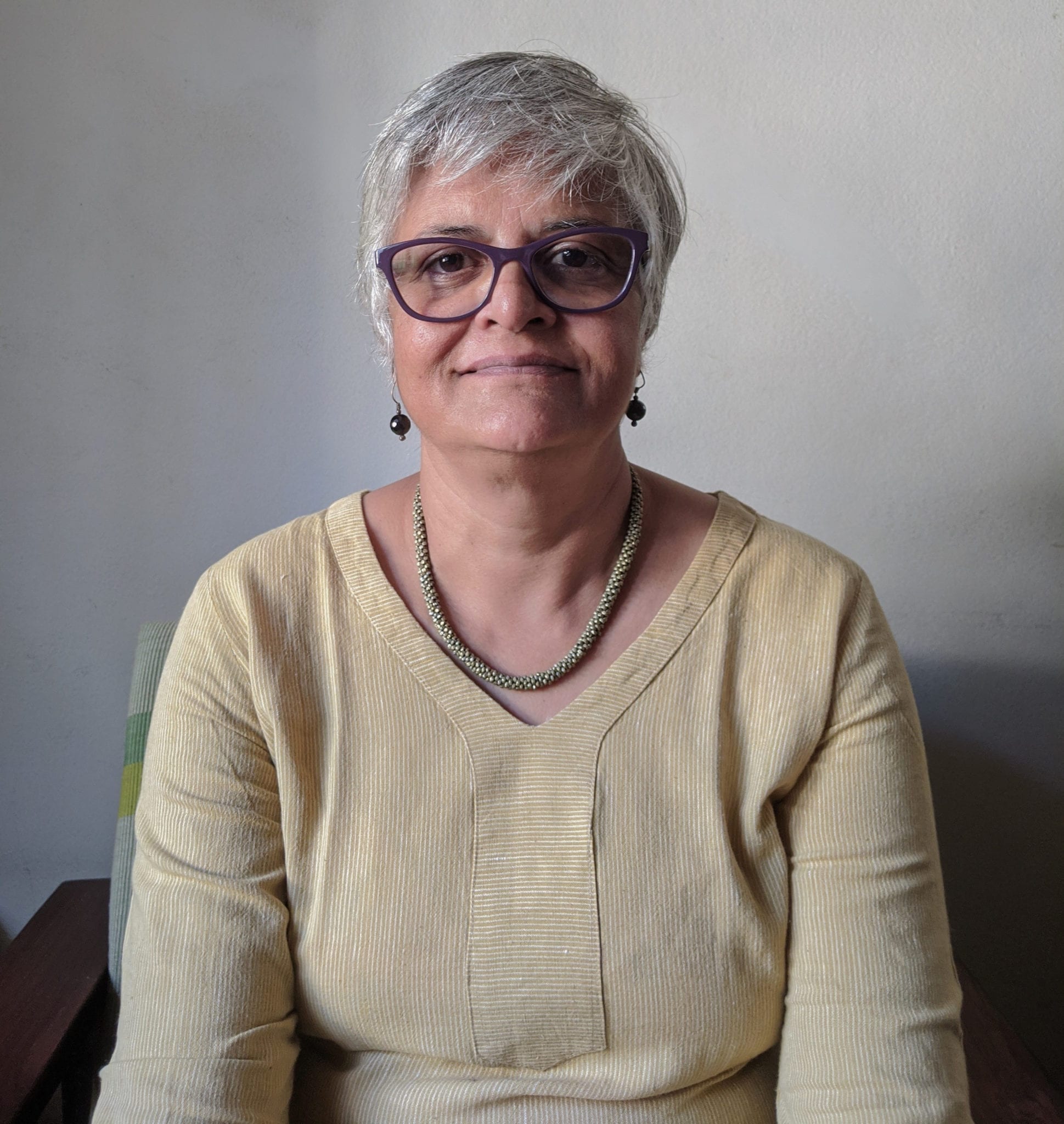
Dato’ Sudha Devi K.R. Vasudevan appointed Chair of the Commonwealth Foundation

Following approval by Commonwealth Heads of Government last week, Dato’ Sudha Devi K.R. Vasudevan has been announced as the new Chair of the Commonwealth Foundation, the Commonwealth’s agency for civil society.

The Chair of the Foundation is a distinguished private citizen of a Commonwealth country appointed by Heads of Government. As Chair, Dato’ Sudha will lead Board meetings which govern the Foundation and support its future direction. She succeeds His Excellency Shree Baboo Chekitan Servansing, a Mauritian National, who has served with distinction since 2016.

The Commonwealth Foundation is one of the Commonwealth’s three intergovernmental agencies with a mandate to support Commonwealth civil society and, through that work, to advance the interests of the Commonwealth’s 2.4 billion citizens.

The Foundation delivers an annual grants programme which supports civil society to engage with governments to advance participatory governance, democracy and human rights. It also administers a creative programme that aims to showcase Commonwealth culture from writing to filmmaking, including through the widely acclaimed Commonwealth Short Story Prize. Through a range of other initiatives, from the Commonwealth People’s Forum to the Critical Conversations online event series, the Foundation works to amplify the voices of the People of the Commonwealth, helping them participate in shaping the policies and decisions that affect their lives.

Dato’ Sudha brings extensive leadership experience to the role. She recently served as Malaysia’s High Commissioner to Australia and, before that, was Ambassador of Malaysia to the Federative Republic of Brazil. Her other diplomatic postings have included Germany, Singapore and Switzerland. Throughout her career, she has held various positions within the Malaysian Ministry of Foreign Affairs including Director-General of the Department of Policy Planning and Coordination, Undersecretary for the East Asia Division and Deputy Director-General for the ASEAN Malaysia National Secretariat.

Director-General of the Commonwealth Foundation, Dr Anne T. Gallagher AO, said:

‘I am thrilled to welcome Dato’ Sudha to the Commonwealth Foundation. Her appointment comes at a pivotal moment for the international community as we strive to help our countries and communities recover and rebuild from the shocks of the past year.

‘Civil society engagement with governments will be essential for progress on this and many other fronts. The Foundation’s Governors, which Dato’ Suhda will lead, are critical to ensuring a Commonwealth that is truly of—and for—its people.’

The outgoing Chair of the Board of Governors, Ambassador Shree Baboo Chekitan Servansing, who has come to the end of his two-year term, said of the appointment:

‘I would like to congratulate Dato’ Sudha on her appointment as the new Chair of the Commonwealth Foundation. I have no doubt that her wide experience and deep involvement in diplomacy will help to steer the Foundation to the next, exciting stage of its development.’

For more information

For further information about the Commonwealth Foundation, further comments, or photo requests, please contact Leo Kiss, Communications Officer, on l.kiss@commonwealth.int.

Notes

  • Annual priorities of the Commonwealth Foundation are determined by a Board of Governors, comprising representatives of Commonwealth governments and High Commissioners based in London, civil society representatives, and the Commonwealth Secretary-General. The Chair of the Foundation is a distinguished private citizen of a Commonwealth country appointed by Heads of Government.

Statement on the International Day to End Impunity for Crimes against Journalists

The United Nations has declared 2 November as the International Day to End Impunity for Crimes against Journalists, recognising those whose lives have been cut short or destroyed because of their commitment to truth, justice and accountability.

Over the past 14 years, close to 1,200 journalists have been killed for reporting the news and bringing information to the public. Many, many more have disappeared or been subject to torture, intimidation or harassment. Even more worrying is the fact that crimes against journalists and media workers are rarely investigated, prosecuted or punished. That shocking level of impunity sends out a clear and chilling message: journalists will not be protected; their killers will not be brought to justice.

Member States of the Commonwealth have proclaimed, loudly and clearly, their commitment to human rights, to the rule of law, and to ‘peaceful, open dialogue and the free flow of information, including through a free and responsible media’. The 2.4 billion citizens of the Commonwealth have a right to demand that these commitments be implemented in a meaningful way: that their governments take decisive action to prevent violence against journalists and bring perpetrators to justice.

The battle for media freedom must be fought on many fronts. Across the Commonwealth assaults on media freedom are becoming more commonplace and more severe. They include not just attacks on journalists but also repressive legislation, unjustifiable censorship, misinformation and other forms of information control. This trend is contributing to an erosion of democratic culture and diminished government accountability at a time when such accountability has never been more important—or more urgent.

While civil society will inevitably be at the forefront of the battle for media freedom, it cannot act alone. The Commonwealth: its member States and its institutions must step forward to protect those values which are fundamental to the Commonwealth’s existence; its legitimacy and its credibility.

#TruthNeverDies

Dr Anne T. Gallagher AO is Director-General of the Commonwealth Foundation.

The Commonwealth Foundation is running a series of online events: People of the Commonwealth: Critical Conversations. A conversation on media freedom in the Commonwealth is planned for January 2021. Register to participate in the series here.

Message from the Director-General on the planned closure of the Institute of Commonwealth Studies

The Commonwealth Foundation, one of the three intergovernmental pillars of the Commonwealth, has a specific mandate to amplify the voice of the Commonwealth’s 2.4 billion citizens.

The Foundation was dismayed to learn of the planned closure of the Institute of Commonwealth Studies—and we are convinced that this decision was made without a full appreciation of what is being lost. I speak particularly of the rich contribution that the Institute has made, over many years, to cultivating a critical understanding of the Commonwealth; its complicated legacy; and its potential to contribute to a future based on justice and equality.

It is well understood that these difficult times require hard decisions. However, the proposal to close the Institute certainly appears to lack strategic foresight, most especially for a University which has built its reputation on innovation and excellence in teaching, outreach and research. The Institute embodies all of those qualities and its continued existence would, I believe, contribute to the University’s own longer-term flourishing.

I urge the University to reconsider this decision, reflecting fully on the place that the Institute for Commonwealth Studies occupies within a living, breathing network of people and ideas. And I encourage the many individuals and groups that have drawn inspiration and strength from the work of the Institute to make their voices heard.

Dr Anne T. Gallagher AO is Director-General of the Commonwealth Foundation. 
Civil society responses in the wake of COVID-19

Without doubt, the coronavirus pandemic has exposed the lack of preparedness among states across the global north and south for a disaster of this magnitude. Decades of underinvestment in health and education has been laid bare. The unravelling of the institutions that underpin these sectors has been spectacular, exposing fundamental deficiencies in their capacity to deliver. It is no exaggeration to say that vast sections of the global population face further exclusion unless governments affect far-reaching reforms. An assertive and engaged civil society can help governments find solutions to these challenges by drawing from the experience of their grassroots constituencies.

Civil society organisations have so far been involved in a range of interventions, from direct service provision to engaging lawmakers to reform the policies and guidelines that govern responses to the pandemic. Within the Commonwealth, there has been enhanced engagement in Commonwealth Ministerial Forums by civil society. At a recent Health Ministers meeting, the Commonwealth Civil Society Policy Forum made a presentation on how digital diagnostic technologies can be used to achieve universal health coverage (UHC). Members are advocating the One Health approach, which looks at finding ways for the civic, private and government sectors to better communicate and work together to achieve UHC.

‘in poor rural areas and especially in the global south, the infrastructure for digital learning is not in place.’

As a leading member of the Forum, the Commonwealth Health Professions and Partners Alliance has been at the forefront of advocating for the implementation of UHC. In the wake of the pandemic, the Alliance has scaled up its advocacy, making proposals for mapping the use of digital technologies in health service and medicines delivery; using technology for better deployment of human resources; and development of model regulation, policy and standards for the use of digital technology, including addressing privacy and other human rights concerns. Articulation of these priorities has been an important first step. The next is to ensure their systematic implementation.

The wide application of digital learning in place of face-to-face learning is clearly a vital innovation that, in our post-pandemic world, is here to stay. But the effects of these changes can only be understood by first acknowledging the fact that, in poor rural areas and especially in the global south, the infrastructure for digital learning is not in place. We do not yet know who–or how many—are currently excluded from these new digital technologies. But a ‘one size fits all’ approach is undoubtedly a recipe for entrenching that exclusion. During this time of systemic change, it is thus vital that the Incheon Declaration and Framework for Action is adhered to. This commitment recognises the role of education as a key driver of development and provides guidance for implementing Education 2030—an essential prerequisite for achieving the promise of Sustainable Development Goal Four: equitable learning for all.

‘Civil society must be—and must be seen to be—a partner and ally to governments: working together to forge a path towards a more positive future.’

Tackling the challenges ahead will require substantial policy and institutional reforms. Without change, there is a real risk that the Covid-induced health crisis will become something much more serious and enduring: that it will lead to even greater inequality and instability; that it will stall our progress towards the realisation of truly peaceful and inclusive societies. Civil society must be—and must be seen to be—a partner and ally to governments: working together to forge a path towards a more positive future. The Foundation is seeking to pivot its own programmes to ensure that it is able to make a meaningful contribution to Commonwealth civil society as communities and countries work to repair and recover from the global pandemic.

Shem Ochola is Deputy Director-General of the Commonwealth Foundation.

Civil society organisations engaged in responses to COVID-19 in Commonwealth countries are encouraged to subscribe to our mailing list for updates on our forthcoming grants call.

Shielding democracy from COVID-19

Across the world, COVID-19 has unleashed a tidal wave of state power. What can we do to ensure that the great pandemic of 2020 is not remembered for an unravelling of democratic values, a disintegration of the rule of law; an irreversible erosion of hard-won rights and freedoms?

The risk is very real. Authoritarianism, the enemy of personal freedom, dines richly on fear and uncertainty. As a former UK Chief Justice recently remarked, we often give up our freedom voluntarily in return for promised protection from some external threat. Accepting this aspect of our humanity leads us to understand that passivity is dangerous. Today, more so than ever, the long-term well-being of our societies requires us to engage our leaders: to support them, yes, but also to question and challenge.

‘Emergency measures that come without an expiry or review date should always raise a red flag.’

The first step is to be absolutely clear about what is acceptable during a time of crisis and what is not. All political systems recognise the need for extraordinary action in extraordinary times. Even in liberal democracies, additional powers can be granted and certain can be suspended during a health or other public emergency ‘which threatens the life of the nation’. The rationale is straightforward. When things go terribly wrong, our leaders need the space and capacity to respond swiftly and effectively. As citizens, we agree to make a temporary sacrifice in order to secure our longer-term freedom and prosperity.

In the real world, things are never that simple. Too often, the rights and freedoms we sacrifice in extraordinary times are permanently damaged. In the aftermath of the 2001 US terrorist attacks, for example, ‘temporary’ powers that infringed on basic rights to privacy and security were granted to national security agencies. Many of these laws are still with us, now routinely used for non-terrorism purposes: from migration control to suppression of the media.

How do we distinguish between a legitimate response to an extreme threat on the one hand and a dangerous overreach on the other? In some cases, the answer seems straightforward. In Cambodia for example, the recently passed COVID-19 emergency law grants an already dictatorial and unchallenged government vast new powers: from property seizure to media controls. Hungary is on the verge of an indefinite state of emergency that will allow its Prime Minister to rule without reference to Parliament until he decides the emergency is over. And the Philippines’ response has quickly morphed from lockdown to crackdown.

‘An informed, engaged and questioning citizenry is the best defence we have.’

Fortunately, such instances of shameless power-grabbing remain the exception, at least for now. But the trend is clear, with Oxford University’s COVID-19 government response tracker confirming that governments of every political stripe are granting themselves sweeping new powers to forcibly detain individuals; close schools; shut borders; restrict internal movement; limit free speech; impose curfews and ban public gatherings. Whether by executive fiat or via parliaments, these laws are being rushed through without the attention and scrutiny that much less-important legislation routinely receives.

Many of these responses are raising hard questions. For example, is it appropriate for governments to use surveillance technology that is normally deployed against enemies of the state to track the movements of their own citizens? And how far should that go: what if, for example, these new rules turn out to support biometric surveillance? What if new laws and regulations have a disproportionately negative impact on certain social or ethnic groups? What if they are deployed to silence protest—to effectively outlaw criticism of state policy in this or other areas? And even if we presume that strong measures might be necessary, how can citizens pass judgement on the actions of their leaders during this critical time when governments across the world, 47 at last count, are postponing national and local elections?

Deciding what constitutes a reasonable law is tricky. It might even be impossible until after the fog has lifted. At this stage, the best question we can ask is whether the authorities are demonstrating that their reaction to COVID-19 passes the two-fold test of being necessary and proportionate to the threat as it is currently understood. That involves weighing a myriad of factors, not least the underlying democratic health of the country: a government that is generally responsible and answerable to its people deserves to be trusted much more than one which is unaccountable.

On top of the general tests, we must be alert to the classic warning signs of overreach. Emergency measures that come without an expiry or review date should always raise a red flag. Laws that fail to specify their objective—and to relate the application of new powers solely to securing that objective—should raise another. Laws that erode basic democratic protections—for example by exempting their application from judicial or parliamentary scrutiny—are also to be treated with great caution. And in this situation, as in all others, we must be highly wary of emergency-related restrictions on those fundamental rights that serve to protect all others: freedom of speech, expression and information. This is the time for radical transparency: any attempt to suppress information, debate and dissent should be robustly challenged.

The COVID-19 pandemic has expanded the reach and power of the state to a degree that is unprecedented in the living memory of most modern democracies. The consequent loss of rights and freedoms may well turn out to be necessary. But history teaches a harsh lesson: sacrificing liberties is a dangerous game with a highly uncertain outcome. An informed, engaged and questioning citizenry is the best defence we have.

Dr Anne T. Gallagher AO is Director-General of the Commonwealth Foundation.

Introducing our Civil Society Advisory Governors (2020-2022)

We take great pride in announcing the appointment of five new Civil Society Advisory Governors (CSAG) to our Board.

The Commonwealth Foundation has a tradition of involving civil society in its governance structure. The Foundation’s Board of Governors comprises representatives of its Member States as well as five CSAG members: distinguished civic voices that each represent a region of the Commonwealth. The representatives provide guidance on aspects of our programmes as well as our long-term strategy. Browse the profiles of the new appointees below.

Goretti Kyomuhendo (Africa)

Goretti Kyomuhendo is Director of the African Writers Trust (AWT), a literary initiative based in Uganda. Established in 2009, AWT aims to bridge the divide between African writers and publishing professionals living in the Diaspora and on the continent.

A writer herself, Ms. Kyomuhendo is one of Uganda’s leading novelists and has published four novels, several children’s books, short stories, and a writer’s guide.

Ms. Kyomuhendo’s career as a literary and cultural practitioner spans over 20 years. She is a founding member of FEMRITE—The Uganda women writers association and publishing house—and worked as its first director for ten years between 1997 and 2007, where she pioneered writing projects to promote, inspire and publish women writers.

The first Ugandan woman writer to receive the International Writing Program Fellowship at the University of Iowa, Ms. Kyomuhendo has been recognised for her work as a writer and practitioner nationally and internationally, and has represented her country at numerous forums worldwide.

She holds a BA in English Studies and an MA in Creative Writing from the University of KwaZulu-Natal in South Africa.

Kalpana Kannabiran (Asia)

Kalpana Kannabiran is a Professor and Regional Director at the Council for Social Development, Hyderabad.  She taught sociology and law as part of the founding faculty of NALSAR University of Law, Hyderabad between 1999 and 2009.  A women’s rights activist, she is a co-founder of Asmita, a feminist collective in Hyderabad that was founded in 1991 and worked for three decades in the areas of feminist publishing, rights training and advocacy, legal literacy, and pro-bono counselling.

Her work has focussed on understanding the social foundations of non-discrimination, structural violence, and questions of constitutionalism and social justice in India. Author of Tools of Justice: Non-discrimination and the Indian Constitution (2012), her writing encompasses law and gender studies, disability rights, rights of religious minorities, indigenous rights, law and literature, and violence studies. She is a recipient of the Amartya Sen Award for Distinguished Social Scientists (2012) for her work in the discipline of law.

Dr. Marlene Attzs (Caribbean and Americas)

Marlene Attzs is a Lecturer in Economics at the University of the West Indies (UWI), Trinidad and Tobago. She has served as Head of the Economics as well as Deputy Dean in the Faculty of Social Sciences, UWI. She has more than 20 years’ experience as an economist focussing primarily on the economics of sustainable development. She currently serves in an administrative capacity within the University, bringing to bear her academic skills to support the University’s strategic objectives.

Dr. Attzs’s research portfolio primarily focusses on sustainable economic development issues confronting Caribbean Island States. Her specific research interests include sustainable development, climate change adaptation, and gender mainstreaming. She has worked as a consultant in many Caribbean countries and also consulted for Governmental and Non-Governmental agencies in Trinidad and Tobago, regional institutions such as the Caribbean Development Bank and the Caribbean Disaster Emergency Management Agency, as well as internationally with the United Kingdom’s Department for International Development and the Inter-American Development Bank (IDB) in Washington, D.C.

Between 2005 and 2006, Dr. Attzs was based at the IDB Headquarters in Washington as a Consultant in the Sustainable Development Division, with responsibility for coordinating the Bank’s Natural Disaster Network, which comprised the national focal points for disaster risk management across the Bank’s Member Countries in Latin America and the Caribbean.

Celia Wade-Brown (Pacific)

Celia Wade-Brown is a former Mayor of Wellington, New Zealand. Prior to her local government career, she worked as a programmer, teacher, and IT analyst. Born in London, United Kingdom, Ms. Wade Brown has worked in Europe, Africa, China, and Australia.

As Mayor of Wellington, she strengthened business and cultural relationships between cities in Asia and Wellington. She was a founding member of the New Zealand Internet Society. In 2002, Ms. Wade-Brown founded Living Streets Aotearoa, a walking advocacy organisation. Wellington became the first New Zealand Council to introduce a Living Wage and a goal of Predator Free Capital.

Improving pedestrian access, cycling facilities, public transport, urban biodiversity and social housing have been integral to her political career. She has promoted the value of cultural diversity by adding Asian, African, and European events to the city’s calendar.

After standing down as Mayor, Ms. Wade-Brown was appointed to Biophilic Cities Network Advisory Board, Walk21 Foundation, Te Araroa Trust, Predator Free Wellington, and the NZ Walking Access Commission. She is Patron of the Friends of Taputeranga Marine Reserve and the African Film Festival, a trustee of the Great Harbour Way Trust, she co-chairs the Wellington Sea Kayak Network, and is currently working to restore biodiversity in native forests.

Ajay Chhabra (Europe)

Ajay Chhabra is an artistic director, producer, advisor, and actor. He has been active in civil society since the late 1990s, bringing people from different countries, cultures, and communities together through festivals, events, and partnerships.

With his company, Nutkhut, Mr. Chhabra uses partnerships and experiences to unearth untold stories and hidden histories. He is currently working on the final instalment of a trilogy of multi-disciplinary performances that mark significant historical moments in the relationship between Britain and Commonwealth communities around the world.

Mr. Chhabra currently sits on several boards at local, regional, and national level. As an Ambassador on the Mayor of London’s Cultural Leadership Board, he engaged in the launch of the London Borough of Culture Award; and has helped develop a comprehensive, inclusive cultural strategy for the capital over the next ten years. Mr. Chhabra is Founding Chair for the National Mela Partnership, and has developed and delivered Mela strategy for Arts Council England and European Union bodies for the past 15 years across three continents.

Download CSAG terms of reference 2019


COVID-19: statement from the Director-General

To write that we are living in strange and extraordinary times would have felt like hyperbole even a week ago. No longer. I hope and trust that you and your families are keeping well in mind, body and spirit. Our thoughts and sympathies go out to those who are especially vulnerable, and whose lives and livelihoods have been so terribly affected. Above all, we must unite to ensure that the pandemic is kept away from the countries and communities that do not enjoy the protection of strong health and welfare systems.

‘We must unite to ensure that the pandemic is kept away from the countries and communities that do not enjoy the protection of strong health and welfare systems’

The Foundation’s team has been working remotely for the past week, and Marlborough House is closed until further notice. Despite these challenges—and the need to cancel several scheduled activities—we are seeking to operate with a ‘business as usual’ mindset. This means, for example, that our grants programme is continuing apace: applications received during our most recent call are being reviewed as planned; the schedule for the 2020-2021 round will remain unchanged; and all grant payments will be processed as normal. (Grant partners with specific issues and requirements are encouraged to reach out to their assigned Grants Officer.) Our Commonwealth Short Story Prize is also operating on schedule, with the 2020 shortlist due to be announced shortly. With regard to the Commonwealth People’s Forum I refer you to our website where regular updates will be posted. In the next few weeks, we will launch a platform for our partners to share their stories and insights on the pandemic. Please keep an eye on our website for this as well.

‘The political and cultural polarisation that we have all become used to over recent years could well be a thing of the past, as our differences fade away before a common threat.’

We will have time to reflect, over the coming weeks and months, on what COVID-19 has revealed to us—about ourselves, our world, and our relationships with each other. Undoubtedly this will lead to some hard questions. For example, have our civil society structures and networks proved sufficiently resilient to sustain our countries and communities through these difficult times? Have our governments provided the courageous leadership that we have a right to expect? And have we, as individuals, demonstrated the compassion, generosity and gratitude that we would want to receive from others?

I am not alone in expressing the belief that we will emerge from adversity into a better, fairer world. The political and cultural polarisation that we have all become used to over recent years could well be a thing of the past, as our differences fade away before a common threat. Our assumed dominion over the planet will have received another sharp wake-up call, breathing new energy into a global commitment to address widespread degradation of our natural environment. The unevenness of the virus’s economic impact may also cause us to finally question the way in which ‘work’ has been reshaped in the service of profits—and the insecurity and indignity that has accompanied this sustained, worldwide trend. And we have good reason to hope that once the worst is over, hyper-individualism will give way to an acceptance that adequate investment in society and public goods—including health and social services—is the true hallmark of a decent, inclusive society.

Perhaps most importantly, it will be the many acts of human empathy, altruism and love we are witnessing and hearing about that will help repair the damage—not least by reaffirming our faith in community and our belief in a shared humanity.

Dr Anne T. Gallagher AO is Director-General of the Commonwealth Foundation. 

Disability rights

One billion people, or 15% of the global population are living with disabilities, and prevalence is higher in developing countries. The evidence shows that Persons with Disabilities (PWDs) throughout the world are more likely to experience poverty.

The issues facing PWDs are similar across countries and range from difficulty accessing physical environments and transportation; prejudice and stigma in society; restricted access to employment and services; non-adapted means of communication; and non-availability of assistive devices and technologies.

‘Bangladesh is gathering information on PWDs by systematically drawing data from applications for disability cards.’

Despite a flurry of international and national commitments to address the needs of PWDs in recent decades—tangible progress has been slow. This is why our grants partners have been working with governments to turn commitment into action.

In Kenya, our partners have been organising and coordinating advocacy at the community and county levels for better laws, policies, and essential services. This activity has led to the formation of a national Disability Advocacy Coalition, which, among other achievements, has ensured the passage of a disability rights bill in Machakos County.

In India, our partners have been gathering robust data on women with disabilities from a range of primary and secondary sources to support newly appointed state Disability Commissioners. This data has already formed the basis for an alternative report to the United Nations, which looks at how India has met its obligations to women with disabilities under the Convention on the Rights of Persons with Disabilities.

In Bangladesh, our partners have formed groups of PWDs to engage with local authorities and strengthened processes and capacities within disabled person’s organisations so they can advocate to local and national government.

‘In relation to all three countries, it is likely that each has something to learn from the other.’

As Persons with Disabilities tend to face similar hurdles worldwide, many threads draw these projects together. Take data: reliable data is crucial in the planning and optimum delivery of services, and is particularly important for delivering social welfare payments. The Government of Bangladesh is gathering information on PWDs by systematically drawing data from applications for disability cards. Civil society organisations have been working to fill the data gap in India, while Kenya has no systematic approach to data collection on disabilities. In relation to all three countries, it is likely that each has something to learn from the other.

Given the considerable scope for cross-border learning, the Foundation is hosting a learning exchange in Bangalore, India, next week, to enable project leads from the three countries—and others from Ghana, Guyana, and Jamaica—to come together and share strategies for advancing disability rights.

The discussion will focus on how to improve government accountability to PWDs by leveraging existing laws, policies, and international frameworks.

The Disability Learning Exchange will take place from 3-5 February 2020. You can join the conversation online using #CWLearningExchange.

Seasonal message from the Director-General

As the festive season is upon us—and as the year draws to a close—I extend my best wishes to the many friends and supporters of the Foundation: the Commonwealth’s agency for civil society.

This year has been an exciting and fulfilling one, and, with your support, we have achieved a great deal. Here are just a few of the highlights from 2019:

  • The addition of eight new grant initiatives to an active portfolio now totalling 40 projects. These new initiatives address a range of issues from community engagement in fisheries policy to greater female participation in politics
  • Over 5000 entries to the 2020 Commonwealth Short Story Prize
  • Over 10,000 new subscribers and followers across our online channels
  • The inclusion of civil society, for the first time, in the Senior Officials segment of the Women’s Affairs Ministerial Meeting.

Looking ahead, I am sure all will agree that the Foundation’s core mission—to support inclusive, transparent and accountable governance throughout the Commonwealth—has never been more important. We understand, all too well, the urgent need for collective action across a range of fronts: from climate change to migration; from gender equality to poverty alleviation. Without the active and sustained involvement of civil society, true progress on these and other critical issues facing our world will be impossible.

‘The People’s Forum—along with its sister gatherings focussing on youth and women—promises to breathe energy, hope, and new ideas into CHOGM 2020’

In 2020, the Foundation will continue to pursue its own path of change and renewal: ensuring that we are as well-equipped as possible to deliver on our ambitious mandate. Having only been in the position of Director-General for six months I take great pleasure in welcoming Shem Ochola as our new Deputy Director-General. Shem’s experience, gained over more than two decades in programme management and governance, will be vital in helping to steer our core work towards even greater relevance and impact.

In 2020, alongside our Rwandan Government partners, we will also convene the Commonwealth People’s Forum: the biennial gathering that brings the citizens of the Commonwealth directly into the Commonwealth Heads of Government (CHOGM) meeting. The People’s Forum—along with its sister gatherings focussing on youth and women—promises to breathe energy, hope, and new ideas into CHOGM 2020. The themes it will tackle over three days (21-23 June) are the big ones: the questions that really matter as we try to navigate our way through an increasingly fractured and uncertain world: how do we challenge the exclusion that eats away at the legitimacy of our political, economic, and social systems? How can civil society expertise and momentum be harnessed to address ‘wicked problems’ that our governments appear almost powerless to address, such as climate change, economic injustice, and exploitative migration? And perhaps most importantly, how do we build and sustain the structures and processes that will secure the kind of governance capable of delivering for all of us: not just for those who, through the fortune of birth, geography, gender, good health, or any other blessing, are already abounding in wealth and power?

Once again, my thanks to all who have been associated with the Foundation’s work in 2019. Please join us as we look towards another year of progress and hope.

Dr Anne T. Gallagher AO is Director-General of the Commonwealth Foundation. Note that information on the 2020 Commonwealth Peoples Forum will be available on the Foundation’s website in the coming months.

Participatory governance: seven years of lessons learned

I was recently asked about the lessons I have learned in the area of participatory governance and development. I reflected on our work at the Foundation and how we consistently ask ourselves about the value we are adding to the sector. We are committed to adaptive learning and management and have dedicated ourselves to strengthening civic voices to constructively engage in policy processes and contribute to shaping public discourse; here are the lessons I consider important.

One of the major learnings from our 2012-2017 strategy was that we must be better at integrating gender in our programming. Under our strategy for 2017-21, we have a stronger focus on gender equality underpinned by the framework of gender and its intersectionality. In keeping with our systems approach, this framework allows for an understanding of the different intersecting systems of oppression and recognises the different ways that gender inequality is shaped by these intersections.

‘The highest degree of change can be observed when projects are based on the partners’ own assessment’

The direction, speed and acceptance of change in complex social and political systems are difficult to predict. We have been more mindful that using a ‘longer’-term timeframe is critical to the success of the Foundation’s strategic priorities. Strengthening civic voices means change over the long term. Our planning now factors this in.

The highest degree of change can be observed when projects are based on the partners’ own assessment; when partners take the lead in determining and articulating the change they want to achieve, the capacities they want to strengthen and the effective approaches to be taken. Customising support and taking into consideration the cultural and political context is fundamental.

There are no short cuts for anchoring the work on local ownership and supporting a process beyond enhancing existing knowledge and skills of individuals whereby civic voices strengthen, create, adapt and maintain their capacity over time and realise their own agency. We accompany partners, acknowledging that one size does not fit all, facilitating processes in prioritising and planning instead of imposing outside analyses and interests and engaging in co-creation.

‘…building trust is imperative in successful engagements and partnerships in governance.’

We have learned that support to civic voices must address individual needs and consider how skills and abilities materialise in organisational and institutional processes. We recognise that structures and processes are influenced by system-wide issues. We have found that initiatives and programmes require a wide range of adult learning approaches that are better adapted than traditional training and workshops. These include learning by doing, peer to peer mentoring and on-site coaching. Combined with these, research, technical assistance, pilot projects, training and evaluations have proved to be useful.

We have also seen how individual strengths organised in and working as part of coalitions or alliances have demonstrated the effectiveness of collective efforts in engaging in policy advocacy and campaigning. One ingredient that features in our work is partnering with effective and strong local resource partners who know the local context and have credibility in-country to deliver the gamut of support. This approach contributes in the long term to strengthening the local enabling environment.

And finally, building trust is imperative in successful engagements and partnerships in governance. One way that civil society is able to build trust is to demonstrate its technical capacity and willingness to constructively engage in policy processes in governance.

As I reflect on these lessons, I look on the future of the Foundation with immense optimism. I take this opportunity to welcome the incoming Deputy Director-General, Shem Ochola, as I pass on the baton to him. Under the leadership of, and in partnership with, the Director-General, Anne Therese Gallagher AO, I’m certain that Shem will take the organisation from strength to strength; building on these lessons to engender an ever more meaningful and constructive engagement between governments and citizens, notably those less heard, across the Commonwealth. I wish him and the rest of the organisation the very best. 2020 is looking bright.

Myn Garcia ends her term as Deputy Director-General of the Commonwealth Foundation in December 2019.