Theme: Health and disabilities

Eradicating the spirit child phenomenon

Issue

The Spirit Child Phenomenon (SCP) is still a problem in northern Ghana’s Bongo region, where traditional soothsayers label certain disadvantaged children as messengers of bad luck, leaving them at risk of being killed by traditional healers known as concoction men.

Project

AfriKids is looking at issues surrounding SCP in order to address how to drive down the problem. The organisation will provide the education, incentives and stakeholder engagement to embed the cultural and technical change into the affected communities that will help to eradicate the phenomenon.

Training and awareness campaigns on child rights and healthcare will be run in local communities. Technical and financial support will also be provided for the concoction men and for families and women’s groups, while there will also be greater engagement  between the various community groups and government health and education facilities for children associated with SCP. This culturally sensitive project will also focus on empowering women within the affected communities, helping them to work directly with key male decision makers.

AfriKids has already eradicated the practice in the Kassena Nankana district. It is hoped that the work to embed this change in communities in Bongo will result in it becoming a sustainable operation of continuous education and information that will help to make SCP a phenomenon of the past.

The Honourable Nana Oyer Lithur, Ghana’s Minister of Gender, Children and Social Protection, said that the work has been transformative.

“I would like to use this opportunity to commend AfriKids Ghana for the extensive work on the subject of the “Spirit Children” in the Kassena-Nankana East and West Districts of the region,” he explained. “We are happy to hear that the practice of killing spirit children no longer exists in these districts. What is even more significant is the involvement of the practitioners of the tradition known as concoction men in the solution process”.

Follow @AfriKids on Twitter

Follow /afrikids on Facebook


Improving health service delivery for women living with HIV and AIDS

Issue

Women living with HIV in Uganda are significantly underrepresented in the decision-making processes that affect their healthcare, their living standards and ultimately their lives.

Project

International Community of Women Living with HIV Eastern Africa (ICWEA) works with the women to strengthen their institutional and technical know-how to take part in policy discussions on HIV. ICWEA helps the women’s groups develop strong knowledge of vital elements of a participatory process, including budgets and monitoring and evaluation, allowing them to shape the structures and debates. It will work with the groups to develop their confidence to open up the avenues through which they can communicate with other women’s groups for more concerted policy advocacy and engagement at bi-annual meetings attended by district officials and key local organisations

ICWEA has been building relationships within Uganda since it was first formed in 2005, feeding into health and HIV/AIDS policy processes, addressing related issues and advocating for change for several years. Its continued push for direct engagement with these decision makers and legislators has the long-term aim of allowing women living with HIV to sustain their own advocacy efforts and continue to push health sector reforms long after the grant project is completed.

[youtube https://www.youtube.com/watch?v=mESwNiZqDkc?rel=0]

Follow @ICWEastAfrica on Twitter

Follow /IcwEasternAfrica on Facebook

Sharing best practices on health service governance

Issue

By involving people in marginalised and rural communities in the processes that determine their health services and policies, health outcomes for those communities will be improved.

Project

Health Poverty Action is helping civil society organisations in Kenya, Namibia and Rwanda to build their capacity to share best practices for the participation of marginalised groups in health service governance. This project is looking at the participatory structures that are already in place in three African countries – Kenya, Rwanda and Namibia – and exploring how they can be enhanced, documented, and potentially scaled up and shared with other countries.

At the moment, a Community Conversation approach is being used in Kenya, where solutions are directly sought from communities themselves through discussion sessions with community leaders and influencers, facilitated by trained moderators. In Namibia, designated Clinic Health Committees (CHCs) support dialogues with health service providers to make sure solutions are relevant, culturally appropriate and fit to meet the needs of the communities. And in Rwanda, the traditional Ubudehe social protection system sees communities – under the guidance of trained facilitators – select a priority community project from a list of options and decide collectively on actions to take.

With a grant from the Commonwealth Foundation, Health Poverty Action is helping civil society organisations in each of these countries to build their capacity to support and enhance these systems. The organisations in Namibia and Rwanda are supported in building Kenya’s Community Conversation into their systems, while also being trained in participatory methods that help them to draw inputs and contributions from communities that have previously been unable to make their voices heard on this vital aspect of their existence. In each country meetings will be held with decision makers to share their learnings on participatory methods, with the aim of embedding the on-going contributions of these under-heard communities into the fabric of their national healthcare systems.

The Commonwealth Foundation awarded a grant of up to £45,000 over 18 months for this project.

Follow @healthpoverty on Twitter

Follow /HealthPovertyAction on Facebook

Reforming colonial-era mental health legislation

Issue

The need to improve the legislation that covers mental ill health in Commonwealth countries is growing more and more pressing as the prevalence of mental ill health increases worldwide.

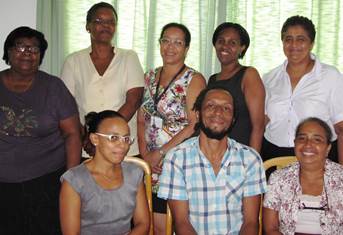
National Mental Health Advisory Committee SeychellesProject

The Commonwealth Nurses and Midwives Federation (CNMF) is updating mental health legislation in Botswana and Seychelles to bring them in line with the UN Convention on Rights of Persons with Disability. Botswana and Seychelles will be the first Commonwealth countries to see their mental health laws brought in line with the UN Convention, and will see the CNMF work to establish the support structures that will build thorough and inclusive mental health provisions.

The two implementation countries were selected due to the existing strong base of networks in place, upon which the CNF will be able to build and develop their work. The project will either support an existing national mental health advocacy group – or establish a new one, if necessary – bringing together people with mental ill health, carers, medical health professionals and policy officials, to pool their experience and collectively develop solutions.

These groups will provide valuable forums to make sure that legislation is formed from the right information and the right people. The Commonwealth Nurses Federation will oversee the project, providing technical support to the groups and working to ensure the sustainability of the positive outcomes produced by the project.

With mental ill health predicted to be the world’s greatest health burden by 2030, this project is supporting the efforts to drive down the stigma, discrimination and marginalisation suffered by people with mental ill health and make treatment and care accessible to all.

Commonwealth Nurses and Midwives Federation

The Commonwealth Nurses and Midwives Federation (CNMF), founded in 1973, is a federation of national nursing and midwifery associations in Commonwealth countries.

The CNMF has regular and constructive contact with major Commonwealth bodies in London including the Commonwealth Secretariat and the Commonwealth Foundation. The CNMF is an accredited Commonwealth body, which allows involvement in annual Health Ministers’ meetings, the biennial Commonwealth Peoples Forum held prior to the Commonwealth Heads of Government meeting and other Commonwealth meetings such as the civil society consultations.

www.commonwealthnurses.org


Promoting the recognition of carers in India

Issue

The need for long-term care for people with chronic illnesses and disabilities is universal, and the rapidly increasing demand is an urgent challenge facing countries throughout the world. In India, carers – like elsewhere in the world – are often unheralded and are usually unpaid family members.

Project

Carers Worldwide UK is supporting carers in India, who are mostly women, to advocate for the social provisions and protection needed to reduce their vulnerability to impacts such as reduced earnings, poor health and loss of education. Carers Worldwide is partnering with socially-focused CSOs in Jharkand, Andhra Pradesh and Karnataka, to build on the lessons of an earlier advocacy pilot project, which highlighted the importance of helping carers through participatory processes such as group-led actions. The pilot has already achieved a number of important outcomes – including establishing self-help groups that have allowed carers to come together for the first time, participation in a government-run livelihood scheme and raising their profile with local government officials – and this project aims to help take that work even further.

The carers most affected by poverty in each of the three districts will receive livelihood and training options compatible with caring and will learn engagement and advocacy skills, to allow them to participate in their own development. The project will also support district level Carers’ Associations, allowing people to communicate with peers and giving them a platform through which they can make their issues known to development and district government agendas.

“This project is creating the first opportunity for carers to come together, be seen and make their voices heard,” explained Anil Patil, the founder and executive director of Carers Worldwide. “This is a huge step forward for this vulnerable group who, until now, have been unrecognised by their communities and the wider society. In partnership with NBJK, SACRED and Samuha, we believe we will achieve significant change for marginalised carers over the next three years, transforming the lives of them and their families as well as laying firm foundations for a carers’ movement across India.”

[youtube https://www.youtube.com/watch?v=GZRBuhvtrMg?rel=0]

Carers Worldwide

Carers Worldwide works with carers in developing countries.

It aims to improve support, services and recognition for anyone living with the challenges of caring for a family member or friend who is ill, frail, disabled or has mental health problems.

www.carersworldwide.org

Follow @CarersWorldwide on Twitter

Follow /CarersWorldwide on Facebook


Bringing civil society into the Commonwealth Health Ministers Meeting

Issue

Civic voice dialogue with governance institutions is a critical element of participatory governance. The Foundation promotes constructive engagement as an approach to advocacy between governments and civic voices. Commonwealth Ministerial spaces, where open to civil society participation, provide an opportunity for civil society working on issues relevant to the Ministerial agenda to engage with decision-makers and to put forward their positions.

Constructive engagement implies that governance institutions recognise that CSOs are independent development actors in their own right and offer a wide range of expertise and experience in development solutions and innovation.

Project

The Commonwealth Health Ministers Meeting (CHMM) is held every year in Geneva.

This video explains what the CHMM Civil Society Forum is about.

The Commonwealth Foundation, in collaboration with the Commonwealth Secretariat and host governments has, where feasible and relevant, convened a Civil Society Forum (CSF) as a pre-conference meeting.

The CSF enables the presence and participation of Commonwealth civil society to put forward a position on issues discussed at the Ministerial meetings with the intention that civil society’s policy asks will be taken on to the World Health Assembly. The Commonwealth Foundation has enabled the participation of civic voices from the margins which includes local leaders, subject experts or representatives of communities impacted by the policy under discussion.  The Forum also provides civic actors the opportunity to share good practises and build partnerships on issues impacting diverse constituencies.

Giving a voice to young people with HIV and AIDS

Issue

Stigma has been identified as the most significant challenge for people living with HIV and AIDS, stopping many from accessing health services early.

Project

Children’s Radio Foundation are training mentors and young people in Cape Town to use radio as a tool to get young people talking about HIV/AIDS in their community. A project entitled ‘Future Positive‘ will train 12 facilitators to lead radio training workshops for 70 young people, increasing airtime allocated to discussions about HIV/AIDS by 200% and creating over 200 hours of relevant content directed at young people.

Through radio training and broadcast, stories will be shared, fostering dialogue within the wider community. Young people at clinics and community centres will be trained to host talk shows and facilitate events within the community, involving decision makers, policy stakeholders and other young people.

This initiative will create more airtime for programming on HIV and AIDS and train radio staff and youth mentors to engage with audiences more effectively.

It will also create platforms for young people living with HIV/AIDS to speak openly about their experiences. The project will facilitate feedback by involving decision makers and policy stakeholders. A curriculum for community radio stations and pop-up stations to engage audiences around HIV and AIDS will be developed and shared widely with other civil society organisations in Africa. The content will be distributed to local and national stakeholders via outreach activities, contributing to the learning component of the project. It will be delivered as part of a joint work plan with the government of Cape Town.

[youtube https://www.youtube.com/watch?v=EMFIFgh7GFc?rel=0]

Children’s Radio Foundation – South Africa

Children’s Radio Foundation is a registered not-for-profit organisation in South Africa, the UK and the USA, providing young people with the skills to make their voices heard. It uses radio to create opportunities for dialogue, participation, leadership and active citizenship. Through radio broadcasts, young people can speak about their concerns and reach out to others, sparking important conversations in their communities.

www.childrensradiofoundation.org

Follow @CRFprojects on Twitter

Follow /childrensradiofoundation on Facebook


Influencing policy on HIV and AIDS

Issue

Unequal opportunities for women to access their health rights and unequal social and gender norms that justify the marginalisation of people affected by HIV/AIDS.

Project

KELIN are creating a strong civil society network to help improve capacity to influence policy on HIV and AIDS-related issues in Kenya.

With the support of a Commonwealth Foundation grant, KELIN Kenya will develop networks promoting participatory governance. By enhancing people’s knowledge of human rights and current government policies, they will be better placed to engage in decision making processes.

Roundtable discussions with parliamentarians on discriminatory laws will also inform the future development of policy briefs.

KELIN

KELIN is a human rights NGO working to protect and promote HIV-related human rights in Kenya.

They do this by: providing legal services and support, training professionals on human rights, engaging in advocacy campaigns that promote awareness of human rights issues, conducting research and influencing policy that promotes evidence-based change.

www.kelinkenya.org

Follow @kelinkenya on Twitter

Follow /kelinkenya on Facebook