Issue
The Eastern Malaysian state of Sabah is abundant with mineral and ecological natural resources, but stewardship of these is no simple task.
Project
The Partners of Community Organisations in Sabah (PACOS Trust) is seeking to improve the vital role that indigenous peoples of Sabah play in monitoring and stewarding these resources. State recognition of their roles in protecting indigenous peoples and community conserved areas (ICCAs) has not been consistent and this grant will help to remedy that.
The focus of the work will be to increase the resilience of the traditional practices, protocols and customary laws that indigenous peoples already use to conserve and protect the resources. The people will be supported in documenting their customary institutions, to aid with the development of plans and priorities for increasing their recognition, for greater dialogue between community organisations and government institutions and for the increased participation of local indigenous peoples’ group leaders in regional and international networks. The PACOS Trust also wants to support local groups with participating in international policy development on indigenous peoples’ issues, such as the bi-annual sessions of the UN Permanent Forum on Indigenous Issues. The project will also be supported by Natural Justice, a South African organization that has a strong track record of providing legal and legislative support to civil society organisations working on indigenous peoples’ issues.
The PACOS Trust recognises the expertise of indigenous peoples in natural resource stewardship and the importance of their involvement in a sustainable solution to addressing challenges. By building a strong role for indigenous peoples in the policies of the conservation and restoration of the local ecosystems, habitats and species, the PACOS Trust will forge constructive engagement between the people who know these resources the best and the groups and powers that can help preserve their future.
Follow /pacostrust on Facebook
Issue
The use of unregulated, under-aged and under-paid child domestic labourers (CDLs) remains problematic in many countries around the world, with around 11.5 million children worldwide still thought to work in illegal situations.
In India, Pakistan and Bangladesh – where millions of these child labourers live – there is an increasing willingness to change their plight, and this project will capture that willingness and use it to support positive movement away from this modern slavery.
Project
Global March is working with partner organisations in each of the three countries and will look to the progress already being made in India’s justice system on the subject and seek to further embed it in the fabric of people’s awareness. Based on the experiences of India’s Bachpan Bachao Andolan, Pakistan’s Grassroots Organisation for Human Development and Bangladesh’s Shishu Adhikar Forum will spearhead action in each of the countries, partnering with civil society organisations (CSOs) to amend laws, raise awareness, advocate for policy change and build the capacity for CSOs, government and law enforcement to work together in the fight against child domestic labour.
There will be training and workshops for CSOs, compilation of legislative literature, expansive regional and national consultations, and extensive analysis of existing structures – all with the aim of enhancing awareness and encouraging the will of many levels of society throughout India, Pakistan and Bangladesh to let their children live their childhoods in peace.
Project updates
-
Congratulations to 2014 Nobel Peace Prize winners Malala Yousafzai and Kailash Satyarthi, two individuals whose causes closely reflect the 2015 Commonwealth Theme: A Young Commonwealth.
Global March Against Child Labour
The Global March Against Child Labour is a worldwide network of trade unions, teachers’ and civil society organisations that work together towards the shared development goals of eliminating and preventing all forms of child labour and ensuring access by all children to free, meaningful and good quality public education. It mobilises and supports its constituents to contribute to local, national, regional and global efforts and support for a range of international instruments relating to the protection and promotion of children’s rights, engaging with the United Nations, international and inter-governmental agencies.
www.globalmarch.org
Follow @kNOwChildLabour on Twitter
Follow /globalmarch on Facebook
Bachpan Bachao Andolan
Bachpan Bachao Andolan (BBA) symbolizes India’s largest grassroots movement for the protection of children, ensuring their quality education. As on October 2014, BBA has rescued more than 83 500 victims of trafficking, slavery and child labour and has helped them re-establish trust in society and find promising futures for themselves.
Since its establishment by the Indian children’s rights activist Kailash Satyarthi in 1980, BBA has led the world’s largest civil society campaign in the form of the Global March Against Child Labour and has been at the forefront of laying down laws against child labour and trafficking in India.
www.bba.org.in
Issue
There are few opportunities to raise funds for Disability rights due to the gap that exists between young disabled people and their civil society organisations (CSOs) and local government.
Project
The Association of Young Disabled People of Mozambique (AJODEMO) is raising its members’ capacity to help local government departments and officials improve how they implement domestic and international legislation designed to support them.
This includes ensuring that the rights and entitlements of young people are better understood, respected, and enforced, with AJODEMO taking the lead in developing and facilitating opportunities for structured engagement between community and local government stakeholders.
The government of Mozambique has shown its commitment towards improving conditions for its young disabled people by ratifying the UN Convention on the Rights of Persons with Disabilities, and adopting new pieces of domestic legislation.
With a specific focus on the provinces of Maputo and Gaza, AJODEMO is working with the support of the UK-based Disability and Development Partners (DDP) on projects to improve the lives of young disabled people. The project will enhance young disabled people’s ability to engage in the community by fostering dialogue and improved relations with local government, improve their economic prospects, and reduce the stigma and discrimination they face.
AJODEMO President, Cantol Pondja, explained, “We at AJODEMO firmly believe that this project with funding from the Commonwealth Foundation and DDP support has the potential to establish a new way for young disabled people and government officials and institutions to engage with each other for everybody’s benefit – particularly to give young disabled people better chances in life.”
[youtube https://www.youtube.com/watch?v=-rSFTW0kpRc?rel=0]
Follow /DisabilityandDevelopmentPartners on Facebook
Issue
The Spirit Child Phenomenon (SCP) is still a problem in northern Ghana’s Bongo region, where traditional soothsayers label certain disadvantaged children as messengers of bad luck, leaving them at risk of being killed by traditional healers known as concoction men.
Project
AfriKids is looking at issues surrounding SCP in order to address how to drive down the problem. The organisation will provide the education, incentives and stakeholder engagement to embed the cultural and technical change into the affected communities that will help to eradicate the phenomenon.
Training and awareness campaigns on child rights and healthcare will be run in local communities. Technical and financial support will also be provided for the concoction men and for families and women’s groups, while there will also be greater engagement between the various community groups and government health and education facilities for children associated with SCP. This culturally sensitive project will also focus on empowering women within the affected communities, helping them to work directly with key male decision makers.
AfriKids has already eradicated the practice in the Kassena Nankana district. It is hoped that the work to embed this change in communities in Bongo will result in it becoming a sustainable operation of continuous education and information that will help to make SCP a phenomenon of the past.
The Honourable Nana Oyer Lithur, Ghana’s Minister of Gender, Children and Social Protection, said that the work has been transformative.
“I would like to use this opportunity to commend AfriKids Ghana for the extensive work on the subject of the “Spirit Children” in the Kassena-Nankana East and West Districts of the region,” he explained. “We are happy to hear that the practice of killing spirit children no longer exists in these districts. What is even more significant is the involvement of the practitioners of the tradition known as concoction men in the solution process”.
Follow @AfriKids on Twitter
Follow /afrikids on Facebook
Issue
Women living with HIV in Uganda are significantly underrepresented in the decision-making processes that affect their healthcare, their living standards and ultimately their lives.
Project
International Community of Women Living with HIV Eastern Africa (ICWEA) works with the women to strengthen their institutional and technical know-how to take part in policy discussions on HIV. ICWEA helps the women’s groups develop strong knowledge of vital elements of a participatory process, including budgets and monitoring and evaluation, allowing them to shape the structures and debates. It will work with the groups to develop their confidence to open up the avenues through which they can communicate with other women’s groups for more concerted policy advocacy and engagement at bi-annual meetings attended by district officials and key local organisations
ICWEA has been building relationships within Uganda since it was first formed in 2005, feeding into health and HIV/AIDS policy processes, addressing related issues and advocating for change for several years. Its continued push for direct engagement with these decision makers and legislators has the long-term aim of allowing women living with HIV to sustain their own advocacy efforts and continue to push health sector reforms long after the grant project is completed.
[youtube https://www.youtube.com/watch?v=mESwNiZqDkc?rel=0]
Follow @ICWEastAfrica on Twitter
Follow /IcwEasternAfrica on Facebook
Issue
By involving people in marginalised and rural communities in the processes that determine their health services and policies, health outcomes for those communities will be improved.
Project
Health Poverty Action is helping civil society organisations in Kenya, Namibia and Rwanda to build their capacity to share best practices for the participation of marginalised groups in health service governance. This project is looking at the participatory structures that are already in place in three African countries – Kenya, Rwanda and Namibia – and exploring how they can be enhanced, documented, and potentially scaled up and shared with other countries.
At the moment, a Community Conversation approach is being used in Kenya, where solutions are directly sought from communities themselves through discussion sessions with community leaders and influencers, facilitated by trained moderators. In Namibia, designated Clinic Health Committees (CHCs) support dialogues with health service providers to make sure solutions are relevant, culturally appropriate and fit to meet the needs of the communities. And in Rwanda, the traditional Ubudehe social protection system sees communities – under the guidance of trained facilitators – select a priority community project from a list of options and decide collectively on actions to take.
With a grant from the Commonwealth Foundation, Health Poverty Action is helping civil society organisations in each of these countries to build their capacity to support and enhance these systems. The organisations in Namibia and Rwanda are supported in building Kenya’s Community Conversation into their systems, while also being trained in participatory methods that help them to draw inputs and contributions from communities that have previously been unable to make their voices heard on this vital aspect of their existence. In each country meetings will be held with decision makers to share their learnings on participatory methods, with the aim of embedding the on-going contributions of these under-heard communities into the fabric of their national healthcare systems.
The Commonwealth Foundation awarded a grant of up to £45,000 over 18 months for this project.
Follow @healthpoverty on Twitter
Follow /HealthPovertyAction on Facebook
Issue
The need to improve the legislation that covers mental ill health in Commonwealth countries is growing more and more pressing as the prevalence of mental ill health increases worldwide.
 Project
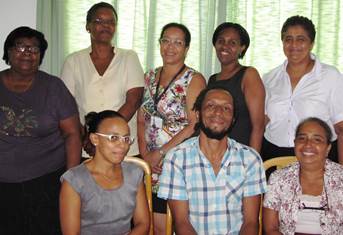
The Commonwealth Nurses and Midwives Federation (CNMF) is updating mental health legislation in Botswana and Seychelles to bring them in line with the UN Convention on Rights of Persons with Disability. Botswana and Seychelles will be the first Commonwealth countries to see their mental health laws brought in line with the UN Convention, and will see the CNMF work to establish the support structures that will build thorough and inclusive mental health provisions.
The two implementation countries were selected due to the existing strong base of networks in place, upon which the CNF will be able to build and develop their work. The project will either support an existing national mental health advocacy group – or establish a new one, if necessary – bringing together people with mental ill health, carers, medical health professionals and policy officials, to pool their experience and collectively develop solutions.
These groups will provide valuable forums to make sure that legislation is formed from the right information and the right people. The Commonwealth Nurses Federation will oversee the project, providing technical support to the groups and working to ensure the sustainability of the positive outcomes produced by the project.
With mental ill health predicted to be the world’s greatest health burden by 2030, this project is supporting the efforts to drive down the stigma, discrimination and marginalisation suffered by people with mental ill health and make treatment and care accessible to all.
Commonwealth Nurses and Midwives Federation
The Commonwealth Nurses and Midwives Federation (CNMF), founded in 1973, is a federation of national nursing and midwifery associations in Commonwealth countries.
The CNMF has regular and constructive contact with major Commonwealth bodies in London including the Commonwealth Secretariat and the Commonwealth Foundation. The CNMF is an accredited Commonwealth body, which allows involvement in annual Health Ministers’ meetings, the biennial Commonwealth Peoples Forum held prior to the Commonwealth Heads of Government meeting and other Commonwealth meetings such as the civil society consultations.
www.commonwealthnurses.org
Issue
In the aftermath of the genocide, women had to live with the social stigma of the sexual violence they suffered. The national government made attempts to improve the rights of those women and the resources available to them, and this project aims to help more women to embrace those reforms and apply them to help themselves and others.
Project
The Faces of Life project, run by Kemit asbl, supports and empowers women to use media and resources to speak up for themselves and to encourage others to do so as well.
Women will be trained to create visual art projects, expressing issues of importance to them. Exhibitions of these art projects will tour throughout Rwanda providing an opportunity for civil society organisations, members of the public and local leaders at various levels of governance to gather together and discuss the issues leading to greater awareness of stigma and taboos on womens’ lives.
KEMIT asbl has worked in cinema and audio visual trainings, film, video and TV productions for 12 years and is using this experience to train the women involved in how to advocate for policy reform for the issues that affect them.
[youtube https://www.youtube.com/watch?v=nAsN0KDpoW0?rel=0]
Follow @Kemit01pro on Twitter
Follow /kemit.production on Facebook
Issue
Kenya’s Constitution requires that no more than two thirds of any one gender represents any elective post. In the 2013 general election only 19 women stood among the 244 candidates that fought for Senator positions in the 2013 General Election and only occupy 9.8 per cent of seats in the Kenyan parliament.
Project
The Institute for Education in Democracy (IED) is now working towards the High Court’s recommendation that positive steps should be taken to increase the representation of women in politics by 2015. It will explore the development of affirmative action in political parties and ensure that the promotion of gender equality is consistent and sustainable, raising the long-term position of women in politics.
The Institute will stage a consultative forum with civil society organisations, political parties and the Registrar of Political Parties to identify strategies for affirmative action. The Registrar – which oversees the law on political parties and has the mandate to ensure gender considerations are integrated into the membership and workings of the parties – will play a pivotal role in the work and will also see its capacity to develop tools to guide political parties in establishing affirmative action regulations built and enhanced. The IED will also develop a new framework with which civil society organisations will be able to monitor the progress being made by political parties on gender equality.
[youtube https://www.youtube.com/watch?v=vcy8V1a7Ar8?rel=0]
Follow @ied_africa on Twitter
Follow IED-Africa on Facebook
Issue
Pro-women legislation has been promoted and adopted by the Pakistan government in recent years, including the Prevention of Anti-Women Practices (Criminal Law Amendment) Act 2011, but significant work is still needed on its enforcement.
Project
The Community Appraisal and Motivation Programme (CAMP) is working with female-led CSOs in Pakistan to form a strategy for women’s rights advocacy entitled, The Sisters’ Voice. In order to address issues such as honour crimes and domestic violence, CAMP is working with female-led CSOs within the provinces of Punjab and Balochistan to improve their abilities to work with policy makers and produce a clear and effective strategy for women’s rights advocacy.
Eighty women from forty CSOs will receive training in a range of crucial skills and knowledge, including awareness of existing laws and policies and advocacy and networking skills. The women, many of whom work in underprivileged communities, will receive training and mentoring that will allow them to not only make decision makers – particularly female parliamentarians – aware of their needs, but also to work with them to help advance their basic rights.
By building this network of confident, informed and cohesive CSOs, CAMP hopes to start building a generation of women who are able to secure equality and fairness for Pakistan’s future female population.
[youtube https://www.youtube.com/watch?v=0MDmBzLX-gY?rel=0]
Community Appraisal and Motivation Programme (CAMP)
Community Appraisal and Motivation Programme (CAMP) is a Pakistani non-profit and non-governmental organisation established and registered in May 2002. It works with some of the most underprivileged communities in Pakistan, responding to emergencies, improving access to quality health and education, creating livelihood opportunities, and working closely with communities and government departments to promote human rights, peace and security.
www.camp.org.pk
Follow /Community-Appraisal-and-Motivation-Programme-CAMP on Facebook


