Submit a thread to our digital quilt for the chance to be featured in an exhibition and win £200. Learn more

Category: Uncategorized

Advocating for the rights of children with disabilities

In Kenya, good progress has been made in regards to disability mainstreaming in different sectors of the economy. The government of Kenya has a National Action Plan for Implementation of the Sustainable Development Goals (SDGs), which includes a commitment to include disability in the development agenda. The ratification of the UN Convention on the Rights of Persons with Disabilities (CRPD); and the launch of the ‘Big Four Agenda’ (food security, affordable housing, manufacturing growth, and healthcare) by the current Kenyan president provides tremendous opportunities in ensuring prosperity for all.

Regrettably, there continues to be a gap between agendas and laws on the one hand, and policies and practice on the other. This has furthered the marginalisation of minority groups, including persons with disabilities. The majority of people with disabilities continue to live in poverty, have limited opportunities for accessing education, health services, suitable housing, and employment opportunities.

‘Multi-stakeholder partnerships, such as the Disability Advocacy Coalition, are an important vehicle for mobilising and sharing knowledge, technologies, and financial resources’

To help push for change, AbleChildAfrica (ACA) and Action Network for the Disabled (ANDY) formed a Disability Advocacy Coalition in Kenya in 2017 to share best practices and design, coordinate, and implement a campaign to raise public awareness on the rights of children and youth with disabilities and hold government to account on their obligations. The coalition involves 10 civil society organisations (CSOs), 10 disabled person’s organisations (DPOs), and 15 disabled person’s groups (DPGs) from 8 districts in Kenya: Machakos, Kwale, Kisumu, Kirinyaga, Siaya, Kiambu, Embu, and Nairobi. Mutual trust and respect, open communication, and understanding between stakeholders regarding each other’s strengths and weaknesses are critical for nurturing the working relationships within the coalition.

Multi-stakeholder partnerships, such as the Disability Advocacy Coalition, are an important vehicle for mobilising and sharing knowledge, technologies, and financial resources and are recognised in Sustainable Development Goal 17–‘Strengthen the means of implementation and revitalise the global partnership for sustainable development’–to support the achievement of the SDGs in all countries. Multi-stakeholder partnerships are also critical to effective implementation of the CRPD. Article 32 stipulates international cooperation in support of national efforts to implement treaty obligations. More generally, the need for engagement of persons with disabilities and their representative organisations in the implementation and monitoring of the CRPD is a key element of the convention.

‘…the achievement of real results for persons with disabilities is aided by the involvement of international actors.’

So far, the coalition’s work has led to the design of a strategy and action plan that will help coalition members ensure access to employment, education, and health services for children and young persons with disabilities. Our efforts have also resulted in the enactment of the Built Environment and Accessibility for Persons with Disabilities Bill in Machakos County by the Governor. Coalition members in Machakos district pushed through the enactment of the bill via engagements with the Disability Directorate and the County Department of Social Protection. The coalition has also pushed for the delivery of the Kirinyaga Persons with Disability Act to the County Assembly of Kirinyaga. The bill is currently awaiting approval from lawmakers.

Support from the Commonwealth Foundation to UK-based AbleChildAfrica, who subsequently supported Action Network for the Disabled in Kenya, enhanced collaboration and the zeal to advance awareness on rights of children and young persons with disabilities in Kenya. Indeed, the achievement of real results for persons with disabilities is aided by the involvement of international actors. This, in combination with an understanding of the day-to-day experience of disability from local disabled person’s groups and organisations, provides a strong basis for informed policy change.

Ngao Mwavuna is an advocacy officer at Action Network for the Disabled, Kenya.

Shem Ochola appointed as Deputy Director-General

Following a rigorous selection process and approval from its Member States, Shem Ochola will become the new Deputy Director-General of the Commonwealth Foundation. Mr Ochola will assume the role in January 2020 at the Foundation’s headquarters in Marlborough House.

As the Commonwealth’s agency for civil society, the Foundation provides £2 million worth of funding and capacity development support each year to help civil society organisations work with governments towards the achievement of critical development goals. Its funding also supports the work of storytellers and creative practitioners through its sub-brand Commonwealth Writers. The Commonwealth Short Story Prize now receives over 5000 submissions each year from 50 countries.

Mr. Ochola brings over 20 years of experience in programme management, governance, and policy influence in appointments spanning civil society, the private sector, academia, and government.

Mr. Ochola began his career as a lecturer in Economics at the Kenya School of Monetary Studies before working at the High Commission for Pakistan as a Trade Development Officer.

He later joined ActionAid Kenya as Head of Governance, where from 2006 to 2008, he played a significant role in establishing the Movement for Political Accountability (MOPA), a citizen-led coalition aimed at empowering Kenyans to hold their public leadership to account. During the 2007-2008 Kenyan crisis, he served as a technical committee member to the Kenyan Cabinet Sub-Committee on the National Accord, which developed a strategy for national reconciliation and social and economic recovery.

His recent appointments include Regional Policy and Partnerships Director at the Aga Khan Foundation, East Africa and Director of Programme Development and Grants Acquisition at World Vision. His current appointment, until he joins the Foundation in January, is Head of Network Development and Coordination at HelpAge International, where he leads the Africa global hub in network development, advocacy, campaigns, and communications.

On news of his appointment, Shem Ochola said:

‘I am honoured to be appointed as Deputy Director-General. The Foundation plays a unique role within the Commonwealth system as a facilitator of collaboration between civil society and governments.

‘I look forward to supporting the growth of a vigilant and strong civil society able to constructively engage and positively influence governments to develop progressive policies, laws, and institutions that improve people’s lives.’

For more information

For further information, please contact Leo Kiss on l.kiss@commonwealth.int. Photos available on request.

About the Commonwealth Foundation

The Commonwealth Foundation is an intergovernmental organisation established by Heads of Government to support people’s participation in democracy and development. It is the Commonwealth agency for civil society; a unique, stand-alone organisation established by, funded by, and reporting to governments.

Notes

  • The Commonwealth Foundation is one of the Commonwealth’s three intergovernmental agencies alongside the Commonwealth Secretariat and the Commonwealth of Learning
  • Annual priorities of the Commonwealth Foundation are determined by a Board of Governors, comprising representatives of all its Member States, civil society representatives, and the Commonwealth Secretary-General. The Chair of the Board is a distinguished private citizen of a Commonwealth country appointed by Heads of Government
  • The Commonwealth Short Story Prize is an annual competition which is free to enter for Commonwealth citizens.

Regionally speaking: women’s affairs

Caribbean nations have played a leading role in all the major United Nations-organised conferences on women: In Mexico City in 1975; in Copenhagen in 1980; in Nairobi in 1985; and at the last conference—and perhaps the most significant—convened in September 1995 in China, which produced the Beijing Platform for Action (BPfA): the globe’s current framework for gender equality.

‘As Small Island Developing States grappling with climate inaction, we naturally identified with Pacific Islanders and formed new alliances.’

The 25-year anniversary of the BPfA converges with the 12th Commonwealth Women’s Affairs Minister’s Meeting (12WAMM), and it is therefore fitting that the Caribbean region, with the support of the Commonwealth Foundation, was represented in the first civil society roundtable to directly feed into the ministers meeting itself. I proudly represented the Caribbean as founder and convener of the CEDAW Committee of Trinidad and Tobago (CCoT), a body that reviews regional progress on the Convention on the Elimination of All Forms of Discrimination Against Woman (CEDAW).

Delegates from Africa, Asia, the Caribbean, and the Pacific attended the roundtable.

As a member of the Caribbean team, I solicited inputs on the four pillars identified for the roundtable: Violence Against Women; Women’s Leadership; Gender and Climate Change; and Women’s Economic Empowerment; and assessments from experts, advocates, partners, and other non-state actors in Trinidad and Tobago.  Building on those responses and my individual research, I worked with my colleagues from the Caribbean Association for Feminist Research and Action, who represented five additional Caribbean island nations to create a picture of these issues in the Caribbean and equally, if not more importantly, what recommendations we believe our region needs going forward.

‘Despite everyone’s best efforts to prepare for big international meetings, they carry the risk that some voices will drown out others.’

A good example of the preparation we undertook for 12WAMM is a working session that engaged Caribbean experts on the recommendations made by the United Nations CEDAW committee in Geneva on violence against women. Experts met to form a regional picture of five key factors that contribute to the problem: 1) violence committed by intimate partners and other forms of domestic violence 2) inadequate number of shelters 3) delay in adopting regulations for the Sexual Offences Act in order to introduce a sex offender registry 4) low number of arrests for breaches of protection orders and 5) law enforcement officials’ treatment of domestic violence cases. Later, at the CEDAW South to South Institute, we examined violence against women through the lens of human rights with a range of regional experts, activists, and advocates.

Flexibility around time slots for working groups ensured all participants were able to provide input and arrive at a consensus.

Despite everyone’s best efforts to prepare for big international meetings, they carry the risk that some voices will drown out others. I am pleased to report that every representative was heard in equal measure at the civil society roundtable at 12WAMM: this was achieved in part by permitting flexibility around time slots for working groups, to ensure all participants were able to provide input and arrive at a consensus.

Perspectives shared by representatives from each region of the Commonwealth highlighted what we share in common: the struggle to eradicate violence against women, achieve women’s leadership and economic empowerment, address climate change, and build coherent and sustainable movements. As Small Island Developing States grappling with climate inaction, we naturally identified with Pacific Islanders and formed new alliances. But we also benefited from local experience too: I won’t forget the rich experience of being welcomed at the Maasai community in Kajiado, 80 km south of Nairobi, where I saw, first-hand, the exceptional work being done by a local community organisation to address women’s economic empowerment and leadership. Salaam!

Terry Ince is Founder of the CEDAW Committee of Trinidad and Tobago.

The People’s Commonwealth

The Commonwealth of Nations was established in 1949 as an intergovernmental organisation: tasked to promote the common interests of its Member States.

But from its earliest days members recognised that, in order to fulfil its great ambitions, this new body needed to become much more than a forum for governments. It somehow had to be (and be seen to be) truly of and for the people. In 1966 Heads of Government set up a foundation charged with bringing the voices of their citizens into the Commonwealth and its work.

‘A functioning civil society contributes, in myriad ways, to the community within which it is operating.’

More than half a century later, the Commonwealth Foundation stands proud as one of the central pillars of the Commonwealth: its existence and steady growth sending a strong signal that members acknowledge and appreciate civil society as an essential, legitimate partner in the business of governance. Of course, that relationship will never be completely smooth. A functioning civil society contributes, in myriad ways, to the community within which it is operating. But it also questions and challenges: pushing leaders and public officials to deliver the inclusive, transparent, and accountable governance that is the right of everyone, everywhere. The Foundation exists to support civil society in that noble goal: encouraging new ways of thinking and working so that those who are most affected can contribute to policies, decisions, and actions that directly affect their lives.

At the heart of the Foundation is our grants programme. Each year we offer grants, mostly to small organisations, of up to £200,000 over four years. We look for innovative project ideas and approaches that are seeking to strengthen the capacity of civic voices to engage with governments in ways that will lead to better governance and better development outcomes. The inspiration for this and much of our other work is Sustainable Development Goal 16: the promotion of just, peaceful, and inclusive societies. The 2019 grants call opens on 1 November, and we are looking to build on what has become a strong and diverse portfolio. Our last call, for example, brought the Foundation a wide range of new partners: from a UK-based group working with Bangladeshi partners to bring the voices of street children into decision-making about their futures to an organisation in the Pacific nation of Vanuatu that is supporting women who are trying to enter a Parliament that, like so many others, does not fully represent the communities it exists to serve.

‘Our umbrella Writers programme [is] aimed at elevating the creative voice as a force for positive change throughout the Commonwealth.’

Another flagship programme of the Foundation is the annual Commonwealth Short Story Prize, which is awarded for the best piece of unpublished short fiction submitted by a Commonwealth citizen. The prize explicitly aims to identify and support talented writers who go on to inspire their communities. It unearths and promotes the best new writing from across the Commonwealth, developing literary connections worldwide. As part of the Foundation’s commitment to lesser heard voices we have, over the years, opened the prize up to translated stories, as well as entries in a range of languages other than English. And our umbrella Writers programme makes sure that the prize is just one component in a much broader initiative aimed at elevating the creative voice as a force for positive change throughout the Commonwealth.

And then there is the difficult, but essential task of bringing civil society, the people of the Commonwealth, into its own governance. The Foundation has prioritised this area of its work, recognising its powerful, amplifying potential. In September for example, we supported the convening of a civil society roundtable prior to the Commonwealth Women’s Affairs Ministerial Meeting. The outcome document of that meeting reflects the direct line that women’s rights and women-led organisations had into the deliberations of ministers. Even more significantly, civil society has now been accepted as standing partners in future meetings.

‘How do we build and sustain the structures and processes that will secure the kind of governance capable of delivering for all of us: not just for those who are already abounding in wealth and power?’

For at least the past decade, all Commonwealth Heads of Government Meetings (CHOGMs) have included parallel events that bring the citizens of the Commonwealth directly into the process. The best known of these are the People’s Forum and the Youth Forum. Since CHOGM 2015, a Women’s Forum has also become an official part of the programme. While all have a different focus, the three forums are united in their commitment to amplifying the voices of those who are too often unheard when decisions are being made about their lives and their futures. The Foundation is responsible, along with the host government, of convening the Commonwealth People’s Forum which, in 2020, will be held in Kigali, Rwanda, over three days leading up to CHOGM. If 2018 is anything to go by, the People’s Forum will not shy away from tackling some of the most important, urgent issues of our time: from economic injustice, to environmental issues including climate change. CHOGM and its forums must also address the big question: how do we build and sustain the structures and processes that will secure the kind of governance capable of delivering for all of us: not just for those who are already abounding in wealth and power?

As its incoming Director-General, I am committed to maintaining and building on the proven strengths of the Commonwealth Foundation—most especially its role in helping to ensure that the Commonwealth itself evolves into the inclusive and brave institution that this fractured and uncertain world so badly needs.

Dr Anne T. Gallagher AO is the Director-General of the Commonwealth Foundation.

Freeing up expression: colonial defamation laws

In 2014 the Foundation funded a three-year PEN International project in collaboration with PEN national centres in five Commonwealth African countries.

The project supported the PEN network to advocate for the reform of legislation governing freedom of expression and information.

At the start of the project, members from each of the five African PEN Centres (Ghana, Kenya, Malawi, South Africa, Zambia) were taught how to train others to advocate. The capacity of PEN centres was also strengthened to engage with international organisations and processes to help further the cause, including the Universal Periodic Review (UPR) and Sustainable Development Goal processes.

Leo Kiss, the Foundation’s Communications Officer, interviewed Daniel Sikazwe of PEN Zambia, the centre’s Secretary, to understand if the project’s objectives are still being advanced in 2019.

Who makes up PEN Zambia?

Daniel: We are made up of a whole spectrum of writers, including journalists and quite a large population of school-age young people. We work with young women and men to develop their writing, language, and citizenship, because writing—in our view—must promote citizenship.

What was the project supported by the Commonwealth Foundation attempting to do?

Daniel: One of the things this project sought to do was challenge and repeal colonial defamation laws that stifle free speech. Historically, defamation laws were a protective mechanism for British officials to stifle dissent amongst African freedom fighters and advocates, but these laws are still being used.

‘The project aimed to get journalists to appreciate how these laws impact them […] so they are aware and more likely to publish stories on the issues’

People must be able to question the democratic system. The law of defamation shouldn’t be criminal; it should be civil. We are also involved in a coalition campaigning for Freedom of Information legislation.

What methodologies did the project employ?  Did you use print media and radio to help further your advocacy?

Daniel: We are journalists, and so we used our connections in the media to build a coalition between media organisations who were aware of the need for Freedom of Information legislation. This included the Livingstone Press Club, which is a group of 15 media organisations. As a result, we had a lot of press and TV coverage on the need to reform the defamation laws.

We also established a radio programme, the Writer’s Circle. We use that platform to discuss literature, culture, rights: whatever topic is to do with writers and their freedom, and sometimes just to feature writers and discuss their work.

The project aimed to get journalists to appreciate how these laws impact them. Our study looked at how journalists are exercising self-censorship. If we have a topic that we want to be understood more widely among journalists, we do a briefing on the Writers Circle so they are aware and more likely to publish stories on the issues.

The secretariat of PEN Zambia left to right: Marita Banda (Project Coordinator), Daniel Sikazwe (Secretary), and Nicholas Kawinga (President)

How did global and regional advocacy add value to efforts at the national level?

Daniel: As a result of the project, PEN International passed a resolution to address the decriminalisation of defamation. PEN Zambia also engaged with the Special Rapporteur on Freedom of Information and Access to Information at the African Union and the United Nations Special Rapporteur on Freedom of Expression in Geneva, so that they would raise the issue with the Zambian government.

How effective was the direct engagement with Special Rapporteur on Freedom of Expression in Geneva?

Daniel: PEN Zambia and PEN International presented a shadow report to the Human Rights Commission a month before the Government of Zambia was due to appear before it. The report talked about the fact that more needs to be done to repeal the laws that criminalise freedom of expression. As a result, the government was asked to consider appropriate legal reform measures over a period of four years.

‘When musicians sing, politicians may ignore the word at first, but they can’t ignore the sounds. One way or another: they will hear.’

Additionally, we are using case studies from other African countries to demonstrate to government what laws and progress is being made with regard to freedom of expression elsewhere in the region.

How can creative expression influence dialogue and decision-making about policy issues?

Daniel: Performance art is key to this. When musicians sing, politicians may ignore the word at first, but they can’t ignore the sounds. One way or another: they will hear.

Eventually it might affect changes in policy but immediately it means that other voices are being heard. Someone speaking out creatively—through poetry, song, or theatre—is an opportunity for conversation.

When you put something on paper, very few people will read. But where there is a play or concert, people will come. Also, politicians feel less threatened by performative arts compared to hard copies of the written word.

How has this project changed your relationship with government?

Daniel: The project has helped to open up avenues for dialogue with government. We have an open invitation to meet with the Minister of Justice and to help the government implement the African Peer Review Mechanism’s recommendations when the process begins in the next couple of years. We have also recently received invitations to meet with the European Union office in Zambia to discuss freedom of expression advocacy.

What is the situation now with the repeal of criminal defamation laws and freedom of expression?

Daniel: The most visible aspect is that there are more media and freedom of expression groups now raising the issues we have been advocating for. Another step forward is that the Government of Zambia announced in March 2019 that they will table an access to information bill in parliament. There are conversations about constitutional amendments and we see this as an opportunity to press the parliamentary committee which is receiving submissions on the constitution. We will be ready to present our thoughts on freedom of expression and defamation laws in Zambia.

Daniel Sikazwe is the Secretary of PEN Zambia.

Stronger civic voices

Civic voice. It’s not new. The question we ask at the Commonwealth Foundation is: what value are we adding to the discourse? At the heart of the Commonwealth Foundation’s work in participatory governance is to support strengthening civic voices to promote peaceful and inclusive societies. The landscape of people’s participation in governance is changing as different actors, change makers, and influencers shift modes of engagement, often supported by technology.

The work of organised civil society continues to be important but there are less-heard voices and informal collectives which remain in the margins that would like to engage more in civic activism and make significant contributions to policy processes. The spectrum of civic voices that the Foundation support include: formal civil society organisation; less-formal collectives; and individual voices (the latter is specifically located in creative expression and its transformative potential).

‘Strengthening civic voices is a complex process that takes place within human, social, and political systems’

Accountability is the ‘central’ lever of effective and responsive governance, which requires processes and mechanisms that offer citizens a means to engage in decision-making and democratic processes. Governance that is inclusive increases the potential for effective decision-making by ensuring broad consensus, civic ownership, and by making institutions more responsive to citizens. This is in keeping with the following Sustainable Development Goal 16 targets:

  • Develop effective, accountable and transparent institutions at all levels
  • Ensure responsive, inclusive, participatory, and representative decision-making at all levels
  • Ensure access to information and protect fundamental freedoms, in accordance with national legislation and international agreements.

In the Foundation’s strategy 2017-21, we are drawing attention to the need for institutionalised arrangements and opportunities for those in the margins. But we also acknowledge the importance of informal spaces and platforms that raise awareness of and call for accountable and inclusive governance. So how does the Foundation contribute to strengthening civic voices in governance?

‘We facilitate processes for partners to identify the change they what to achieve, self-assess their strengths, and plan the pathway to change’

Responsive and principled accompaniment

Our capacity development framework offers the view that strengthening civic voices is a complex process that takes place within human, social, and political systems. To us, change means over the long term. Thus, the Foundation is committed to enhancing existing knowledge, skills and craft, acknowledging that one size does not fit all. We facilitate processes for partners to identify the change they what to achieve, self-assess their strengths, and plan the pathway to change instead of imposing outside analysis and interests.

The Foundation strengthens the voices of individuals by providing platforms for them to tell their stories. Pictured: Constantia Soteriou, from Cyprus, accepts the overall 2019 Commonwealth Short Story Prize for her short story ‘Death Customs’

Co-creation

Our approach to strengthening civic voices is through partnerships. We don’t implement directly, rather we co-convene, imagine and reimagine with partners, designing and facilitating processes with them. Building trusting relationships underpins this process.

Access to spaces for constructive engagement

As an intergovernmental organisation, we are able to facilitate and support civic voices in being able to access formal and informal spaces. These range from policy-making spaces in the Commonwealth and beyond, such as ministerial meetings and UN conferences to platforms in the public sphere that may include dialogues and conversations, movements and campaigns, and digital platforms that demonstrate how technology can enable inclusion and participation.

Serious consideration of gender and its intersectionality

In all our work we promote an understanding of the different intersecting systems of oppression and the recognition that gender inequality is shaped by these intersections. This principle guides us in strategically supporting the civic voices located in the margins due to multiple layers of discrimination.

These are only some of the salient features of our approach to strengthening civic voices. The Foundation has only just begun.

Myn Garcia is Deputy Director-General of the Commonwealth Foundation.

Have you worked with the Foundation? Or on a project that uses similar methodologies in the service of stronger civic voices? Share your thoughts on Facebook and Twitter using: #StrongerCivicVoices and @commonwealthorg

Patently helpful: medicines and trade

Cancer, dementia, diabetes, tuberculosis, and heart and lung disease, accounted for 31 million of the 56 million deaths worldwide in 2016. Eighty percent of these deaths occurred in developing and low income countries; the truth is many people died because the drugs they needed were too expensive to buy. The good news is—Third World Network (TWN) Malaysia are showing there is something we can do.

Developing and low income countries share a bigger burden of these deaths because their public health systems are often under-funded and unable to make the imported drugs available at an affordable price. This is partly because of the exorbitant costs and the long-term nature of the treatments required. As a consequence, sick patients go untreated leading to their debilitation and death. Both government and patients do not see a way out of the problem because the drugs produced by big pharmaceutical companies, usually based overseas, are bound by patents that are locked into trade deals.

‘Companies often extend their product patents by tweaking the chemical make-up of the drugs to maintain their monopoly of production and sale’

Pharmaceutical companies fix the prices of drugs they produce and also license these drugs to ensure that no one else can use the same combination of chemicals. These licenses can run for as long as 20 years, during which time the companies have a monopoly of production and sale. Pharmaceutical companies argue that the protection afforded them by the licence is necessary to recoup research and development costs, but profits have been shown to far outstrip these. Moreover, companies often extend their product patents by tweaking the chemical make-up of the drugs to maintain their monopoly of production and sale.

The benefits of trade agreements are widespread but some clauses attempt to close the door on countries making essential drugs themselves

It is customary for countries to sign trade agreements to improve trading flows and boost the economy. The benefits of trade agreements can be widespread but some clauses can close the door on the possibility of countries making essential drugs themselves, while ensuring overseas companies continue to monopolise supply. These agreements substantially reduce the ability of countries to make laws that promote the local production of essential drugs, while government officials in different ministries often do not appear to know or fully understand the technical implications of some of the agreements that former or current governments have signed.

‘It is estimated that over 450,000 Malaysians are infected with Hepatitis C, and that the new treatment plan will make it possible for Malaysia to eliminate the disease by 2025’

However, special agreements made at the World Trade Organisation (WTO) give governments the legal right to prioritise the health of their citizens and so produce drugs in their own countries—even if they have subsisting trade agreements that might otherwise prevent them from doing so. Nonetheless, government awareness of the WTO agreements remains low, and those that are aware often do not know how to activate its provisions, nor do they have the required drug manufacturing capabilities and resources for research and development.

TWN Malaysia is implementing a project to tackle these factors, with support from the Commonwealth Foundation and the cooperation of the Malaysian Government. In particular, TWN Malaysia has worked with other civil society partners to provide technical and legal input to overcome the license barrier for Sofosbuvira—a drug used for treating Hepatitis C. Due to these efforts, the price of a three-month supply has now dropped from US$10,000 to US$100. This has allowed the Malaysian Government to roll out free treatment in 21 public hospitals. It is estimated that over 450,000 Malaysians are infected with Hepatitis C, and that the new treatment plan will make it possible for Malaysia to eliminate the disease by 2025.

You can read more about Third World Network’s project here.

Through a gender lens: climate change

On my last night in Jamaica, I visited Hellshire Beach in Portmore with a group of friends. I had read the stories of the degradation of this beautiful local beach and imagined the decimation of sandcastles as the sea crept up the shore and onto the paved areas. Yet still, I was unprepared for what I saw.

Sargassum lapped at my legs as I stood in the water: visual proof of everything we’d discussed during our time in Jamaica, as participants in the Commonwealth Foundation’s second meeting on the intersection between gender and climate change.

The background

Following up on its exploratory 2018 discussion with over 40 civil society leaders from all over the Caribbean Commonwealth, the Commonwealth Foundation collaborated with the United Nations Development Programme’s Global Environmental Facility and the Institute of Gender and Development Studies (University of the West Indies) to host a second meeting in Jamaica.

‘It is a matter of fact that the climate change burden is unevenly distributed, and so are the resources to ease the strain of climate change-induced losses and damages.’

In the 2018 meeting, participants indicated a need for capacity building. In response to this, the Commonwealth Foundation hosted the second meeting to introduce and open up participatory involvement in the development of a Climate Change and Gender Guidance Tool. This tool was set to strengthen the capacity of civil society organisations in the Caribbean and to understand the linkages between gender and climate change. It was assessed as a good tool to integrate gender perspectives in their work and use gender analysis to support gender-sensitive policies and programmes.

During the meeting in late July this year, we all shared knowledge from each of our countries and discussed best practices for investigating and addressing climate change through a gendered lens.

Delegates at the first gender and climate change discussion in Barbados in May 2018

Lesson learned: uneven distribution

It is a matter of fact that the climate change burden is unevenly distributed, and so are the resources to ease the strain of climate change-induced losses and damages.

For some, climate change remains a distant rhetoric, a hoax. For the developing world however, it is a harsh and undeniable daily reality. Case in point: despite Jamaica’s miniscule contribution to global climate change, the sea-level rise we witnessed on Hellshire Beach is just one climate impact casting an ominous shadow over the island.

Michael Taylor, a physicist and Director of the Climate Studies Group, confirmed to the Jamaican Gleaner, that ‘the loss of beach is significant; it is estimated at 0.26 metres per year for Jamaica, with sea level rise and post-storm events. And the beach retreats at about 100 times the rate of sea level rise.’

In other words, the island is losing land and coastline, which negatively affects the livelihoods of citizens. This is a truth for small island states around the world. Regardless of the abounding observable and scientific proof, few resources aimed at dealing with climate change trickle down to the grassroots, indigenous, and community organisations, and the resources that do are dispensed at a sluggish pace.

Lesson learned: women need resources too

Addressing the unequal dissemination of resources in Caribbean society is crucial to achieving holistic climate action and policies. A major takeaway from the discussion was that climate change impacts people differently: in terms of socioeconomic circumstances, disabilities, age, and gender.

It is known that investing in women and girls creates a positive domino effect. However, in the Caribbean the limited resources available are unequally distributed between men and women. This is also because in the Caribbean, the majority of women still hold traditional female gender roles.

‘I believe that if just one voice is muted, then we are failing to respond to climate change as we should: together.’

But when natural disaster strikes, women are usually the first responders. They lead disaster risk-reduction efforts at the household and community levels, and contribute to post recovery by addressing the early recovery needs of their families and the community.

Women are also often the family members that secure food supply to their families.

According to the United Nations, women comprise approximately 43% of the agricultural labour force. When hurricanes strike more regularly, or when drought persists and scorches the land, where does this leave the women who depend on the land and sea for food security?

Providing these women with the same resources available to men can positively influence climate adaptation and sustainable development efforts.

Jean ‘Binta’ Breeze starred in an exclusive performance staged to conincide with the discussion in Jamaica. Women Who Walk With Water focussed on climate issues facing the Caribbean and the role of art in inspiring these urgent conversations.

A history of unequal power distribution

The history of the Caribbean region has contributed to various forms of inequality. However, gender is a crosscutting issue that speaks to the different roles and responsibilities that have been assigned during interactions in the family, school, religion, peers, and the media. As such, it is particularly important for civil society leaders to understand the importance of gender as they seek to address climate change impacts.

Engaging in gender analysis is about understanding power and who makes the decisions in society. Who decides on the distribution of resources and who decides the composition of leadership on a community and national level? Is it representative?

The unsweetened truth is that in the Caribbean, institutions reinforce and reflect pre-existing inequality, despite commitments made to equality and human rights.

Sandra C.A. Ferguson from the Agency for Rural Transformation (ART), Grenada, provides feedback on the Climate Change and Gender Guidance Tool at the University of the West Indies, Mona Campus, in Jamaica

All voices must be heard

Gender inequalities can create vulnerabilities, which must be considered when planning for adaptation to climate change and natural disaster-risk management. Observing the world and climate change from a gendered perspective will boost awareness of how gender intersects with other factors like age, race, class, religion, political affiliation, and education. When solutions to climate change address these different realities, they are more effective and their impact ripples throughout society.

During one of my last days in Jamaica, as the bus driver sped up and down the narrow roads of the mountainous Nine Mile, I reflected on how gender would be considered in the upcoming 25th Session of the Conference of the Parties to the United Nations Framework Convention on Climate Change (COP 25). COP 25 is set to evaluate and report on the progress of the implementation of the Gender Action Plan. Given that women face greater disadvantages in their ability to respond to climate change impacts, is the Caribbean ready to overcome its systemic and unequal distribution of power and resources, and create opportunities for the survival of all? Because I believe that if just one voice is muted, then we are failing to respond to climate change as we should: together.

Dizzanne Billy is the Caribbean Outreach Manager at Climate Tracker. 

Celebrating linguistic diversity in the Commonwealth

The Commonwealth Foundation is committed to linguistic diversity. Our cultural initiative, Commonwealth Writers, is underpinned by the conviction that stories and storytelling have the power to contribute to social transformation. Our ambition is to influence and shape discourse in the public sphere. We share the hope of Jurgen Habermas that through ‘public opinion the state is able to be in touch with the need of society.’ Nancy Fraser argues that the public sphere can be seen as ‘a theater in modern societies in which political participation is enacted through the medium of talk.’

‘ “This conversation between practitioners, editors, and publishers of translation is an urgent and necessary intervention. It offers us an opportunity to begin a serious discussion about how we can build an infrastructure for translation to push against the myopias that box us in and make our world smaller.” ‘

In March 2019, as part of UNESCO’s International Year of Indigenous Languages, Commonwealth Writers convened a translation symposium in Penang, Malaysia. To support translation is to encourage writing in local languages and the proliferation of diverse narratives. The symposium signals the effort to investigate the imbalances caused by the relative lack of literary translation, starting with South Asia and Southeast Asia. It aims to advance the diversity of—and diversity in—creative expression, and the status of creators.

Bilal Tanweer (third from left) joined Muhammad Haji Salleh, Mamta Sagar, and Jayapriya Vasudevan for a discussion on the politics of translation following the translation symposium in Penang, Malaysia.

Writer, academic, and translator Bilal Tanweer, from Pakistan, reflected on his participation in the symposium: ‘This conversation between practitioners, editors, and publishers of translation is an urgent and necessary intervention. It offers us an opportunity to begin a serious discussion about how we can build an infrastructure for translation to push against the myopias that box us in and make our world smaller.’

‘We argue that dynamism in creative expression and its influence to shape public discourse is one of the manifestations of a diverse, robust, and vibrant civil society.’

On 9 July, the 2019 Commonwealth Short Story Prize award ceremony was held in Quebec City, Canada. This was the first year that the prize started accepting Greek-language submissions, and a story translated from the Greek emerged as the overall winner. This indicates that there is a vast wealth of writing around the Commonwealth yet to proliferate into the mainstream. Cypriot writer Constantia Soteriou won the Prize for her story, ‘Death Customs’, translated by Lina Protopapa. It was also announced at the ceremony that the 2020 Commonwealth Short Story Prize will accept entries in French. This brings to 11 the languages that the Prize is open to receive entries in, which also includes Bengali, Chinese, Greek, Kiswahili, Malay, Portugese, Samoan, Tamil, and Turkish.

Lina Protopapa asserts that translation is ‘a tool of resistance’ in a world that is increasingly turning inward. Linguistic diversity is in keeping with the values of the Foundation and its commitment to promote inclusion across the Commonwealth, which includes a range of differing literary traditions. We argue that dynamism in creative expression and its influence to shape public discourse is one of the manifestations of a diverse, robust, and vibrant civil society.

Myn Garcia is Deputy Director-General of the Commonwealth Foundation.

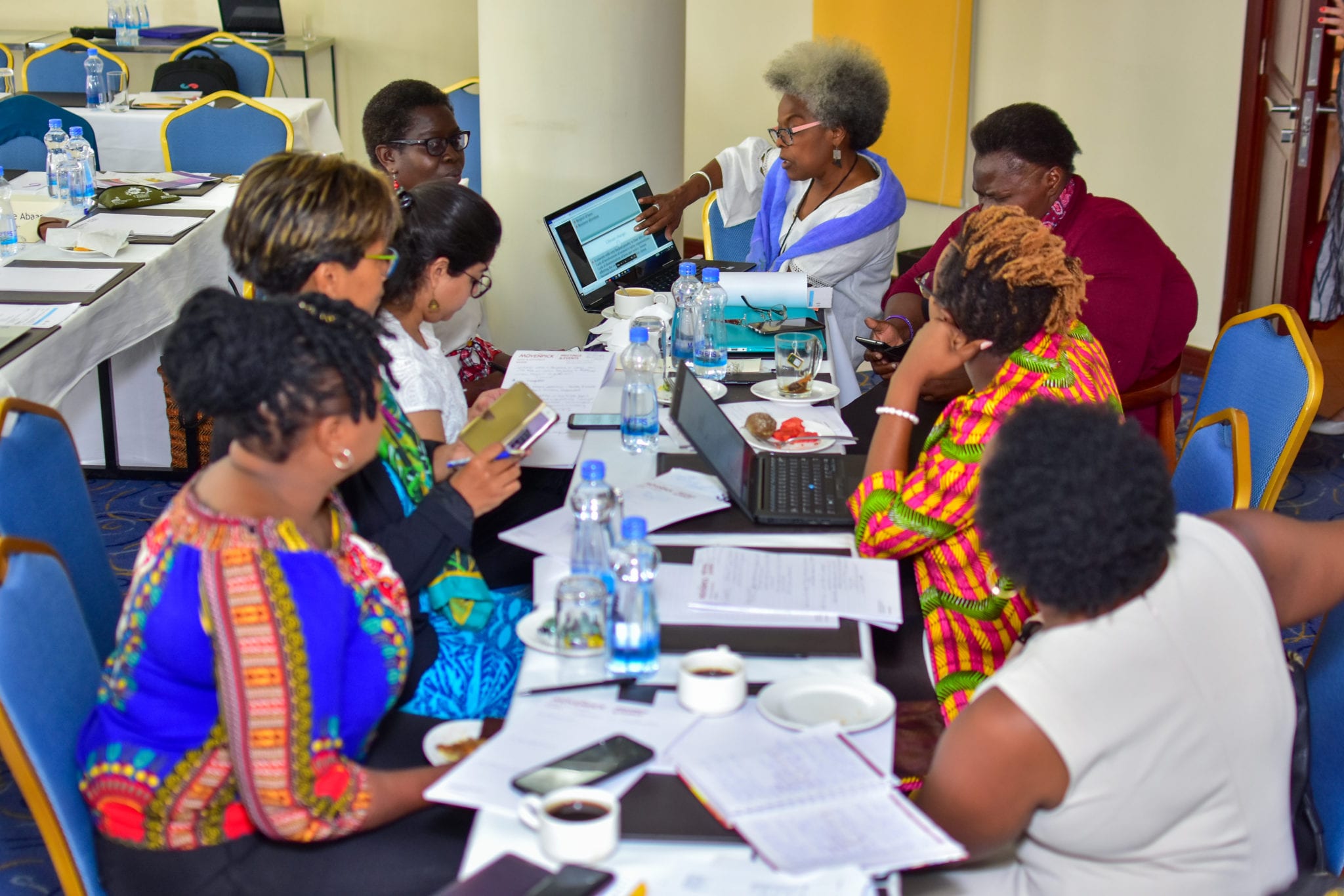
Commonwealth civil society roundtable at the 12th Women’s Affairs Ministers Meeting

At the 11th Women’s Affairs Ministers Meeting (11WAMM), held in September 2016 hosted by the Government of Samoa, Kenya was selected to host the 12th Women Affairs Ministers Meeting (12 WAMM).

The meeting will be held on 19-20 September 2019 in Nairobi, Kenya with the theme: ‘From Commitment to Action: Accelerating Gender Equality and Women’s Empowerment for Sustainable Development.’

Kenya’s Big Four Agenda is effectively aligned to the 2030 Agenda for Sustainable Development, at the continental level with Africa’s Agenda 2063 ‘The Africa We Want’, and at the national level, it is anchored to the Kenya Vision 2030.

In 2020, the global community will mark the 25th anniversary of the Fourth World Conference on Women and adoption of the Beijing Declaration and Platform for Action (Beijing +25) and the fifth year of the 2030 Agenda for Sustainable Development.  Moreover, the Commonwealth Heads of Governments Meeting (CHOGM) and Commonwealth People’s Forum (CPF) will be held in Kigali, Rwanda in June 2020.

In consideration of several parallel processes in support of Beijing +25 Platform for Action, amplifying the voices of women’s rights and women-led organisations will be prioritised. In this spirit and as a way to contribute to the advocacy and discourse on gender equality and women’s empowerment in the lead up to 12 WAMM and Beijing +25, the Commonwealth Foundation will organise a civil society roundtable in partnership with the Government of Kenya as the host country for 12WAMM on 16-17 September 2019. The Federation of Women Lawyers (FIDA-Kenya) will be the co-convenor of the roundtable.

In consultation with FIDA-Kenya and the Government of the Republic of Kenya, the criteria for the selection of organisations and participants from across the Commonwealth in the civil society roundtable is as follows:

  • Representative networks and organisations working at the regional level which are already members of the women’s major group[1] and/or actively representing civic voices of women throughout the Commonwealth. This includes those that are working on policy and advocacy on the four priorities of the Commonwealth: Women’s economic empowerment, Women in leadership, Ending violence against women and girls, and Gender and climate change  
  • Organisations and/or networks involved in national reviews and regional consultations on the implementation of the Beijing Platform for Action (BPFA) and/or involved in the development of shadow reports of civil society consultations and/ or in annual consultation of Commonwealth National Women’s Machineries
  • Organisations and/or networks showcasing intersectionality in their membership: women from rural areas, young people and elderly generations, less privileged socio-economic backgrounds, among others, and are inclusive of voices in the margins/less heard voices in their internal governance
  • Representatives of women in media and leading feminist thinkers who have participated in critical reviews progress on women’s rights and gender equality, informing the Beijing +20 debate including feminist economists who can support governments with advice on accelerating results.

The Women’s Major Group is self-organised and facilitated by a team of 8 Organising Partners, including WEDO. The WMG has the mandate to facilitate women’s human rights and gender equality perspectives into UN policy processes on sustainable development. In recent years, the WMG program and project has been designed to influence two distinct phases in global sustainable development: (1) finalising a universal Post-2015 Development agenda that is grounded in national and regional realities, in particular realities for women; and (2) ensuring its robust implementation at the national, regional and global levels.

Expected outcomes of the roundtable:

  • Civic voice collectives across the Commonwealth effectively communicate policy priorities and recommendations on accelerating results for the delivery of SDG 5 to governments including recommendations to address the intersectionality of gender
  • Sustained engagement of civic voice collectives across the Commonwealth in the Women’s Affairs Ministers Meeting process with the active co-convening role of women’s rights and women-led organisations in the host country.
Download the latest update