Submit a thread to our digital quilt for the chance to be featured in an exhibition and win £200. Learn more

Category: Uncategorized

The inaugural Festival of Commonwealth Film

Something amazing happens when I watch a film. I sit down, it begins, and if it’s any good, I’m transported to another world.

The screen is a window, and through it I can see into any situation, any character’s experience, any culture. That’s why I find myself so frustrated with the state of cinema most of the time. The offering at the multiplex is often uniform and bland, not to mention bad as well. The story-lines are cut frequently from the same pattern. There is even a book called Save The Cat that explains the methodology, if you can call it that, for writing a ‘good’ script. Most of the films I see are in the English language, and sadly, when I travel, the local cinemas are stacked with Hollywood films, and if there are British films on offer, they are usually costume dramas.
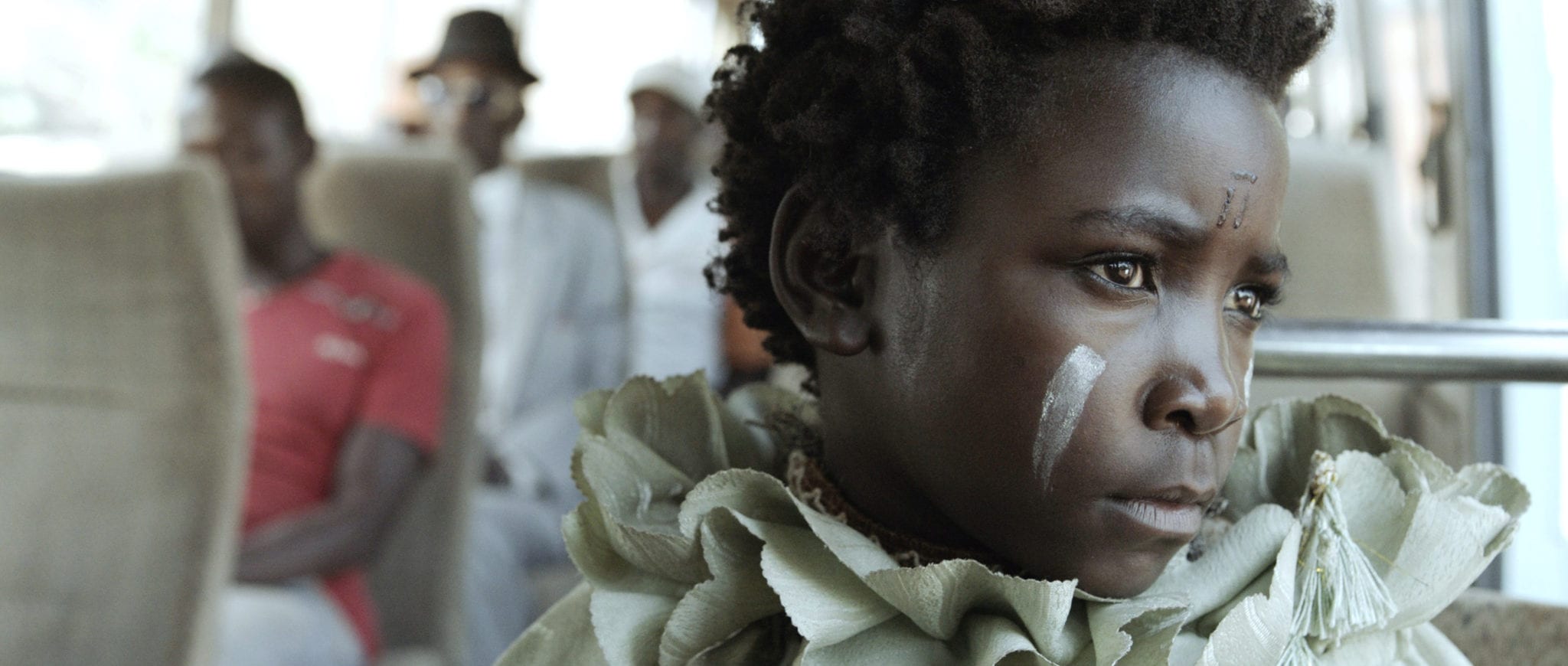
I Am Not a Witch, witch features in the inaugural lineup, won the BAFTA for ‘outstanding debut’ in February 2018

But what about all of the other stories? What about the voices of the people from the Commonwealth countries that don’t speak English as a first language? Each with its own rich and unique language, culture, and heritage.

That’s why I’m so honoured and excited to be co-ordinating the first-ever Festival of Commonwealth Film, at the British Museum on 14 and 15 April. Over two days, we will be showing seven feature films, as well as a short film programme and a 360º virtual reality film. We have films from the Bahamas, India, Malta, Papua New Guinea, Pakistan, Tonga, United Kingdom and Zambia. Directors from nearly all of the films will be coming to meet the audience and answer their questions. In one very special case, we’re hosting the UK Premiere of a documentary on human trafficking, Not My Life, which will be followed by a Q&A not only with the director but also Sanjoy Hazarika, the Director of the Commonwealth Human Rights Initiative, about the scourge of modern-day slavery.

We’ll be sharing stories about transgender activists in Tonga, fishermen in the Mediterranean and Caribbean, modern women struggling to reconcile tradition and modernity in India, sisters fighting to protect their land in Pakistan, and an eight year-old girl accused of witchcraft and threatened with being turned into a goat.

Through the immersive magic of virtual reality, we have the powerful story of a woman imprisoned for twenty years despite being entitled to release, who is ultimately freed through the persistence, tenacity, and love of her son.

So many stories, so many windows looking in on places, situations, and people that I simply would never see anywhere else. All brought together with the support and commitment of the Commonwealth Foundation, Commonwealth Writers, and the Commonwealth Human Rights Initiative. For two days, the British Museum  will be where we bring the richness and diversity of the Commonwealth to anyone with eyes to see and ears to hear.

When I’m exposed to a good piece of cinema, I leave feeling like I’ve had a good meal. Whether it’s a drama, where I’ve been emotionally affected, or a comedy, where the endorphins from a good therapeutic laugh are still coursing through my system, the end result is the same – real cinema acts on me, and in its way it changes me somehow, so that I’m different when I leave.

With a cafe open all day to relax in and talk about what’s been seen, and early bird prices at £7 (2 tickets for £10) with 50% off for concessions, it will be an incredible weekend of cinema and culture that we sincerely hope will become a regular event bringing the best cinema from across the Commonwealth together in one place.

Now please forgive me, but I have to go back to making sure it all comes off without a hitch – see you in April!

Mike Freedman is Festival Co-ordinator for Festival of Commonwealth Film 2018.

25 Notes on Becoming by Boluwatife Afolabi

I

I write to tell you that

the walls of my bones

are made of contention and

I am always situated between desires

that threaten to break

or mould me.


II

I write to tell you that

I am not the cartographer of memory

and that sometimes,

I forget my way home and

stumble into women who offer

to teach me the ways of water:

How to be soft,

how healing comes in waves,

how to open my body into the sea and

drown all the things that hurt.


III

I write to tell you that

my love is a nomad and

while wandering here in Ibadan

it fell into the hands of a woman

wearing your face.


IV

I write to tell you that

the second name for movement

is uncertainty.


V

I write to tell you about hope.

How it is a dream

where children grow into the belly

of a barren woman,

how she wakes in the morning

smelling of loss and longing.


VI

I write to tell you that

scars are a lot like borders.

How my body is a map filled with

dirt and death and

there is a sea in my eyes that takes

and takes and on moonless nights

how I ache and ache beneath my hills

and valleys and call all the names of

god painted on my tongue for the touch

of mother and fullness,

how my prayers come back to me

dressed in a void.


VII

I write to tell you that

while writing this,

language betrayed me and my mind

assumed the form of a tabula rasa.


VIII

I write to tell you that

silence is the name

for protest and prison.


Continue reading…

Message for Commonwealth Day 2018

This year the Commonwealth’s theme is ‘Towards a Common Future.’

It’s an aspiration which many would subscribe to; what distinguishes the Commonwealth’s commitment is a focus on making that future fairer for all.

For the Commonwealth fairness is a powerful concept. We invoke it, for example, in relation to the conduct of elections and the pursuit of a global rules-based trading system. But fairness also evokes other words that are keystones for the Commonwealth, like equity and justice. Through these lenses fairness also means sustainable development and universal human rights.

The Sustainable Development Goals (SDGs) saw the global community agree that we should ‘leave no one behind’. This means that each of us has a responsibility to each of us and that we all need a say in determining what’s fair. At the Commonwealth Foundation our strapline is ‘More voices for a fairer world’ because we recognise that inclusive, fair, and accountable development is best achieved through civic dialogue and participation.

‘The architecture of the SDGs acknowledges that fairness doesn’t just happen—it requires foundations.’

There is no universal template for achieving fairness within the Commonwealth’s broad vision for plural democracies where all can expect equal treatment. Any definition of fairness should respond to an articulation of people’s needs regardless of their status. The road to fairness is culturally situated and negotiated.

Civil society is an essential part of this mix. It is these voices that can bring the interests and concerns—particularly from those that aren’t usually heard—into the public arena, where institutions and policies can respond.  The architecture of the SDGs acknowledges that fairness doesn’t just happen—it requires foundations. SDG 16 calls for peace, justice, and strong institutions. These are the essential building blocks for sustainable development. Policies can signal the intent of institutions to encourage this kind of environment; at their best these policies are driven by or engage with civil society.

The Southern African Alliance for Youth Employment is bringing together organisations from seven countries, including trade unions, churches, and wider civil society to develop their ideas for policies that get young people working. The Eastern African Sub-Regional Support Initiative for the Advancement of Women is monitoring the commitments of East African governments on gender equality and has been advocating for a regional Gender and Development Bill.

‘An environment that encourages creative expression also has a part to play in enabling citizen voice and establishes a climate for fairness.’

The Commonwealth Human Rights Initiative from India and the Katiba Institute from Kenya are learning from each other to establish and strengthen Right to Information legislation. Transparency International Sri Lanka is doing the same, while the Network for Non-Governmental Organisations is informing the regulatory for civil society in Nigeria.

The Commonwealth Foundation supports these initiatives but also recognises that not all voices get heard through established and institutionalised ways and means. An environment that encourages creative expression also has a part to play in enabling citizen voice and establishes a climate for fairness. Anthologies of writing on small states or the experience of indentured labour encourages each of us to see through the eyes of others. Short films from new directors from Pacific Islands reveal issues of concern to new audiences.

These examples illustrate the ways in which civic voices help to determine what fairness looks like. They deepen our understanding of what fairness needs to deliver and shape the policies that will make it happen. Most importantly they help us to be true to the commitment to leave no one behind by amplifying those that are less heard. Without less-heard voices, ‘fairness’ only works for those powerful enough to define it, leaving others with a sense of grievance and injustice. ‘Governance that is inclusive and delivers development that is inclusive’: that’s what we mean by ‘A Common Future’ and it signposts Commonwealth renewal.

Vijay Krishnarayan is Director-General of the Commonwealth Foundation. 

Citizen-generated data for a change

‘Citizen-generated and evidence-based data’ are terms we hear more and more about in the discourse around monitoring and accountability of the Sustainable Development Goals (SDGs).

I joined Mansuriah alongside other colleagues from the Foundation and EASSI on the learning visit to Gender Links earlier this month and thought the Gender Barometer they have developed was an excellent example of citizen-generated data. It was clear the barometer had become a powerful accountability tool in Southern Africa, influencing discourse and provoking change across the region around gender equality.

‘It was clear the barometer had become a powerful accountability tool in Southern Africa’

After South Africa, I continued to East Africa where I met with Foundation grant partners KELIN and the Africa Platform for Social Protection (APSP) who work with some of Kenya’s most marginalised communities. What approaches to citizen-generated data did they find effective?

Citizen-generated data is defined as ‘data that people or their organisations produce to directly monitor, demand or drive change on issues that affect them’ . Here are a few of the approaches to citizen-generated data that our partners are using to ensure inclusion of marginalised people in holding duty-bearers to account.

Mixed methods approaches that harness different knowledge sources

The SADC Gender Protocol barometer effectively pulls together and ‘houses’ data from a variety of monitoring and evidence measures. Referred to as an ‘omnibus’, it uses two main measures: An Index and the Citizen Score Card.

  • The Index draws on data from readily available statistics, an attitude survey and a media monitor tool.
  • The Index is complimented and compared with data collected from a Citizen Score Card – a perceptions measure administered to a representative sample of women and men in each of the 15 SADC countries.
  • Each of the organisations also use a variety of participatory methods to harness data and knowledge from communities to bring evidence and voice into decision-making spaces:
    Providing testimony on the lived experience and challenges faced by service-users and marginalised communities, if presented in a participatory decision-making space, such evidence can be a powerful stimulus for change and strengthens voices at the grassroots.
  • multistakeholder dialogues that bring together service-users with service providers and other governmental decision-making bodies into a participatory space where voices can be heard and progress towards change and solutions can be discussed.
  • case studies are used to capture more in-depth analysis of experiences.

Choosing indicators that really question the change

In March 2017, the Gender Protocol Alliance revamped its index so that it would result in ‘better data for better decisions’. Rather than using indicators that relied on data which was readily available, indicators were revised to really get at the nub of the issue and to ask difficult questions on gender equality. Gender Links’ Executive Director, Colleen Lowe, explained that indicators have been chosen for their potential to provide critical evidence; not simply about monitoring for the sake of data capture but about demonstrating the change that needs to happen.

‘Rather than using indicators that relied on data which was readily available, indicators were revised to really get at the nub of the issue’

Examples of indicators aimed at measuring some of the more hard-to-measure areas around women’s voice and gender-based violence, which have remained intractable and hidden issues for women, are:

• % who say if a woman works she should give her money to her husband
• % who say if a man beats a woman it shows that he loves her
• % who say a woman has a right to insist on a man using a condom
• % women sources on economic topics

Aligning with policy and validating data

The SADC gender barometer is aligned to an existing policy. It follows the nine sectors of the Gender Protocol: constitutional and legal rights, governance, education and training, the economy, gender violence, health HIV and AIDS, the media and climate change. Aligning the protocol to SDG 5 (Gender Equality) has given additional leverage for government to sign up to the protocol and meet the targets. Joan De Klerk, Head of Public Education and Information at South Africa’s Commission for Gender Equality confirmed that the Commission uses data from the barometer to cite in their own reports.

Validation of data with government has been critical for buy in and credibility of the evidence presented by civil society. APSP have validated data that showed that the people in need were not accessing the cash transfers, thus compromising its impact, by bringing government officers into the field to see the reality. Partnering with academic bodies to help in determining what is statistically acceptable is also another way to avoid data being discredited by government.

Popularizing the accountability tools, the results and building rights awareness

Each of the three organisations have gone to great lengths to popularise and breakdown technical policy documents and assessment criteria into simple language. This approach is critical to creating interest around the accountability process as it helps to build rights awareness and demonstrate how individual and community-based issues fit into a wider rights-based policy framework.

KELIN’s publication, Monitoring the Implementation of the Right to Health Under the Constitution of Kenya, outlines the constitutional provisions on Kenya’s right to health. As Allan Maleche, KELIN’s Executive Director noted, people living with HIV ‘must be able to know how to plug into questioning the broader rights to health issues. Unless they understand how the right to health and the health system works then the advocacy [and accountability measures] will be useless’.

The use of infographics and data visuals has also been a powerful way in which Gender Links has communicated the results of the barometer. These can be more easily shared via social media and to tell the story in accessible yet powerful ways that can build interest to engage.

Strong networks to capture perceptions in the margins and support advocacy

The Southern Africa Gender Protocol Alliance has been a critical vehicle for advocacy. Gender Links has sought to embed the protocol provisions in the work of each of its Alliance members. Gender Links’ networks also include working relationships with 430 local government councils who play a critical role in data capture.

‘[KELIN] is also building its network to include journalists who […] can also act as advocates to provide further evidence.’

KELIN is working to identify community champions and strong CSOs in each of the counties where its project operates. It is also building its network to include journalists who are passionate on community issues and who, with some additional training on health rights, can also act as advocates to provide further evidence.

Looking ahead

It’s not yet clear what strictly is or isn’t citizen-generated data but the visit and discussions showed that evidence and data used for accountability needs to have credible data and information that ask difficult questions, ideally using measures validated by duty-bearers but backed by a strong rights awareness among affected communities. Those affected need to see how their experiences fit into a wider policy and rights-based framework so that evidence collected is accountable to them.

A challenge that always exists is negotiating and judging how best to use the data and evidence in the accountability space. Describing the challenges of complimenting government interests while also advocating for change, Samuel Obara, of APSP said: ‘this [advocacy] space is fragile because [our work relies] on political will and this is a will that we are trying to protect’. Colleen Lowe from Gender Links described the relationship between government and civil society as ‘creative tension’. I would like to thank our partners in South Africa and Kenya for hosting rich discussions and sharing experiences.

Gillian Cooper is Programme Manager for Knowledge, Learning and Communications at the Commonwealth Foundation.

Improving the advocacy landscape for gender equality in East Africa

I had always heard about Gender Links but had never had close interaction with the organization or staff.

My organisation, The Eastern African Sub-regional Support Initiative for the Advancement of Women (EASSI) and Gender Links have shared details on our work and collaborated from a distance on matters of gender equality and equity. However, I was particularly interested in learning about the Gender Barometer – a monitoring and accountability tool coordinated by Gender Links that is used to track progress towards gender equality in all Southern African Development Community (SADC) Member States. So when this chance of a learning visit presented itself, it was a dream come true!

Gender Links is the coordinating NGO of the SADC Gender Protocol Alliance based in South Africa which has presence in all 15 SADC countries. Gender Links is one of the leading gender justice organisations in the SADC region just as EASSI is for the East African region (EAC).

As individuals are created differently, with varying capabilities, so too are organizations; there is beauty in difference. And as we are exposed to different learning experiences, there is growth whether physical, emotional or intellectual. I was joined in this process of growth and development by EASSI’s Acting Director, representatives of EASSI’s focal point organizations in Kenya and Tanzania and members of staff from the Commonwealth Foundation.

The EAC Gender Equality and Development Pilot Barometer 2017

Over the last 10 years, EASSI has spearheaded advocacy efforts at the East African Community (EAC) level, for the East Africa Gender Equality and Development Act. It has not been an easy journey! Until 2017 there was a lack of harmonized policies and legislation to deal with gender inequality across the region. But in March 2017, the EAC Gender Equality and Development Act was passed by the East Africa Legislative Assembly.

‘Women are affected by rampant gender based violence and within decision making spaces the numbers of women are very low.’

Problems of gender inequality in the region are manifest at all levels: in the social spheres, at the domestic level, and in public institutions. Women are affected by rampant gender based violence and within decision making spaces the numbers of women are very low.

While the Act awaits to be assented to by the Heads of States and to take effect nationally, there is a clear need for a harmonised framework for action and to track success, and the Barometer was deemed as a necessary participatory measurement tool for making cross-national comparisons.

Progressing the advocacy from regional to national and local

An inclusive process nurtures ownership of development tools. EASSI is still advocating mostly at a regional level and yet this work needs to happen at the grassroots in order to reach development practitioners at all levels. This is where we could learn from Gender Links, which has made big strides with advocacy around the SADC barometer at local level.

I wanted to understand how Gender Links was able to galvanize much of the SADC region to commit to peer reviews of indicators laid out in the barometer, which were important to gathering reliable data. I also wanted to find out how to effectively collaborate with governments on gender equality, in order to get government agencies, departments and other local NGOs to adopt a gender equality model and nurture a community that is committed to practicing gender equity.

‘The visit taught me to keep an open mind, to learn, and to not keep learning to myself.’

The learning visit entailed sharing Gender Links’ work around data collection methods; datasets; managing the Alliance; and, organizing Summits to bring together women’s organisations, other civil society, and local and national government representatives. The learning visit also included a visit to the District Municipality Centre of Excellence on Gender and a community home based care centre.

Where the learning should take us

The visit gave me the necessary knowledge and skills to enter into spaces that are often perceived as closed, to engage government stakeholders and perhaps above all to connect with the grassroots in order to harness popular support.

The visit taught me to keep an open mind, to learn, and to not keep learning to myself. I am certainly sharing the Gender Links’ method of advocacy work with the EASSI network so we can change the advocacy landscape in the region.

One of the things I would most like EASSI to institutionalise is a positive relationship with government: one that enables us to work together with policy makers on gender equality. I would like to see the barometer adopted as a tool in policy reviews and to ensure implementation of the Protocol by local government councils where the largest population in the EAC is based. Finally, I would like to build a forum where all stakeholders come to take stock of progress, share strategies and good practices and ultimately advance gender equality in the region.

Read further details on the powerful approaches shared between Foundation partners on this learning visit.

Manisurah Aheebwa is Policy Officer, Peace and Security, at EASSI. 

Telling island stories

[soundcloud url=”https://api.soundcloud.com/tracks/406058775″ params=”color=#ff5500&auto_play=false&hide_related=false&show_comments=true&show_user=true&show_reposts=false&show_teaser=true” width=”100%” height=”166″ iframe=”true” /]

Run time: 57.06
Chair: Tony Murrow, Little Island Press
Panellists: Steve Percival, Mere Taito, Tracy Assing, Katherine Reki, Dijone Fonite, Lani Wendt-Young

Sit back and listen to an exclusive panel discussion featuring esteemed island writers, filmmakers and other guests involved in some of the Commonwealth Foundation’s recent capacity development projects. This recorded discussion covers a range of topics including the power of film making, the trials of the creative process, the overlooking of indigenous stories in national narratives and the difficulties facing story tellers hailing from island communities.

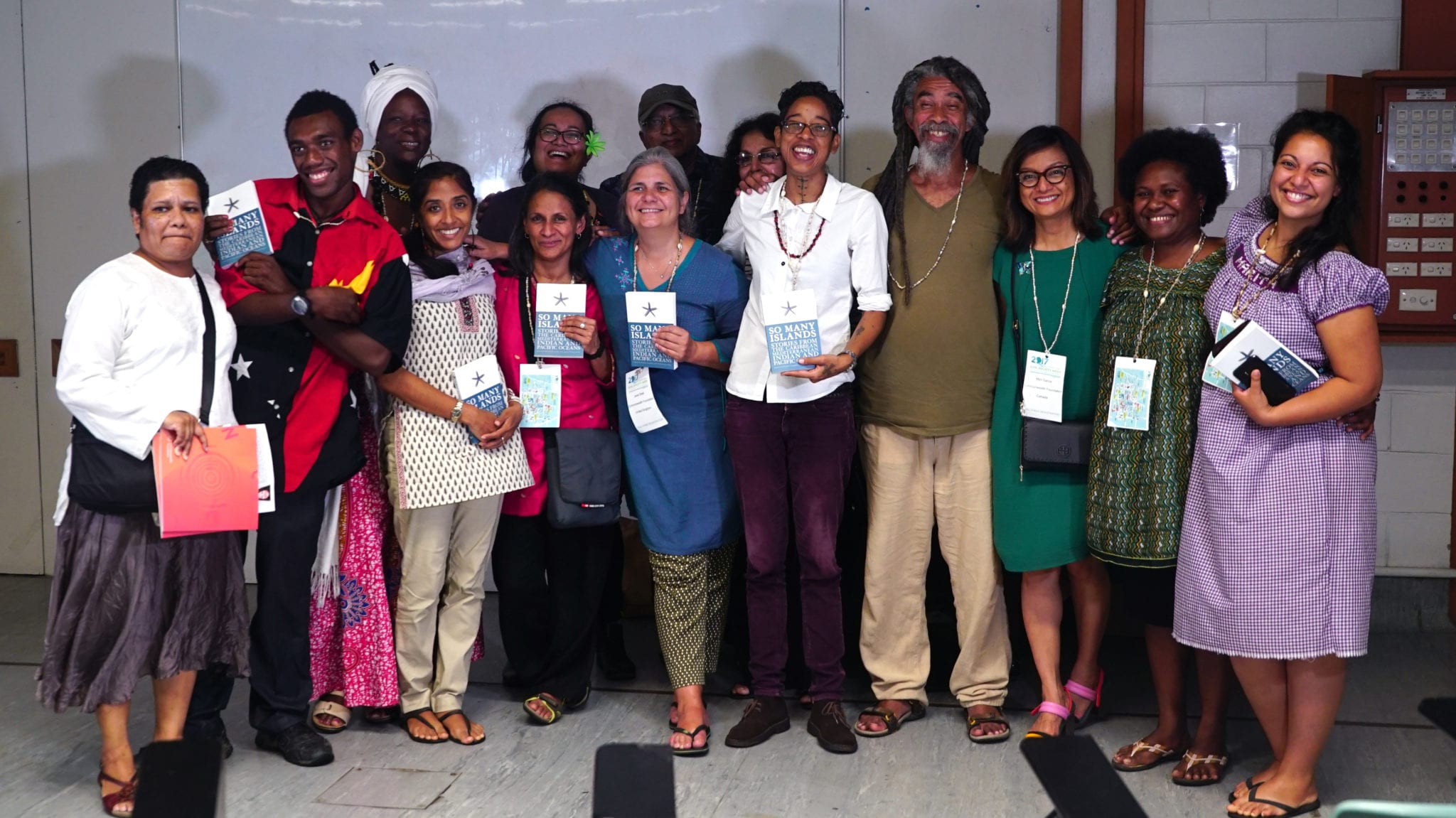
The discussion followed the Pacific launch of the So Many Islands, a collection of literature hailing from 17 island states around the Commonwealth, and the Samoan premiere of Commonwealth Shorts: Pacific Voices, the latest cohort of short films from the Commonwealth Foundation’s film making capacity development project. Artists who contributed to both projects were represented on the panel which also included guests Steve Percival, Lani Wendt-Young and Dijone Fonite.

This discussion was convened in December 2017 at the National University of Samoa and hosted by the Commonwealth Foundation and Little Island Press. 

Catalayah by Wendy Hara

I memorised the rhythm of your heart, almost inaudible but I heard you, a beating body inside a body being beaten.

Growing within me

Growing with me

The tiny footprints you made on the home we shared, I could never erase them, and you had me wrapped around your finger while his fingers were wrapped around my neck.

My daughter, you never felt the sun kiss your brown skin

My daughter, you never felt the sand tickle your tiny feet

My daughter, you never felt the river flow through you

My daughter, you never heard the love song the birds sing for you

My daughter, you never knew the love of your mother through the world she would show you

Because of a man who knew only of planting his seed inside me but could never tend to the flower that was to grow

Throwing fists

Throwing knives

Throwing me.

And one day I hit the ground

And you shattered

And I bled

And you bled too

And you died

And I died too.

Read on adda…

Can stories create change? Commonwealth Conversations at Civil Society Week

Can stories told through the medium of films, short stories and poetry, change the way people perceive social problems and challenge deep rooted social issues?

High-profile journalistic exposés can trigger change. But how can citizens sharing stories of, for example, gender-based violence, influence public discussion on the issue? That’s the question the Commonwealth Foundation brought to International Civil Society Week 2017 (ICSW 2017), a global gathering of civil society organisations. ICSW 2017 took place in Fiji in December in honour of that nation’s position as chair of the recent climate talks in Bonn; the first time ICSW had been convened in the Pacific.

The Foundation’s approach to investigating the transformative power of stories was to produce three discussion events for ICSW 2017 predicated on the following themes: Gender and Justice; The Legacy of Indenture; and The Politics of Identity. Creative storytellers and civil society representatives were invited to come together and discuss the issues raised in films and written stories created as part of Commonwealth Writers’ capacity development projects for storytellers. The Foundation funded a total of eight climate and women’s-rights activists from the Caribbean and the Pacific to participate in these conversations and the wider forum.

‘From the Polynesian oral traditions of old to films streamed via the web today, stories capture and store human experience.’

In the first of three events, Gender and Justice, Katherine Reki played her powerful short film: My Mother’s Blood (2016). The film tells the tale of a woman that falls victim to the ravages of superstition, the loss of her land and livelihood and the son she leaves behind who plots revenge. Reki opened the discussion with a statement that resonated with the audience: ‘Why can’t films tell the story of our culture and history? Why does it always have to be Hollywood’s? I wanted to change that.’

My Mother’s Blood’s narrative focus on people led to an emotional response that brought the room to life. The event’s chair, Gabrielle Hosein, pointed out how this could be useful: ‘if we can touch enough people’s hearts, we can cultivate action.’ This is partly the advantage that storytelling has over other ways of talking about social issues.

‘[Stories] create human connections to the issues and experiences they are a vehicle for. And in doing so they can encourage and shape conversations in a way many political discussions cannot.’

But, as the subsequent events explored, it is not just the emotional impact of stories that give them currency. In the event on The Legacy of Indenture, Mary Rokondravu, a Fijian writer and former winner of the Commonwealth Short Story Prize, made an important point: ‘if we leave these stories behind, then no one learns, and no one hears’. Indeed, stories have always played this role. From the Polynesian oral traditions of old to films streamed via the web today, stories capture and store human experience, and not only through the narrow experiences of those lucky or great enough to make it into the history books. With the proliferation of the internet, as one audience member pointed out, opportunities for ordinary citizens to have their stories acknowledged are increasing, and social media plays no small part in this.

Above: Delegates from all over the world participated in the conversations
Above: Part of the Foundation’s delegation to International Civil Society Week

The importance of stories as a means to preserve language and social identity was also discussed. Gabrielle Hosein emphasised that stories can give successors ‘a language to draw on’, enabling subsequent generations to create and sustain identities outside of the status quo. Mere Taito pointed out the importance of intellectual property laws in this debate: that social histories are written down is useful, just as long as they don’t find their way into ‘private vaults’.

At the concluding event, The Politics of Identity, Tracy Assing spoke of how indigenous histories were still not being ‘documented consistently or comprehensively’ and, with a glint of a tear in her eye, her performance of ‘Unaccounted For’, recently published in the Commonwealth Writers anthology So Many Islands, described how indigenous communities can attempt to undo this historical wrong: ‘I am the daughter of Ricky Assing and Marlene Ballantyne. The sister of Che […] this is how I was taught to introduce myself. It was a way of saying that I never walked alone’.

So, how do stories create change? They create human connections to the issues and experiences they are a vehicle for and, in doing so, they can encourage and shape conversations in a way many political discussions cannot.  It was encouraging to see this idea picked up in the concluding ICSW 2017 plenary discussion on methods for civil society advocacy. But it was a subsequent comment from one of our panellists and former winner of the Commonwealth Short Story Prize, Mary Rokonodravu, which struck at the heart of the Foundation’s mission in Fiji:

The Foundation’s Commonwealth Writers programme continues to identify platforms and to promote such stories from less-heard voices during 2018 and will be hosting several events at this year’s Commonwealth People’s Forum in London.

A new policy for civil society in Nigeria

The recent debate in Nigeria on Bill HB585 provided an unexpected opportunity for The Nigeria Network of NGOs’ to advance its efforts to strengthen the regulatory framework surrounding the civil society sector.

Last year, when The Nigerian House of Representatives considered Bill HB585, to regulate the activities of nonprofits in the country, many within the sector felt, quite rightly, that the Bill, if passed, could limit freedoms for civil society.

The debate on whether Bill HB585 should pass or not took place via traditional and social media platforms. What we heard loudly from the public both online and offline was that the bill could pose a threat to citizens’ rights of free association and assembly. However, a quiet but nonetheless large number of voices that supported the bill had genuine concerns about a lack of transparency in the sector.

‘Amidst the growing call for strengthening sector accountability and regulations, a relationship with the regulators on how best to address these issues has matured for action’

Those that argue for the bill say there is no regulatory framework guiding the work of non-profits in Nigeria. However, there are 7 regulatory frameworks in place that can be strengthened and reformed. This is the work that my organisation, Nigeria Network of NGOs is leading, thanks to support from the Commonwealth Foundation.

This assertion that no regulatory framework exists confirms the gaps in the understanding of legislation governing the operational environment of the third sector space and the sector’s ways of working. These gaps must be bridged as full knowledge of the sector’s modus operandi by all stakeholders will go a long way in easing the rush to over-regulate. Efforts to this end will require a combination of awareness raising activities, evidence-based analysis of the sectors and a level headed evaluation of the positive and negative impacts of red tape.

‘this moment provided an opportunity to remind government of the importance of civic space and the equity that must come to play within the attainment of the Sustainable Development Goals’

Our engagement with regulators since 2012 and the multiyear support received in 2016 from the Commonwealth Foundation has meant that the Nigeria Network of NGOs has been able to review regulations and suggest constructive changes. Ongoing engagement with our regulatory authorities remains an imperative. Amidst the growing call for strengthening sector accountability and regulations, a relationship with the regulators on how best to address these issues has matured for action. Through a detailed review of the laws guiding the operations of the sector, targeted advocacy efforts and meetings with regulators, Nigeria Network of NGOs found it easier to engage regulators and suggest evidence based solutions.

For instance, suggested changes to the Part C of the Companies and Allied Matters Act (the law guiding the operations of nonprofits in Nigeria) were generated from discussions and outcomes from conferences and workshops with regulators, sector wide consultations, experience, evidence and lessons learnt from our work and peers in other parts of the world.

The Government’s ease of doing business order in addition to its ongoing efforts at reducing red tape, has helped ensure that the civil society sector is not left behind. As the country aims to improve its ranking on the ease of doing business index, this moment provided an opportunity to remind government of the importance of civic space and the equity that must come to play within the attainment of the Sustainable Development Goals.

Oyebisi Babatunde Oluseyi is Executive Director of the Nigeria Network of NGOs. Photo credit: NNNGO

The Brief Insignificant History of Peter Abraham Stanhope by Mary Rokonadravu

At 11.42 pm on 1 November, 2016, Peter Abraham Stanhope sat at his family’s old mahogany dining table and slit his wrists. He had folded three clean bath towels to place his hands upon so as to not make a mess. He watched the news first; switched on to Fiji One Television crackling against the sudden rain, part of the storm approaching from the east. The islands of Wakaya and Makogai were already cloaked in rain well before nightfall. He showered first, of course. Ate his dinner of fried pork sausages, three sausages to be exact. Some cassava, fried to a crisp. Just the way he liked it. He folded his laundry – one cotton shirt, one pair of cotton trousers, one well-worn polyester underwear he had bought from Gulabdas & Son two years before.

The fragrance of citrus – lime and oranges from the soap powder permeated the living room as he meticulously laid out his clean, folded clothes. He opened a can of skipjack tuna chunks and fed Sona, his old cat – the cat’s name meaning ‘Arsehole’, the result of a lost bet with old Maciu Smith, Mac, his old diabetic workmate, now house-bound in Vulcan’s Lane with both legs amputated from the knees down and addicted to Korean soap dramas on Sky Television. He had visited Mac during the day; said he was going to Suva on the morning ferry, if Mac could see to Sona who ate tuna chunks and appreciated the odd belly rub.

“Fuck you!” Mac had roared into the quiet afternoon, “Yeah, I gonna send one of the kids to feed Sona. If you stay longer, I’ll make them take me up the fucken steps and I gonna stay until you get back. And answer your phone when I call you!” They had both worked at PAFCO, the Pacific Fishing Company, driving forklift loads of frozen skipjack, albacore and bigeye between the Korean fishing boats and the cannery. That was in a better time, when the Japanese still ran the cannery, before the Government took over. At least, that was the general opinion in town.

He remembered to sweep out his toe nail clippings from earlier in the day, fold it into an old Fiji Times newspaper page and put it into the rubbish bin. He knew the Wesleyan Chapel deacon, the Vakatawa, would find him on Sunday morning. He wanted the house, and himself, clean.

His daughter, Caroline, married to a snivelling American who sold computers, lived in Maine. Peter had the fall postcards and winter Christmas cards pinned on the kitchen walls. His son, Jona, was dead. The men who killed him were now on trial. He had watched them in the news for two weeks. Then rung his nephew Samuela in Suva. He received the diver’s knife from Bob’s Hook, Line and Sinker a week later. It did not need sharpening. He read his Bible before he put his wrist on the towels and cut. His hands lay limp; as if he were holding a knife and fork, his wrists momentarily resting from a dinner of baked chicken and potatoes, as if someone at table were telling an interesting story, about an elopement maybe, or sharing a sermon from a Sunday past, and the hushed table was all ears. Were it a painting, the title, ‘Abraham’s Dinner’ would be apt.

His people have been in the town for one hundred and fifty years.

Let us begin with that. The town.

Levuka sits on a black rock, the Pacific at her toes. A tiny row of clapboard stores on its main thoroughfare. With no declaration to creativity, the name Beach Street stuck to the Macadam road that once was igneous pebbles salted by the sea. A few stores are of old coral and limestone patched with concrete. There is a Catholic cathedral of modest proportion. A Wesleyan chapel of even more modest proportion. A Masonic temple, oldest in the South Pacific, razed to the ground by good, I-am-born-again-and-the-rest-of-you-will-burn-in-Hell Christian folk. A tuna cannery a rabbi from Baltimore comes to cleanse to kosher twice a year. A little powerhouse hums electricity into the cannery, into homes perched like limpets onto steep, craggy volcanic slopes, into streetlights guiding nightshift workers back home or cigarette-puffing boys jogging to the bakeries for rising dough, and morning buns and loaves.

There is no drone of a first fly. They must be at the fish cannery at the southern end of town, drunk at the mixing of fish meal for pet food and fertiliser. The whole town cowers under this regular stench. It slips into the wood walls laying termites intoxicated; sinks into oiled mahogany floors, into the snake beans outside the Steinmetz’s kitchen on Church Street; into hand-washed PAFCO, FEA, and PWD overalls on clotheslines along the 199-steps of Mission Hill. The only sound is a mud wasp smoothening the walls of its mud house behind the old German-made woodstove. He lives alone. Stopped going to church thirty years ago. If no one finds him within a few days, he will bloat in the tropical heat. Then there will be liquid on the mahogany chair and on the mahogany floor.

He knew the church would not permit him a Christian burial – how awful that he took his own life! Burn in Hell! So he wrote letters. One to Mac telling him to have prayers in the living room – he had cleaned the room, gotten to his knees and polished the wood floor. Washed and ironed the curtains. Fluffed out the cushions. Put his wife’s best crochet piece on the coffee table. On all the palm-stands and side tables, little pieces of crochet-edged linen with embroidered daisies. He wrote another letter to Caroline. When you come to your senses and leave that American, home will be waiting for you. Do not believe any superstition. My spirit will not be here. I am going to your brother.

The last three things he did that night, before sitting to watch the news, before moving to the mahogany dining table, was to wash and season the cast iron skillet, put a fresh roll of toilet paper on the holder, and call his son’s mobile telephone number. His son was gone, as was the phone, but he called it every night. He had called it for the last three years. He had never been able to sleep without calling. He knew he called more for himself than for Jona. But in a very deep, hidden place, he wished Jona to know, if he were watching at all, that his father was still here. Still calling. He hesitated at the telephone. He knew it was the last call. He wanted it to be right. He dialled the numbers very slowly. His eyes fixed on the lights of Levuka, at the foot of the hill from him, this little bastard of a town that had kept his family for two hundred years, as a voice came over the line: The number you are trying to call is not available. Please hold while your call is diverted.

He held the line until it clicked. Then he stood to walk to the mahogany table in the next room.

Continue reading…