Submit a thread to our digital quilt for the chance to be featured in an exhibition and win £200. Learn more

Tag: Awareness campaigns

The spirit of solidarity at the Commonwealth People’s Forum 2018

Ben Okri, renowned writer and poet, calls on citizens to ‘Wake up. Unveil your eyes, ask questions, use your power.’

Citizens are, he says, living units of democracy, ‘a living force for all the possibilities of this world. Of all the qualities, the one I most value in the citizen is not political savvy, or high education, but awareness.’

Mr Okri will kick off three days of the Commonwealth People’s Forum 2018 (CPF 2018) deliberations, debates, and dialogues in just this vein with his keynote address. Over 16, 17 and 18 April 2018, the importance of ‘awareness’ and the power of civic voice in the Commonwealth will be examined in panels on various current issues.

All debates at CPF 2018 will amplify less heard voices. Narratives of people in the margins from around the world will be spoken, shown, seen and heard. Action will be demanded to address marginalization, and delegates will remember that they do not walk alone in their struggles to create a better world.

Other speakers of note include:

  • Miriam Coronel Ferrer and Olga Amparo from the Philippines and Colombia, respectively, talking about their lived experiences and exploring the challenges for women involved in peace processes in Women Negotiating Peace
  • Kim Barrow, the First Lady of Belize and Caleb Orozco an LGBT activist for many years, will discuss Belize’s successful legislative reform around same-sex relationships in Legislative Reform in the Commonwealth
  • David Archambault, former tribal Chairman of the Standing Rock Indian Reservation in North Dakota and Daniel Kobei from Kenya’s Ogiek indigenous minority debate the systemic discrimination to the rights of self-determination for indigenous people in Indigenous Rights and Self-Determination
  • Faiza Shaheen, Director the Centre for Labour and Social Studies, named Observer Rising Star for Campaigning in 2017 and P. Sainath, former Rural Affairs Editor of The Hindu debate how we can make the global economy more just in Just Economies
  • Priyamvada Gopal, deeply involved in the campaign to decolonize the university curriculum in the UK, talks in Persistent Resistance

CPF 2018’s main theme is: Inclusive Governance: Can the institutions of the Commonwealth renew themselves to be inclusive, just, and accountable? Each day will explore three subthemes: exclusion, justice and accountability.

We hope that delegates at CPF 2018 will feel the embrace of solidarity in full measure as we ask difficult questions of ourselves and as we engage in technical chatter and substantive discussions. We say to all our delegates what speaker Felogene Anumo says to young feminists: ‘The future belongs to us.’

These questions would have found direct and brave answers in the voice of Asma Jehangir, the stalwart lawyer-activist from Pakistan, had she been able to attend CPF 2018 as planned. Instead however, we will mourn her recent untimely death, and pay tribute to her indefatigable spirit which persisted in the face of arrest, death threats, court cases, and assaults. She said a few years ago: ‘There have been times I have been scared. There have been times that I have cried. But does that mean you give up …? No, never!’ Asma truly embodied Ben Okri’s idea that ‘We can redream this world and make the dream come real. Human beings are gods hidden from themselves.

Shobha Das is Project Manager at Commonwealth People’s Forum 2018. Photo credit: Find My Feet
The inaugural Festival of Commonwealth Film

Something amazing happens when I watch a film. I sit down, it begins, and if it’s any good, I’m transported to another world.

The screen is a window, and through it I can see into any situation, any character’s experience, any culture. That’s why I find myself so frustrated with the state of cinema most of the time. The offering at the multiplex is often uniform and bland, not to mention bad as well. The story-lines are cut frequently from the same pattern. There is even a book called Save The Cat that explains the methodology, if you can call it that, for writing a ‘good’ script. Most of the films I see are in the English language, and sadly, when I travel, the local cinemas are stacked with Hollywood films, and if there are British films on offer, they are usually costume dramas.

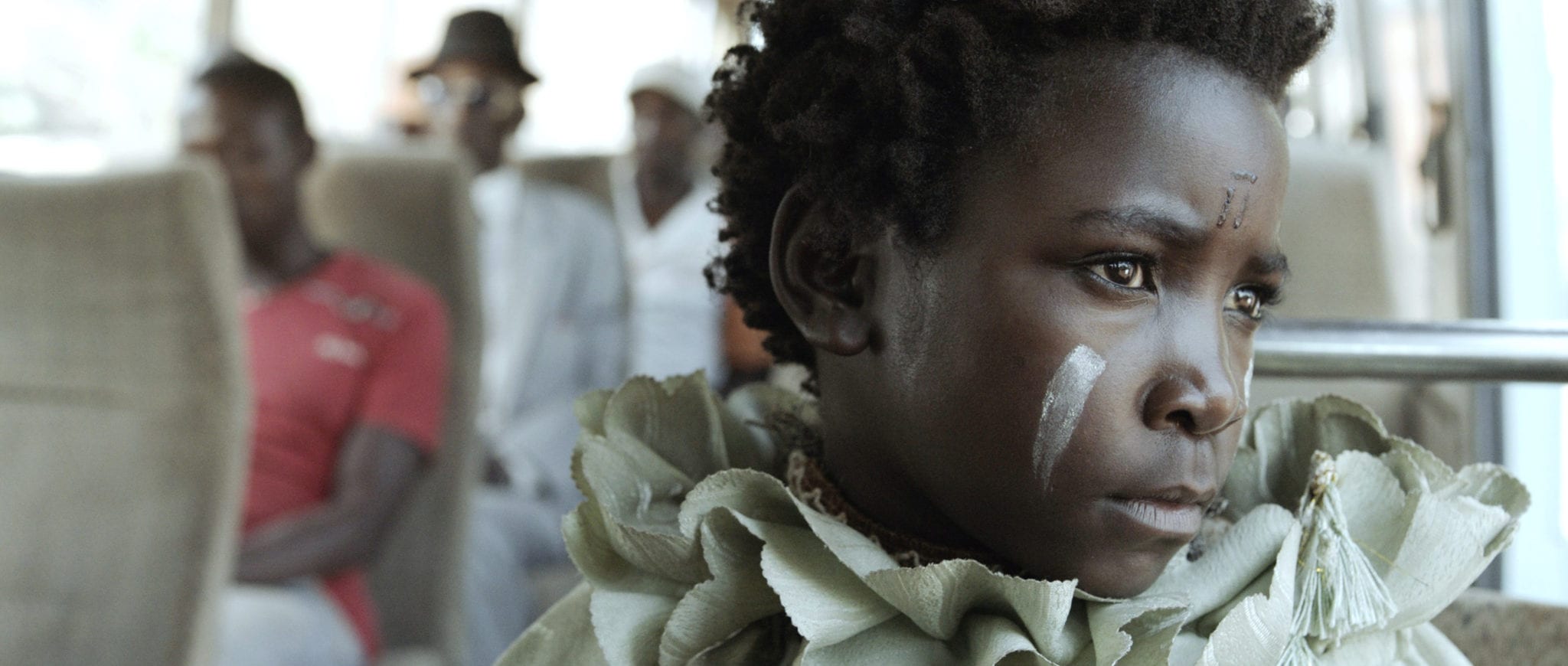
I Am Not a Witch, witch features in the inaugural lineup, won the BAFTA for ‘outstanding debut’ in February 2018

But what about all of the other stories? What about the voices of the people from the Commonwealth countries that don’t speak English as a first language? Each with its own rich and unique language, culture, and heritage.

That’s why I’m so honoured and excited to be co-ordinating the first-ever Festival of Commonwealth Film, at the British Museum on 14 and 15 April. Over two days, we will be showing seven feature films, as well as a short film programme and a 360º virtual reality film. We have films from the Bahamas, India, Malta, Papua New Guinea, Pakistan, Tonga, United Kingdom and Zambia. Directors from nearly all of the films will be coming to meet the audience and answer their questions. In one very special case, we’re hosting the UK Premiere of a documentary on human trafficking, Not My Life, which will be followed by a Q&A not only with the director but also Sanjoy Hazarika, the Director of the Commonwealth Human Rights Initiative, about the scourge of modern-day slavery.

We’ll be sharing stories about transgender activists in Tonga, fishermen in the Mediterranean and Caribbean, modern women struggling to reconcile tradition and modernity in India, sisters fighting to protect their land in Pakistan, and an eight year-old girl accused of witchcraft and threatened with being turned into a goat.

Through the immersive magic of virtual reality, we have the powerful story of a woman imprisoned for twenty years despite being entitled to release, who is ultimately freed through the persistence, tenacity, and love of her son.

So many stories, so many windows looking in on places, situations, and people that I simply would never see anywhere else. All brought together with the support and commitment of the Commonwealth Foundation, Commonwealth Writers, and the Commonwealth Human Rights Initiative. For two days, the British Museum  will be where we bring the richness and diversity of the Commonwealth to anyone with eyes to see and ears to hear.

When I’m exposed to a good piece of cinema, I leave feeling like I’ve had a good meal. Whether it’s a drama, where I’ve been emotionally affected, or a comedy, where the endorphins from a good therapeutic laugh are still coursing through my system, the end result is the same – real cinema acts on me, and in its way it changes me somehow, so that I’m different when I leave.

With a cafe open all day to relax in and talk about what’s been seen, and early bird prices at £7 (2 tickets for £10) with 50% off for concessions, it will be an incredible weekend of cinema and culture that we sincerely hope will become a regular event bringing the best cinema from across the Commonwealth together in one place.

Now please forgive me, but I have to go back to making sure it all comes off without a hitch – see you in April!

Mike Freedman is Festival Co-ordinator for Festival of Commonwealth Film 2018.

A new policy for civil society in Nigeria

The recent debate in Nigeria on Bill HB585 provided an unexpected opportunity for The Nigeria Network of NGOs’ to advance its efforts to strengthen the regulatory framework surrounding the civil society sector.

Last year, when The Nigerian House of Representatives considered Bill HB585, to regulate the activities of nonprofits in the country, many within the sector felt, quite rightly, that the Bill, if passed, could limit freedoms for civil society.

The debate on whether Bill HB585 should pass or not took place via traditional and social media platforms. What we heard loudly from the public both online and offline was that the bill could pose a threat to citizens’ rights of free association and assembly. However, a quiet but nonetheless large number of voices that supported the bill had genuine concerns about a lack of transparency in the sector.

‘Amidst the growing call for strengthening sector accountability and regulations, a relationship with the regulators on how best to address these issues has matured for action’

Those that argue for the bill say there is no regulatory framework guiding the work of non-profits in Nigeria. However, there are 7 regulatory frameworks in place that can be strengthened and reformed. This is the work that my organisation, Nigeria Network of NGOs is leading, thanks to support from the Commonwealth Foundation.

This assertion that no regulatory framework exists confirms the gaps in the understanding of legislation governing the operational environment of the third sector space and the sector’s ways of working. These gaps must be bridged as full knowledge of the sector’s modus operandi by all stakeholders will go a long way in easing the rush to over-regulate. Efforts to this end will require a combination of awareness raising activities, evidence-based analysis of the sectors and a level headed evaluation of the positive and negative impacts of red tape.

‘this moment provided an opportunity to remind government of the importance of civic space and the equity that must come to play within the attainment of the Sustainable Development Goals’

Our engagement with regulators since 2012 and the multiyear support received in 2016 from the Commonwealth Foundation has meant that the Nigeria Network of NGOs has been able to review regulations and suggest constructive changes. Ongoing engagement with our regulatory authorities remains an imperative. Amidst the growing call for strengthening sector accountability and regulations, a relationship with the regulators on how best to address these issues has matured for action. Through a detailed review of the laws guiding the operations of the sector, targeted advocacy efforts and meetings with regulators, Nigeria Network of NGOs found it easier to engage regulators and suggest evidence based solutions.

For instance, suggested changes to the Part C of the Companies and Allied Matters Act (the law guiding the operations of nonprofits in Nigeria) were generated from discussions and outcomes from conferences and workshops with regulators, sector wide consultations, experience, evidence and lessons learnt from our work and peers in other parts of the world.

The Government’s ease of doing business order in addition to its ongoing efforts at reducing red tape, has helped ensure that the civil society sector is not left behind. As the country aims to improve its ranking on the ease of doing business index, this moment provided an opportunity to remind government of the importance of civic space and the equity that must come to play within the attainment of the Sustainable Development Goals.

Oyebisi Babatunde Oluseyi is Executive Director of the Nigeria Network of NGOs. Photo credit: NNNGO