Project Stream: Open grants call

Supporting participatory dialogue on fiscal policy

Issue

Following the economic turmoil that many Caribbean nations experienced during the global economic downturn that began in 2008, it became clear that countries in the Caribbean region needed to develop the skills and strength to build their financial policies and make their voices heard in wider policy debates.

Project

With the support of the Institute of Law and Economics in Jamaica, this project will create an official network of businesses, NGOs, CSOs, youth organisations, community organisations and will increase their knowledge and skills to engage effectively in the process of fiscal policy formation. Workshops and public forums around the region will be held, and partnerships with tertiary institutions will be forged to capture younger opinions. Network participation at OECD, UN and Commonwealth forums on tax will also be secured.

Grass-roots groups, small and medium-sized enterprises, youth organisations, civil society organisations will all benefit from the increased visibility of fiscal policy, by having their voices heeded and from inclusive and constructive dialogue with government.

A comprehensive communications strategy, will be developed so that the project can leave a sustainable legacy that will provide guidance and support for any and all Caribbean leaders, stakeholders and experts long into the future.

Professor Rosalea Hamilton, founding Director of the ILE, is excited by the response to the project so far, especially from young people. She said, “I am confident that this investment in deepening our democracy will enhance the growth of our human, social, and political capital and, in turn, will contribute to social and economic development in the Caribbean.”
Follow /ile.institutelaweconomics on Facebook

Improving labour rights for farm workers

Issue

South Africa’s agricultural industry is increasing in prominence as a major economic driver for the country. The industry is under the spotlight, however, due to the prevalence of critical workers’ rights issues such as discrimination and wage inequalities. This project will support constructive dialogue to help address these issues.

Project

The Ethical Trading Initiative (ETI) is a leading alliance of companies, trade unions and NGOs; its members include major UK supermarkets that have sourcing relationships with the South African agriculture industry. To improve working conditions and secure the future stability of this sector, ETI is working with local partners the Western Cape Economic Development Partnership and the Institute for Development and Labour Law of the University of Cape Town.

Pooling their collective experience, this group will bring together farm workers, civil society organisations, employer organisations and government institutions for the first time, to develop an innovative multi-stakeholder forum to address these issues through constructive dialogue between these different groups.

This project will examine employer-employee negotiating methods, identify appropriate opportunities for fostering dialogue and build capacity within workers’ groups to advocate more effectively for their members. The goal is to develop the trust and frameworks that are needed for effective dialogue between South African farm owners and their workers.

ETI Executive Director, Peter McAllister, said: “A successful agriculture industry is vital for South Africa, and for the supermarkets that buy its produce. I’ve seen first-hand there is a need and interest in constructive dialogue where workers’ issues can be raised and resolved through negotiation. The time is ripe to establish a suitable forum and we are grateful to the Commonwealth Fund for supporting this effort.”

[youtube https://www.youtube.com/watch?v=ZN-dYUI-Ju4?rel=0]

Follow @ethicaltrade on Twitter

Strengthening the PEN Africa network for civil society engagement

Issue

The pen and the written word are powerful tools for upholding free expression, cultural rights and democratic governance. Through creative expression, Commonwealth citizens have the ability to advocate for the legislation that underpins these rights.

Project

PEN International (founded 1921) is a global community of writers, who work to promote literature and defend freedom of expression. The organisation will target measures to build capacity, skills and knowledge in order to advocate in favor of freedom of expression. Local PEN Centres will participate in policy training to help with advocacy work on local, regional and international levels and a three-year advocacy strategy will map out plans to engage with regional-level forums such as the Africa Commission on Human Rights. 

This work will serve to leverage the voice and influence of PEN Africa Network members in Ghana, Kenya, Malawi, Nigeria, South Africa and Zambia. PEN members will gain greater understanding of areas including freedom of expression and digital freedom, cultural and linguistic rights and quality education. It will help to empower not just them but the people with whom they work and future generations of writers, journalists and advocates.

Follow @pen_int on Twitter

Follow /peninternational on Facebook

Enhancing national dialogues on justice

Issue

Following Kenya’s national elections in 2007, heavy violence broke out between the opponents and the victors, which the Kenyan government has been seeking to address in the years since.

Project

Kituo Cha Sheria and REDRESS are empowering people affected by post-election violence in Kenya. The Truth, Justice and Reconciliation Commission (TJRC) set up by the government recommended the establishment of a reparations program which has yet to be implemented. The national judiciary is in the process of establishing an International Crimes Division to try the crimes committed during the post-election violence. In addition, legislation was passed to deal with the vast numbers of internally displaced people (IDP) which has yet to be enforced. So far, these transitional justice mechanisms have not fully addressed post-election violence concerns.

With the aid of a Commonwealth Foundation grant, Kituo Cha Sheria and REDRESS are empowering the people affected by the violence to meaningfully engage in the transitional justice process and ensure their voices are heard. Community based organisations representing people affected by violence, will be trained in human rights and advocacy, enabling them to advocate for their rights in dialogue meetings with national institutions.

Kituo Cha Sheria and REDRESS are both esteemed organisations in the field: Kituo Cha Sheria is a legal aid centre that was established in 1973 while REDRESS has worked to obtain justice for torture survivors worldwide since 1992. Together, they will use the grant to work with civil society organisations (CSOs), with community based organisations (CBOs) and with other local groups to ensure that the transitional justice process in Kenya is victim-centred. “Transitional justice is not only about rebuilding state institutions but it is also about empowering those whose rights were violated. This is why this project makes a difference.” says Beini Ye, Post-Conflict Legal Adviser at REDRESS.


[youtube https://www.youtube.com/watch?v=tBS7kMf3flo?rel=0]

Follow @KituoSheria on Twitter

Follow /Kituo-Cha-Sheria on Facebook

Promoting community solutions in upgrading urban settlements

Issue

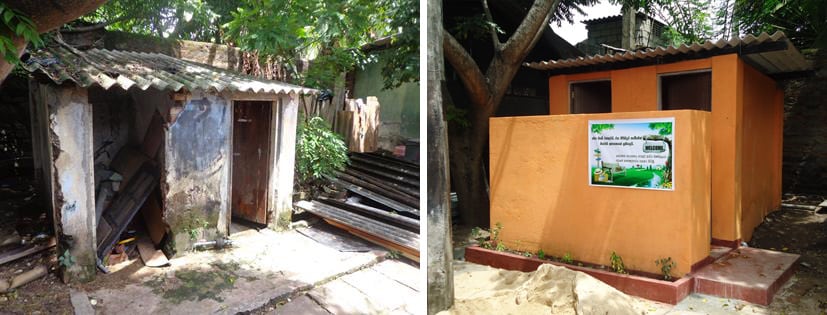
The Sri Lankan capital of Colombo is growing – and it is growing fast. The pace at which the city’s population is rising – due to both migration and birth rates – has outstripped its capacity to build sufficient housing provisions, leading to a rapid increase in informal settlements, with poor living conditions and unstable or non-existent community structures.
Reall is leading a project that will focus on 40 low income settlements in Colombo, and look at how the people themselves can contribute to improving the environments in which they live. The project will set up community development councils (CDCs) – a group of office bearers elected by households in the community – to act as representative bodies who will help the communities to work with governmental bodies and drive structured development of sanitation, water and other vital infrastructure.

Settlement upgrades in Colombo, Sri Lanka

Project

Reall (formerly Homeless International) is setting up community development councils to give the people of Colombo the knowledge, the skills and the voice to help them transform the conditions and services in the settlements in which they live. Through participatory decision-making and community empowerment, the project will give the people of Colombo the knowledge, the skills and the voice to help them transform the conditions and services in these settlements.

Jenny Hyde, the International Programmes Officer at Reall, explained, “By replicating tested approaches from other communities, the project will mobilise communities into CSOs, develop their capacity to initiate basic service delivery within their communities and facilitate working partnerships with government, leading to improved housing and basic services in targeted communities. Using a community-driven approach to design and deliver infrastructure promotes a strong sense of ownership, which in turn will ensure long-term maintenance of the facilities.”

The project is being implemented by Reall’s long-term partner in Sri Lanka, Sevanatha Urban Resource Centre, in association with the Sri Lanka Women’s Coop. The Colombo Municipal Council is the lead government partner on the project and has committed to provide funding towards infrastructure improvement projects.

Reall

Formerly known as Homeless International, Reall – or Real Equity for All – is a social enterprise that is dedicated to alleviating housing conditions in informal settlements across the developing world.

In 1989 Homeless International was born out of the social housing community in the UK and has developed a unique approach to tackle the problem of slums. They now help slum dwellers by supporting the development of partner organisations in Africa and Asia, which have their roots in poor communities.

reall.xyz

Follow @reall_int on Twitter


Promoting the recognition of carers in India

Issue

The need for long-term care for people with chronic illnesses and disabilities is universal, and the rapidly increasing demand is an urgent challenge facing countries throughout the world. In India, carers – like elsewhere in the world – are often unheralded and are usually unpaid family members.

Project

Carers Worldwide UK is supporting carers in India, who are mostly women, to advocate for the social provisions and protection needed to reduce their vulnerability to impacts such as reduced earnings, poor health and loss of education. Carers Worldwide is partnering with socially-focused CSOs in Jharkand, Andhra Pradesh and Karnataka, to build on the lessons of an earlier advocacy pilot project, which highlighted the importance of helping carers through participatory processes such as group-led actions. The pilot has already achieved a number of important outcomes – including establishing self-help groups that have allowed carers to come together for the first time, participation in a government-run livelihood scheme and raising their profile with local government officials – and this project aims to help take that work even further.

The carers most affected by poverty in each of the three districts will receive livelihood and training options compatible with caring and will learn engagement and advocacy skills, to allow them to participate in their own development. The project will also support district level Carers’ Associations, allowing people to communicate with peers and giving them a platform through which they can make their issues known to development and district government agendas.

“This project is creating the first opportunity for carers to come together, be seen and make their voices heard,” explained Anil Patil, the founder and executive director of Carers Worldwide. “This is a huge step forward for this vulnerable group who, until now, have been unrecognised by their communities and the wider society. In partnership with NBJK, SACRED and Samuha, we believe we will achieve significant change for marginalised carers over the next three years, transforming the lives of them and their families as well as laying firm foundations for a carers’ movement across India.”

[youtube https://www.youtube.com/watch?v=GZRBuhvtrMg?rel=0]

Carers Worldwide

Carers Worldwide works with carers in developing countries.

It aims to improve support, services and recognition for anyone living with the challenges of caring for a family member or friend who is ill, frail, disabled or has mental health problems.

www.carersworldwide.org

Follow @CarersWorldwide on Twitter

Follow /CarersWorldwide on Facebook


Fostering a democratic culture in schools and local communities in the Caribbean

Issue

Democratic processes rely on the engagement and participation of an interested electorate if they are to succeed. In the Commonwealth Caribbean countries, there is generally an apathy towards the community engagement process – particularly at the local government level – largely due to a lack of knowledge and cynicism about civic participation and local governance.

Project

The Caribbean Association of Local Government Authorities (CALGA) is working with young people to help them constructively engage with local government. This project will work to develop student councils in secondary schools, which will send representatives to specially created Junior Councils that will provide a structured interface between young people and local government institutions.

The young people on these Junior Councils will be trained in the local government system, participatory governance and advocacy and lobbying techniques, giving them the capabilities and confidence needed to effectively engage with authorities.

The project will also work with government representatives to integrate the young people’s voices into local government processes. The project aims to eventually embed the Junior Councils into local governance processes, allowing it to continue beyond the duration of the grant.

The work has attracted a mix of trainers and project coordinators in the four countries, from the education and local government sectors. Councillor Examin Philbert from St Lucia – a Project Coordinator and school principal – explained: “The project is timely and will afford students the opportunity to actively participate in democratic processes. It will enable Student Councils to develop leadership skills, forge partnerships with the school administration, as well as, lobby and advocate on behalf of the student body. The Junior Councils will catapult our youngsters into meaningful participation in community and Local Government engagement.” 


CALGA

The Caribbean Association of Local Government Authorities is a not for profit organization established to facilitate the further development of Local Government within the Caribbean region.

Their mission is to promote good governance and local democracy through capacity-building, networking, advocacy, and effective representation of the interests and views of Local Government authorities.

www.calga.org


Enabling women farmers’ participation in the green economy

Issue

While women have made giant strides in some male-dominated occupations, they still represent a small proportion of workers in the green economy. Women are often marginalised, left out of critical policy debates and have limited access to resources. While there is a need for greater investment in agriculture, there is currently no recognition of the productive role of women farmers.

Project

With this grant from the Commonwealth Foundation, the Caribbean Policy Development Centre (CPDC) aims to enhance women’s capacity for advocacy, contributing to an increase in the livelihood opportunities available, particularly through emerging opportunities in the green economy.

It will provide an opportunity for women farmers to develop their advocacy skills to shape policy debates around the green economy in the Caribbean, resulting in a strong model for replication in other contexts. The project also responds to the 2013 Commonwealth Theme ‘Opportunity through Enterprise’.

Caribbean Policy Development Centre (CPDC)

CPDC is a coalition of Caribbean non-governmental organisations.

It was established in 1991 to raise awareness about key policy issues among NGOs and the general public and to impact on policy decisions which put the interests of Caribbean people at the centre of their development strategy. Since its inception, CPDC has lobbied regional and international governments on behalf of Caribbean citizens whose voices are less heard. In doing so, CPDC has become accepted as a significant social partner in the development of the region where it has extensive experience and reach.

www.cpdcngo.org/cpdc

Follow @cpdcngo on Twitter

Follow /CPDCngo on Facebook


Fostering cooperation for sustainable development

Issue

The role of civil society, in particular women and young people, in influencing local governance processes in India is recognised as vital.

Project

Technology and Action for Rural Advancement (TARA) are working with civil society, women and young people in the environmental field, to help them influence local governance processes in India.

With a grant from the Commonwealth Foundation, this project will improve the skills and capacity of civil society organisations to engage with local government, nurturing collaborative relationships and better understanding. Advocacy models will demonstrate environmental sustainability concerns, fostering cooperation, sharing knowledge and promoting the involvement of young people and women in local governance.

The project will work with diverse stakeholders nurturing a collective sense of responsibility. It has a strong environmental aspect and targets women as well as addressing cross-cutting themes.

Technology and Action for Rural Advancement (TARA)

TARA is a registered social enterprise in New Delhi, India.

It enables the creation of livelihood support systems through training and capacity building for the rural poor and marginalised communities. It is part of the Development Alternatives Group, an organisation providing development solutions in India and elsewhere.

www.tara.in


Promoting fair trade networks

Issue

Fair trade between Commonwealth nations is recognised as vital in order to drive business.

Project

Shared Interest Foundation is promoting fair trade in Africa by giving three networks a chance to share experiences and learn from each other.

With a grant from the Commonwealth Foundation, Shared Interest Foundation is collaborating on joint activities to allow greater networking and sharing of benefits, as well as learning from the success and failure of others. It will allow time and space for critical reflection involving those working in a similar context as well as those without any prior knowledge, helping to create a more objective analysis of progress, challenges, barriers, hopes and opportunities.

Focusing on learning by seeing and doing, project partners will visit each other’s operations and meet members, producers and board members to hear a wide range of experiences about how projects and schemes, such as income generation activities, have worked in reality.

The project has a strong emphasis on peer-to-peer learning and staff exchanges working in different country contexts. This project also responds to the 2013 Commonwealth Theme ‘Opportunity through Enterprise’.

Shared Interest Foundation, UK

Shared Interest Foundation was formed in 2004 as the charitable arm of Shared Interest Society.

It uses the pooled investments of its members in the UK to effect real and lasting improvements to people’s lives in poorer parts of the world. The organisation has an extensive knowledge of the fair trade sector, with prior experience of managing capacity building exchange projects through the Commonwealth Local Government Forum. It has worked directly with fair trade businesses in Africa for nine years.

www.shared-interest.com

Follow @SharedInterest on Twitter

Follow /fairtradelender on facebook