Submit a thread to our digital quilt for the chance to be featured in an exhibition and win £200. Learn more

Governance Area: Policy and legislative reform

Commonwealth Insights: The SAMOA Pathway

Commonwealth Insights: The SAMOA Pathway

The second in a series of civil society reflections on participatory governance The SAMOA Pathway: Recommendations from Commonwealth civil society provides an analysis of the main conclusions of the Third UN Small Island Developing States (SIDS) Summit held in September 2014.

It offers recommendations from civil society in the Commonwealth from the Caribbean, Pacific and Indian Ocean 1 on the critical issues raised in the SAMOA Pathway, the principal output from the SIDS Summit, on how to begin to turn these commitments into a transformative agenda for the sustainable and inclusive development of SIDS.

Commonwealth Insights: The SAMOA Pathway

Commonwealth Insights: The SAMOA Pathway

The second in a series of civil society reflections on participatory governance The SAMOA Pathway: Recommendations from Commonwealth civil society provides an analysis of the main conclusions of the Third UN Small Island Developing States (SIDS) Summit held in September 2014.

It offers recommendations from civil society in the Commonwealth from the Caribbean, Pacific and Indian Ocean 1 on the critical issues raised in the SAMOA Pathway, the principal output from the SIDS Summit, on how to begin to turn these commitments into a transformative agenda for the sustainable and inclusive development of SIDS.

Strengthening women’s voices to advocate for women’s land rights

Issue

There exists, in African countries, a drive to continue strengthening leadership of African women, tackling patriarchy and empowering them for a secure and just Africa.

Project

Akina Mama wa Afrika (AMwA) are strengthening the voice of women to advocate for secure and equitable land rights in Southern Africa.

This project aims to strengthen the collective voice of women to talk about large scale land acquisitions in Southern Africa, and promote women’s access to land in Namibia, Kingdom of eSwatini and Zambia.

This will be achieved by building the capacity of women’s organisation members in these countries to undertake and publish feminist research on the effects of land acquisitions on women, and conduct advocacy campaigns with affected communities and policy makers.

Women’s experiences will be documented in their own words in the form of oral ‘herstories’ through which women will articulate the challenges, gaps, successes and strategies employed in control and access to land rights.

It is expected that by the end of the project, women will have access to important advocacy documents and research, which can be used as tools to raise awareness of and advocate for stronger land rights for women.

Akina Mama wa Afrika

Akina Mama wa Afrika (AMwA) is an international, Pan-African, non-governmental organisation for African women with its headquarters in Uganda. It was founded to create space for African women to organise, build links with each other and speak for themselves. AMwA has been working to build African women’s leadership capacities since its creation, acting as a training centre and an advocacy engine for the African women’s movement. The organisation aims to: influence policies that affect African women at national, regional and international levels; strengthen and promote African women’s feminist leadership; participate in the construction of a feminist epistemology by African women.

www.akinamamawaafrika.org

Like AMwA on Facebook

Subscribe to AMwA on YouTube

Ensuring health and safety for workers in garment industries

Issue

The garment industry plays a key role in the economies of Bangladesh and Sri Lanka and there is a need to recognise increased working standards for female workers.

Project

War on Want are improving working conditions in the Bangladesh and Sri Lanka garment industries by strengthening occupational safety and health standards

Through raising awareness of OSH issues, female workers’ rights and related policy processes, garment workers – and the organisations representing them – will be able to jointly advocate for better working standards. This will include setting up a platform for regular dialogue between government representatives, garment retailers and trade unions to improve standards.

By the end of the project, garment workers would have obtained the skills and experience to continue collectively engaging in problem solving with factory owners.

War on Want, UK

War on Want has over 60 years of experience in promoting workers’ rights. The organisation works in direct partnership with grassroots organisations in several countries to address issues of poverty and inequality. It has worked in Bangladesh and Sri Lanka with partner organisations to promote workers’ rights for over ten years. Following the collapse of Rana Plaza, the organisation has developed a campaign entitled “Never again: making fashion’s factories safe” which resulted in the signature of a legally-binding agreement “Bangladesh Safety Accord” by over 150 biggest clothes companies to help prevent such disasters in the future.

www.waronwant.org

Follow @WarOnWant on Twitter

Like War on Want on Facebook

Subscribe to War on Want on YouTube

Partner organisations

The National Garment Workers Federation (NGWF) is one of Bangladesh biggest garment workers unions, representing over 45,000 workers. The vast majority of its members are young, female garment workers. The NGWF is a founding member of the Bangladesh Garment Workers Unity Council, an umbrella organisation of 21 garment worker federations. It is also a member of the arbitration committee, a body that negotiates labour law and cases of workers’ rights violations through dialogue between trade unions, government and factory owners. NGWF was involved in a successful campaign to introduce a new minimum wage for garment workers in Bangladesh, which was approved in 2010.

Free Trade Zone & General Service Employees Union (FTZ&GSEU) is the largest trade union in Sri Lanka, with 16,000 members. The FTZ&GSEU focuses on supporting female workers, who are more vulnerable to labour rights abuses. FTZ&GSEU has a long track record of actively and successfully engaging with government as well as with companies. The organisation has been a member trade union of the National Labour Advisory Committee since 2007. The Committee was established to provide for consultation and co-operation between the government, organisations of workers and employers on social and labour policies and international labour standards. It is chaired by the Minister of Labour.


Strengthening the role of civil society organisations

Issue

Over 1,800 civil society organisations (CSOs) are registered in the Maldives, all of which operate under the Associations Act. This act came into force in 2003, and needs to be updated in line with the 2008 Constitution.

Project

Transparency Maldives are strengthening the role of civil society organisations in governance and policymaking in the Maldives by advocating for the adoption of a revised Associations Act. This project aims to develop a network of CSOs to gather support for, and engage in, advocacy for the revised Associations Act to be tabled for approval in parliament. It will achieve this by building the capacity of CSOs to create networks and coalitions to strengthen their engagement with local government institutions.

It is expected that the project will ultimately contribute to an improved operating environment for CSOs in the Maldives.

Transparency Maldives

Transparency Maldives works to improve governance. It aims to be a constructive force in the Maldives by encouraging discussion on transparency, accountability, and the fight against corruption. It has experience of working in the areas of civic participation, election monitoring and engaging in advocacy with government. Transparency Maldives is a member of the global network of Transparency International with over 90 national chapters.

transparency.mv

Follow @TransparencyMV on Twitter

Like Transparency Maldives on Facebook

Subscribe to Transparency Maldives on YouTube


Forging civil society action against child domestic labour

Issue

The use of unregulated, under-aged and under-paid child domestic labourers (CDLs) remains problematic in many countries around the world, with around 11.5 million children worldwide still thought to work in illegal situations.

In India, Pakistan and Bangladesh – where millions of these child labourers live – there is an increasing willingness to change their plight, and this project will capture that willingness and use it to support positive movement away from this modern slavery.

Project

Global March is working with partner organisations in each of the three countries and will look to the progress already being made in India’s justice system on the subject and seek to further embed it in the fabric of people’s awareness. Based on the experiences of India’s Bachpan Bachao Andolan, Pakistan’s Grassroots Organisation for Human Development and Bangladesh’s Shishu Adhikar Forum will spearhead action in each of the countries, partnering with civil society organisations (CSOs) to amend laws, raise awareness, advocate for policy change and build the capacity for CSOs, government and law enforcement to work together in the fight against child domestic labour.

There will be training and workshops for CSOs, compilation of legislative literature, expansive regional and national consultations, and extensive analysis of existing structures – all with the aim of enhancing awareness and encouraging the will of many levels of society throughout India, Pakistan and Bangladesh to let their children live their childhoods in peace.

Global March Against Child Labour

The Global March Against Child Labour is a worldwide network of trade unions, teachers’ and civil society organisations that work together towards the shared development goals of eliminating and preventing all forms of child labour and ensuring access by all children to free, meaningful and good quality public education. It mobilises and supports its constituents to contribute to local, national, regional and global efforts and support for a range of international instruments relating to the protection and promotion of children’s rights, engaging with the United Nations, international and inter-governmental agencies.

www.globalmarch.org

Follow @kNOwChildLabour on Twitter

Follow /globalmarch on Facebook

Bachpan Bachao Andolan

Bachpan Bachao Andolan (BBA) symbolizes India’s largest grassroots movement for the protection of children, ensuring their quality education. As on October 2014, BBA has rescued more than 83 500 victims of trafficking, slavery and child labour and has helped them re-establish trust in society and find promising futures for themselves.

Since its establishment by the Indian children’s rights activist Kailash Satyarthi in 1980, BBA has led the world’s largest civil society campaign in the form of the Global March Against Child Labour and has been at the forefront of laying down laws against child labour and trafficking in India.

www.bba.org.in


Reforming colonial-era mental health legislation

Issue

The need to improve the legislation that covers mental ill health in Commonwealth countries is growing more and more pressing as the prevalence of mental ill health increases worldwide.

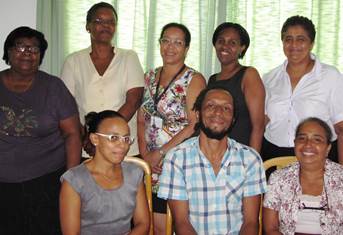
National Mental Health Advisory Committee SeychellesProject

The Commonwealth Nurses and Midwives Federation (CNMF) is updating mental health legislation in Botswana and Seychelles to bring them in line with the UN Convention on Rights of Persons with Disability. Botswana and Seychelles will be the first Commonwealth countries to see their mental health laws brought in line with the UN Convention, and will see the CNMF work to establish the support structures that will build thorough and inclusive mental health provisions.

The two implementation countries were selected due to the existing strong base of networks in place, upon which the CNF will be able to build and develop their work. The project will either support an existing national mental health advocacy group – or establish a new one, if necessary – bringing together people with mental ill health, carers, medical health professionals and policy officials, to pool their experience and collectively develop solutions.

These groups will provide valuable forums to make sure that legislation is formed from the right information and the right people. The Commonwealth Nurses Federation will oversee the project, providing technical support to the groups and working to ensure the sustainability of the positive outcomes produced by the project.

With mental ill health predicted to be the world’s greatest health burden by 2030, this project is supporting the efforts to drive down the stigma, discrimination and marginalisation suffered by people with mental ill health and make treatment and care accessible to all.

Commonwealth Nurses and Midwives Federation

The Commonwealth Nurses and Midwives Federation (CNMF), founded in 1973, is a federation of national nursing and midwifery associations in Commonwealth countries.

The CNMF has regular and constructive contact with major Commonwealth bodies in London including the Commonwealth Secretariat and the Commonwealth Foundation. The CNMF is an accredited Commonwealth body, which allows involvement in annual Health Ministers’ meetings, the biennial Commonwealth Peoples Forum held prior to the Commonwealth Heads of Government meeting and other Commonwealth meetings such as the civil society consultations.

www.commonwealthnurses.org


Enhancing gender responsive policies

Issue

Kenya’s Constitution requires that no more than two thirds of any one gender represents any elective post. In the 2013 general election only 19 women stood among the 244 candidates that fought for Senator positions in the 2013 General Election and only occupy 9.8 per cent of seats in the Kenyan parliament.

Project

The Institute for Education in Democracy (IED) is now working towards the High Court’s recommendation that positive steps should be taken to increase the representation of women in politics by 2015. It will explore the development of affirmative action in political parties and ensure that the promotion of gender equality is consistent and sustainable, raising the long-term position of women in politics.

The Institute will stage a consultative forum with civil society organisations, political parties and the Registrar of Political Parties to identify strategies for affirmative action. The Registrar – which oversees the law on political parties and has the mandate to ensure gender considerations are integrated into the membership and workings of the parties – will play a pivotal role in the work and will also see its capacity to develop tools to guide political parties in establishing affirmative action regulations built and enhanced. The IED will also develop a new framework with which civil society organisations will be able to monitor the progress being made by political parties on gender equality.

[youtube https://www.youtube.com/watch?v=vcy8V1a7Ar8?rel=0]

Follow @ied_africa on Twitter

Follow IED-Africa on Facebook