Submit a thread to our digital quilt for the chance to be featured in an exhibition and win £200. Learn more

CF Source: Foundation

Inclusion lies at the heart of sharing our Common Wealth

It is often said that the Commonwealth stands for all the Ds: Development, Democracy, Diversity and Dignity. Surely if there was a global award for best alliterative multi-lateral we would do well but this year’s theme; “An Inclusive Commonwealth” encourages us to take a moment to look at how each of these powerful concepts are connected to each other. 

The theme is both timeless and timely. The argument for inclusion lies at the heart of what we mean by Common Wealth but it is particularly relevant in this the first year of the new global development agenda: an agenda that seeks to address the fact that the world’s richest 10% own 85% of global assets and the poorest 50% own 1%. 

One of the most powerful arguments in favour of a more ambitious set of development goals was the imperative to “leave no one behind.” In fact world leaders went further when they signed off on the Sustainable Development Goals. They pledged “to reach the furthest behind first” because they recognised that “the dignity of the human person is fundamental.”
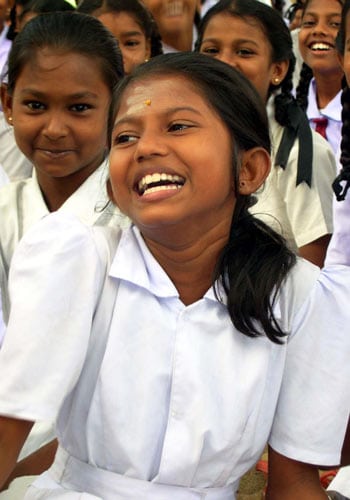
Tamil school children in Sri LankaThere are different takes on the concept of inclusion. For advocates of inclusive development it means the equitable participation of all nations in a global trading system: A system that enables Less Developed Countries and all small states to enjoy fair terms, access to markets and without having to endure trade dumping. It also means financing for development options that do not lead to punitive debt and the further isolation of those economies least able to bear that burden. 

The Commonwealth recognises that inclusive development cannot be isolated from inclusive governance. If we are to arrive at an inclusive global trading system for all then all member states need to be able to enjoy equal access to global decision making processes. They need to be able to participate effectively. In turn this implies a commitment to developing the capacity of member states to negotiate and participate in a transparent and accountable rules based system.

This principle of participation for all does not only apply at the global level. If regional and national development agendas purport to embody the aspirations of people – then those people have to see themselves in those policies and plans. They need to be able to participate effectively and this needs to be supported.

Commonwealth Heads of Government recognised this when they met in Malta and “Recognised that freedom of opinion and expression, freedom of peaceful assembly and association, and freedom of religion or belief are cornerstones of democratic societies, and important for the enjoyment of all human rights, including the right to development, and are fundamental to achieving the Sustainable Development Goals.”

Civil society organisations that also met in Malta at the Commonwealth People’s Forum saw the need for inclusivity in relation to food security, access to sustainable energy and urban planning. On Lesbian, Gay, Transgender and Intersex rights they said that “Inclusive societies are stronger, more innovative and therefore more resilient.” This line resonated with delegates from all sectors, disciplines and regions. 
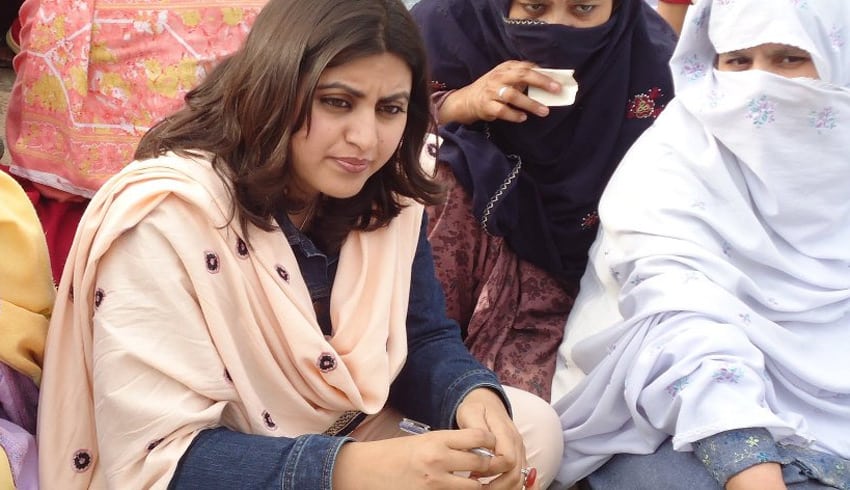
Strengthening women’s participation in governance in Pakistan

Civil society has an important role to play in highlighting where society as a whole is falling short on inclusion and demonstrating the ways in which these deficits can be addressed. For example women in parts of Pakistan were put off taking part in the 2013 general election by a lack of transport, pressure from political parties and the control of polling stations by armed men.

Two organisations are working together to address the issue. Peace Direct and Aware Girls are helping to promote the participation of women in electoral processes in the districts of Swabi and Marden, building on lessons learned.

By training 60 young women and providing education to at least 900 women, they are encouraging women in the conflict-affected areas of Khyber Pakhtunkhwa province to voice their opinion and improve their leadership skills. Citizens’ committees will address women’s rights issues and develop advocacy tools. This initiative will also improve dialogue with politicians and officials. It is expected that this will lead to improved public attitudes supporting women’s participation in electoral and political processes, as well as increased accountability among community leaders, political parties and public bodies.
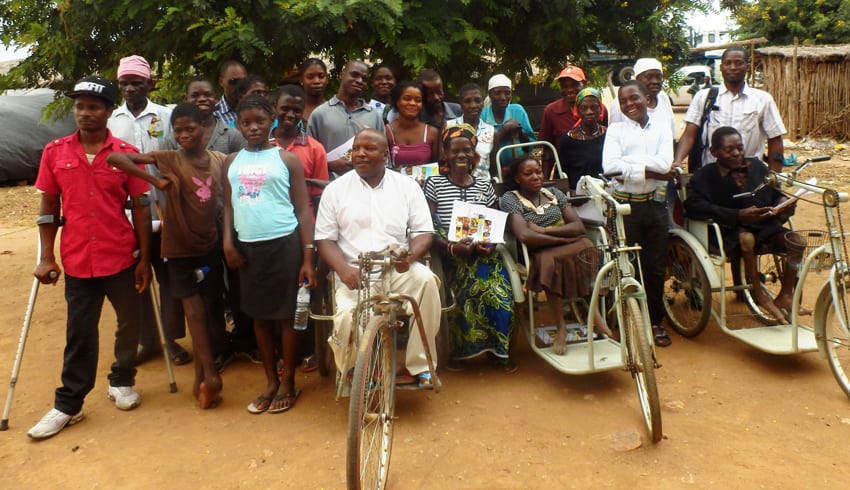
Upholding the rights of young disabled people in Mozambique

In another example the Association of Young Disabled People of Mozambique (AJODEMO) is raising its members’ capacity to help local government departments and officials improve the implementation of domestic and international legislation designed to support them. This includes ensuring that the rights and entitlements of young people are better understood, respected, and enforced, with AJODEMO with support from Disability and Development Partners, taking the lead in developing and facilitating opportunities for structured engagement between community and local government stakeholders.

The government of Mozambique has shown its commitment towards improving conditions for its young disabled people by ratifying the UN Convention on the Rights of Persons with Disabilities, and adopting new pieces of domestic legislation. This has helped create a conducive climate for this project, which will enhance young disabled people’s ability to engage in the community by fostering dialogue and improved relations with local government, improve their economic prospects, and reduce the stigma and discrimination they face. 

These two examples, which are both funded by the Commonwealth Foundation illustrate some of the issues that need to be addressed if we are going to take inclusion seriously. Perhaps the most important of these, is that inclusion is not a matter of addressing the needs and aspirations of society’s minorities. It is dependent on: recognising the rights that we are all presumed to have to participate equally in processes of development and democracy; and then acknowledging that those rights are not enjoyed by all – even when those being prevented from doing so form a numerical majority. 

We also have to acknowledge that there are limits to what civil society can achieve on its own when it comes to inclusion. The examples show how important it is to have an environment within which civil society can make the case for inclusion. These projects will not succeed without supportive government policies and receptive state agencies. They also require the positive reinforcement of all those who see the value of inclusion, whether they be members of parliament that want to represent their constituencies fully, businesses that want to have access to the widest pool of human resource talent or indeed civil society organisations working in the interests of the public good. Inclusion is ultimately about you, we and us – not they, them and others. 


Commonwealth Civil Society Roundtable on Education

Transformative Education and Sustainable Development in Small States: Towards a 2030 Implementation Agenda

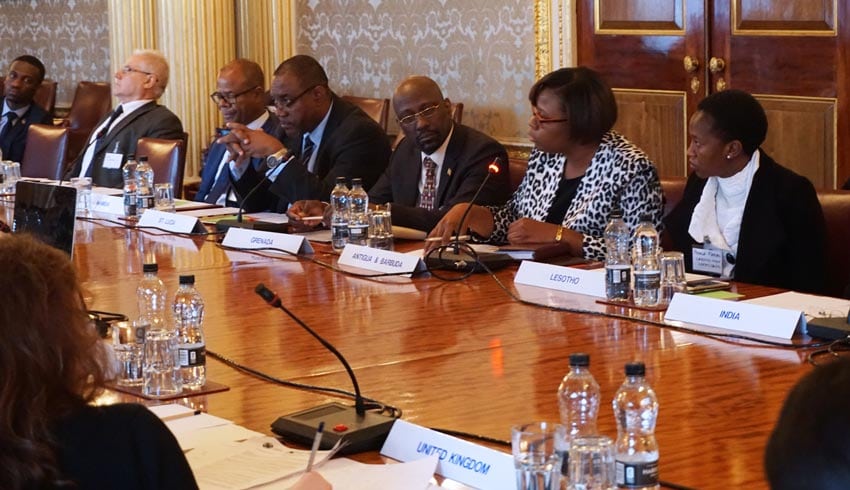
On a platform not often seen, civil society and government representatives came together to discuss their shared interest in the development of education at a roundtable discussion held in London at the Commonwealth. Civil society representatives addressed the need for transformative education for sustainable development in Small States with a view to influence policy change.  The gathering was attended by 17 government representatives.

In his opening remarks, the Director of the Commonwealth Foundation, Vijay Krishnarayan, noted the importance of this roundtable as an opportunity to broaden and deepen dialogue with Commonwealth Member States. He highlighted the need to see the roundtable not as a one off intervention, but part of an ongoing process of constructive engagement which, has so far encompassed policy dialogue meetings on education in The Bahamas and Malta. He spoke of the importance of a shared dialogue and an opening of the space for civil society engagement with policy makers.

The Chair of the Roundtable, Dr Joel Warrican of the University of the West Indies Open Campus, introduced the concept of transformative education. He looked at the colonial roots of education and suggested that there is a need to shed some debilitating, traditional practices of coloniality. He acknowledged that there is often an aversion to change but argued that change is vital for the sustainability of Small States and indeed all states that have been affected by colonialism. The call is for education that is transformative where there is a re-envisioning of what is known and practiced to bring new perspective to future actions of people.  He stressed that this approach is not a way to burden the current curriculum but is rather a re-envisioning and a rethinking of education in its current format. A format that incorporates content reflecting sustainable development themes of gender, class, ethnicity, environment; one that encourages critical thinking and an ownership of learning for students in the 21st century.

The roundtable heard three presentations from civil society. Dr Vincent Caruana of the University of Malta presented on how transformative education is embodied in current projects and the importance of training and communicating with teachers, parents and students in this approach. Speaking on the way forward for transformative education, Ms Fatimah Kelleher emphasised that there is a direct linkage of transformative education to Small States and the global SDG agenda.  She examined how to operationalise the concept of transformative education and highlighted the importance of civil society engagement emphasising that demand needs to come from the local level, and the process must be both consultative and collaborative in nature.  Mr Sonny Leong of the Council for Education in the Commonwealth, offered some immediate actions that can be taken to push forward transformative education through research, partnerships and technical assistance and maintaining pan commonwealth dialogue on the issues.

A lively discussion followed from the representatives, responding to the ways in which education can be re-envisioned through, but not limited to, the experience of Small States. The idea of encouraging critical thinking in young citizens and how transformative education could be incorporated into all areas of education was well received. The need for a continued conversation on the state of education was highly evident from both sides as they maximised this opportunity to come together to speak about a valued, shared interest that reaches out to all corners of the Commonwealth.

Commonwealth High Commissioners’ Roundtable on Education

Building capacity for policy advocacy in the Caribbean

A series of policy research and advocacy workshops have been undertaken by members of the Caribbean Consultative Working Group (CCWG) to build civil society capacity in the region. 

In October 2014, the Caribbean Policy Development Centre (CPDC) undertook the first training workshop on policy advocacy just prior to the first meeting of the newly formed CCWG. The group is a means for Caribbean civil society actors to learn from each other and share best practices on policy advocacy in the region.  

Both meetings occurred at a particularly strategic time for the civil society organisation (CSO) community and the region generally. The conclusion of the Third International Conference on Small Island Developing States (SIDS 2014) in Samoa suggested that advocacy efforts must be concentrated on issues of implementation important to the CSO agenda; additionally, the CSO community was preparing for the further elaboration of the Post-2015 development agenda.

The second policy advocacy workshop and first policy research workshop was held in Barbados April 2015, providing technical assistance to the group in the ongoing development of their advocacy strategy.

A workshop held in Antigua in January 2016 was the final in the series of four policy training workshops, and focused on policy research for the group’s chosen advocacy thematic of Sustainable Energy for all in the Caribbean region. The aim of the workshop was to build the capacity of civil society leaders in the Caribbean to engage in participatory governance processes, specifically with the CARICOM Secretariat. 

[youtube https://www.youtube.com/watch?v=itJfY3c3hLI?rel=0]

Door is open for civil society in CARICOM processes

Devon Gardner, Programme Manager for CARICOM Energy, has said that civil society input is critical for the Caribbean Community Secretariat (CARICOM) to deliver benefits to Caribbean people. 

In an interview with the Commonwealth Foundation, Mr Gardner stated that since “the objective of CARICOM is to improve the lives of citizens from the region, then you can’t necessarily improve the lives of people unless you know what it is that the people want out of their lives. So the role of civil society, which represents the man on the street and the people of the region, is something that is important to whatever work and activities we undertake.” 

Mr Gardner spoke after delivering a presentation on CARICOM energy policy processes to the members of the Caribbean Consultative Working Group (CCWG). 

“We believe that the role of civil society in shaping what it is that we want to derive is important,” said Mr Gardner. “The bottom line is, if it is that we are to shape energy strategy and policy and to deliver actions on the ground, we must know what it is that our people are prepared to do to meet their energy goals and objectives. And without civil society, that question can never be answered.” 


[youtube https://www.youtube.com/watch?v=joBjwHTee-4?rel=0]


People’s Forum sets the benchmark for an inclusive Commonwealth

Vijay Krishnarayan reviews the significance of the Commonwealth People’s Forum held in the wings of CHOGM Malta 2015, and its implications for the future.

Commonwealth Foundation colleagues travelled back from Malta last November quietly happy with the job that we had done together with our Maltese partners to bring civil society organisations together on the subject of resilience. We saw nearly 350 delegates from 44 countries immersed in 19 sessions getting under the skin of the concept of resilience over three days at the Commonwealth People’s Forum (CPF 2015). An initial sense of having done something good was borne out as the results from the delegate survey came in. They scored the Forum highly – particularly as a space for fellowship and learning, but with the benefit of a few months distance it is a little easier to appreciate the significance of the gathering and start to think about the implications for the future.

The Forum’s theme was ‘What Makes Societies Resilient?‘ and it struck a chord with many in civil society. With ‘resilience’ being invoked at every opportunity and in every development arena, CPF 2015 aimed to provide civil society with an opportunity to define the term based on the realities they witness. The development discussion on resilience to date has been confined to economics and the environment but the Forum heard that the concept has much wider application. The theme also provided an opportunity to acknowledge the leading role that small states have had in making the case for resilience, using the Commonwealth as a platform.

The complexity of the challenges and the consequent need for sophisticated strategies was reflected in the outcome statement – The Malta Declaration on Governance for Resilience. It provided analysis and recommendations as well as an annotated record of the proceedings. Credit is due here to the team of session producers, chairs, rapporteurs and the Chief Rapporteur.  Together they produced a focussed document that makes an important contribution to the continuing global discussion on the inter-relationship between governance and development. It is already being cited (either as a whole or its specific sections) as an agenda for dialogue by civil society organisations.

In delivering the Forum there were a number of successes and firsts, which are worth recounting. The most significant of these was the space made for policy dialogues. For many years civil society organisations have been asking for room to engage directly with ministers and government policy makers. This call has been loud when it comes to the biennial Heads of Government Meeting. While that issue remains on the agenda, the Foundation has sought to create new spaces where dialogue can take place. In Malta policy forums were set up, which brought civil society and government representatives together. The agendas for these interactions were designed by civil society organisations. These constructive engagements focussed on transformative education and Lesbian, Gay, Bisexual, Transgender and Inter-sex (LGBTI) rights and resulted in policy recommendations that were presented to Ministers. In turn this meant that the set piece dialogue between civil society delegates and Foreign Ministers was much more focussed and constructive that they have been in the past.

There was also a new emphasis on hearing non-Commonwealth perspectives. While encouraging a Commonwealth audience and acknowledging the emphasis delegates placed on learning we brought new perspectives that had not been heard in a Commonwealth setting. For example colleagues from Latin America gave insights on a colonialism that resonated with Commonwealth listeners and yet added something new. These voices helped bring substance and added a new depth throughout the agenda.

The question time assembly that was held between the three candidates vying to become the next Secretary General of the Commonwealth and civil society delegates was also a highlight. The idea was warmly embraced by the Speaker of the Maltese House of Representatives who graciously hosted and chaired the session on the floor of Malta’s Parliament. Delegates welcomed the opportunity to find out more about the candidates’ vision for the Commonwealth and how each of them saw civil society. This was a first and demonstrated that the Commonwealth can respond to the need to include civil society in its political processes. It must to stay true to the Commonwealth Charter’s vision of civil society as partners in promoting and supporting Commonwealth Principles and Values.

Reflecting on the Forum as a whole, if there was one overarching message it was on the need for equitable development. A consistent refrain at the CPF echoed the commitment behind the Sustainable Development Goals to leave no one behind. The Forum understood the ways in which for example women, migrants, indigenous people and LGBTI people are not heard or included in policy discussions that have a direct bearing on their lives. The Heads of Governments’ 2015 communiqué is encouraging as is the designation of the Commonwealth theme for 2016 as ‘An Inclusive Commonwealth‘ but civil society will continue to ask for and expect governance that delivers development and dignity for all.

Any objective observer at the CPF in Malta could begin to perceive that reform of the Commonwealth’s ways and means is underway. These changes are not waiting for a report or an expert panel but are being driven by member states that want to see the Commonwealth add value to democracy and development and by civil society organisation’s that subscribe to its principles. The Commonwealth Foundation is a willing partner. We look forward to working with our member states to make change happen and to supporting civil society organisations putting life in to a Commonwealth of the People.

Vijay Krishnarayan is the Director of the Commonwealth Foundation.