












Written piece
Rearranged Out of Importance
Naashia Mohamed
Maldives
About this piece
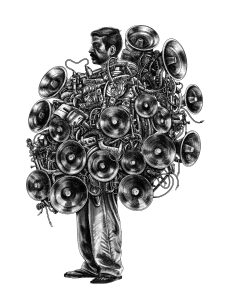
My poem reflects on multilingual identity and shifting belonging across contexts. It highlights how some languages are privileged while others are marginalised, and critiques the token celebration of our linguistic heritage instead of valuing them in everyday life.
Rearranged Out of Importance
They said:
language is a tool,
something you pick up
like a pencil
and put down
when the page is full.
But no one told me
that some words refuse
to be put down.
They linger
in the space between
what I can say
and what I feel.
At school
I learned to speak in straight lines,
sentences that behaved,
answers that fit neatly
inside the margins.
At home
my words curved,
spilled over,
carried unruly histories
I did not yet understand.
They said:
you will learn English there
(as if language were a destination,
as if arrival meant
leaving something behind.)
I learned quickly
which language to carry
like a passport,
which one
to fold quietly
into my back pocket.
And yet,
there are things
Dhivehi knows
that English only circles around:
the way the sea is never just sea,
the way kinship bends and stretches
to hold more than names,
the way goodbye
is felt
without a word.
If belonging is a language,
then mine is always
slightly out of sync.
But there are moments
when everything aligns:
a word spoken in one tongue
answered in another,
a laugh that needs no translation,
a story carried across mouths
and still recognisable.
Maybe belonging
is not fluency,
but the willingness
to remain
in the in-between
where no word is lost,
only waiting
to be heard again.
No language disappears
all at once.
It thins.
It softens at the edges.
It learns to make itself smaller,
making space for another
Rearranged
out of importance
brought out
in red libaas and fattaru,
for the days
we remember
to remember it.
So tell me:
if a language is no longer spoken
in the places that matter most,
does it grow quieter,
or do we?