Submit a thread to our digital quilt for the chance to be featured in an exhibition and win £200. Learn more

Category: Uncategorized

Reflections on the 11th Commonwealth Women’s Affairs Ministers (11WAMM) meeting

What is the role of civil society in working closely with governments to address the challenge of gender inequality? 

I travelled with this question to the 11th Commonwealth Women’s Affairs Ministers meeting (11WAMM) held 7-8 September 2016 in Apia, Samoa.  This triennial Ministerial meeting provides the opportunity for ministers, senior officials, civil society, private sector and partner agencies to discuss critical issues on advancing gender equality and women’s empowerment.

Commonwealth Ministers meet under a number of different themes, but this one on women’s affairs is different. Outside the UN meetings around the Commission on the Status of Women and regional caucuses, there isn’t really anything quite like this opportunity for governments and civil society to talk with each other about how best to advance gender equality.  The last Minister’s meeting I had attended was back in 2013 in Dhaka, Bangladesh.  That conversation with Ministers came at a critical time, when we were two years shy of the beginning of a post-2015 era and taking a critical look at what we had achieved thus far with the Millennium Development Goals.  Civil society had rallied to advance the call for a standalone goal on gender equality.  This was achieved with Goal 5 of the 2030 Agenda, and the Commonwealth Foundation can lay some claim to supporting civil society to better articulate clear asks of their Governments.

11WAMM was now taking place a year after we have agreed these global goals, an important juncture for Commonwealth Women’s Affairs Ministers to agree on key priority areas for action within the broad spectrum of what is needed to achieve gender equality.  It is known that governments alone will not achieve the Sustainable Development Goals (SDGs).  The United Nations has made a resounding call for stakeholders to work together.  

In the discussions at 11WAMM, Ministers agreed that gender equality and the empowerment of women and girls is critical to the achievement of the SDGs.  The discussion on an inclusive Commonwealth was important for the context as it offered the possibility of integrating a diverse set of perspectives to achieve women’s economic empowerment. Direct contributions were given by civil society representatives to this Ministerial discussion.  A case in point was the Ministerial discussion on women’s rights and the elimination of violence against women and girls (EVAWG).  The civil society representative from the Pacific, a key discussant for the session, used the platform to put forward a key ask from civil society that ‘all policies and programs on EVAWG use language that is focused on Women’s Human Rights and women’s experience of violence, putting  women survivors at the centre.  This they went on to emphasise should also include interventions that address VAWG to adopt approaches that are rights based, gender responsive and gender transformative. Part of my question on the role of civil society was partly answered at this juncture with civil society offering and proposing evidence based solutions.

This ministerial platform is one way by which Commonwealth countries are domesticating global recommendations into regional and national policies. Inclusivity is a key tool to generate partnerships. Policies should incorporate important lessons learned from the Millennium Development Goals – goals that recognise the importance of better resourcing and platforms to ensure civil society can partner with government.  

In line with key lessons learned, the 11WAMM communique from Ministers, para 15 acknowledges the importance of working with all groups including civil society organisations as key partners. Within the Commonwealth family, the Commonwealth Foundation has the remit to support civil society. The Foundation plays a pivotal role as an intergovernmental Commonwealth organisation with a non-governmental mandate, advancing the partnership between civil society and government and improving people’s participation in development processes.  It is in light of this mandate that the new four-year Strategic Plan 2017-2021 of the Foundation will continue to reflect a deliberate effort to promote gender equality in line with the SDGs.   

Partnerships that include all key stakeholders are key to how we begin to address the challenges we face when working towards the realisation of gender equality.  The reference to civil society organisations makes sense because civil society bring local knowledge, innovative ideas and solutions, provide technical expertise, leverage social and political capital as well as participatory approaches to analyse and solve problems.  Partnership also indicates that no one will be left behind.  However, a mere reference is not nearly enough.  Governments must commit to change and embrace the different voices that can contribute to the process.  

In the end, it is not really about governments, civil servants or private sector working towards the realisation of the SDGs and gender equality, it is about me, you and us collectively bringing about the change for women, girls and society we want to see in our homes, our families, our societies, countries, regions and the world at large.

Diana Atungire-Ocaya is governance programme manager at the Commonwealth Foundation. She attended the 11th Commonwealth Women’s Affairs Ministerial Meeting from 7-8 September 2016. Photo: Andrew Moore, ‘Clocktower Sunrise’, Flickr CC. 
Exploring the local in Brussels

I step off the train feeling a little nervous. It’s my first time in Brussels since 23 June and I’m not sure what to expect. I’ve never been a regular visitor but the place is familiar and I’ve always felt comfortable. This time it’s different. I feel like a stranger coming to a new place. I’ve a nagging sense that I don’t really belong anymore. Myn and I are here to attend AidEx2016, an annual trade fair for the aid and development sector.

As we enter Hall 11 at the Expo site I hold the door open for a guy and he says “Cheers.” The Anglophone vibe is unmistakable. It seems I was wrong to feel unwelcome. Most of the exhibitors and delegates are from Northern Europe. I exchange nods with several of the Indian exhibitors who have brought new and affordable technology applying for example solar cells and bio-technology. There’s no question that the conference sessions would be conducted in anything other than English. You can see why the coffee queue discussions fix on the implications of the UK referendum for EU aid and development policy.

In my naivety I assume that the location is in some way related to the fact that the European Union is such a big player in the development sector. In 2013 EU aid was worth nearly 15 billion Euro or 9% of the institution’s overall budget. Asking around I find that in fact Brussels is a cheaper conference venue than London and that seasoned delegates feel that AidEx 2016, the sixth edition, is smaller this year.

For me as a newbie, the hall seems filled with exhibitors showcasing every possible kind of aid and development hardware. There are 150 stalls with delegates from 120 countries. It’s impressive. Event Director, Nicholas Rutherford explains the evolution of AidEx from trade fair to platform for debate and discussion on contemporary issues. The theme this year is “Localisation,” taking up the challenge of delivering the universal Sustainable Development Goals.

Jemilah Mahmood, friend of the Commonwealth Foundation and Under Secretary General at the International Federation of Red Cross and Red Crescent Societies gave the opening address. Jemilah had previously spent time heading up the secretariat for the World Humanitarian Summit, which rehearsed many of the arguments in favour of local ownership. She starts by reminding us that localisation isn’t a term used by local people and that it’s taken the international community to make it “a thing.” She makes the case for localisation in the context of aid and development: it’s fast; has access; is aware of circumstance; and can be cost effective. On this last point she adds the caveat that localisation often comes at a heavy price when the lives of local volunteers and workers are lost in dangerous settings. What then are the appropriate roles for international agencies? Jemilah is clear – our job is not to sub-contract but rather to advocate and amplify voice, provide cover and enable local action.

We move into to other sessions: on aid architecture; capacity development and stakeholder partnerships. The Commonwealth Foundation isn’t a relief or humanitarian organisation so it’s interesting to get an insight into the challenges that this part of the development sector is facing. You get a sense that the World Humanitarian Summit provided a moment for discussion and agreement but that many of the issues persist. The issue of local agency is clearly top of the list and money talks. In 2015 the proportion of international assistance that found its way to local and national civil society organisations amounted to 0.4% of the whole. The “Grand Bargain” and the “Charter4Change” have started to broach the issue but increasing the flow of development funds to the global south is a topic that has many here at looking at their shoes or scratching their heads.

The discussion on how to finance aid and development when public purse strings in OECD countries draw ever tighter, continues. I still get slightly queasy at the thought of private sector involvement in development generally, and relief in particular, but understand the need. At AidEx2016 we hear how the Swedish Government works to encourage investment not only to fill the gaps but also to help innovate and bring new technology to the field. They recognise the importance of open and transparent procurement systems especially in multi-lateral institutions so that there is equal access and that best value is achieved. What is missing from this discussion is any reference to the local and informal economy and the ways in which it can be brought into the financing for development discourse.

If “localisation” means enabling the sharing of good practice on the ground so that it shapes national and international discourse as well as making global commitments into meaningful policy, then the Commonwealth Foundation is a subscriber. The draft strategic plan for the period 2017-2021, which will be discussed by our Board in December makes space in our programming for more of the work that we’re currently supporting in Cameroon and Tanzania. Here we are supporting civil society efforts to engage government counterparts, as they seek to align the SDG commitments with national development frameworks. It also encourages us to share the results coming in from grant funded local and national initiatives so that partners can review them and scale up where appropriate.

Myn and I get on the train back to London with half of the AidEx2016 delegates. I’m happy that we’ve looked in through this window on the humanitarian and relief community. We recognise many of the issues and challenges, but there are some new insights. For example, the session on the role media in covering aid brought to the surface concerns at the seeming need to find ever more heart rending means of countering the prevailing public scepticism about aid. Localisation and perhaps more pertinently the ownership of development has many manifestations.

Vijay Krishnarayan and Myn Garcia, director and deputy director of the Commonwealth Foundation, attended AidEx2016 in Brussels on 17 November 2016. Photo: ‘Brussel Noord’, courtesy of Luc Mercelis, Flickr CC.

We still have options: co-creating feminist futures & reflections on AWID 2016

I was recently in a poetry workshop. In the mornings as we, the participants, waited for the facilitator and the camera crew to set up we would engage in spirited debates about feminism. By which I mean arguments that nearly rose into brawls. During one of these arguments, an exasperated man exclaimed, “Feminists want to take over the world!”

In Brazil, when I shared this anecdote, someone replied, “well, what’s wrong with that?” What’s wrong with feminist’s taking over the world?

At my day job I’m a content developer. I spend hours demystifying valuable information and simplifying it for low-literacy audiences. It’s simple to me. Knowledge is power. Binding power in complex vocabulary is a way of warding off the masses.

The first feminist text I ever read was Bell Hooks’ “Feminism is for Everybody.” Her writing was clear and concise. It didn’t make me feel like an idiot and she explained feminism with no gimmicks.

The word feminism is a word that translates differently in every culture and country. In Uganda, thousands are not familiar with this word. Many who do know it, regardless of gender, interpret it as a lifestyle/philosophy/belief that intends to disrupt and corrupt culture. I also believe feminism intends to disrupt culture, but only to free me from it. Since culture is something created by humans, it can also be rewritten.

Maybe we need new words, a feminist vocabulary, a way to rename ourselves on our terms.

But perhaps, first we need to be careful with our use of the words we already have. I think we need to first make feminist discourse available in the simplest form to everyone in every language possible. Is that too ambitious?

On the first day of the conference, I attended a young feminist session led by two young women from Egypt who started a platform called Ikhtyar, which means choice. Their session was titled, “Egypt: Why we choose to utilize feminist non-conventional knowledge production as a tool of resistance”. This session spoke to me more than any other because it centred on two ideas that are central to my personal feminism: feminist knowledge production and choice.

Now I will write from my context as a Ugandan. I believe the decisions we make are based off the knowledge we have, which informs us of the choices we have. The information that comes to us is very selective because of the patriarchal powerhouses that control our media and the remnants of colonialist knowledge that are flooding our schools and bookstores with European and American textbooks, self-help books, and an excess of Christian literature deeply based in prosperity gospel. So as a country, we don’t imagine we have any choices beyond capitalism, religious fundamentalism, superstitions about western homosexuality infiltrating African soil, and subscribing to tyrannical governments.

There’s a part of me that imagines a lot of Ugandans think of feminists the same way Americans used to regard witches in Salem or how they regarded communists in the 60s. They simply don’t know what it’s about and believe what the available media has told them.

The way he phrased his fear told me he knew nothing of what feminism can be. Taking over the world is a very patriarchal approach to change. The feminists I encountered in Brazil spoke more of decentralized decision making. Feminists cannot change the world if we use the same path to power as patriarchy.

The second day of the conference, I participated in one of the co-creation sessions led by the organisation, Frida. We were imagining our feminist future through co-creation. While I’m not a big fan of the caravans suggested by multiple (European) participants, I fully got behind the idea of co-creating the feminist future. It’s taken me nearly a month to crystalise the ideas in my mind, but I want to resubmit my contribution.

What does a feminist future look like for me?

It looks like distributing feminist knowledge produced in the global south by citizens of the global south representing the full spectrum of gender. It looks like policy that supports more women artists and writers of colour to take their work to larger platforms, because art is one way of creating access to universal experiences. It looks like development from a feminist perspective, preferably with an intersectional approach. It looks like informed choices because we all have the choice not to continue living in oppressive systems, some of us just don’t know it yet.

One of the tools I often use in co-creation is reversing approach. I think in striving for this feminist future, we have to take a hard look at the systems we are using now and ask if they are working. If they are not working, we have to not only ask, what can we do different? Also, what if we try the opposite of this? Instead of trying to write gender equality into the system, what if we create a system with decentralised power that actually represents the spectrum of gender and the interests of the population?  If we have consistently approached change through systems from the global north, why not try systems from the south?

I don’t know much about politics, but I do know that we wrote the existing systems and we have the power to rewrite them. In other words, we still have a choice. Ikhtyar. It’s never too late to co-create a feminist future.

Gloria Kiconco is a poet, journalist and author and attended the Association for Women’s Rights and Development Forum (AWID) in Bahia, Brazil, as a part of the Commonwealth Foundation delegation in 2016.

Feminist futures: diversity, vitality and boldness in Bahia

The theme of the 13th AWID International Forum, held in Costa do Sauipe in Bahia, Brazil from September 8-11, 2016, was ‘Building collective power for rights and justice’.

It offered a forward looking perspective, of demanding boldness and embracing diversity: and the forum imbibed that spirit. The colour, beauty, diversity, vitality and boldness was evident in everything. From the sheer number and variety of participants, to the rich programme content, and even the living and working spaces.

I attended this AWID Forum, my first, with great anticipation and my objectives for the meeting were mostly external to myself. I looked forward to finding out more about the future of the women’s movement and exploring how my organization, the West Africa Civil Society Institute (WACSI) could play a significant role in strengthening the capacity of West African women and women in West Africa to face this future. I was concerned about how WACSI’s work would benefit more women’s and women-led organisations in West Africa, and how we could find more innovative ways of mobilizing resources to do this.  The forum also offered the opportunity to connect with other organisations; especially other Commonwealth Foundation partners that were going to be a part of the delegation, to find common strands and strengthen our partnerships for greater impact.

The forum provided those opportunities…and many more. It offered a space for deep self-reflection. And I underestimated the depth of knowledge that could be shared, in less than ten days, between a motley group of women from Colombia, Canada, Barbados, Nigeria, Uganda, South Africa and Ghana, that made up the Commonwealth Foundation delegation. A truly amazing outcome was the bond formed between these women, who had different but in many ways shared experience.

The AWID Forum sessions were interesting, but perhaps even more enlightening and engaging were the times my delegation met; over breakfast, lunch, dinner, in meetings and between meetings, as we walked together to different sessions and congregated after them to debrief. It was in those spaces that I learnt the most. It was in those spaces that I shared the most. It was in those spaces that I got the answers to questions that had bugged me for years, and some that had even arisen during the AWID Forum sessions that I had not been able to get answers to.

I learnt for the first time about the place of women in the Afro-Brazilian struggle and why having the conference in Bahia was itself a statement of solidarity. I was challenged to think more broadly and innovatively about what strengthening civil society meant; going beyond organisations, and embracing other forms of organizing within civil society and thinking of ways in which to strengthen that. I had sometimes questioned my own identity as a feminist; and my tussle with whether I could be a Christian and still be a feminist was firmly resolved as one of us shared why that was not a contradiction ‘Feminism is about choice’ she said, and fighting power and structures that hinder that choice. My own understanding of feminism was broadened to embrace it as a more holistic philosophy rather than a narrow one of women’s rights. My journey as an African woman executive and its challenges were not peculiar to me, and I listened with admiration as my sisters described how they had faced the same issues, and how they had dealt with them in turn.

I left Bahia not only having met the objectives I had set for the meeting but with much more; I left with a better consciousness of self, and how I could and should engage in building collective power for rights and justice. I owe that to the interesting AWID Forum sessions I attended but mostly to those other six women who shared that space and time in Bahia with me. It is to them, and to the Commonwealth Foundation that made this opportunity possible, that I am eternally grateful.

Nana Asantewa is Executive Director West Africa Civil Society Institute and a friend and partner of the Commonwealth Foundation. 

Suspending disbelief to imagine feminist futures

In times when the collective power, enhanced by social media, has echoed an increased public skepticism of politicians and institutions, would you suspend your disbelief?

Would you suspend your disbelief despite the fact that in the 21st century as a woman and a representative of the world’s majority population, you still have to fight for equal pay and create a movement such as Say Her Name?  #SayHerName, which campaigns against police brutality and violence against black women, challenges the Afro-feminisation of poverty as is the case for Afro-Brazilian women. This is a world where we still have to advocate for sexual health, reproductive rights and gendered budgets.

With this defiant invitation the organisers of the 13th Association for Women’s Rights in Development (AWID) International Forum brought together more than 1,800 feminists and female human rights defenders from around the world. The Forum included grassroots activists, human rights advocates, representatives from multilaterals such as the Commonwealth Foundation and policy makers.

It was four days of intensive discussions in the form of plenaries, side events, caucuses, small gatherings, story-telling sessions, dance and cabarets, in which representatives of multiple feminisms accepted one of the challenges presented to the Forum: to design ways to govern our own village.

Governing our village

In response, Forum participants envisioned a village in which policies finally work for the realization of women’s rights, and all women’s choices. A village in which diversity would be valued and the fluidity of our identities on gender, sexuality, and more would be recognised. Religious fundamentalism would not have any say in the definition of policies in this village, as its governance would be secular. 

Representatives from the black feminist forum brought to the village epistemological analysis that challenged colonialist notions of history, and the passivity and lack of agency with which African women are depicted. They presented art and story-telling as a political act able to reaffirm different notions of identity where blackness would be celebrated, a village in which all life matters.

With a feminist internet, and perspectives from indigenous knowledge, the village would improve the interaction between humans and planet, and a deeper sense of gender justice would have the final say on the distribution of resources.

With a firm rejection of militarized responses to 21st century global challenges a feminist village would seek alternative ways of conflict resolution salvaging fundamental principles of participatory democracy to redesign the functioning of political systems and institutions, which have to be better able to address systemic dynamics that perpetuate power imbalances and reinforce discrimination.

Increase solidarity amongst movements as a democratic response to reach the envisioned feminist futures

With the complexity of the current reality, it is no longer possible to pretend that a recipe for change is in the realm of a political actor, an institution or a movement. There are multidimensional issues affecting women’s lives and a multidimensional response is required to make a reality of the envisioned feminist futures.

While the  women’s movement recognized the significant role played by global frameworks in amplifying demands of the women’s movement, for example: the Commission on the Status of Women established to promote the advancement of women throughout the world; the historic Convention on the Elimination of All Forms of Discrimination against Women (CEDAW); and the Beijing Declaration and Platform for Action, it is still clear that women’s demands are being left behind and women’s rights continue to be ignored.

AWID showed that women are not waiting for change to happen passively. With a call for an increased solidarity amongst movements, feminists are working actively to make change happen. The suspension of our disbelief led us to imagine a feminist future, however a consistent element of reality during this exercise was the strength and clarity of women’s voices, and the certainty that working better together as a movement is central to achieving the transformation envisioned by feminist futures. 

Reinera is an expert on women’s rights and gender, with more than 20 years of work experience in international development. 

Restoring the social bargain. Some reflections from IDS’s 50th Anniversary conference

Last week I attended the 2day IDS 50th Anniversary conference: States, Markets and Society: Defining a new era for development. It was a great opportunity to listen to and participate in discussions with some well-known and respected thinkers in the development field and a handful of practitioners from various corners of the globe. Concurrent panel sessions were structured around the five themes of the conference: Inequality; finance and business; sustainability; institutions and the reinvention of democracy; and, citizen voice. Indeed, these are some of the biggest issues and questions of our time, making it difficult to choose between sessions!


The themes were especially relevant against the backdrop of the Brexit vote in the UK the week before. In fact, an important conclusion from the conference was that the discipline of ‘development’ which has been focused on the global South, applies now, more than ever, to the Global North.  Ten years ago, when I began my first job in urban regeneration in London’s East End following an early ten-year career in participatory development in the Caribbean, I was struck by the lack of development knowledge transfer from the South to North.  What is stopping this technical transfer? Why are the linkages with the development community of the South practically non-existent with regeneration and inequality programmes in the North?


Tackling issues of inequality, fostering greater innovation in the finance and business sectors, building democratic institutions, ensuring the participation of citizens and moving to a greener development agenda are critical elements for a post-neoliberal world in the UK as much as in Uganda. ‘Development as empowerment that rejects orthodoxy’ in the words of Adebayo Olukoshi, Director of the African Institute for Economic Development and Planning.


The conference challenged participants to think about the triad of state-market-society and how the relationship between these three institutions needs to be reconfigured to address the five themes. This question, as the conference title suggests, underpinned all of our discussions. Without question, it was agreed that neoliberalism, the privileging of the market, its policy rigidities and narrowing world of possibilities, has damaged the social bargain between state and society. Sadly, I learned that there are few, if any examples where the relationship between state and society has been radically redefined. Even in some countries of Latin America that have provided the first wave to challenge neoliberal economics, central government policy has remained largely immune to civil society. Despite the rhetoric of participation and sharing power, new pathways for governance and participatory democracy have not been found.


‘Alliances’ and ‘hybrid forms’ between state-market-society were the buzzwords of the conference. Although there were few concrete examples, at least in the sessions I attended, this was offered as innovative ways in which to rebalance the relationship and enable a more universal understanding of development. This framing is closely related to the Foundation’s approach to constructive engagement between institutions in governance and civil society and its work around regional civil society driven networks for policy advocacy.


While hybrid forms may be a helpful new ideology, not enough was said about the social bargain between civil society organisations and society. As we have learned in the capacity development work at the Foundation, even if configured in new alliances, the legitimacy of CSOs is critical. As in the words of Sunita Narain, Director General, Centre for Science and Environment, India, ‘the term ‘society’ is inadequate.’ Critical for the triad of state-market-society are the capabilities at the bottom of the pyramid. CSOs have an enormous role to play in ensuring that policies and that government and corporate investments are pro-poor. Again from Sunita: ‘We need to talk about empowering the poor to demand more. Sustainable long term change will only happen when the poor demand change.’


The 2016 Commonwealth Short Story Prize: Winner Announced

The 2016 Commonwealth Short Story Prize attracted nearly 4000 entries from 47 countries. The global judging panel, representing each of the five regions of the Commonwealth – Helon Habila (Africa), Firdous Azim (Asia), Pierre Mejlak (Canada and Europe) Olive Senior (Caribbean), and Patrick Holland (Pacific) selected Indian author Parashar Kulkarni as the overall winner for his story ‘Cow and Company’.

Parashar Kulkarni says “I have been trying to write for many years now and I feel encouraged to continue. I am thankful for the opportunity to share my work with Commonwealth Writers, and with Granta. I am also looking forward to reading new and exciting voices that emerge from this initiative.”

The award was presented by Man Booker Prize Winner and former short story judge Marlon James at the Calabash Literary Festival in Jamaica on 5 June.

“I am very happy to receive the Commonwealth Short Story Prize which provides an inclusive, accessible and international platform for participation which is particularly helpful for new writers.” says Parashar Kulkarni.

See further details on the Commonwealth Writers website 


Cow and Company’ is available to read on Granta now.

CIVICUS World Assembly in Bogota

Been there, done that…

There are two types of delegate to the CIVICUS World Assembly. The hardened veterans who have been there, done that and worn out the tee-shirt. They take a particular joy in telling anyone who cares to listen how many times they have heard it all before. Then there are those that are never tire of this amazing moment when civil society colleagues from across the globe come together to talk and think. I’ll confess here that this year I felt myself drifting dangerously towards that first rather unattractive group. But that was before I had a chance to stop and take stock of what was being said.

This was the first opportunity for civil society to come together in the Sustainable Development Goal era. It was one of the most diverse CIVICUS gatherings with more than 900 people converging in Bogota. They reflected the gamut of civic perspective: concerned individuals; local groups; national associations; international federations; development donors; government officials; and the occasional tribune from business.

These are interesting times for civil society. The new agenda for 2030 brings with it a new reality regarding its resourcing. We’ve known for some time that there is less money around for the usual work from the usual sources but last year’s Financing For Development discussions in Addis signalled the end for Official Development Assistance. That cat has the attention of many pigeons: from government donor agencies increasingly having to defend their ever smaller budgets to international NGOs having to review their business models accordingly.

Ever since the phrase War on Terror was coined it was clear that civil society would be caught in the cross fire. In the run up to the conference the violent deaths of brave people working for social justice in each part of the world brought that home to delegates in a chilling way.

The move to have the conference in Colombia at this time was in part a decision aimed at making it more diverse with a better balance between delegates from the North and the South. It was also designed to support the continuing peace process and highlight the importance of civil society in making the ultimate outcome a lasting one.

These contextual factors made delegates look at some of the usual agenda items through different glasses. “Shrinking space for civil society” has been a preoccupation at these gatherings for nearly 20 years but the evidence of the increasingly violent closing down of dissent with impunity is transforming this issue from the metaphysical to something very real.

The context also revealed the tensions within civil society. I heard from several delegates and not just the young, a sense that the organisations that were established in the 1980s to coordinate and articulate civic voice were now impeding. These intermediaries were taking up too much of the “shrinking space,” coveted by new social movements and networks.

The frustration of these new players is fuelled by government institutions that are still unable to engage with multiple stakeholders let alone those who continue to be kept at the margins. It’s also driven by an awareness of the need for urgency in addressing inequality, violence and a damaged environment.

Reduced funding from established donors is also turning civil society in on itself. New initiatives portray themselves as closer to people than established civil society organisations with the promise of impact and results. “Fundamediaries” or those that make the connections between donors and implementing agencies are despised for skimming scarce resources. At the same time civil society in the South rightly question why only 1% of official development assistance comes to them directly.

The diversity of civil society and the operational constraints faced by the sector as a whole means that competition is inevitable but it comes at a time when collaboration with the sector is needed more than ever. Organisations like the Commonwealth Foundation have an obligation to enable dialogue and cooperation between civic stakeholders. At the same time there is also an obligation to help civil society organisations to adapt and come to terms with a changing context.

The evidence from this year’s ICSW is that new approaches are challenging the orthodoxies – space for some may be shrinking but for others new opportunities are being taken advantage of. Funding for some is reducing but new forms of social organisation are coming up with ideas for self-financing and effecting change. The painful truth is that hardened veterans like me will be some of the toughest to convince that these new ways can work but at the very least Bogota convinced me that I need a new tee-shirt.

Providing legal support for social entrepreneurs in Asia

i-Probono enables charitable organisations to access legal support, making it easier for lawyers and civil society organisations to engage with each other.

With a grant from the Commonwealth Foundation, i-Probono is bridging the gap between social entrepreneurs and the legal sector in South Asia. The project will enable social entrepreneurs in four countries to access high-quality legal assistance, improving outcomes for people.

Read some of the case studies to have come out of this project, funded by the Commonwealth Foundation grants programme. 


Teenager to remain under the protection of children’s shelter

New Delhi: iProbono successfully represented Yasmin*, a 16-year old survivor of incest and child abuse, before the Delhi High Court. Yasmin is currently at a shelter home under the care of the Child Welfare Committee. Her brother, who is sixteen years older than her, is accused of sexually abusing her since she was 7 years old.

Read the full story…

Plea for equal relief after boy’s school assault

New Delhi: As a 12-year-old boy he was grabbed from inside his school and sexually assaulted by senior students. Faced with severe psychological trauma the boy was forced to change his school and shift home to another south Delhi colony.

Read the full story…

iProbono launches pro bono panel of lawyers for survivors of child sexual abuse

New Delhi: iProbono has inaugurated its appellate panel of pro bono lawyers at the India International Centre. The aim of the panel constituted by iProbono in collaboration with the Counsel to Secure Justice (CSJ), is to provide pro bono legal assistance to survivors of child sexual abuse before the Hon’ble Supreme Court and the Hon’ble High Court of Delhi.

Read the full story…

iProbono offers free legal aid for NGOs

A non-government organisation in need of legal assistance in any area of its functions or for itself may seek it free from iProbono, a global network of civil society bodies. The online networking platform connects practicing lawyers, law firms, law students and schools with the organisations needing legal aid.

Read the full story…

iProbono to offer free legal services to civil society

Islamabad: iProbono, a global non-profit network of lawyers, hosted its preliminary roundtable meeting at Jinnah Institute Islamabad.

The aim was to connect civil society groups, social entrepreneurs, NGOs, and activists who are in need of legal assistance with lawyers and law students who wish to use their legal skills for the public good for free. The network’s global outreach enables individuals and projects across the world to source legal assistance across jurisdictions. With funding from the Ford Foundation and the Commonwealth, iProbono is prepared to launch its network in Pakistan.

Read the full story…

No charges for discharging responsibilities!

Social enterprise is a movement that is showing rapid growth across global boundaries. The British Council hosted an evening talk on ‘Creating legal frameworks for social enterprises’ recently. The event focused on developing new legal frameworks in Sri Lanka to support the development of a thriving social enterprise sector.

The panel of speakers was made up of Upul Jayasuriya – President, Bar Association of Sri Lanka, Aritha Wickramasinghe – Sri Lanka Representative of iProbono, and Dr. Amanda Kiessel – Board Member, Good Market.

Read the full story…


Inclusion lies at the heart of sharing our Common Wealth

It is often said that the Commonwealth stands for all the Ds: Development, Democracy, Diversity and Dignity. Surely if there was a global award for best alliterative multi-lateral we would do well but this year’s theme; “An Inclusive Commonwealth” encourages us to take a moment to look at how each of these powerful concepts are connected to each other. 

The theme is both timeless and timely. The argument for inclusion lies at the heart of what we mean by Common Wealth but it is particularly relevant in this the first year of the new global development agenda: an agenda that seeks to address the fact that the world’s richest 10% own 85% of global assets and the poorest 50% own 1%. 

One of the most powerful arguments in favour of a more ambitious set of development goals was the imperative to “leave no one behind.” In fact world leaders went further when they signed off on the Sustainable Development Goals. They pledged “to reach the furthest behind first” because they recognised that “the dignity of the human person is fundamental.”

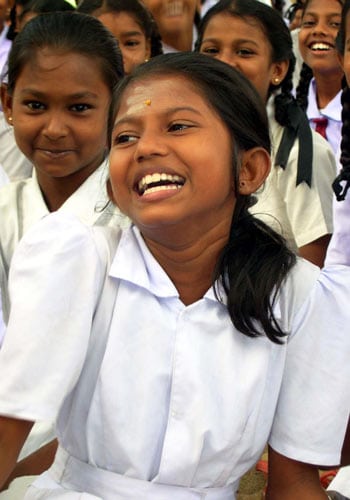
Tamil school children in Sri LankaThere are different takes on the concept of inclusion. For advocates of inclusive development it means the equitable participation of all nations in a global trading system: A system that enables Less Developed Countries and all small states to enjoy fair terms, access to markets and without having to endure trade dumping. It also means financing for development options that do not lead to punitive debt and the further isolation of those economies least able to bear that burden. 
The Commonwealth recognises that inclusive development cannot be isolated from inclusive governance. If we are to arrive at an inclusive global trading system for all then all member states need to be able to enjoy equal access to global decision making processes. They need to be able to participate effectively. In turn this implies a commitment to developing the capacity of member states to negotiate and participate in a transparent and accountable rules based system.

This principle of participation for all does not only apply at the global level. If regional and national development agendas purport to embody the aspirations of people – then those people have to see themselves in those policies and plans. They need to be able to participate effectively and this needs to be supported.

Commonwealth Heads of Government recognised this when they met in Malta and “Recognised that freedom of opinion and expression, freedom of peaceful assembly and association, and freedom of religion or belief are cornerstones of democratic societies, and important for the enjoyment of all human rights, including the right to development, and are fundamental to achieving the Sustainable Development Goals.”

Civil society organisations that also met in Malta at the Commonwealth People’s Forum saw the need for inclusivity in relation to food security, access to sustainable energy and urban planning. On Lesbian, Gay, Transgender and Intersex rights they said that “Inclusive societies are stronger, more innovative and therefore more resilient.” This line resonated with delegates from all sectors, disciplines and regions. 

Strengthening women’s participation in governance in Pakistan

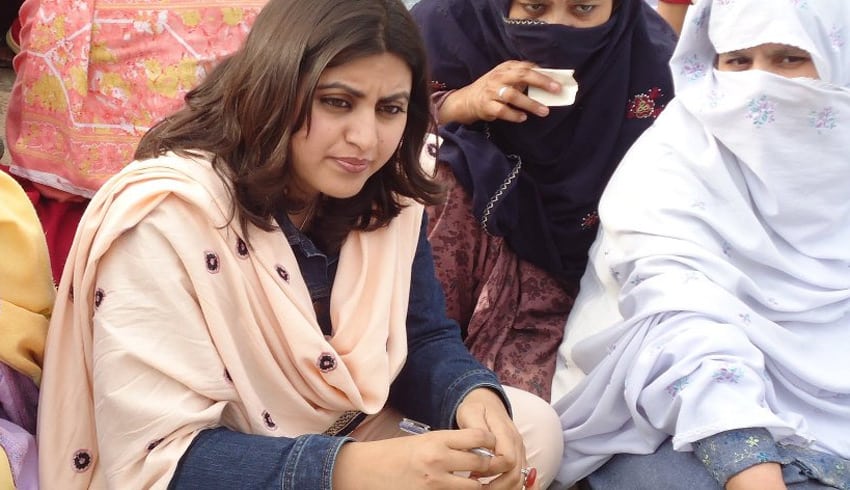
Civil society has an important role to play in highlighting where society as a whole is falling short on inclusion and demonstrating the ways in which these deficits can be addressed. For example women in parts of Pakistan were put off taking part in the 2013 general election by a lack of transport, pressure from political parties and the control of polling stations by armed men.

Two organisations are working together to address the issue. Peace Direct and Aware Girls are helping to promote the participation of women in electoral processes in the districts of Swabi and Marden, building on lessons learned.

By training 60 young women and providing education to at least 900 women, they are encouraging women in the conflict-affected areas of Khyber Pakhtunkhwa province to voice their opinion and improve their leadership skills. Citizens’ committees will address women’s rights issues and develop advocacy tools. This initiative will also improve dialogue with politicians and officials. It is expected that this will lead to improved public attitudes supporting women’s participation in electoral and political processes, as well as increased accountability among community leaders, political parties and public bodies.

Upholding the rights of young disabled people in Mozambique

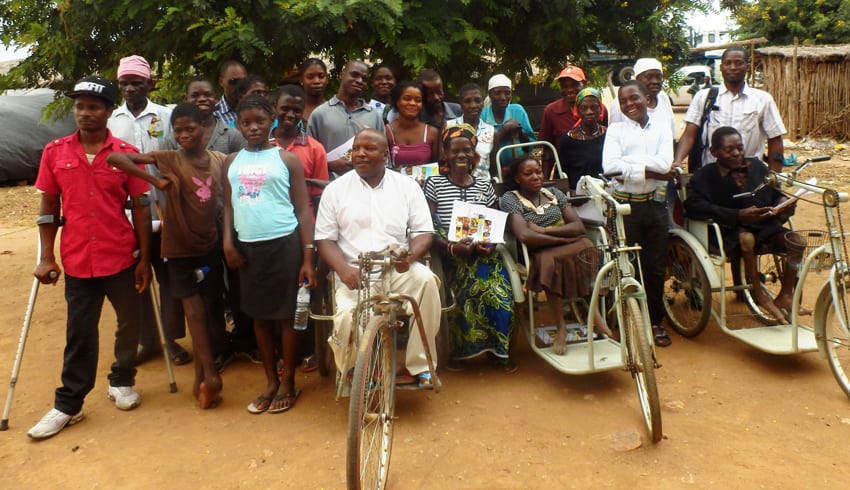
In another example the Association of Young Disabled People of Mozambique (AJODEMO) is raising its members’ capacity to help local government departments and officials improve the implementation of domestic and international legislation designed to support them. This includes ensuring that the rights and entitlements of young people are better understood, respected, and enforced, with AJODEMO with support from Disability and Development Partners, taking the lead in developing and facilitating opportunities for structured engagement between community and local government stakeholders.

The government of Mozambique has shown its commitment towards improving conditions for its young disabled people by ratifying the UN Convention on the Rights of Persons with Disabilities, and adopting new pieces of domestic legislation. This has helped create a conducive climate for this project, which will enhance young disabled people’s ability to engage in the community by fostering dialogue and improved relations with local government, improve their economic prospects, and reduce the stigma and discrimination they face. 

These two examples, which are both funded by the Commonwealth Foundation illustrate some of the issues that need to be addressed if we are going to take inclusion seriously. Perhaps the most important of these, is that inclusion is not a matter of addressing the needs and aspirations of society’s minorities. It is dependent on: recognising the rights that we are all presumed to have to participate equally in processes of development and democracy; and then acknowledging that those rights are not enjoyed by all – even when those being prevented from doing so form a numerical majority. 

We also have to acknowledge that there are limits to what civil society can achieve on its own when it comes to inclusion. The examples show how important it is to have an environment within which civil society can make the case for inclusion. These projects will not succeed without supportive government policies and receptive state agencies. They also require the positive reinforcement of all those who see the value of inclusion, whether they be members of parliament that want to represent their constituencies fully, businesses that want to have access to the widest pool of human resource talent or indeed civil society organisations working in the interests of the public good. Inclusion is ultimately about you, we and us – not they, them and others.