

Category: Articles
2020 Commonwealth Short Story Prize shortlist
Posted on by Commonwealth Foundation
adda: translations from South and Southeast Asia
Posted on by Commonwealth Foundation
Stories to Connect Us
Posted on by Commonwealth Foundation
13 November 2020
Aniemeke Isioma Prisca
Lagos, Nigeria
COLONA
The last place you want to be is where you are- in a danfo bus with Nene and twelve other passengers. It’s your first time in a bus since the lockdown began. You’re trying so hard to focus on the vehicles buzzing past yours and not on what the man sitting beside you is saying.…
13 November 2020
COLONA
by Aniemeke Isioma Prisca
Lagos, Nigeria
The last place you want to be is where you are- in a danfo bus with Nene and twelve other passengers. It’s your first time in a bus since the lockdown began. You’re trying so hard to focus on the vehicles buzzing past yours and not on what the man sitting beside you is saying. His garb, his breath and his words discomfort you. His oversized gray suit covers must of his dark-as-night skin and his afro still has in it the evidence that he had a bath this morning. He seems to you like a civil servant, overwhelmed with the shortcomings of the Nation but camouflaged in the I-know-it-all aura.
“Na lie o” he says. “All the tin wey the govament people dey talk na lie. All lies.” He pulls the polythene bag on his lap closer to his chest like he realized it was slipping out of his grasp and he had to protect it at all costs.
Outside, an average-aged man hawking doughnuts is running after a blue Ford. He probably sold them doughnuts and hasn’t gotten his money. Poor man. You want to pity him but you don’t allow yourself to. He may be poor and still be happier than you are. Everybody should be happier than you are for your soul is now void of happiness.
“See make I tell una sontin wey una no know,” He says and you watch as a drop of saliva lands on Nene’s arm. You pull the two of you away from him and send him a murderous look. “Woman, na me you dey look like dat? Abeg o, I no dey for dat kain tin dis monin. You know who I be? Odogwu Uchenna is what they call me so you better respect me.”
Although still baptized with his strong Igbo accent, his proper English surprises you. “Sorry sir” you say and move farther from him.
“Ehen, where did I even stop?” He waits for a while and when no one answers him, he continues. “This colona thing they are talking about up and down na fake. The thing no dey this country at all.”
You stiffen on hearing this and immediately, tears well up in your eyes. You can’t cry in such a public place and most importantly, you can’t cry in front of Nene.
“All the people wey dem talk say don die, no be colona kill them o. If person go hospital like this, even if na headache or malaria kill am, they go talk say na colona kill am.” He says. “They just they use that one dey make money and to dey fear people.”
“Na true o,” the woman at the front row says and begins telling the story of how her mother died and the doctors wanted to write COVID-19 as the cause of her death.
But your mind travels beyond the bus and to the day Felix called you from the hospital, two weeks ago. You remember the tremor in his voice and the troubled beating of your heart. You remember Nene sitting on the red rug in the parlour, and on Skype with Feyi, her classmate. You and Feyi’s mum had set it up for them because the children missed each other.
“Aisha, my love, I… I have tested positive for COVID, they won’t let me leave. I’m sorry,” he had said, dragging each word as he spoke. “I promise I’ll be back home soon. You and Nene should take care, okay? Just give me two weeks, I promise I’ll be home. ”
You, whose tears can fill the bathtub when they decide to fall, screamed and threw the phone on the floor. “No!” You yelled and fell to the ground. It was Nene who shut the laptop and picked up the phone. Her wisdom surprised you but that was not the time to dwell on that. She spoke to her father for some seconds, repeating, “I’m fine”, “She’s fine” and “Okay daddy”, then she handed the phone back to you.
“Aisha, please calm down. Personally, I have helped about ten people recover. So, I’m sure I’m going to survive this. I’m a doctor Aisha, don’t forget. I’ll be home soon.”
“Felix I can’t face your family on my own,” you said in between sobs. “I can’t even take care of Nene on my own. How will I cope?”
He sighed, “Aisha, you know I hate it when you talk like this. You’re a strong woman. Don’t worry about my family, they won’t bother you. I have to go now. Take care. I love you and Nene so much.”
He called once after that and that was the last time you heard of him. His colleague had called to tell you the “sad news” that Felix, your dear and precious husband was “no more and has gone to meet the Lord.”
“Madam why you dey cry? The I-know-it-all man asks.
You apologize and wipe your eyes with Nene’s handkerchief. It’s been two months but the ache in your heart is still so fresh. Since then, you have been wondering if it had been a mistake to marry Felix, if you should have listened to your parents, if you shouldn’t have abandoned Islam for him, if you shouldn’t have left Kaduna for him, if you should have aborted Nene when his parents asked you to.
You allow yourself think about these things because it’s the only thing you can do. You can ask yourself why and wallow in regret all day as if that will change your present ordeal. You can cry and move around in Felix’s clothes, praying his spirit is still with you. You can lock the gates and switch off your phone when his family members come around. But the one thing you wish the most to be able to do- bring Felix back- you cannot do.
“Shebi now they’ve opened schools, they don tire. Before we know, they go dey open everything small small then, everything go come back to normal. Colona no dey anywhere jor.” The man continues.
School. Nene is dressed in her pink and white uniform and you had woven her hair into cornrows this morning. She is so excited to see her friends after a long time, that she didn’t mind that her father was not the one taking her to school and in his car. She is only two and has accepted the explanation you gave to her that her father travelled as the truth. Now, there is an oversized green and black Ankara nose mask over her nose and mouth and in her schoolbag, is a bottle of hand sanitizer. Yemi’s mother had told you not to worry too much. “The school is very safe,” she said. “Nene will not like it if you don’t let her go.”
Yemi’s mother was right but she had not lost her husband to the virus. You’re surprised that you’re just realizing this now. How can you let Nene go to school? Isn’t losing Felix enough for you? If the virus gets Nene like it did him, how would you console yourself?
“Driver!!”
“Ahn ahn madam, wetin dey do you?”
You ignore him. “Driver please stop the bus. I want to get down.”
The driver and the conductor rain insults on you and storm you with questions about why you got on the bus in the first place. “Please,” you say and start to cry again.
“This madam no well o,” the I-know-it-all man says. “Abi you don get colona?”
The bus erupts in laughter and you don’t know how it happens but your right palm lands against his charcoal-black cheek and you feel the force of the slap down to your shoulders. Everyone starts shouting at you and the man is threatening to pounce on you but the plus-sized woman beside him holds him down with her two arms.
“This woman they craze o”
“You sure sey she well?”
“Driver please stop the bus”
“Abeg make she come down”
Feeling like you have single-handedly won a war, you carry Nene and get down from the bus. She asks you if she’s no longer going to school and you only pet her on her back and ask her not to worry. The buzzling of the city terrifies you. Two men are fighting and tearing each other’s clothes, market men and women are calling on passersby to buy their goods, nine-to-fivers are running after buses to get a seat before the next person does, hawkers are hustling for motorists in traffic to buy from them. It’s a scary sight for you, especially as majority of crowd are without nose masks. You tug Nene closer to your chest and ensure your mask, identical to hers, is tight around your face. There was no way you could protect Felix but there is a way you can protect Nene; even if it means locking the both of you in the house. After all, Felix had asked you to promise him that you would keep Nene and yourself safe.
11 November 2020
Karini Viranna
Berlin, Germany
Toilet Paper Candles

It’s Thursday. April 9, 2020. My birthday is in 25 days which…
11 November 2020

Toilet Paper Candles
by Karini Viranna
Berlin, Germany
It’s Thursday. April 9, 2020. My birthday is in 25 days which Facebook reminds me. “Which
charity do I want to donate too?” I’m newly separated from my husband. Newly, as in a few days
before the quasi-lockdown in Berlin. We shared our birthdays together. I used to hate birthdays. I
think you hate it when your father never shows up and you’re 4, then 8, then 16. But then my
husband’s was the day after mine. They became fun. This will be my first birthday alone. My
dearest friends have already suggested a Zoom call. I am excited for them.
I close the app and turn my attention to my new flatmate. He’s a musician. One that can play in key.
So I haven’t invested in earplugs. We are in the kitchen. He’s preparing porridge with organic
walnuts and dates and discussing the hot topic of the past month. TP. We haven’t had toilet paper for
2 weeks. My flatmate is considering to get what he calls an “ass hose.” I’m familiar with it and not
enthused. But we’ve been to the shops around and there’s nothing. Not even the scented 4 ply kind
that no one in Wedding buys.
I’m considering bartering potatoes with friends for toilet paper – we have too many, to me at least.
This is partially a German household after all. I’m sick of potatoes. But the grocery shops have
become a dystopian version of Pac-Man. I’ve never enjoyed grocery shopping. Nowadays it’s my
only chance to interact with others. Except everyone avoids one another. Slide to the side of the
aisle, so that you can’t possibly encounter a grumpy expression or smile. It’s bleak. So I stay home.
And I think about making Kartoffelpuffer with Apfelmus tonight. And I think if my integration class
would consider that I’ve integrated – mastering the potato in 77 different ways is surely a skill every
German knows.
I spend most of mid-morning replying to texts from friends and family. This way of staying in
virtual contact has not increased for me. The FaceTime calls, texts to check if you’re okay, what
you’re cooking or wasting time on because that’s all you could be doing if you’re living away from
home, right. But what is home to me? Germany is the third country I’ve immigrated too. This is
second nature. I spend more time replying to some loved ones and forming some kind of reassuring
response to my South African mother that would keep her chastened for a few days at least. I give
her enough info to play the doting mother to her gossipy friends.
It’s afternoon when I walk down to the park next to our house. I take my camera but half-heartedly.
Watching my neighbours from my fourth-floor window has proven more interesting than being
outside. My neighbour across the street washes her windows every third day at 14:00. She removes
each potted plant from the window sill, then sprays the glass with what is the eco-friendly brand of
glass cleaner. Then she moves the squeegee across, and up and down, then to the corners for a
perfect clean. Then she does the inside. She returns the plants to their spots and looks at the window
with what I am assuming is a satisfied expression. When I see her, I wonder if this feeling of
accomplishment lasts her three days and then she needs a refill. I wonder why I’m even wondering
this. This thought annoys me. The annoyance annoys me. Lately, I wonder if this is the first sign —
I’ve considered checking Google or WebMD several times in the day for signs of going bonkers.
Back to the park. There’s an empty basketball court. A mother’s brought her child over to the court
with a bag of balls to play. He rides into the court with confidence, jumps off his bicycle, and
throws both jacket and reflector vest off immediately. “Boah, es ist heiß!” He looks thrilled. This
joy on his tiny face relaxes me. She throws him a ball. He attempts to kick or throw it back. He
misses repeatedly. This goes on for 20 minutes. They use only a quarter of the court. I sneeze three
times while I watch them. She’s eager to leave. I wonder if my sneeze brought this on. She promises
him ice cream at the corner Eis shop which is surprisingly an “essential” shop. She tells him she has
to go back to work, to “Home Office.” I am sick of this term. “Corona” and “Zoom call” too. I stifle
the next two sneezes as they leave.
I climb the four flights of stairs. I consider this my exercise for the day because I am sweating, have
a soreness in my ass, and generally didn’t enjoy it. When I enter the flat, my flatmate tells me some
good news. “We have toilet paper!” he shouts and shakes the bag of 12 rolls with the fluffy white
kittens at me. We do a little dance and sit together in the kitchen. He tells me about all the candle
wax he found while cleaning out decades worth of things in his room. He suggests we make new
candles with the wax. We find glass jars and he checks YouTube for DIY ideas. We have everything
we need except wicks. We need a type of chord or string to make them. We don’t have chord or
even thick string. We stare at our phones and search for answers as the wax melts from solid into
liquid on the stove.
“We could use toilet paper for wicks. I just found something online that says it works.”
So we use four pieces of our precious TP. We roll each piece of toilet paper into wicks, and we do
this with a sense of rebellion. Because there’s enough TP for everyone. But still, we need signs at
the grocery shops which say one per customer. And why have we waited 2 weeks to even feel the
caress of recycled 3 ply on our butt cheeks? I’ve yet to see the hoarders in action but they’re there.
Hoarding. Hiding.
It’s 19:00 in the evening by the time we finish. The candles are cooling in their jars. TP wicks look
shoddy. But they produce an epic flame. My cats are unlike Sheer Khan from the Junglebook and
do not avoid the flames, but rather swat at the glowing orange light. I take my whiskered children to
my room and lay my back onto the bed. My phone is stretched towards the ceiling and I type out
my recollection of the day even as the tendons in my forearms ache from the extra phone use.
By 19:11 the lockdown tradition begins, and the musician on the fourth floor starts off the evening’s
entertainment with a self-written song called “Stimmungsschwankungslied” — a song to change
your mood. Turn-your-frown-upside-down kinda thing. The guitar solo is quite melodious. I drop
my phone next to me and imagine our neighbours sticking their heads out from their windows, as
they do whenever he plays. There’s gracious applause and he says he hopes that this song brings a
“better mood” to the rest of their days. There’s a shout for an encore and some chitter-chatter erupts
from open windows to balconies. I wonder if the song has brought any change to my days here. But
then, I’ve heard it 18 times now. So maybe tomorrow
28 October 2020
Rukaiya Idrish
Vizag, India
Dancers and Writers
I like to play in the shadows, with the shadows. The mudras reflect, playing in the shallow and deep waters. My dance is a tribute to life. It is my very essence. It speaks volumes about me, my slow hand movement paralysing time, seeing it for what it is. In waves my body moves, delicate,…
28 October 2020
Dancers and Writers
by Rukaiya Idrish
Vizag, India
I like to play in the shadows, with the shadows. The mudras reflect, playing in the shallow and deep waters. My dance is a tribute to life. It is my very essence. It speaks volumes about me, my slow hand movement paralysing time, seeing it for what it is. In waves my body moves, delicate, timeless movement. In this time of chaos, strife and terror, my writing is my anchor like my dance. Both part of me, my very essence.
Dancing and Writing is intimate to me. It is the divine union of Shakti and Shiva, the yin and yang. Therefore it is a private process, whether in solitude or loneliness shall I write and dance, only the moment tells.
The whirl of the khwaja vacates the vessel, my body, revealing itself slowly, one layer after another. The movements come to me, lifting me effortlessly, emptying me in one moment and filling me in another, bringing me to a shattering climax… I don’t know when the whirl of the dervish will hit, nor do I know when elegance sitting still onto my fingers will appear in waves.
It is almost magical, like the force of life. When I dance, life comes to a full circle.
Dance, poetry in movement combined with creative writing is the union of the body and its soul. The divinity comes when lovemaking happens.
Two separate entities deconstructed and fitted into one.

Congratulations to @UtushimiTwandi — shortlisted for the 2022 #CWprize with her story; ‘Thandiwe’.
Learn more about Mubanga on our website ? #StoriesToConnectUs
https://www.commonwealthwriters.org/shortstoryprize/shortlist/
‘Stories bring us joy.’
Do you agree with Sophia? Which stories have brought you joy?
Sophia Khan has been shortlisted for the 2022 #CWprize for ‘The Kite’. Find out if she is the regional winner for Asia on 23 May.
#StoriesToConnectUs
https://www.commonwealthwriters.org/shortstoryprize/shortlist/
Gitanjali Joshua is on the #CWPrize shortlist for ‘Accidents are Prohibited’
Find out who is the regional winner for Asia on May 23.
Read more on our website ? #StoriesToConnectUs
https://www.commonwealthwriters.org/shortstoryprize/shortlist/

?It’s fantastic to see that @CecilBrowne1 (who lives and works in England but was born in #StVincentAndTheGrenadines) has had his story ‘A Hat for Lemer’ shortlisted for the #Commonweath Prize 2022. Best of luck! ???? https://youtu.be/Jsa6azbEsQg #storiestoconnectus #CWprize
‘Every time you encounter a story you learn something about yourself’
@UtushimiTwandi is on the 2022 #CWprize shortlist with her story, ‘Thandiwe’.
Read more ? #StoriesToConnectUs
https://www.commonwealthwriters.org/shortstoryprize/shortlist/
From our Instagram:
This error message is only visible to WordPress admins
Error: No posts found.
27th October 2020
Teddy Totimeh
Ghana
Lock Down
The number builds. We have lost more people than we thought we would lose. Just when we have begun to fix our focus on getting back to some kind of normal, this disease seems to further deepen its trenches along the frontline. The virus is freely jumping across all the defenses we have sacrificed to…
27th October 2020
Lock Down
by Teddy Totimeh
Ghana
The number builds. We have lost more people than we thought we would lose. Just when we have begun to fix our focus on getting back to some kind of normal, this disease seems to further deepen its trenches along the frontline. The virus is freely jumping across all the defenses we have sacrificed to put up. And seems to pick whom it pleases. It crosses class, tribal, political lines. No one is safe.
This is a disease of mistakes. It is an infection that can only be reined in with rules and adherence to procedure. There is a certain level of social accountability that is needed to keep this disease from crossing the frontline and overwhelming us. Leadership must be strategic, instructions must be clear, observance must be monitored closely and default punished. There is a chain of actions that ensures success. Any breach, bodes disaster, and it does not matter how independently pristine the components of the chain are.
We could not plan strategically enough to control the spread in the beginning. We struggled to equip frontline staff early enough. We excelled with rolling out rafts of measures that kept the initial viral rampage at bay. We caught the eye of international press. We got some plaudits. We got numbers going up, but we had an explanation. We could not continue a lock down, so we bit the bullet for 3 weeks, and opted out. And now we have 11,000 cases and more, and the fire rages… this virus is definitely not done yet.
The promise to ourselves, when we abruptly ended our lockdown for economic reasons, was that we would keep an eye on hotspots, and shut them down. We haven’t. We have allowed them to fester. We have allowed the health care staff to wander into the realms of multiplying viruses exposed. We have allowed big funerals to go on without policing. We have allowed people to die in numbers that seem acceptable, just because other countries fared worse.
This virus hitches rides on droplets. We need to mask. We need to physically distance. We need to keep our hands clean. Any short cut, and we miss out on the benefits from any sacrifice. And man, we have taken a lot of short cuts. Our number builds up because we have not insisted on the measures that should prevent the disease from taking hold in the depths of our communities. Instead of testing more, we have tested less. So we have not been able to keep ahead of the disease, and isolate the infected from the uninfected. If this continues, increased mortality is inevitable, because the more infections we have, the more severe the presentation will be.
We still have a little room to maneuver. We have a lot of good things going for us. Theoretically, the humidity and warmth that we are blessed with, means that water molecules in the air limit the distance across which infectious droplets can travel. Infective droplets are weighed down so much by the water molecules that the disease is just not as infectious here as it would be in a wintry Europe. The youth of our population, also means that our vulnerability as a society is not as pronounced as the much older populations elsewhere.
However, all these advantages can be cancelled out by a lack of social distancing, hand hygiene and masking. We all know how more than 500 fit workers in a factory, got infected by contact with a single colleague worker super spreader. We are not protected without the measures. And because our cases are asymptomatic, we are likely to breed more super spreaders, than in other populations. In other words, our R0 is likely to be way above the average, in some areas.
The way forward: our last stand, is the hospital. As a country we must beat an organized retreat to the actual frontline and shore up the defenses. We must equip staff, empower personnel and deploy and motivate more contact tracers to keep infected asymptomatic patients from coming to the hospital. We have been blessed with a lot of time to plan, but the honeymoon is over.
The battle has begun.
24 September 2020
Subhendu Beura
Gray
I ride the horse of dawn, when night withdraws reluctantly, and the day breaks with a leisured yawn. I hang with the fluffiness of the clouds, mantle the sun, paint the sky with my hue and become a possibility. I stay in a covenant, between lines – amidst what is written and what is not.…
24 September 2020
Gray
by Subhendu Beura
I ride the horse of dawn, when night withdraws reluctantly, and the day breaks with a leisured yawn.
I hang with the fluffiness of the clouds, mantle the sun, paint the sky with my hue and become a possibility.
I stay in a covenant, between lines – amidst what is written and what is not.
I rest in the expanse; between truth and lie – right and wrong – seen and unseen –sin and virtue – said and unsaid – black and white.
I manifest when a species of parasites, sucking life out of the planet, whine and christen a microbe, a virus. I dissolve into laughter of grayness.
25 September 2020
Annapurna Sharma
India
Darkness
Darkness. The surround was dark. When she stepped out of the house darkness enveloped her. It embraced her as would a lover hugging his beloved. It was half-past four in the morning, an hour or so before the sun began to demonstrate its power. She had to walk a good five kilometers to reach her…
25 September 2020
Darkness
by Annapurna Sharma
India
Darkness. The surround was dark. When she stepped out of the house darkness enveloped her. It embraced her as would a lover hugging his beloved. It was half-past four in the morning, an hour or so before the sun began to demonstrate its power. She had to walk a good five kilometers to reach her workplace (the house where she worked). The chirping of crickets was like music to her ears. They smelt of darkness. She loved to rhythm her steps to their stridulations just like the beat of the smaller hand on the watch on Madam’s bedside table. Her friends chatted far ahead of her on the road. She didn’t mind trailing behind.
Her name was Vennila, meaning moonlight. She watched the moon escaping from her vision, into obscurity. Except for a momentary wink of a star or the blink of an airplane, the sky was shrouded in darkness, just like her, waiting for the veil to be lifted. She loved the shine on her skin – the purplish shade of black. The blood underneath was red. The first time she had a glimpse of its redness was when she sliced herself with a blade. She was only five then. Her friends told her, ‘if you peel off the black skin, you can grow a fairer one.’ When her mother saw the blood, she rushed to her and applied turmeric.
She said, ‘Vennu, you are not black, you are red.’ She parted a layer of the turmeric, ‘see, the redness oozing out. Taste it. It is sweet and warm. You are sweet from within, warm at heart and red in color.’
She believed her mother. Years later when she saw splotches of dark blood, she panicked. Vanity stopped her from asking others. She began her own explorations, of unknown thoughts, of unknown areas, of unknown inheritance – God was removing some amount of darkness from her, monthly. And there would soon be a day when the darkness would be expunged, totally. She waited for that day.
***
Darkness. Darkness was only a metaphor. It was the happiness that mattered. Vennila watched as Rosy, the infant, crawled on the clean, sanitized floor. She had scrubbed the tiles with all her might so that no particulate could find its way to Rosy’s pink skin. She watched her toothless smile, her innocent babbles, every day, when Madam, Rosy’s mother, went to bathe and get dressed. If Rosy was pink outside, what would she be inside? A more beautiful shade of pink. Perhaps the pink of the rose in the garden, the pink of sunrise, the pink of the homecoming bird…
One day she expressed her presumptions to her mother. ‘Silly Vennu. Everyone’s blood is red.’
Probably Rosy’s was a more beautiful red than hers. She never touched her. She made bizarre sounds, unintelligible, just like her to keep her engaged until her mother returned from her luxurious bath.
‘Vennila, why are you clicking like a lizard? Pick her up and go into the balcony. She loves the vehicles on the road.’
Cars and scooters, their tails were darker than their fronts. What if Rosy turned black like her? Vennila vowed not to carry her into the balcony. Rosy’s mother gave her an annoyed look. But she didn’t care.
***
Darkness. Darkness was a shield. The world is full of bad people, her mother said. The bad touch, the bad looks, the bad whistle, unending stories of badness, blackness. The people who traded in the night were themselves fair or of pale brown skin. Probably they didn’t know the difference between white and black.
At eleven in the morning when she finished her work, Rosy’s mother left her a plate of idli or upma to eat, in a corner on the kitchen platform, made of black granite. Why not red granite? Granite is sturdy like stout bones and the black color adds the shine, the vigor and vitality, like your husband. Rosy’s mother teased her neighbor. She heard their whispers and giggles.
She placed her arm parallel to the granite to check the degree of darkness. There was a twinkle in the granite’s smile. Making up her mind to scrub her skin harder, she picked the plate carefully, sliding it across the edge. Rosy’s mother often joked, ‘like a mouse, stealthily you pick up the plate, I never hear you.’
Hmm, she was like a mouse, dark, small and smelly. She ate the food sitting in a corner. At around twelve she walked back home, covering her head with an old towel. Noontime was the worst time of the day, her friends said. Every night before she slept, her mother mumbled in her ear, ‘God made each one of us with care and love. Probably, out of extra love he painted us with another coating of brown that turned black, blacker and blackest. Our insides are red, filled with love…’ She removed her headscarf and allowed the sun to bake her, till she was stronger and darker.
***
22 September 2020
Kirk Budhooram
Trinidad and Tobago
Vacation
My wife and I were finally able to juggle our timetable to…
22 September 2020
Vacation
by Kirk Budhooram
Trinidad and Tobago
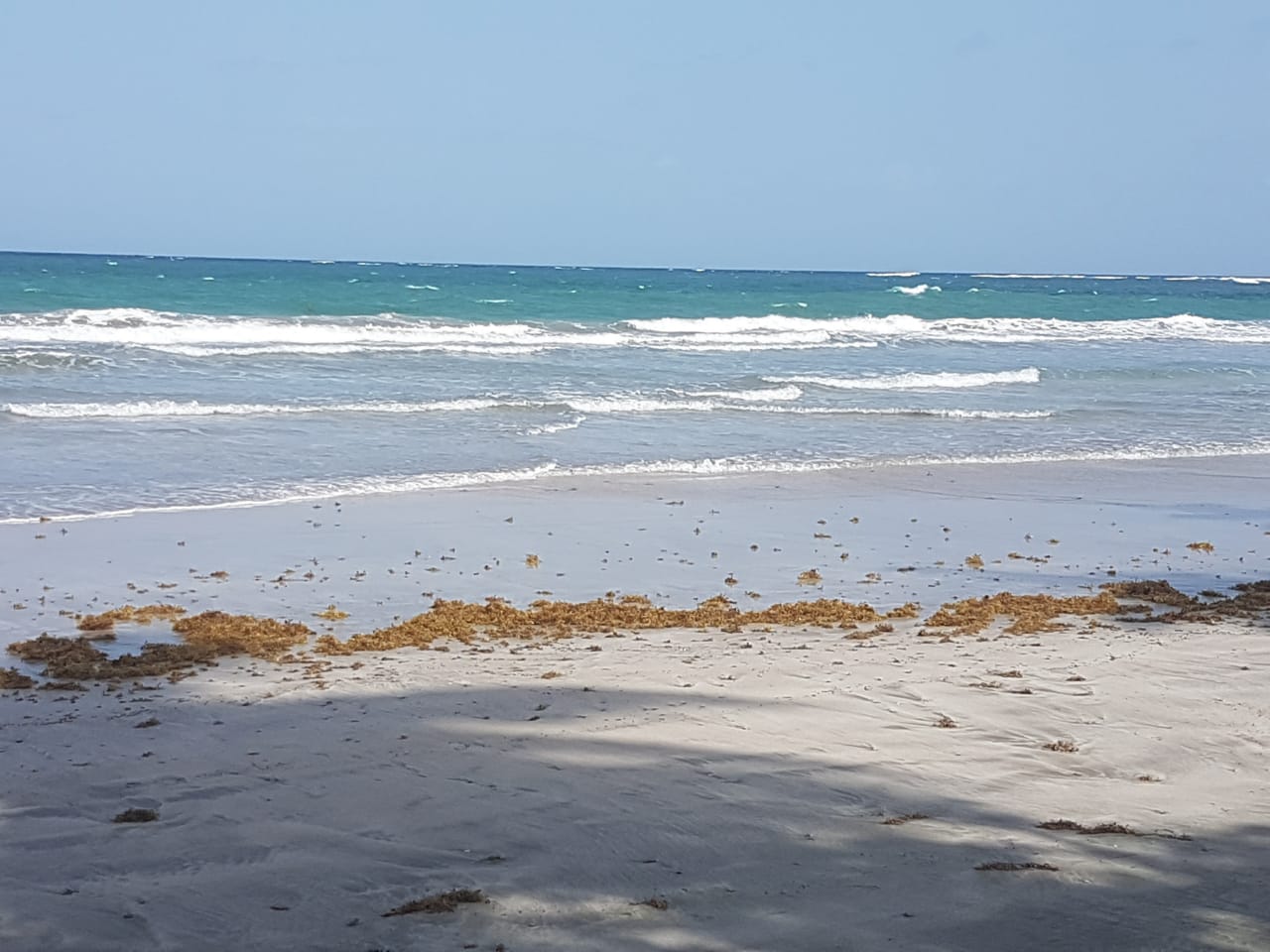
My wife and I were finally able to juggle our timetable to do some island hopping. We’d been to Europe and America but this time, not just because of COVID-19, which had affected those continents and left us in the Caribbean unscathed, we decided to island hop from Grenada to Jamaica, going up the West Indian islands. We had always wanted to do it. It meant total freedom with no one, especially from work, to bother us.
“Why you wasting your money for? You could rent a beach house and spend a weekend down Mayaro instead,” my father said.
“All the islands the same, yes. Why you even bothering?” my mother asked.
“Same beach everywhere you go,” my mother-in-law chimed in.
“You two should save your money and do something worthwhile,” my father-in-law said.
We knew differently. Each island had different histories, different sites to enjoy, different types of people and customs… nah, we were excited and no one was going to change our minds.
“What time we leaving?”
“Early in the morning, Monday, 23rd March,” I answered my wife.
“Yeah, but what time? I need to tell Dinesh when to pick us up for the airport.”
“Ok, tell him, four o’ clock in the morning… and not to be late like last time. We did almost miss our flight.”
“I’ll tell him. You think this COVID will hit us bad here? I find it so frightening. So many people dying.”
“Listen, darling, God is a Trini and we have no COVID cases here. We not going to get any.”
But I talked too fast. The next day, on 12th March, the country recorded its first case. A man who had visited Switzerland. The day after that, two more cases were recorded.
“You think we should cancel?” my wife asked.
My eyes nearly popped out of my head. “And throw away all that money I spend on airfare. Oh no! Let them cancel and refund me my money! Until then, we going Grenada on the 23rd!”
By 19th March I was so excited to head out. The country had nine cases, no deaths. I thought that was a good track record. God was still a Trini and my wife and I were going on our much-needed vacation. Three weeks of pure bliss. Sand between our toes, underwater museum in Grenada, chasing flying fish in Barbados, Blue Mountain hike in Jamaica, skipping over hot bubbling sulphur springs on the Soufriere Volcano in St Lucia, and discovering our own uninhabited island in the Grenadines. Whoever said that the Caribbean islands were all the same did not care to bathe in their beauty.
“Darling, the government addressing the country on the 21st.”
She ran out of the bedroom, busy packing the suitcases. “About COVID?”
“Yeah. Just an update, I sure. Darling, you not excited? A few more days and we gone!”
“Yeah,” she said. “But I worried. Suppose now we get the virus on one of the islands?”
“Oh Gosh! We not going to get it. Darling, be positive.”
“Okay, okay.”
Two days later, the Minister of Security addressed the nation and as he spoke, my jaw dropped and dropped until it was dragging on the floor. Forty new cases confirmed in one day because sixty-eight adventurers decided to go on a cruise that eventually became the stage for an outbreak of the Coronavirus.
“How people could be so irresponsible?” I shouted at the television.
“Because of this we are closing our borders effective midnight on 22nd March, 2020. Nobody will be able to come in or fly out of Trinidad and Tobago,” the Minister announced.
I held my head, fell down on my knees and bawled.
My wife ran into the room but all she could do was rest her hand on my shoulder and, when she thought she could get a word in, she whispered, “This is God keeping us safe at home, darling.”
No vacation.
Would the airlines even refund me my money?
If my wife had never seen me cry before, she saw enough that day to last a lifetime.
10 September 2020
Carla du Preez
Pretoria, South Africa
Counting the cost
MAY 2020 PRETORIA, SOUTH AFRICA DAY 50 OF LOCKDOWN It is Winter here. These are the things I have washed: plates 500 coffee mugs 200 water glasses 100 oven dishes 50 pots and pans 100 lids of pots and pans 100 containers for leftovers 100 lids of containers 100 salad bowls 50 cutting boards…
10 September 2020
Counting the cost
by Carla du Preez
Pretoria, South Africa
MAY 2020
PRETORIA, SOUTH AFRICA
DAY 50 OF LOCKDOWN
It is Winter here.
These are the things I have washed:
plates 500
coffee mugs 200
water glasses 100
oven dishes 50
pots and pans 100
lids of pots and pans 100
containers for leftovers 100
lids of containers 100
salad bowls 50
cutting boards 50
cooking utensils 200
cutting knives 150
dinner knives 300
forks 300
dessert spoons 150
serving spoons 100
tea spoons 250
mixing bowls 50
baking utensils 100
hands 1000
SEPTEMBER 2020
PRETORIA, SOUTH AFRICA
DAY 168 OF LOCKDOWN
It is Spring here.
I am still washing things, but I have stopped counting:
clean dishes, clean hands.
Instead, I want to sit outside and watch new leaves
unwrap themselves from branches.
These are the things I cannot count:
beauty
kindness
hope
gratitude
13 September 2020
Debasmita Ganguly
Kolkata, India
The wall between us
Have you ever seen the ants die? After you smash it under your slipper no bloodstains, no trace of the corpse just track it, hit your shoe against the ground you will find hundreds of them underneath and no need of substantiation by quantitative analysis. A few steps away is Samuel Samuel Tainam small…
13 September 2020
The wall between us
by Debasmita Ganguly
Kolkata, India
Have you ever seen the ants die?
After you smash it under your slipper
no bloodstains, no trace of the corpse
just track it, hit your shoe against the ground
you will find hundreds of them underneath
and no need of substantiation by quantitative analysis.
A few steps away is Samuel
Samuel Tainam
small nose
slit eyes
pale skin
etched in few decades of slaughter or sleep
The viscera report is yet to come
Back home a teacher once told him to create and endure
let his toil be vast
till he becomes their freedom.
The sky turned electric blue that afternoon.
Some dreams can offer redemption.
So Samuel arrives and stops dazed by the sun.
The capital looks fine with the tricolour fluttering
keeping in mind the perfect geometry of democracy
Samuel doesn’t get the great theme it serves.
Samuel Tainam
from the far east, untouched landscape lost in memory
obscured, shipwrecked, without pity or anything right.
His history forgotten in
much sober-sided calculations of
small nose
slit eyes
pale skin.
They call him ‘chinki’, ‘chowmin’ and these days ‘virus’.
Samuel sometimes laughs with them, sometimes ignores
and it feels like sliced with a butcher’s knife every time.
Every day a little harder try to enter
choked, swamped, squeezed
nothing really works.
Until that morning!
The boys sitting on the next table in the café
didn’t budge
a fit of rage beneath that pale skin
years of betrayal flared up in those slit eyes
Samuel smelt the hills crisp with fallen leaves.
When prayer doesn’t work
fly or fire
Samuel, you’ll be blurred in gloom.
Here lies Samuel
in a dingy corner of the morgue
open mouthed
slack neck
inert like humanity, terribly bored
free from licking and counting wounds of so many wasted years.
Out in the streets, people are bursting their lungs out for Floyd
Samuel Tainam
secretly wishing to be born again like that dark beefcake
only to assure immortality with death.
He knows by now here every life gets a different value
though nowhere close to the attention that a cow gets.
The saffron sun shines high
little violations at home fade away in the spangled sky.
31 August 2020
Dewali Deb
India
BREATHLESSNESS
When my footprints Leave behind no marks On your landscape Townscape No more I sail my boat on my windy wings Sail I’ll pay back Whatever you lost Bought and sold Close your door Close your door on every coming and going On every footmark of life soul Then Only then you remember me…
31 August 2020
BREATHLESSNESS
by Dewali Deb
India
When my footprints
Leave behind no marks
On your landscape
Townscape
No more I sail my boat on my windy wings
Sail
I’ll pay back
Whatever you lost
Bought and sold
Close your door
Close your door on every coming and going
On every footmark of life soul
Then
Only then you remember me
Stare vacant
Looking for me
I’ll unable be to answer your call
You’ll make a shrine in my memory
In memory of my life
In memory of your life and all
Like ‘Once upon a time
In your telltale
In your story you write
The string of our heart
Will no more sing song
The string in your hand
The Veena and violin
Rest dust
Layers of chocking dust
Chocking dust upon choking dust
On keys of flute
Unable to breath
Puff in
Unable to blow
String the Sarangi
Tune whiff the Pungi
Day after day
How it is to think
Flowers and gardens go into hibernation
OH! We are two songs
Sing chorus in one tune
OH! The dark
The dark Lord Shepherd Boy
Will no more sing his pipe
To his herd on green pasture
Graze on green pasture
Kiss lowly his face
Ring aloud their pendant bell
I’ll no more play
I am in dismay
Play into dawn
Play out into dusk
I have lost my spring
My garden and my nest
You will give me a new name
You will try to hold me close
Where am I
Gone forever
Forever from your landscape
Townscape
04 September 2020
Anjani George
Kerala, India
A New World
And we huddled in our homes No complaints, thankful to just be safe And we prayed as never before For our world and those around us And we forgot all those differences In union against the common enemy And we cheered those frontline warriors Waging this war, wishing we could help And we felt sad…
04 September 2020
A New World
by Anjani George
Kerala, India
And we huddled in our homes
No complaints, thankful to just be safe
And we prayed as never before
For our world and those around us
And we forgot all those differences
In union against the common enemy
And we cheered those frontline warriors
Waging this war, wishing we could help
And we felt sad and shed tears
At tales of those who succumbed
And we worked without setting foot out
Did we think it could ever happen?
And we learnt new life skills
That we thought we wouldn’t need
And we rested at home too
Together under the same roof
And we played all those games
We’d missed over the years
And we cooked and baked
Those recipes, mouth watering
And we cleaned and dusted
Those nooks that never mattered
And we watched all those movies
That made us laugh and cry
And we read all those books
Piled on the shelves, unread for years
And we listened to good music
That we never had the time for
And we danced to our heart’s might
Swaying to those fun rhythms
And we had time to hold each other
To nurture and to care without hurry
And we found time to seek and meet
Though virtual, it brought great joy
And now refreshed anew
We are braver, stronger and more bonded
And this also we will overcome
This virus that dares cross our path……
02 September
Teddy Totimeh
Ghana
On Racism
I became aware of my blackness when I left these shores for the first time. It was a strange self realization, that living in Ghana did not prepare me for. I have heard astronauts say that they only grasped how special Earth was when they had left it, and saw that blue dot floating in…
02 September
On Racism
by Teddy Totimeh
Ghana
I became aware of my blackness when I left these shores for the first time. It was a strange self realization, that living in Ghana did not prepare me for. I have heard astronauts say that they only grasped how special Earth was when they had left it, and saw that blue dot floating in absolute blackness. This process was less benign. Over the years I have come to understand that there is a certain acceptance of my humanity, that I can only experience in Ghana.
Once away from these shores, I realised I had to choose carefully which child I would smile and wave at, after mothers grabbed their bags closer in response, and shielded their children. I had to understand that even if I was a valued member of the team in the hospital, I could appear to be a threatening hulk on the street. I learnt to move to the other side of the road, when I saw school children on their way home, especially if they were young boys. I slowly understood the questioning stares at haute couture stores, or speciality restaurants, or classical music concerts.
I learnt to deeply treasure the friendships that I was blessed with. I realised how crucial these special people were, for replenishing my stores after the relentless external dehumanization. I have fathers, mothers, siblings of different nationalities, who have ensured that every time I have come back home (to Ghana), there was enough humanity left to remain myself. The experiences differed from country to country, but I soon accepted that sometimes the grossest episodes happened where I least expected. I also accepted that sometimes, no matter how alluring the park was, no matter how many toys, or swings… maybe it was not for my children.
I have had a very sheltered experience generally during my seasons abroad because of what I do. But the reality of my blackness has always been that inevitable faultline that could weaponise at any time. Sometimes the disbelief in a foreign person’s eyes, when I say what I do with brains, is so absolute, that after experiencing it over and over again, the doubt transfers. Negative reinforcement is a powerful force. Back home, stepping into the security of an environment where it is not strange to introduce myself as a doctor, can be almost euphoric.
And that is why I would go to the moon and back, for the people who have reached beyond their cultural realities and accepted this Ghanaian into their homes in many different time zones. These are heroes with something rich about their humanity. They have made my life better. And for every person who is touched by anything I have learnt off the shores of this country, they have these international parents, siblings, teachers … to thank.
At the core of all prejudice, tribalism, or racism… is that blindness to innate humanity. And its reality, is how insidious it can be. And as we point fingers condemning racism, let’s remember that the slavery that founded the evil of racism, was fuelled by the business of people trading people. That tribal wars produced individuals so dehumanized, they could be sold for sugar, rum and arms. It’s interesting that these devalued humans would contribute to building the richest country in the world. That where they were bought or captured from, is still the richest continent, with the world’s poorest people.
And even though this is the country I call home, where I want my roots to sink, and my heritage to be established, I can’t close my eyes to how this devaluation of people still persists. I can’t be blind to the daily dehumanisation that ensures that there are more V8s on our roads than ventilators or more members of parliament than Medical/Surgical specialists in the country. I can’t pretend I do not see how COVID 19 infected Ghanaians are treated by their various communities. Or how a country famed for being welcoming international visitors, now treats some of them.
This is the land of my birth. This is where my ancestors thrived. This is where I would love for my children to establish and build greater legacies than I would ever conceive. It is still the place where I feel most protected and ready to let my family indulge in its blessings. But we must always remember that all it takes to empower prejudice, tribalism and human devaluation, is to quieten the voices of collaboration, community and corporate progress. And at this time, I remember my international family in the US. I know how hard these times must be. How this single moment of inhumanity discolours the true spring of love and hope that continues to power loving actions and motives.
In these difficult times, I remember you all.
14 September 2020
Geetha Ranganathan
Chennai, India
When will nature forgive mankind
It was not any ordinary afternoon for Sujatha, a brilliant, young girl studying in Coimbatore. A breeze blew at her lustrous hair and she regained consciousness with the memories of her mother, Kayal and her sister, Radha. Sujatha belonged to a poor family from a small village in Tamil Nadu. Her single mother, Kayal, looked…
14 September 2020
When will nature forgive mankind
by Geetha Ranganathan
Chennai, India
It was not any ordinary afternoon for Sujatha, a brilliant, young girl studying in Coimbatore. A breeze blew at her lustrous hair and she regained consciousness with the memories of her mother, Kayal and her sister, Radha.
Sujatha belonged to a poor family from a small village in Tamil Nadu. Her single mother, Kayal, looked after the family since Sujatha had lost her father at an early age. She only recognized her father from the old photograph her mother kept. Kayal did farm work in the nearby fields to make a living. Realising her family’s precarious financial position, Sujatha showed great interest in her studies and her principal helped her to join the B.A. Botanical Studies at a renowned college in Coimbatore.
August 15, 2020: Today marks the 143rd day since the birth of lockdown because of COVID-19 in India. Also, it is the 74th Independence Day in India. Before the Government initiated the lockdown, Sujatha prepared day and night to score high in her exams. Unexpectedly, the college authorities cancelled the final exams. So Sujatha thought of returning to her hometown as soon as possible. As the lockdown was extended, however, bus services were totally banned and she was forced to stay back at the hostel.
In normal times, Sujatha stayed in her hometown during the holidays which always began with an oil massage to her hair by her mother, followed washing her hair and eating her mother’s homemade food. Then, she would spend her day listening to the Radha’s stories and roaming around the village with her sister playing at the pond and open spaces.
When she stayed in Coimbatore, she would talk to her mother once a week, because Kayal does not own phone and she can only speak on the next door neighbour’s phone. Sujatha had never regretted being born poor and sternly believed that she could change the fate of her family. But being alone in the hostel because of the lockdown made her ponder over unnecessary things. She felt low not reaching out to her mother and felt stressed about being poor. Just then, her college mate Vidhya came inside her room and started speaking,
Vidhya: “Hey Sujatha! Do you hear something about Bavisha today? She was so stressed, it seems. Do you know why? Generally, they will travel to foreign countries during the summer holiday. And with this lockdown, she cannot go anywhere and that has caused her stress, she says.”
Sujatha: “Uff!! Is this important now? Everyone here is desperate to go back home. And in this situation, she feels bad about missing a foreign trip. Shit! Please leave that topic for a while, Vidhya!”
As Vidhya was talking, Sujatha’s negativity rose to the next level. She started comparing herself with her classmate, Bavisha. Bavisha belongs to a rich business family in Coimbatore. She comes into college wearing expensive dresses, and she takes care to not repeat the same outfit. She dolls herself up with branded make-up kits and matching accessories and boasts about her luxury items with her friends at college, showing less and less interest in her studies. In contrast, Sujatha does not have any luxury things and she takes part in all the contests held by the college, showing her talent. She spends her holidays researching the plants in the village and sharing the research stories with her mom who proudly tells the village residents about her daughter’s research.
With an irritated sigh, Sujatha rescued her hair from the breeze and became absorbed with the memories about Kayal and Radha once again. She even stopped listening to Vidhya’s tales. Disheartened by her loneliness and the comparison with Bavisha, Sujatha fell asleep. In her sleep, she had a dream which coloured her thoughts.
…………………………………………………………………………………………………
“Puvi! Where are you?” Agila stood anxiously while combing her hair.
“Hey, here I am, Agila!” Puvi answered from behind.
“Puvi! I am so happy today! Do you know why? I went to my children’s home today and saw them. Meena (Fish eyed) looked relaxed in her house. And Vengaiah (Lion) is working in his workplace with no pressure. Also, my breathing is becoming normal nowadays,” said Agila.
“Oh! Wow! How many years have passed, since I saw you happy like this, Agila!”, replied Puvi. Later, Agila’s face became dull and Puvi noticed the same.
“What is the matter, Agila? Why you have become sad suddenly?” he asked.
‘‘No, Puvi! I am thinking about Sujatha now. She is unhappy at this moment.” said Agila.
“Why?” asked Puvi.
“It would be tough for her to stay away from her mother now,” Agila said.
“Is it necessary to worry about Sujatha now?” asked Puvi.
“Why not Puvi! I am the mother of all. So, I would be delighted to see my kids happy. Now my daughter is suffering, and her worry troubles me,” replied Agila.
“Agila! That is fine. But why do you lose your composure for that? She will be all right soon.” said Puvi.
“Yes! She will become normal soon, and that is why I came here now. Sujatha! Your pain is correct in every sense. But you need to understand one thing. Whatever we give to nature will come back to us. Human beings have destroyed nature in many forms. And this situation is the mirror effect of that destruction. This period will not stay for long and it will change soon. Until then, you need to be patient.”
“You need to realise a few other things too. As a woman, you might face many obstacles in life. Minor disappointments and failures should not shatter you. Every woman requires confidence and courage throughout their life. You need to remember the sacrifices of your mother in grooming you. Also, comparing yourself to Bavisha is no use. It is because you know that every human being is unique” continued Agila.
“Don’t you love plants? I know you do. Think, these are the days when nature can return to its usual state. In this way, you need to keep your mind peaceful. Please don’t stress yourself like this!” said Agila.
Sujatha: “Amma! I am so sorry! But I do not recognise who you are? Are you from my hometown? And how do you know me personally?”
“Sujatha! Don’t you recognise me?” said Agila with surprise and stretched out her hands. Sujatha saw green fields, plants, animals and other creatures at her fingertips; mountains and hills at her feet; and water levels in her eyes.
“Sujatha! I am Agila! (The world), I am the universe! And Puvi is my friend, Earth!” Agila smiled loudly, which woke Sujatha from her sleep.
…………………………………………………………………………………………………………………………………….
Startled, Sujatha got up from the bed. She realised that it had all been a dream. She thought that the current happenings are the need of the hour. Slowly, tears rolled down her cheeks.
“I won’t worry any more amma! I understand that my mother is here with me. All my attention will be on the studies alone. And I won’t compare myself to anyone and get distracted with it. When nature is happy, I should feel joyful and I will. I grew up seeing difficulties and troubles in life. From now on I will take care not to get disturbed by any setbacks” decided Sujatha.
The twilight wind rubbed her face. Sujatha closed her eyes to admire its warmth. The soothing wind opened her intellectual windows, allowing the breeze to blow inside. With a dazzling smile, Sujatha asked Mother Nature, ‘When will you forgive us?’ Just then, a raindrop splashed on her face.
16 September 2020
Janakiram Chikkala
Kakinada city, India
JOIN OUR HANDS
Years and decades are gone Since humans arrived on the Earth! But present also a transparent wall between them. In the name of Colour, race, religion discrimination These are wounds in a healthy society Our brotherhood, humanity, development Buried beneath these walls. Life, death, between them, live, eat, sleep Is common to all humans. So…
16 September 2020
JOIN OUR HANDS
by Janakiram Chikkala
Kakinada city, India
Years and decades are gone
Since humans arrived on the Earth!
But present also a transparent wall
between them. In the name of
Colour, race, religion discrimination
These are wounds in a healthy society
Our brotherhood, humanity, development
Buried beneath these walls.
Life, death, between them, live, eat, sleep
Is common to all humans.
So why do we discriminate? For what?
Think again.
No such separation for animals or birds
With so much knowledge and intelligence.
What do we do?
We all are sons and daughters
Of goddesses of nature.
All are equal in her eyes
All have an equal right to enjoy everything on earth.
From today break transparent walls between us.
Join our hands and walk towards humanity and brotherhood.
29 August 2020
Jane Nannono
Kampala, Uganda
AN ELEMENT OF DRAMA IN MY VILLAGE
Katwalo and his girlfriend Mazzi were the latest additions to this small…
29 August 2020
AN ELEMENT OF DRAMA IN MY VILLAGE
by Jane Nannono
Kampala, Uganda
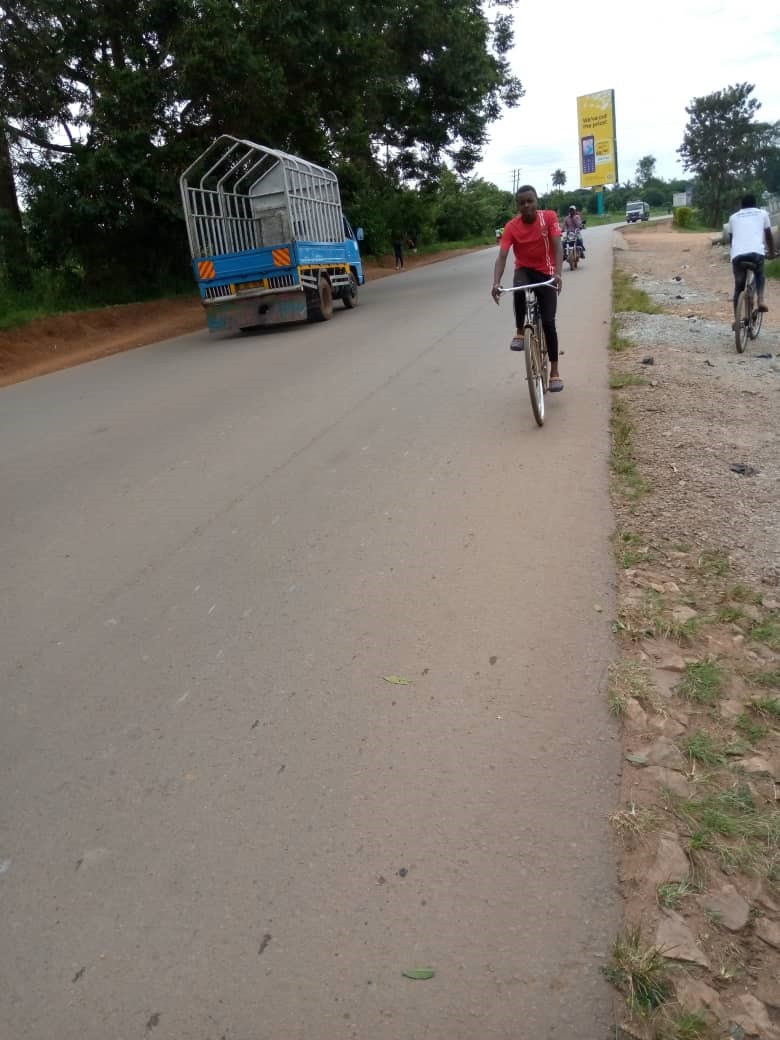
Katwalo and his girlfriend Mazzi were the latest additions to this small place where everyone knew everyone else by name. They rented two rooms in the small house opposite mine. Three days after they moved in, the government declared a lockdown to stop the spread of the new contagious Coronavirus. The lockdown restricted any movement of people except those working in the essential services. It included a curfew that was lifted from six thirty in the morning to seven in the evening. All this boiled down to staying where you were, to be safe. In late January, the disease had sounded far away in Wuhan, China, but on 22 March 2020, the Ministry of Health announced the first confirmed case in our country. It was a 36-year-old Ugandan male returning from Dubai aboard Ethiopian Airlines.
It made the COVID-19 respiratory disease real to Ugandans. It reminded me of another experience, in 1994 when I had relocated to Botswana as a health worker. The Batswana considered HIV/AIDS a disease of Ugandans and other East Africans. My appointment as a health worker could not be confirmed until the HIV test results done in the government laboratory in Botswana had been received by my employer. Being someone who hates surprises, I had had it done twice before I left Uganda.
Like the majority of people who understood that the new disease was still shrouded in uncertainties, I stayed indoors. There were three of us in our home: my frail octogenarian mother, our vibrant helper in her early thirties and myself. My mother, a staunch Catholic by habit, put in a lot of hours listening to the Catholic-run Radio Maria while the helper watched Indian soap operas on television. We made sure we listened to the live updates from the Ministry of Health on the COVID-19 disease and how to keep ourselves safe and prayed together in the evenings. As a writer, I spent hours tapping away on my laptop but then I became a keen observer of my environment and listened to the birds’ songs, cicadas chirping, animal noises, the children’s laughter, and cries in our neighbourhood. My village had never been this quiet.
My attention was drawn to the new arrivals in the area, not by choice but merely because my house was surrounded by a wire mesh fence adorned with creepers. It was fine before the lockdown as I was too busy to notice what was going on across the road. But now that I had a lot of time to myself, I even noticed the chickens pecking at insects in the compound.
Katwalo, the newcomer, was tall enough to qualify for a basketball team, lean and bald which he concealed by wearing a baseball cap or a fedora. He appeared to be in his late fifties and usually wore a baggy pair of cargo shorts and a replica soccer jersey that was one size too big with a pair of colourful sneakers.
Whenever he was seated on his verandah, he would greet almost anyone passing by irrespective of age. The children soon took to him though they still kept at a distance. They would congregate in small groups, hide behind the mango trees and peep at him as he read his local newspaper. In the evenings, he would water and take care of his vegetables – tomatoes, eggplants, carrots, and green pepper – growing in discarded car tyres, which amazed the children.
The girlfriend Mazzi was rarely seen on the small verandah, preferring to stay in the house. By mid- April she had developed a habit of dressing up as if going to work, wearing a face mask and leaving the house at 9 am not to return until just before curfew began. She looked like she was in her mid forties and really cared about her image. Her afro-kinky braids were decorated with beads and big hoop earrings dangled from her ears. Sometimes she wore colourful Pakistan Salwar suits, simple blue jeans with flamboyant floral tops or free flowing, colourful party dresses.
I wondered about what kind of essential services she provided, yet it was none of my business, so I never asked. But I did not have to wait long to find out. One afternoon I was woken from my nap by the sound of someone passing my house, shouting at the top of her voice. She was speaking English and kept pausing and breaking into song. “Change your mind and come back home, somebody looooves you.” I was tempted to peep through my bedroom window. Lo and behold! It was my neighbour staggering home merrily.
As expected, the children came out to watch Mazzi make a spectacle of herself. They had the best laugh of the day. Some started mimicking her gait and singing. “Somebody loooves you.” She found her way to her doorstep, got the key out and opened the door. It was the same the following day, much to the amazement and amusement of the children and their parents.
One Friday night, around 8 pm, someone was heard screaming, “Thief! Thief! He’s trying to steal my money and phone.” Many of us heard the piercing scream during the curfew hours. Someone must have called the Police Station which is only a stone‘s throw away. Yet by the time they came, the thief had run off with his bounty.
Mazzi was driven to the Police station to make a statement but, with her mumbling, all they could pick up was that her bag and its contents had been snatched from her. They realized that she was not in a position to answer any of their questions. She certainly could not have explained away being found outside her house after curfew. Before they knew it, she had laid her head back and was snoring, and she did not wake up until 6 am. “How did I get here?” She asked in a panic and looked around for her handbag.
“My man friend must be looking for me. Afande, did I commit any crime?” She asked. Her breath smelt like the local distillery itself. An officer tried to help her remember what had happened to her last night.
To the officer’s surprise, Mazzi laughed out loud. “Was my handbag taken from me for safekeeping? I need to call my man friend.”
“No, you didn’t have a handbag or Mobile phone when you came in here.”
“Then who has them?”
“What is your name and where do you live?”
“I’m called Mazzi. I live very near here.’’
“Could you find your way there?”
“Why not?”
“Can we get your man friend to pick you up from here?”
“His number is in my phone which I don’t have now.”
“Can you please write your home address. I can send someone to collect him before I release you to go home.” The officer said, pushing a pen and paper towards Mazzi.
Afande watched her scribble the address.
“Please include the full names of your man friend too.”
Katwalo was not at home when a young man in civilian clothes arrived at the address. He asked us if we knew where Katwalo had gone.
“He left early which is unlike him.”
“Does he live alone?’’
“No, he has a girlfriend.”
“Could she be inside the house?’’
“It’s unlikely. The house is quiet. She normally keeps her radio on and loud too.”
He knocked on both the front and back doors. There was no answer.
He asked me to deliver a message to Katwalo to come down to the police station when he returns.
“Is he in trouble?”
“No, just make sure he gets the message.”
Katwalo had called Mazzi’s number many times but her phone was off. He waited until the morning before going to check with the owners of the three drinking joints which she tended to visit. From the last one he learned that Mazzi had been there until almost 8 pm, then walked away on her own. Katwalo responded, “let me have something to eat at home, then I’ll call her sister.”
On reaching home, he made himself some rice and eggplant stew with avocado which I found him eating when I came to give him the message from the plainclothes officer. His heart skipped a beat, he was lost for words and fear was written all over his face.
“I’d say that it is not something very serious. The messenger never asked me for your phone number.” I reassured him.
On reaching the station, Katwalo was greatly relieved to see his girlfriend. Afande Zawedde took some time to explain what transpired the night before.
“Make sure you don’t get in trouble. The one who snatched your bag could have harmed you. Keep the curfew hours. You could even buy your drink and have it at home.’’
By the afternoon everyone in the village knew that a thief had stolen Mazzi’s bag, but the thief had not yet been apprehended. A group of three or four men were standing by my wrought iron gate passing the time and talking about last night’s incident.
“It was that smart lady who sings on her way home,’’ one of them had confirmed.
Much to their surprise, Mazzi walked past them at that moment. They followed her with their eyes only to see her enter her popular drinking place.
“ Where does she get the money to drink every day ?’’ One was heard asking.
“Ask her tomorrow.’’
“I can’t understand why she dresses smartly just to go for a drink in the village.”
“I was told that she has grown up children.”
“She seems to have given up on her life, otherwise how can she spend the whole day drinking that hard stuff.”
“I stopped judging people some years back. We don’t know her, for all we know she could be feeling lonely and miserable. She could be drinking to forget her misery.”
“No, she lives with a man friend down at Naggayi Close.”
“You never know, she could have a longstanding drinking problem which she doesn’t know how to resolve.”
“You’re right! A crisis never brings out anything new, it just brings to the surface what has been simmering below.”
“This new disease has confined us into one place and nobody knows how long it will go on. If it goes on for long, the weakest among us will get frustrated and depressed. We have too much time to ourselves.”
“Little wonder then alcohol consumption and domestic violence have gone up.”
I thought to myself about how Mazzi might have suffered a big loss or tragedy in her life that overwhelmed her and pushed her into alcohol dependency. The confinement could have just pushed her over the edge. It stood to reason that she needed some help and support to overcome it. Talk of the unintended consequences of COVID-19 disease – maybe sleeping on a wooden bench at a police station is what Mazzi really needed to face her demons and turn her life around. However, it was in all honesty, too early to tell and most times it gets worse before it gets better, I reminded myself.
Blog: http://penandprosper.blogspot.com/2019/02/6-bodacious-bloggers-black-history.html?m=1
Jane Nannono’s Author Page: amazon.com/author/tz31_maaso_06
24 August 2020
Leonard Dabydeen
Canada
TAMING COVID-19
Our global taming of this pandemic asks us to open our hearts, see ourselves. In our hearts the vision is clear, watching all forgotten living things seeking truth.
24 August 2020
TAMING COVID-19
by Leonard Dabydeen
Canada
Our
global
taming of
this pandemic
asks us to open our hearts, see ourselves.
In our hearts the vision is clear, watching
all forgotten
living things
seeking
truth.
15 August 2020
Mandira Pattnaik
India
Where we Unbelong
Done hawking amulets on labyrinthine cobbled streets, my brother and I, our starved bodies aching, squeeze between holiday shoppers and condescending gazes, trot to the open fields on the outskirts of town. Green, grassy, endless. Like where home was. Our people huddle here to archive loss, chronicle escapes, under a flag that flutters, doesn’t belong…
15 August 2020
Where we Unbelong
by Mandira Pattnaik
India
Done hawking amulets on labyrinthine cobbled streets, my brother and I, our starved bodies aching, squeeze between holiday shoppers and condescending gazes, trot to the open fields on the outskirts of town.
Green, grassy, endless. Like where home was.
Our people huddle here to archive loss, chronicle escapes, under a flag that flutters, doesn’t belong to us.
We run into the warm breeze.
‘Careful!’ warns the legless man.
Dino shouts back, ‘Ain’t any mines, this place!’
Everyone laughs.
We kick a cycle-rim around. Hands remain curled into fists in tattered coat pockets, ready, for Father always says, ‘We’re aliens here.’
17 August 2020
Paula Tan
Kuala Lumpur, Malaysia
Somewhere Towards The Ends
“Haiyo, Uncle… age is just a number. Learning not hard mah.” He’d heard that once too often. Today, Ah Phor’s rheumatoid arthritis was plaguing her again, so he was making that hot noonday walk to the chap fan shop to tapau lunch for her. Even at that old, second-rate shop, the vendors insisted he scan…
17 August 2020
Somewhere Towards The Ends
by Paula Tan
Kuala Lumpur, Malaysia
“Haiyo, Uncle… age is just a number. Learning not hard mah.” He’d heard that once too often. Today, Ah Phor’s rheumatoid arthritis was plaguing her again, so he was making that hot noonday walk to the chap fan shop to tapau lunch for her. Even at that old, second-rate shop, the vendors insisted he scan the QR code. Alternatively, write his details down on the tattered exercise book tied to the stained formica table. No smartphone, no glasses either. How la? He had forgotten his spectacles when leaving the house. Sweat trickling in a rivulet down the back of his singlet, he traipsed his way slowly back home to get them. In the sodden mask, his breath felt stale & sour.
A relative had suggested he use GrabFood, or Foodpanda, or get his son to do it for him. The same son who came home past ten every night, barely casting a glance in his direction. Self-pity aside, moving seemed that much harder these days. He’d put off paying his landline bill this month. Like the rice shop, the Telekom office required code-scanning, and the queue outside had stretched halfway down the block. His legs, bulging with varicose veins, ruled out standing that long, leaving him the singular option of sitting at the bus stop watching his neighbourhood route bus pass, and pass again. Still, the queue did not ease up. No kopitiam nearby either, but he consoled himself with the thought that he’d need to scan another code there as well.
An hour later, he fumbled with the lock, balancing a pack of Milo purveyed from outside the sundry shop. Ah Phor shot him an irate glare, she couldn’t contact her mahjong kakis. The landline was dead. As the evening sun cast its hazy glow on their intermediate terrace, he sat quietly on the rusty swing in their small compound. The neighbours’ creaking gate drew his attention, their daughter was home from work. She waved and reached out to him over the wire fence. “Ah Sok, I bought you and Aunty some kai fan from the shop near my office… ho sek ah.” Her smile was real, warm. Shyly, he mumbled his thanks.
Maybe tomorrow, he would ask if she could help settle his bill.
CANTONESE GLOSSARY
*chap fan : economy rice
*tapau : pack to go
*kopitiam : coffee shop
*Ah Phor : Term of respect for grandmother or elderly woman.
*Ah Sok : Term of respect for an elderly man.
*kai fan : chicken rice
*ho sek : tasty
MALAYSIAN COLLOQUIALISMS
*haiyo : Malaysian expression of exasperation
*mahjong kaki : Malaysian slang word for friends one frequently plays a game of mahjong with.
25 July 2020
Angus Wardlaw
London, UK
COVIDIOUS
We missed the blossom this year. Replaced instead by an ugly curve. The bent bow of a merciless nimrod preying upon our ancients and slinging arrows without prejudice towards those who serve. But still, life went through the motions: red lights pointlessly flashed. With their amber and green disciples following mindlessly behind for absent slaves,…
25 July 2020
COVIDIOUS
by Angus Wardlaw
London, UK
We missed the blossom this year.
Replaced instead by an ugly curve.
The bent bow of a merciless nimrod
preying upon our ancients
and slinging arrows without prejudice
towards those who serve.
But still, life went through the motions:
red lights pointlessly flashed.
With their amber and green disciples
following mindlessly behind for absent slaves,
no longer thrashed.
Whilst on the pavement below,
masked raiders scuttled along
with white cubes of panic under their arms
like fools.
Pigeons scattered
before reclaiming their empty streets
Dancing like squaws and braves
as they flouted the new rules.
Drowned birdsong resuscitated once more,
Swimming pleasantly back to our ears.
Father and child reacquainted,
throw bread together to feed their stolen years.
Social distancing; alone together.
Oxymorons are now our guiding light as we clap like cymbal-banging monkeys in both thanks and hope that those who are carers,
may take up our fight.
And if, next spring, we see the blossom fall,
what will we have learned?
Will it be business as usual for one and all?
Back to the grindstone.
Families divided once more by wage.
Or will we finally bow down to nature,
In reverence to Her, the ultimate sage?
16 August 2020
Srinjoy Dey
Mumbai, India
Quarantine #1
How to experience a pandemic: Rule One: Slow things down. Check every passing second of the clock crossing the dots, movement is essential for survival. Hold on to it. Rule Two: Growth. Your hair will grow out, so will the other parts of you – the eyes will grow tired, the ears – weary, the lips will…
16 August 2020
Quarantine #1
by Srinjoy Dey
Mumbai, India
How to experience a pandemic:
Rule One: Slow things down. Check every passing
second of the clock crossing the dots, movement
is essential for survival. Hold on to it.
Rule Two: Growth. Your hair will grow out,
so will the other parts of you – the eyes will
grow tired, the ears – weary, the lips will
grow dry and everything will begin smelling
like oats and rye. Your belly might pop out
of your shirt, so could your chest.
The thickness of your blood will hold them.
Rule Three: Dust will gather around your house,
the motivation to clean it will
be wiped away. Do not worry. We all
have corners we don’t visit.
Rule Four: Riddles. Men will appear on your television screens
and recite rhyming riddles. Sometimes you will solve them.
Sometimes they will dissolve inside you, leaving no trace.
You should make some hot tea and head to the verandah
with rusty grills. The scent of decaying metal is where we are at.
Turn brown, let the sun take you in its arms.
11 August 2020
Kailash Iyer
Nairobi, Kenya
The social distancing conundrum
“I think socializing on the Internet is to socializing what reality TV is to reality”. I read Aaron Sorkin’s statement in pre-COVID 19 times and re-read the statement post-pandemic. What strikes me is the unchanging essence of the statement in both eras. Internet socializing was fictional socializing before coronavirus. Internet socialising now feels as real…
11 August 2020
The social distancing conundrum
by Kailash Iyer
Nairobi, Kenya
“I think socializing on the Internet is to socializing what reality TV is to reality”. I read Aaron Sorkin’s statement in pre-COVID 19 times and re-read the statement post-pandemic. What strikes me is the unchanging essence of the statement in both eras. Internet socializing was fictional socializing before coronavirus. Internet socialising now feels as real as the Hollywood fictional ‘virus’ blockbusters, which turned into reality overnight.
‘Unprecedented’ has been the word most frequently used amidst this pandemic. Everything sounds unprecedented and ‘for the first time in history’, at least in memorable history. Unprecedented scale of infections. Unprecedented lockdown. Unprecedented economic fallout. The scale of fright that has engulfed people’s minds is undeniably unprecedented. Scrambling to stay inside the house, an unprecedented majority of the population is locked up inside the fortressed walls of their houses.
Among the unprecedented situations, one thing clearly stands out. An unprecedented increase in socialising. Surprisingly, in these unprecedented times of social distancing. The number of phone calls and WhatsApp messages that I have received during the past week of lockdown has breached the spiked-up levels of Christmas and New year chat figures. The phone calls that I have picked up in the last week may have matched the number of calls that my stock exchange friends receive during their waking hours. I am now aware that in times as bad as these, my friends will not let me down.
I did not receive these calls and messages initially when the curfew and social distancing measures were announced. It took some time for all of us to gulp down the news. That we will be locked inside our house for a long, really long time. My eagerness to overcome social fatigue made me switch off all kinds of social media. And I adopted Yoga, deep breathing, introspection, reading, writing and many more ‘opportunities’ that the self-help gurus and lifestyle experts prescribed.
Day one of curfew went past in all experimentation and managed to keep me engaged. Day two seemed to scream back at me, but the power of the Gurus lasted through and empowered my experiments with introspection opportunities. By day three it was clear that I was on a failed trajectory at becoming a recluse. And day four opened with all social media outlets reactivated. The floodgates opened right there. Hundreds of messages littered across all apps screamed at me for shutting from the world. I realised the internet has finally become a reality.
Messages from friends, well-wishers, acquaintances, relatives turned into cacophony as soon as they struck my mobile device, but for now, the cacophony sounded melodious. The same messages that we used to abhor with a ‘not again’, almost leading to blocking the uncles and aunties and ‘good morning’ friends now were sought after.
Those friends who were perpetually in a state of work surprised me the most. When the mobile device rang displaying the name of a long-lost friend who had decided to immerse himself in his obligations towards his business, I experienced a state of sheer happiness. Though a slight disappointment took over me when he revealed that boredom made him reach out to me, isn’t overcoming boredom one of the key responsibilities of friends? Socialization begins its journey with overcoming boredom. And then it dons more important roles like physical and mental support.
The pandemic has made us realise how important it is to have friends and people around you who care for you. Despite the debate over physical or virtual connect, the crisis has sensitised us to the need for emotional connect irrespective of the medium that we use. Prompting us to ask, ‘Did social distancing promote social proximity?’
19 July
Keston Charles
Trinidad
Church on Friday
No space on the left, Where people sat, Holy water replaced with hand…
19 July
Church on Friday
by Keston Charles
Trinidad
No space on the left,
Where people sat,
Holy water replaced
with hand sanitizer.
Mouths covered,
A lady at the door,
Writes names,
If it spreads they know who to call.
Hands clasped for the peace sign,
No touching,
Just watch,
Time for communion,
Brace yourself.
When church done Dee party start,
But only till eight.
19 July
Geoffrey Philp
Miami, Florida
The Lonely Floridians
“With all the riots on TV,” said Bill, as we talked over…
19 July
The Lonely Floridians
by Geoffrey Philp
Miami, Florida
“With all the riots on TV,” said Bill, as we talked over the nine-foot-high fence that separated our condos, “It clicked, Colin.”
“What clicked?” I asked.
“I finally understood what had been happening in this country when you told me about what your family went through with the eruption of that volcano–what was its name again?”
“Soufrière,” I said.
“Soufrière, yeah,” said Bill. “I swear since the lockdown, it’s like I’m losing my mind. All the days are the same. I’ve forgotten so many things. But then again, I’ve always forgotten the names of places on small islands.”
I winced, but I didn’t interrupt him. Before the lockdown, Bill and I only spoke to each other at awkward barbecues that our wives had organized. Or we’d see each other early in the mornings when he’d be running off to his job as a manager of a boutique hotel on Hollywood Beach, and I’d be climbing into my truck to begin prep work for a small indoor restaurant I own in Midtown.
Now in the afternoons after the thunderstorms have cleared, we sit on the wrought iron chairs–the last of our wives’ conspiracies for us to get along before Bill’s wife, Karen, left him in April, and Donna, my wife, died a day after Memorial Day from Coronavirus complications.
With our children in Georgia, New York, and Boston, Bill was probably as miserable as I was. Unshaven, unwashed, and unhappy, we watched mallards, egrets, and herons hunt near the lake that faced our apartments. Sometimes, after the thunderstorms, we make friendly bets about how far near the water will get to our apartment boundaries.
“I mean, to live on an active volcano for all those generations,” he continued.
“We’d learned to ignore the rumblings,” I said.
“But for so long!”
Bill was on his third drink. Not only was he slurring his words, but he was stressing his ‘r’s. Although Bill had lived in Miami for over fifteen years, he had never gotten rid of his Mid-Western accent. I was waiting for him to say he was going to “warsh” his glass later.
Whenever he got to his fourth drink, only his family and friends in Rendville would be able to understand him. It was also my signal to say good night and pick up my pitcher of sugar-free lemonade. The only reason I began drinking sugar free lemonade was after my doctor told me I needed to watch my glucose levels, and Donna scolded me when I didn’t. Now I drink it out of habit. But with Donna gone, what’s the point?
“My parents, grandparents, and great-great-great grandparents lived on Montserrat,” I said. “And before our family tree stretched back to Nigeria, Ghana, Benin, and Togo.”
“Never mind that,” said Bill. “What you said stuck with me since last night when I asked you about how your family could live on an active volcano for so long. And you said, “’After the eruption, we had to reimagine how we would live our lives.’ Fancy that, wisdom from a small island.”
The rattle of ice in Bill’s basket quieted the cicadas buzz in the tall grass. I waited for a few minutes to give Bill enough time to pour Old Parr, his favorite scotch, over the ice cubes. It was time to go back to my bed, where if I got any sleep, I’d wait to recycle the next day.
“Well, as they say in Little Havana, ‘Salud,’” I said. I raised my glass and pointed it towards the wall. I imagined Bill was doing the same–as if we could hear our glasses clinking against each other in the dark.
—
Read more by Geoffrey Philp
20 April
Hafeeza Nahaboo
Mauritius
A lesson for mankind
“The world is too much with us; late and soon Getting and spending, we lay waste our powers: Little we see in Nature that is ours; We have given our hearts away, a sordid boon!” – Wordsworth A lesson for mankind I The whole world is confined. Its inhabitants are locked down. Nature is…
20 April
A lesson for mankind
by Hafeeza Nahaboo
Mauritius
“The world is too much with us; late and soon
Getting and spending, we lay waste our powers:
Little we see in Nature that is ours;
We have given our hearts away, a sordid boon!”
– Wordsworth
A lesson for mankind
I
The whole world is confined.
Its inhabitants are locked down.
Nature is free from the lethal inventions of Man.
Flowers are blooming in the fields.
Bees are humming.
Butterflies are fluttering.
Birds twigs in their beaks
Are building nests in deserted trees.
Streams are gurgling down the valleys.
Little fish are leaping in the clear waters.
Plants are growing on river beds.
Beaches are resting and breathing
Lulled by the soft breaking of wavelets.
Dolphins are splashing merrily in the oceans.
Nature is expressing its right to exist
Too long over exploited by Man.
II
Covid is shaking the planet.
Its inhabitants are at a loss.
Facing a horizon of uncertainty.
Thousands of deaths.
Scarcity of food.
Economic imbalance.
Is it God’s wrath?
Disasters were the norms of the day.
Killing of innocent animals.
Oil spills in Galapagos.
Forest fires in Australia.
Deforestation of the Amazon.
Covid will soon be erased.
Will Man mend his ways?
Earth’s the right place for love.
Humanity needs Nature to survive.
Honesty and justice must prevail.
For a better tomorrow.
20 April
Hafeeza Nahaboo
Mauritius
‘Mankind is helpless before this invisible enemy.’
Covid 19 is on the rampage. Mankind is helpless before this invisible enemy. This pernicious virus is not sparing any place on the globe. It has reached and settled on our island. Lockdown and curfew are in force. The exceptions are the essential services namely hospitals, police force, fire rescue, supermarkets selling food and items…
20 April
‘Mankind is helpless before this invisible enemy.’
by Hafeeza Nahaboo
Mauritius
Covid 19 is on the rampage. Mankind is helpless before this invisible enemy. This pernicious virus is not sparing any place on the globe. It has reached and settled on our island. Lockdown and curfew are in force. The exceptions are the essential services namely hospitals, police force, fire rescue, supermarkets selling food and items of basic necessities.
One fine morning. My life has briskly changed. A strange feeling. No rush. School closed. I will miss all the familiar friendly faces in the van and at work. No morning jokes from colleagues to brighten the day. No shouts and peals of laughter in the recess yard.
It’s eight o’clock. I look through the open windows. An unusual silence invades the neighbourhood. No honking of cars. No echo of a human voice. Where are the others? A quiet breakfast, piping hot tea and home made roti with jam to start the day.
The order of the day is “Stay at home. Stay safe” is the best way to curb the pandemic. Home confinement makes us come face to face with ourselves and helps us to realise that we are dependent on each other for our survival on this earth. It is a blessed time, far away from the madding crowd, to rekindle our lost family and home ethics. Sharing in the daily household chores, cleaning and decorating our home, starting a kitchen garden, making a simple balanced home made meal and enjoying the food together, are activities to keep fit and to express selfless and green values.
House confinement brings changes in habits for a better world. Some will develop reading for pleasure which is fast disappearing instead of being glued to mobile phones. Others will taste the simple joys of life while discovering hobbies like woodwork, flower making, mask making, sewing and embroidery which can be proved useful in later years. Many houses have become sacred hearth of love and respect. Whole families pray and reflect on verses of Holy Scriptures during these days of adversity, “More things are wrought by prayer than this world dream of.”
One day there will be no Covid 19. It will indeed be a day of victory and rejoicings. Will we have a newer and better world? Will we retain and practise the lessons of humility learnt during the pandemic or will we go back to our former ruthless and selfish ways?
15 April
Shashi Kadapa
Belgavi, India
‘Will I be next?’

The lock-down in India wears us down psychologically and mentally. Cares, worries,…
15 April
‘Will I be next?’
by Shashi Kadapa
Belgavi, India
The lock-down in India wears us down psychologically and mentally.
Cares, worries, continuous media streams about Covid 19 stats presents
a endless relay of human misery, striking a deep fear and I wonder
“Will I be next?”
I hunker down in my home, swathe myself in masks, douse my hands with
sanitizers, these charms may work, or they may not. We have become so
paranoid that we are more scared of a child sneezing and coughing than
a psychopath fingering an axe.
I, we are the privileged few who have a home to hide, money to spend,
and we do not have to go out to work. So, what happens to the
unfortunates, the poor, who lead a hand to mouth existence. They must
go out in the streets, brave the dangers, earn a living, and then find
food.
Met Parvatiamma, micro farmer, vegetable vendor, and her misery in the
lock-down. Met her in Belgavi, India where I have put up with my
bro-in-law to wait this pandemic out.
She is one of the voiceless poor, without a FB page, twitter account,
no Instagram. She is not glam, does not pose in skimpy yoga pants, no
singing on terraces, no fans, does not grouch about wasting creative
time, no vids of sweeping the floor to gain sympathy and wows. Yes,
they are not writers.
Just hard working folks who live with what they earn in the day. No
savings, it is only grinding poverty and wretchedness.
This lady and her husband tend to a small patch, grow a handful of
potatoes, coriander, tomato, chilies, and sell them, making about Rs
100/ day, less profits, in the season. Drought, pests, money lenders,
she somehow manages to earn enough to buy a fistful of jowar and rice.
Her meager crop is ready in her basket. She furtively dodges cops with
sticks and tries to hawk her produce. Many times they drive her away.
Bargain hunting homemakers relish the opportunity to force her to
shave the price.
Without people like her, we would starve. With the lock down, her
despondency is now intense. Many evenings, she returns home with her
basket half empty. Scanty food is doled out in small portions. She
drinks a pot of water to fill her stomach.
I ask her, “Are you not afraid of infection.” Her stoic answer, “If
devi (goddess) wants, she will take me.”
Please give such people a salute, and do not bargain.
The two rupees you bargain is taking away a morsel of rice or a roti
from a famished child.
12 July
Sammy Abd
Colombo, Sri Lanka
The boat has now a new captain
The humans were busy In all things A to Zee Less you and more me Boundless and set free The change in the air Caught them unaware Bubbles of pretense burst in scare Crippling the globe, into dispair The hope now thin Survival mode kicks in To hoard and to turn in And…
12 July
The boat has now a new captain
by Sammy Abd
Colombo, Sri Lanka
The humans were busy
In all things A to Zee
Less you and more me
Boundless and set free
The change in the air
Caught them unaware
Bubbles of pretense burst in scare
Crippling the globe, into dispair
The hope now thin
Survival mode kicks in
To hoard and to turn in
And to protect the kin
The creatures of freedom
Now enclosed into boredom
An overwhelming emotion
As new norms fall into motion
With new regulations to pertain
A one meter distance to maintain
The future is no longer certain
Since the boat has now a new captain
15 July 2020
Subhadra Rajgopal
India
Ginger up
Deepika was making upma for breakfast. Not the rava or sooji upma, mind you. This was quinoa upma. As she was preparing the ingredients, her mother came into the kitchen. “Did you add ginger?” she asked. Deepika looked at up, eyes teary due to the irritant gas emanating from the cut onions. She nodded her head, and said, “ Yes, I did” Once breakfast was served, Deepika…
15 July 2020
Ginger up
by Subhadra Rajgopal
India
Deepika was making upma for breakfast. Not the rava or sooji upma, mind you. This was quinoa upma. As she was preparing the ingredients, her mother came into the kitchen.
“Did you add ginger?” she asked.
Deepika looked at up, eyes teary due to the irritant gas emanating from the cut onions. She nodded her head, and said, “ Yes, I did”
Once breakfast was served, Deepika set about making Chai. The water was boiling, when her mother-in-law peeped in from the dining area, and asked, “Did you add ginger?”
“Yes, I did”
Her husband, a late riser, was yelling from the bedroom, “Deepika, my morning mix please.”
Deepika hurried with the tall glass of the morning concoction towards her husband. He asked her, “Did you add ginger?”
“Yes, I did. This is your daily kashayam, in these covid times. How will it be complete without ginger?”
“I am just asking. Why so grouchy in the morning? A hard working fellow gets up a bit late, and the wife is all riled up!”
Deepika just nodded her head in exasperation. She was in a hurry. She had an important conference call coming up in few minutes.
Boss was pontificating about supply chains and how they got disrupted with the advent of covid-19. He wanted a review of every pin and needle they were sourcing. “Transparency, I want transparency throughout our supply chain. Visibility too. I would say re-architecturing the supply chain. I don’t want to be caught napping when there is a next black swan event, or another pandemic situation. “
Deepika was thinking, “I thought one pandemic is enough for a lifetime. This fellow is preparing for another?”
Boss stopped mid track, and said. “Team, I believe in breaks, especially tea breaks. If we can convene in about 15 minutes with you beverage of choice, we could have a virtual break. Please note, no shop talk during the interval. After the break, we can continue our meeting.”
So back they were at the virtual meeting, each holding a mug in hand. Gone were the old small tea cups with saucers into which one could pour the tea and slurp away. Nowadays it was personalised big mugs.
Boss, in his avatar as a benevolent leader, was solicitously asking in random, “what are you drinking?”. Almost everyone said, “Ginger tea”, aka ‘allam tea’, ‘Inji tea’, ‘adhrak chai’. Some of course said ‘herbal infusion with a dash of ginger’ , others said ‘mine is this super organic tea from the best of gardens, with just a hint of cinnamon and ginger’, ‘hand blended ginger tea’. So came in different descriptions of flavours, nuances, aromas. Deepika could hear someone say, mine is artisanal, hand blended with ginger.”
“Here we go again”, thought Deepika. Everyone was having ginger tea, of varied descriptions. Ginger seemed like the math topic in the online class of her school going daughter. The highest common factor.
Back they went into their discussion, and there were serious reviews about components coming from ‘you know where’ and whether they need to source from other countries. You know, the way it happened when USA played tariff games with that country. They re-routed through some other satellite countries. But we can’t fall to that trap. The country of origin is very important. Transparency. And so on. So forth.
Deepika was reeling from the discussions, and the added work load. Since her next meeting was after few hours, she went back to the kitchen to prepare lunch.
Her mother, was making ginger chutney, the variety which could go with rice and rotis. Deepika took out the bottle gourd for making ‘koottu’. Her mother didn’t look up from her efforts at the chutney. She said, I have already made the ginger-garlic paste ready. It is fresh, don’t put the ready made paste. There is ‘ajinomoto’ in it.
Deepika was sure her mother read all the newspapers in the morning, which were all going ga-ga about the number of ‘not-mentioning-the-name-of-the-country’ apps that got banned. So the sudden reticence for ready made ginger garlic paste, which had ‘ajinomoto’, according to her.
“Amma, you may be getting a bit confused about the country of origin!”
Soon enough, her son came bounding into the kitchen, and said, “Ma, don’t fob me off with instant noodles anymore. I am not going to eat them. Let us ban them from our kitchen, and make pastas, or lasagna.”
Her mother cracked a joke, “ Even those are not liked by the current rulers. They evoke so many other memories.”
Husband came out of his own virtual meeting for a break. Before he could open his mouth, Deepika said, “Your ginger-lemon tea is ready. Here it is.”
Deepika said, “Amma, I hope the government doesn’t ban ginger.”
“Of course it probably originated in south eastern Asia, which was part of ancient China.”
Her mother gave the verdict, “No, they can’t ban it. It could have originated anywhere, but Indian medicine practitioners who found out its medicinal properties. It is an integral part of ayurvedic and other Indian medicines. See how Ginger decoctions have helped us improve our immunity during these virus times. Our immunity levels are going up because of ginger. Even allopathy doctors are recommending it. It is a part of our culture, and comes under our definition of self-reliance.”
“Ouch”, said Deepika. “Let us put Ginger on top of the pecking order. “
Her husband said, “What, pecking? Does it not sound like the old name of a capital city? “
“Now I know where we copied the changing names and spellings from. Have we just not changed the spellings of all the cities in Tamil Nadu, everyone is so confused. A British name, an old Indian name, a new Indian name. Global to local”.
“Exactly, that is what the Government is telling us. To be self-reliant.”
Deepika was thinking, “If only resolving our supply chain issues were so simple!”
***
Upma : South Indian breakfast, cooked as a thick porridge from dry-roasted semolina or coarse rice flour.
Rava/ sooji : semolina (coarse middling of wheat)
Kashayam : A water decoction of a group of herbs.
Koottu : A dish made with vegetables and lentils
Allam, Inji, Adhrak : ginger in telugu, tamil, hindi respectively
19 April 2020
Faith Omoregie
Nigeria
QUARANTINE BLUES
He said… Let’s stay inside And find ourselves again Listening to quarantine blues That way You and I will stay safe In a virus infected world Recovering the union We’ve long lost roaming the world So we choose to stay safe Within our small space Forgetting to play safe Now inside We play from dusk…
19 April 2020
QUARANTINE BLUES
by Faith Omoregie
Nigeria
He said…
Let’s stay inside
And find ourselves again
Listening to quarantine blues
That way
You and I will stay safe
In a virus infected world
Recovering the union
We’ve long lost roaming the world
So we choose to stay safe
Within our small space
Forgetting to play safe
Now inside
We play from dusk to dawn
First on the bed
Then on the couch
Then on the floor
Then on the bed again
Safe in our self cage
Forgetting the hustles and garbs
We proudly deck as daily badges
Discovering places
We never knew exist
Within our tight space
Alcohol in our palms
Desire in our hearts
The walls are crumbling down
This lockdown
Though for a while
But we both know
With the world lock out
And we lock in
The seeds that will tell this tale
Are being spored every second
As we stay safe
Locked in
In a virus infected world
Swaying to quarantine blues
Awaiting a vaccine
In a world full of sin
03 May 2020
Sue Segar
Cape Town, South Africa
Khayelitsha during Covid-19

I decided to go to Khayelitsha today. Against all the odds. It’s…
03 May 2020
Khayelitsha during Covid-19
by Sue Segar
Cape Town, South Africa
I decided to go to Khayelitsha today. Against all the odds. It’s been three weeks of COVID-shutdown now, housebound with two teens who don’t want to know me and a husband who’s somewhere else, trying to save his magazine.
In the life of a journalist, that’s a long time inside. When the media alert arrived on my phone, saying the Minister of Housing would be going into Empolweni tented camp, I called my friend and colleague, Kim.
We go back a long way, Kim and I. I knew she’d drop everything to come with me.
‘See the Minister’s alert,’ I said. ‘I will pick you up in twenty minutes. Don’t forget mask and sanitizer. And essential services certificate.’
‘See you now,’ said Kim
We worked at Parliament as reporters for years at the same time, she as a broadcast TV journalist and me as a print journo, often under pressure. (Once, at the president’s office, Tuynhuys, during a briefing, she yelled at me, ‘Sue, you’re in my f**king shot.’)
I was standing right in front of her cameraman. I felt humiliated, furious, but I teased her afterwards.
We were stopped just once by the police on our way into the township. Quite scary. Anyone in a uniform in this country terrifies me. It goes back a long way, that fear. But the guys were very nice. They looked at our permits and told Kim to sit on the back seat. ‘She’s sitting too close to you,’ said one officer. But they gave us great directions to the camp. They knew exactly where it was and seemed happy that the media were going there.
We arrived at the Empolweni camp and parked. There was quite a bustle! The city knocked down some houses here a few weeks ago, where people were building illegally on council-owned land. They gave the people some tents to live in. Big, cream coloured flappy things. Then Corona struck.
We got out of the car and saw a throng of people around the minister’s entourage. Behind them, a field of flapping tents dumped on the sand.
The minister was dressed in a white dress and high black stilettoes. She had on a mask and carried a bright green bottle of sanitizer. She struggled to walk through the sandy, uneven surfaces where about fifty tents stood flapping in the wind. Her hair looked perfect. Inside the tents were bags of stuff, but no groundsheets.
We walked among the people living in the tents. They were friendly and chatty. Children played soccer in the sand and dashed through the spaced tents.
Outside some of the tents, people had placed old armchairs, rusty beds, funny tables with wonky legs – remnants from the houses that had been demolished a few weeks earlier.
On one of the armchairs sat an old lady. It was a big armchair and looked quite grand plonked out there in the wild, even with a few bits of stuffing gashing out of it.
She looked like a queen. In front of her, another woman was tending a fire, made of sticks upon which sat a big pot of boiling stew. Other women sat on rickety chairs around the fire, chatting in the fire and the wind. Men stood around, mingling with them, before sauntering over to join the conversation among the minister and her staff.
Police with loudhailers implored people to keep their distance. They did not.
Children ran up and down the hilly sand dunes on the outskirts of the tent settlements. Every now and then a toddler would run to the gogo, sitting like a queen among her friends, and leap into her lap. She would absent-mindedly stroke the child’s forehead, then shove them aside to get on with her conversation. Then another child would pitch up and get the same treatment. She managed to lie in that armchair. She dominated the conversation, often punctuated with shrieks of laughter while the other women took turns to stir the pot.
The minister addressed the crowds, told them she would soon be helping them rebuild their shacks. They were happy. What a great opportunity for some inter-party politics! The Minister chatted to the media, then left in a flurry of aides, spokesmen, police, tyres and dust.
Journalists swapped notes. A cluster of foreign journos and then the good old SA hacks. The foreigners had no clue what was going on. We had a good skinner about them. Brenton, a photographer who spends most of his days out there, was furious: ‘So damn irritating. These overseas ones swoop in with their superior cameras and cars; think they have the story, then run it on the major networks.’
And ‘why do those CNN journalists always have to be so pretty?’ I whined to Kim on the way back. Our journos arrive for stories in old clothes and barely have time to brush their hair!
More tents, more fires, more armchairs, more conversations, more smells of food cooking. As the sun started going down, it looked more and more like a community…
I know my colleague Kim so well. I would be the one who wanted to leave first. She would want to stay and stay and talk and talk and I would be itching to go. I watched her, holding her notebook, learning into a group of people telling her their stories, each story a little spiky sting on the heart, like the spikes that stick out of that omnipresent image of the round virus.
‘OK, let’s get going, Kim …’
But today I felt a strange reluctance to leave. It was getting cold. There was something of the beautiful coming over the camp. Table Mountain in the background; small fires burning with charred pots bubbling upon them. Children jogging over the tent pins to clamour around the pots. The women’s voices. Laughter. Community. A dog sat quietly outside one of the tents.
14 April 2020
Zeneefa Zaneer
Colombo, Sri Lanka
Rise From The Ashes
Once upon a time, We were a global village. We stepped on moon. Created a space village. And were investigating life on Mars. But now, We are locked inside four walls And put back to where we began. We are learning to wash our hands And following basics to keep ourselves protected. We fought…
14 April 2020
Rise From The Ashes
by Zeneefa Zaneer
Colombo, Sri Lanka
Once upon a time,
We were a global village.
We stepped on moon.
Created a space village.
And were investigating life on Mars.
But now,
We are locked inside four walls
And put back to where we began.
We are learning to wash our hands
And following basics to keep ourselves protected.
We fought with each other.
Invested billions on weapons.
Massacred innocents.
For the fence, border and territory.
For the religion, race and ethnicity.
For the language, caste and status.
But now,
We have a common enemy.
It has no religion, race or ethnicity.
We need a microscope to see it,
But have no clue how to defeat it.
Once, we were close,
We could touch.
But we were far away from each other.
We were in different worlds
chasing behind our dreams and desires.
But now,
We have distanced ourselves
but our hearts beat to the same rhythm.
Not so long ago,
We skipped meals.
Some couldn’t provide,
some were busy,
and others were on diet.
But now,
we stand in queues.
Fear of hunger is felt
by the rich and the poor.
Uncertainty is in air
but we breathe hope.
Our lives are threatened
but our spirits don’t give up.
Thousands of souls depart
but heroes are born.
The world is on fire
But we rise from ashes.
03 July 2020
Anandi Mishra
Delhi, India
false starts and fault lines
of old wrecked houses and small damp rooms, of dead, buried emotions…
03 July 2020
false starts and fault lines
by Anandi Mishra
Delhi, India
of old wrecked houses and small damp rooms,
of dead, buried emotions and livid napalm feelings,
of kerosene lamps lit in old ancestral homes,
of fumigation of spaces full of people and pulverized soil,
of an imagined isolation,
and an isolation one lived in.
My flatmate and I wait, every second of every weekend, to chance upon that one show, that one movie, that one episode that would drag us out of our staid, predictable, middle-class, self-made lives. A show about two loves uniting after a gap of over a decade, another set of episodes that act as paeans to those we lost to time, other shows we can add to that pile of films about the bravura of soldiers and heroes who sacrifice their lives and times at the borders, fighting for an unseen, imaginary border.
This is big, coming from a north Indian whose own family had to cross the boundary to find comfort in a country that favoured their own religion of practice. But so, goes the proverbial voice, borders don’t matter, more so in the times of Coronavirus. (Or do they?)
As I write these words, the temperatures outside are blazing at a benign 37 degrees Celsius, a relief from the 47 degrees of about a week ago. I’m sat in one corner of my bedroom with the air conditioner on, licking my wounds, dreaming of the sweet, tasteful water from my grandmother’s surahi (earthen pot). The beer poaches the pores on my skin as I think about the upcoming week when the mercury is again set to touch a somber 45 degrees. A melee arises within.
What do we choose these days for? I quickly tell myself, so far, all of life seems to fall in place with a narrative that is lopsidedly distributed.
Would, as a creative person, I have life any other way? I dare not answer this question, even to myself. These days are some of the most eventful days and nights, composing a violet streak of verbiage in my notebooks. Multitudes, even. I can’t, for the life of me, deny the immediacy these days have lent to my life, the sense of feel, mood and environ.
Aren’t those the very things a writer lives for?
I brood beautifully at the end of every day as I think of the make-believe novel that is left dangling inside my head, the psychogeography of it, the endlessness of it. Instead what comes to mind are the litchis kept in the refrigerator. These thoughts, I love them, but what do they feel for me? Are these merely an entree into a minutia beyond the current moment I inhabit, or is there something more? My words work hard to crack these mysteries.
Tom Petty in his fully realized, modest and ambitious song said that Fault Lines were laid down like land mines. And I think of the conversation I had with someone two noons ago. “You don’t need to worry”, she told me, as beads of perky, shiny, salty sweat trickled down my back. Like pearls of honour.
“It’s hard to not worry, it’s tough to relax,” I try to tell her, naïve and knowing, even a little noble. But the Murakami I am reading tells me better. I can imagine a magical stone and that will for that absurd, elusive power to reside within me.
My anxieties are as good an emblem as any for my mind’s muse, the beloved unknown. I wish for them to go away. And momentarily, they do.
They come back, in the wee hours, nonetheless. The back of my throat runs dry, and I am afraid to wake up, leave the bed and get myself a glass of water. Instead, I mumble a gibberish, sweet-nothing name I call my mother with. Its 3 am. No one replies. I thank god.
I sleepily cry a solemn tear. One moment I wish my mother to be there, the next I don’t.
I shut my eyes, and the face of a classmate from too long ago appears before my eyes. I want to open my eyes and do away with it. I try to think of so many other people, I try so hard. By now, I surmise its 3.30 am, when actually its 5 am. Time goes faster when you’re trying to sleep.
Soon it’s daybreak. The wide gloaming is now taken over within moments by the rash, boastful oranges and yellows. Hues of the proverbial new beginning. The sun leaks its yellow thin, early morning pee from the curtain next to the air conditioner. I lay on one shoulder, hair loose, eyes half-shut, kajal bellowing down from them.
The doorbell rings, it’s in my head. No one is at the door. No one has been. It’s almost three months now.
I am still awake. Rehearsing for god knows what. Shakespeare’s on my mind at 6 am when I see lightning strike from the balcony. I try to take a photo of it, instead arrive at the discovery of a very lean, skeletal man. He’s walking timidly at an unscrupulous speed, carrying an empty polythene bag. I wonder what he’s up to when I see a turbaned man on a motorcycle, deliver some packets of camel milk to a house in the neighbourhood.
I look at the greyish-blue calm skies. It’s the hues of sapphire and cobalt that composed the backdrop of the 2011 Aamir Khan film Dhobi Ghat (Mumbai Diaries). I want to watch that film again. The blue is my solace, its azure my comfort.
It is June 6 today, a dozen years today since my father’s mother, the only grandmother I knew of passed away. She set the death trend in my life.
The sun in my room leaks into my eyes, like a golden shower from an unnecessary, cramped, forced upon fetish. I squint and try to look out of the window. A faceless pigeon looks at me, askance. I think it wants to know what all I have been up to for the last few hours. I close my eyes back again, try to play eye-spy, foretelling a false tale of long, enduring sleep. Nothing but bleakness, empty nothingness, a long deep grey awaits behind those shut eyes.
Not a moment’s worth of shut-eye, and it’s only 6 am, what all can I cramp into the day? The only hope is the second-hand cheap copy of Kafka on The Shore I bought from the roadside somewhere in East Delhi last summer. Before I start reading, I try to conquer some daily chores. Mopping and cleaning — my biggest two enemies.
Tiding through them, I take a quick shower and bathe in the pre-morning cold, old water. It feels comforting, to relax and unwind, in those colourless, small, dead moments. All alone, under the shower.
The pregnant, potent air smells different. It smells like desires, or scratch that, my dreams.
I think of Midori, I think of Norwegian Wood, and soon find myself thinking of The Beatles and the journalism school professor who drew the comparison first for me.
He had entered the college lift when I was alone in it. “Ground floor please,” he muttered, as he usually used to, everything under his breath, his way of alluring women.
I gazed aimlessly in varied directions as I felt his eyes stuck to my damp face. “What are you reading little lady?”
“Ummm… you can see…”
“The only Norwegian Wood I know of is a Beatles’ song…,” he was in the middle of the sentence when the lift slid open on the ground floor and I saw my best friend waiting for me right outside.
“Bye, sir.”
My friend had made fun of the creepy old professor and me that evening while we had our customary cup of coffee and a very cheap but strong cigarette.
That friend is missing from my life now, as is that cup of coffee, and that really small, hard cigarette. I feel the stench of missing that coastal town too, at times, but it soon dawns on me, the lack of life I felt while there, the emptiness and how I had felt short-changed by my own well-timed emotions.
I return to the dryness of the Delhi air on this June night. A couple of rumali rotis and butter chicken waits for me in the kitchen. A few pints of beers that I have been able to secure, sit cosily in the fridge. I tell myself I shall devour it all, and singeing, I return to my words, to my writing.
My writing, my muse, my whore, my beloved, my one and only.
24 June 2020
Wan Phing Lim
Kuala Lumpur, Malaysia
‘When the sun sets on us all’
I spent my Hari Raya looking out the window and saw the migrant workers sitting on the rooftops below. I saw what they were looking at; a big bad orange sun, round like an Omega-3 egg yolk, sinking into skyscrapers. How did they get up there? The workers I mean, not the sun. But the…
24 June 2020
‘When the sun sets on us all’
by Wan Phing Lim
Kuala Lumpur, Malaysia
I spent my Hari Raya looking out the window and saw the migrant workers sitting on the rooftops below. I saw what they were looking at; a big bad orange sun, round like an Omega-3 egg yolk, sinking into skyscrapers. How did they get up there? The workers I mean, not the sun. But the sun beams on us all, and the sun sets on us all.
Beyond us lies a dirty river, like a big longkang or monsoon drain, sometimes grey and sometimes dark green. After a rainstorm, it is the colour of milk tea, like teh tarik, our national drink. Beyond the river lies an Islamic graveyard, empty today because no visits are allowed during the lockdown phase. But at night there are blue sirens in the dark, for Muslims must be buried on the day they depart.
Beyond the graveyard is the highway, filled with fast-moving vehicles, crawling with ‘ants’. The highway is orange, like an artery of the country, for one to escape this smoggy city. Beyond the highway is the city called Sunway, for the young and the rich, the ‘City of Dreams’ it says. There, a stone lion awaits by the Pyramid, waiting to swallow boys and girls, eager and easily swayed.
Beyond the city it is empty. One does not see anything past it. But surely there is more, beyond what the eyes can see? The present keeps us short-sighted, trapped in our own misery. The migrant workers leave their picnic on the roofs; the sun is gone, the party is over. Dark-skinned, gaunt, lithe, five of them. With arms outstretched, they balance like birds on the green zinc roofs, swimming on their industrial seas.
08 April 2020
Salini Vineeth
Bangalore, India
The little red flip flops
That night, she slept, cuddling her red flip flops. She had never worn footwear. Not that she hadn’t tried to get a pair. Ever since she started going to school, she had been pestering her Baba to get her red flip flops. ‘I have told you not to send her to school. See, how…
08 April 2020
The little red flip flops
by Salini Vineeth
Bangalore, India
That night, she slept, cuddling her red flip flops. She had never worn footwear. Not that she hadn’t tried to get a pair. Ever since she started going to school, she had been pestering her Baba to get her red flip flops.
‘I have told you not to send her to school. See, how she has started demanding things’ Ayi always blamed Baba for sending her to school. Ayi could always use a hand in their shack, especially after Chottu was born.
She was in a deep slumber. She didn’t hear Chottu crying for milk. She didn’t hear Ayi and Baba fighting through the night. She didn’t hear the hustle and bustle of Ayi and Baba scurrying around the house, gathering whatever they could carry.
‘Jonaki, get up. Wash your face and wear your flip flops,’ she jumped up with joy when Ayi woke her up. She sat with her eyes wide open, trying to figure out what was going on inside the tent. She saw two large cloth bundles bulging with their belongings. It was still dark.
‘Why do we need to take everything when we go for the picnic?’ She asked, but her voice just reverberated on the tin walls of their makeshift home. Nobody answered. However, it didn’t matter to her.
Luggage or no luggage, they were going on a picnic! That’s what Baba had told her the previous evening. He was sitting in front of the tent and cutting his fingernails in leisure. It bewildered her. Not just the idea of a picnic, but the entire week had been inexplicable. Baba had stopped going to the construction site. Many of their neighbours in the slum had vacated. A grumpy silence had pervaded the air. It overpowered the smell of the nearby drainage.
‘Here, a flipflop for you. We will have to walk a lot from tomorrow,’ after cutting his nails, Baba had gone out to buy some things. He had tied his handkerchief tightly across his face, and his fragile voice seemed to be trapped inside it.
‘Where are we going, Baba?’ she asked, trying to climb up into his lap. But he asked her not to touch him until he had washed himself thoroughly.
‘Where, where, where?’ her chirpy voice was like the tinkling of an anklet.
‘We are going for a picnic,’ Baba said, with a sigh. She didn’t understand why he was so sad about going for a picnic.
Even though she had never been to one, she knew everything about picnics – you need to climb on to a bus and go to a quiet place. A nice place, unlike the place where their tin shed stood. Their hut stood by the corner of a construction site, lost in the continuous whirring of heavy machines. You should also carry a basket full of food. You spend the day in that lovely place, playing in the sun and enjoying the food. Her classmates had told her what she should do on a typical picnic.
‘Picnic, my foot,’ Ayi had spat out with hatred. But it didn’t bother her. Ever since Chottu was born, Ayi had become very irritable. She cursed at anything and everything. She always steered clear of Ayi even though it made her sad sometimes.
‘What are you dreaming about? Put on your clothes,’ Ayi smacked her out of her daydream. The blow didn’t bother her much, as she was so lost in her shiny new flipflops. They fitted her so well. She felt light-headed, trying to walk on them. She had never felt the earth so soft under her feet. When she was ready, Ayi tied a handkerchief across her face. Just like the one that Baba was wearing the other day. Is this a part of the picnic? She wondered.
‘Where shall we get the bus from, Baba?’ she asked when they reached the main road. It was still dark and unusually quiet.
‘Beta, it’s a walking picnic,’
‘But, there are no picnic places nearby, where are we walking to?’ She struggled to speak through the mask.
‘You little miscreant, just shut up and walk on, ok?’ Ayi attempted another smack, but she limped forward and dodged. Ayi had cuddled Chottu, close to her bosom. Chottu grumbled from under the thick woollen blanket. She wondered why Ayi had decked him up so much. They were just are going for a picnic! But she decided it was best not to ask.
Carrying a medium-sized cloth bundle on her back, she walked on. From time to time, she stole a glance at her new flipflops. She felt that she knew them for a very long time. As they crossed the train station, her heart started thumping fast. She had only seen as far as the train station when they had once come to see Baba off to his village. But she, herself, had never seen their village. In fact, in her seven years of life, she hadn’t seen much except the construction site and the school.
The day broke, and the summer sun started blazing above their head. She wondered how long they must walk before they reach the picnic spot. Not that she complained. She jumped around like a little goat. The pots and pans from her backpack clattered.
‘Walk with small steps, if you jump around too much, you will faint soon!’ Ayi scolded her. Ayi was always like that, trying to find some fault or the other in her. She wasn’t sure if it started when Chottu was born or when she joined the first standard a few months back.
‘Baba, why there are no cars or buses?’ She wondered.
‘It’s too early in the morning beta,’ Baba rustled her hair affectionately. However, she couldn’t help but notice his soft sigh.
‘Baba, are you sad?’ She asked. She always asked such questions. She had a good knack in picking up such subtle emotions. That’s how she escaped from Ayi’s inexplicable wrath sometimes.
Baba didn’t reply. Soon, they got on to the main highway. Small groups started sprouting on the road. They looked just like them – lugging around cloth bundles and bags. Some of them were on cycles and hand-pulled rickshaws. As they walked on, the number increased.
Are they all going for the picnic? She found it puzzling.
If they are going to the picnic, why do they look sad? Or, are they just tired? Questions deluged her brain. The hot sun baked her cheeks. The red flip flops had started paining her feet.
‘Baba, are we there yet?’ she asked.
‘I have told you it’s impossible. How could we walk till our village lugging around these children and baggage? My breast will dry up in this heat. Do you want us all dead?’ It was Ayi who responded.
Someone in her little brain told her that they were not going for a picnic.
They walked on, under the blazing sun, with heat from the asphalt lashing at them. They stopped at times, sipping carefully from their plastic water bottle. Ayi didn’t let her have a mouthful.
‘Don’t gulp down all the water,’ Ayi scolded her.
Even after drinking a bit of water, her mouth felt parched. Her lips dried up and started cracking. But, she had decided not to complain about the picnic.
They crossed small towns and kept walking on the deserted highway. Her red flip flops started cutting into her toes. They stopped for lunch on a roadside with no shade. She removed the flip flops and saw the blisters. Ayi was sitting crouched next to her, trying to feed Chottu. They were a few strangers too, crouching here and there, with their teeth tugging at dry rotis. The sun snarled above them like a ruthless landlord.
‘This road is too hot, I can’t even rest my bum,’ Ayi cursed, and few more words followed.
‘Did we have a choice?’ Baba’s voice rose. She was startled and looked up from her blisters.
‘What did you want me to do? Stay there and starve to death? At least if we walk up to the village, we can live on something,’ Baba added.
‘Now you are fond of our village. You were so keen to leave everything behind and shift to the glittering city. What did you tell me? We will return home as rich. Look at us now, walking our way home, like beggars, not even sure we will make there alive!’ Ayi lashed out at Baba. Baba silently got up, and they started walking again.
By afternoon, the red flip flops had bruised her tender legs. Every step felt like a hundred needles pinching into her feet. She couldn’t resist her tears.
‘What happened, dear?’ Baba asked. She shook her head. She didn’t want to remove her new flip flops. She was sure that they weren’t going for a picnic, and neither were hundreds of people around them. Who wears masks to picnics?
They walked on, and by dawn, she couldn’t move an inch. Baba carried her on his shoulders. Chottu was crying non-stop, and it made Ayi mad. She kept on spewing curses at Baba.
‘I told you to wait until the government does something. What if we starved for a few days? I would have produced milk for Chottu even if I starve. Haven’t I before? But this road will make me dry,’ Ayi shouted as they settled on the pavement in the evening.
She took off the flip flops, and they glared at her. She felt like it was all a trap. This new flip flops and the idea of the picnic. However, she couldn’t mull over it much. She heard a ruffle ahead.
‘It’s the police, I think, let’s hide,’ Baba said. She wondered why they should hide from the police. She knew that the police would catch you only if you make some mistake. But all they were just walking on the road. How could it be a crime?
‘Baba…’ She tried to call out.
‘Shh..’ Baba shushed her and dragged her and Ayi behind a bush near the road.
‘Let’s just turn us in, they will give us food and shelter,’ Ayi whispered. Baba didn’t speak.
However, when they heard shouts and cries, Ayi didn’t say anything more. They waited under the bushes, weary and hungry. The dark blanket of night spread over their head.
The next morning, she got up with severe pain in her feet. Her feet were swollen, and the marks of the flip flop straps were etched onto them. Chottu started screaming, and soon Ayi started wailing.
‘I am dry, I have no milk,’ she lamented.
‘Wait a minute,’ Baba got up from the bushes and disappeared on to the main road. They sat there, behind the bushes, waiting for Baba. Soon she felt dizzy and leaned into Ayi’s lap.
‘Here, Jonaki, drink it,’ Baba’s voice woke her up. He had a bottle of milk.
‘Look at our plight, stealing milk and walking like cows on the road. What did I do to deserve such a plight?’ Ayi cried while feeding Chottu with a spoon.
‘We are just near the border, we will reach this afternoon,’ Baba tried to console Ayi. Soon they were ready to go.
Jonaki got up on her unsteady feet. The red flip flops were no longer fitting her swollen feet. Baba tied the flip flops together with a thread and hung them around her neck. He then carried her on his shoulder. They picked up their stuff and hit the main road again.
As they approached the state border, they saw a huge crowd. All of them were wearing masks and carrying heavy baggage. She heard ruffles and arguments. Her heart started beating alarmingly. She heard people crying and cursing.
But, what is this all about? She couldn’t fathom.
‘Who are these people, Baba?’ she asked.
‘They are no one,’ Baba replied.
‘Why no one?’
‘They are no one in particular, just poor, like us,’ Baba sighed.
Soon they joined the revolting crowd. The police stood on the other side. A group of people was trying to upturn the police barricades. The police kept imploring them to calm down. However, they were out of their minds and bodies. The heat from the summer sun, reflecting on the asphalt road, made them dizzy. Their lips were parched, and stomach famished. They were desperate to get home.
Soon, the crowd breached the barricades. People flowed onto the other side of the border like an open dam. She felt breathless as people pushed and shoved them. The smell of sweat and onions smothered her. Sitting on Baba’s shoulder, she held onto her red flip flops tight. Ayi and Chottu were out of sight. She cried out aloud, but it was muffled by the wailing and shouts of the hundreds around them. She looked around, trying to spot Ayi.
Will I see Ayi again? A meteorite slashed through her heart. She fainted onto Baba’s arms.
‘Jonaki, beta, get up! We have reached our home,’ She heard Ayi calling. She strained to open her eyes. But it seemed like she didn’t have the strength to open them anymore.
‘Jonaki, my dear, Jonaki,’ she heard Baba’s voice turning into a heart-wrenching wail.
So much for a picnic! She wondered and closed her eyes forever. The red flip flops were still hanging around her neck as she lay on Baba’s lap like a withered plant.
19 June 2020
Swathi Sriram
Berlin, Germany
Being wayward
The greying lull of winter’s night breaks into a clamorous, glorious spring day, windows filled with streaks of light that catch and reflect the sun on painted white walls. – only, it is not glorious anymore. This pandemic has altered everything. My partner works from home, staring at our bookshelf, Tapping away on the keyboard,…
19 June 2020
Being wayward
by Swathi Sriram
Berlin, Germany
The greying lull of winter’s night
breaks into a clamorous, glorious spring day,
windows filled with streaks of light
that catch and reflect the sun on painted white walls.
– only, it is not glorious anymore.
This pandemic has altered everything.
My partner works from home, staring at our bookshelf,
Tapping away on the keyboard,
creating between sudden bursts of epiphany.
The streets are empty, the shopping carts are rolled full by panic buyers.
The privileged complain of boredom and lack of social contact.
Some are shut in an emergency room, their lives upended by turmoil;
The callous ones party it out in beach-houses and sunlit bungalows.
Face masks become props for photo-ops,
the travel bugs lament about not being able to step out.
Some justify eating out at restaurants before going back home,
to their aging parents and grandparents.
Doctors stagger and agonize over many hours – awake,
sweating and cussing, to bring life back into the dying.
Children strut around confused;
their eyes filled with fear of the unknown,
as parents manically dab a clear liquid on to their tiny hands,
rubbing them like it’s the end of the world.
On the other end, celebs clap on high-rise rooftops;
clanging vessels and banging drums.
‘Thanks, but where’s the equipment’, the doctors ask.
The government smiles, and flings out cash
‘Now get to work’!
The homeless wait outside supermarkets;
intrigued by what they see.
The entitled and selfish worry about househelps –
maids, drivers, and the food delivery troops.
We’re in a liminal space.
Trying to remember what was once normal,
aching to predict what would come up next.
My wayward heart prepares for it all –
Oscillating between a shred of hope
and a white sweaty bed of death.
18 June 2020
Mia Couto
Mozambique
‘O invisível idioma’, trecho de adda
‘O curandeiro Mário Mabasso desinfeta as mãos com gel de álcool antes…
18 June 2020
‘O invisível idioma’, trecho de adda
by Mia Couto
Mozambique
‘O curandeiro Mário Mabasso desinfeta as mãos com gel de álcool antes de bater à porta do Ministério da Saúde. Atrás dele junta-se uma meia dúzia de homens e mulheres, todos usando máscaras feitas de capulana. Estão no centro da cidade de Maputo, a capital de Moçambique. A cidade, para eles, tem outro nome: xilunguíne, o lugar onde se vive como os brancos. Apresentam-se como representantes da Associação dos Médicos Tradicionais de Moçambique. Pertencem ao mundo da oralidade e sabem que, neste outro lado do mundo, o que vale é a palavra escrita. ‘
Leia ‘O invisível idioma’ em adda now. Ilustração by Isuri.
18 June 2020
Ben Okri
London, UK
‘shaved head poem’, excerpt from adda
‘living in testing times. most testing times in one hundred years. pandemic…
18 June 2020
‘shaved head poem’, excerpt from adda
by Ben Okri
London, UK
‘living in testing times.
most testing times in one
hundred years. pandemic
sweeping through our
world will wipe clean
pages of the human story.
nothing will be unchanged
in its wake. strikes at the core
of what it means to be human.
strikes at the heart
of culture and of civilisation.
culture depends on dialogue
and civilisation depends
on communality.’
Read ‘shaved head poem’, in full on adda now. Illustration by Alexis Baydoun.
© Ben Okri, 2020. All Rights Reserved.
18 June 2020
Mia Couto
Mozambique
‘The Invisible Language’, excerpt from adda
‘The medicine man, Mário Mabasso, disinfects his hands with sanitiser before knocking…
18 June 2020
‘The Invisible Language’, excerpt from adda
by Mia Couto
Mozambique
‘The medicine man, Mário Mabasso, disinfects his hands with sanitiser before knocking on the door of the Ministry of Health. Behind him, there are half a dozen men and women, all wearing masks made from capulana cloth. They are in the centre of Maputo, the capital of Mozambique. For them, the city has another name: Xilinguine, the place where one lives alongside white folk. They introduce themselves as representatives of the Association of Traditional Doctors of Mozambique. They belong to the world of orality, and they know that on this other side of the world, what counts is the written word.’
Read ‘The Invisible Language’, translated from Portuguese to English by David Brookshaw, in full on adda now. Illustration by Isuri.
18 June 2020
Dr Maitreyee Joshi
Pune, India
Vignettes During the Corona Times
VIGNETTE 1 She paces across the house, her heart beating fast, and her palms sweaty. Wiping her palms to her night- gown, she stands in front of her phone lying on the mantle-piece, wishing that it rings, and she finally knows that her blood reports are normal. Her anxiety has escalated since yesterday after the…
18 June 2020
Vignettes During the Corona Times
by Dr Maitreyee Joshi
Pune, India
VIGNETTE 1
She paces across the house, her heart beating fast, and her palms sweaty. Wiping her palms to her night- gown, she stands in front of her phone lying on the mantle-piece, wishing that it rings, and she finally knows that her blood reports are normal.
Her anxiety has escalated since yesterday after the lab attendant arrived and collected blood samples for her monthly tests. Dr Bharucha, her physician has advised her to get them done every six months, but she cannot relax unless she gets it done every month. Come Saturday, and she has to visit Dr Bharucha, for she is afraid if something happens to her on Sunday, what would she do?
It’s been ages since she left work at Dena Bank to be home full time. Ramesh, her husband has become deaf to her health complaints. If anything goes wrong, she has nowhere to go. All her relatives cut their talk short when she tells them about her acidity and palpitations.
Finally the phone rings and she picks it up. She says in a low unsteady voice,”Hello.”
The lab attendant says in a cheerful voice,”Hello Madam, all the reports are normal like every month.”
She sighs with relief thanking the lab attendant, and wipes her brow with her sleeve. Plonking on the chair beside the mantle-piece, she closes her eyes for a few seconds. As she opens her eyes, she feels a vague pain in her lower back. Her thoughts become frantic once again. She thinks,” What must be the reason for this pain? I need to visit Dr Bharucha soon. Her hands tremble as she dials Dr Bharucha’s number.
Ramesh walks to the living room, and puts on the TV. Looking at her he nods his head as if in frustration.
The TV news reporter’s voice trails on,” WHO has declared the Corona outbreak as a Pandemic. Prime Minister Modi has urged people to wear masks, wash hands for a total of 20 seconds, and avoid going out for unimportant reasons. He also stressed maintenance of social distancing.”
From the last two days, Ramesh goes out wearing a mask and washes his hands seriously for 20 seconds. He urges her to do the same, and has to work from home.
All the WhatsApp chat is about how to save oneself from Corona infection. The TV is full of Corona news. Now the whole world is worried about its health, like she has been always. Her anxiety has suddenly dropped, for the entire world appears to have become hypochondriac like her. She finally feels at home.
VIGNETTE 2
After finishing her morning chores tidying the house, she sits on the corner chair of the living room. Her kid’s friends had been at their house, and had made the house topsy-turvy.
She still has to do all the cooking for the family; her in-laws, her two growing kids, and her husband. The TV in the living room is blaring at full volume. Actually, the idiot box is always on , and her in-laws sit in front of it all the waking hours. She has never been able to put on anything which interests her on TV; she has stopped considering it her right.
Since the Corona outbreak, any house help available has left. The TV goes on,”Due to the Corona outbreak, this year Palkhi processions are cancelled; the Ganesh festival celebrations will be low key with no crowding, and people are urged to cooperate by not gathering in large numbers for celebrations at home.”
Her in-laws, her kids, and her husband are dismayed, and all of them pull faces. A wave of joy forms and escalates in her being. No Palkhi means no people to come for food and stay during Wari! No gathering for celebrations means no cooking for 30 people for 10 days during Ganesh festival, means no aching back, sore heels, and throbbing head!
She is unable to hide her joy and walks into the kitchen calmly, her heart dancing and thanking Corona.
14 June 2020
Tryphena Yeboah
Orange County, California
Lessons
Eleven days after my first protest in America, I sit in my room to order a Black Lives Matter T-shirt on Amazon. There are different fonts of the text, different colors too. Good reviews read: Quality material, Fit as expected, Fast delivery. One star says, “it barely covers my waist.” It shouldn’t take me this…
14 June 2020
Lessons
by Tryphena Yeboah
Orange County, California
Eleven days after my first protest in America, I sit in my room to order a Black Lives Matter T-shirt on Amazon. There are different fonts of the text, different colors too. Good reviews read: Quality material, Fit as expected, Fast delivery. One star says, “it barely covers my waist.” It shouldn’t take me this long, but I agonize over the decision- how much longer will the protests go on and can I wear this to a class where I’m more often than not, the only black person? I scroll through sizes and wonder if a large will swallow me up, reveal my head as a small, conceivable threat. A muzzle at the back of a black man’s neck, veins pulsing against it. When I place the order, I already know my review before the package arrives: Wraps around my body like a flag, the words don’t come off because the text is stitched deeper into the fabric of our lives. And the color, its ebony, midnight, gleaming pitch never fades.
On Friday, I step into a pool for the very first time. My swimming teacher is fifteen years old and ten years younger than me. I say, ‘what if I drown?’ She says I won’t. I say, ‘what if the water moves me and sweeps my feet off?’ She says ‘the water can only move around you. You’re in control of your body.’ I don’t believe a word. My body has always been uncharted, even to me. But I try, dip my toes in first. The water is warm against my skin. I press my feet on a step and grip firmly on the handrail. Everyone is watching, my teacher and her parents. I am always the one learning something new in this country. The right cutlery to use at a table, an accent that doesn’t single me out, a foreign dish of quinoa, broccoli, and cauliflower on my tongue. A newness so sharp my insides twist in revolt. When at last, I overcome the waters, everyone applauds. I can’t float yet, but my body, all the way up to my neck is submerged. I can move my legs in the thickness of it. Freedom. I have to learn balance and flexibility and gracefulness. When I slowly climb out, the first thing I say is ‘I feel so fat, Lisa.’ Heavy. She throws her head back and laughs. Your body is light under the water, she says. As I wrap a towel over my shoulders, I think to myself, I want the lightness to last forever.
At dinner, there is brown basmati rice and halibut and chicken and salad and crusty garlic bread. Something sweet made of chocolate for dessert. A feast. Nothing like my daily ramen noodles. My fifteen-year-old teacher rolls her bread in a napkin and lifts it to her lips. I watch and do the same thing. I never stop learning. It is an evening of music too, as her father strums a guitar and plays a harmonica. The day is beautiful enough to make me cry. The three of them sing Razor Love. It’s my first time hearing it and I sit with the sound. Now all I’ve got for you is the kind of love that cuts clean through. I want to cup their cheeks in my palm but we’re six feet apart and so I dance, and I hope somehow, they see me, my giddy joy, how my being there is all I could ask for in a terribly quiet and empty world.
The pain of this testimony is that I leave it all behind. And the loneliness afterwards- it has everything and nothing at all to do with what is happening around us. I want to know who else wraps their arms around themselves in the name of survival. I miss the game I play when a shopkeeper asks, ‘Anything else I can help you with?’ And in my mind, I list my longings before I shake my head and smile a sad smile. Riddle: What grows inside the many spaces of a woman’s body? When a YouTube video promises to shred my belly fat in two weeks, I wake up early to bend my waist in a crunch and grate carrots on every lunch meal. I still look like I’m carrying more than myself. My legs are quick when I walk past a mirror, if I don’t glance at my reflection, I erase myself a little every day. A small victory. But today I stand in front of it, my acne-ridden face round in the cheeks and I look at myself. How painful it is to think I have no hope. What am I so afraid of? The ground is all water and I move my limbs. I have no balance, no flexibility, no gracefulness and yet, I begin to dance. Lift my hands and sway my hips. Move my being against the current of this silent, distant world. And for this, I love the girl in the mirror. I love her I love I love her.
3 June 2020
Maharaj Kumari Bhindi
Suva, Fiji
COVID 19 Student
COVID 19 Crisis has clouded education with uncertainty Academic continuity plans in huge trouble and difficulties COVID 19 pandemic poses many issues for students Strategies prepared for remote-learning-teaching services Facilitating teachers for the new instructional environment Preparing the mind-set of students to adapt to new learning ways Emphasizing on the new roles students need to…
3 June 2020
COVID 19 Student
by Maharaj Kumari Bhindi
Suva, Fiji
COVID 19 Crisis has clouded education with uncertainty
Academic continuity plans in huge trouble and difficulties
COVID 19 pandemic poses many issues for students
Strategies prepared for remote-learning-teaching services
Facilitating teachers for the new instructional environment
Preparing the mind-set of students to adapt to new learning ways
Emphasizing on the new roles students need to acquire to learn
I am a student facing university closure due to COVID 19
These trying times have made me lose contact with all
I miss the beautiful landscape and green scenery of my university
Everyone is treated like a family in my university
I miss my learning in my classroom
I miss my teachers, the true mentors and motivators
Fully devoted and dedicated
I miss the enjoyable and valuable teachings from my guiding teachers
My teachers have been compassionate and understanding
Fully devoted and dedicated
I miss my important spaces where I used to meet and talk with my friends
I miss the peaceful and interactive studying environment
I miss my university, the best learning center
Wanting to be a student for life but demotivated to learn
Trying to decipher the hidden meaning of this demotivation
Having no access to computer facilities
Unable to visit my university library and computer labs
Difficulty doing assignments and meeting learning outcomes
Endless tasks that seem impossible to tackle
Feeling overwhelmed with so much to learn with no guidance
Feeling stressed and not enjoying the learning
Missing out on opportunities of learning
But now, how to virtually connect with teachers and other students
Beyond the electronic media and technology
I would like to be connected emotionally in my anxiety
Learning-teaching endeavors also need to include uncertainties
Am I only a thinking machine in my teacher’s views?
Where is the affective domain?
Doesn’t it have any significance now?
Will I learn effectively?
Will the teacher teach efficiently in my state of mind?
Can my teachers balance mental and emotional loads for me?
Can I be motivated to continue and to take up the challenges in this crisis?
Can hope and optimistic language be the essential ingredient to boost my morale?
Can someone visualize my responsibilities, obligations and predicaments?
Disinterested in learning any more now
Who can show me the path on how to get back to learning?
30 May 2020
Dr Hampi Chakrabarti
Bengaluru, India
A Peanut Battles the New World Existential Crisis
Why peanut? The association dates back to three decades before COVID-19. On the sultry evenings after my father came back from the office at exactly 5pm, he would take my mother and the little me out to the hilltop behind our house, in our little town of Ranchi in India. Once there I was usually…
30 May 2020
A Peanut Battles the New World Existential Crisis
by Dr Hampi Chakrabarti
Bengaluru, India
Why peanut? The association dates back to three decades before COVID-19. On the sultry evenings after my father came back from the office at exactly 5pm, he would take my mother and the little me out to the hilltop behind our house, in our little town of Ranchi in India. Once there I was usually encouraged to run around by myself, while my parents sat and caught up on what my generation likes to call ‘the quality time’. In the world before news feeds were in existence, what accompanied their quality time was the sunset and peanuts. These peanuts were roasted over sand with their shell on, and you were required to invest time and energy, and attention in breaking open the shells to get to the peanut. The pushcarts below the hill marketed them with the endearing nickname, ‘Time pass’.
‘Time pass. Time pass. Time pass. Five rupees a packet.’
Peanuts, thus, became my metaphor for unhurried quality time. The kind of time I had assumed I would be entitled to when the world entered this locked down. I was so wrong. The only things I could give a miss owing to working from home was that I could skip dressing myself below screen level, and there was no commute to work. What got added on to my to-dos, like most of you fellow earthlings, was elaborate planning in order not to not starve multiple times a day, mopping and dusting my own universe, mowing my own outgrowth, but the monster of it all was the pressure to be an apostle of positivity and productivity. Interestingly, that turns out to be quite irrelevant if you have filled the hours of your days and nights with productivity and positivity. The relevance comes about only when your pursuit of the aforementioned Ps has been made available for consumption by all and sundry on a webcast, on social media live or at least a humble post. All of a sudden, every soul is riddled with the burden of uplifting humanity, including themselves and their brethren — come I will teach you how to think a particular thought, how to grow a rhododendron, how to bake a cake without eggs, milk, gluten and oven, how to meditate and how to write a song.
Oh, I too could do an Instagram live about how to not give a baboon’s back about Instagram lives. But then, I bumped into it — that old friend, FOMO, from the pre-COVID days. What if those tiny people in those square and rectangular boxes on the Zoom calls become the only available human reality in the new world? What if hourly ‘content’ updates become our only signifier in the new world? What if followers on social media become the only qualitative analysis of our worth? If content stays the only king, good God, am I to perish as a pauper? It’s like we are constantly and legitimately living two lives — one outside and one inside our screens. And each one is as real as the other!
And then I wondered, of all things to be a winner at, was I pioneering the novel visage of existential crisis?
Let’s see. In the new world order, I have been overwhelmed by the amount of online wisdom that has come my way. And been significantly threatened for my existence by my sheer lack of initiative or skill in the wisdom market. The outpouring of creativity and enthusiastic ingenuity by the friends and colleagues who until the day before lockdown hadn’t cared to switch off the lights when they left the room is wreaking havoc with my understanding of life as I sit around eating fruits for breakfast, boiled vegetables for lunch and a glass of milk for dinner. On receiving an invite to join a friend’s Instagram live to celebrate the roaring success of her makeup tutorial videos, I took a pensive look at the hair on my limbs that have finally stopped growing any longer after attaining a certain height. And also, my neighbour had posted two dance videos with more than 500 views and 300 likes within the time that I took to stand and stare at the blooming white hibiscus on my balcony. On my part, I only manage to post on social media on the days I dust underneath my bed. In my defence, I did undertake a few amazing journeys within the pages of a few books and watched many a sunrise from my window. With clearer air, I watched the sky every night as the count of visible stars went up. I watered my peace lily and stood in rapture as the white flower made its journey into existence, unwrapping its maiden bounty at a divine pace, undetected by naked eyes. I had long conversations with a few loved ones. None of it was captured on my sizzling screens, neither did it make its way to the news feeds of my tribe.
So, tell me how does a peanut exist in this world of like, comment and subscribe?
*
27 May 2020
Bhagwanji Bhindi
Suva, Fiji
The Menace of the Virus
A dangerous perilous virus Breaking out breaking all barriers Spreading and impacting everything Hell bent on causing mayhem and panic Putting a huge strain on people’s lives Leaving everyone defenseless and helpless Fear and anxiety gripping all A sudden lack of control over life now dominating Time of upheaval and turmoil has arrived Because everything…
27 May 2020
The Menace of the Virus
by Bhagwanji Bhindi
Suva, Fiji
A dangerous perilous virus
Breaking out breaking all barriers
Spreading and impacting everything
Hell bent on causing mayhem and panic
Putting a huge strain on people’s lives
Leaving everyone defenseless and helpless
Fear and anxiety gripping all
A sudden lack of control over life now dominating
Time of upheaval and turmoil has arrived
Because everything has now changed
A global pandemic increasing at an alarming rate
As more and more people getting infected
The death spiral continuing and worsening
The worst health crisis for decades demanding action
But heroic doctors and nurses battling valiantly to save lives
Economies falling and businesses collapsing
And global stock markets crashing
But the price of items steadily increasing
Social distress rising and rising
Unemployment increasing as jobs are cut
And money becoming less and less for more and more
A dangerous perilous virus
Causing flight disruptions then total closure
Education disturbances and businesses turbulences
Beaches, parks and entertainment industry shut down
Shops and malls closed, cinemas sealed off
Social gatherings restricted
Curfews and lockdowns prevailing
The places we filled now filled with space
Silence has filled everywhere completely
Empty streets, silent playgrounds with no people around
Countries closing their borders forever
Situation getting worse and worse
Everything seemingly unstable and unpredictable
But no end in sight to the spread of this virus
As the virus is not prepared to face defeat
Locked and stuck inside the house
Wandering the lonely rooms and corridors
Trying to use time to escape this messy misery
In the face carnage, trying to remain optimistic
Trying to stay calm and courageous
But feeling rudderless and adrift
Feeling frightened, alarmed and startled
Worried about loved ones, families and friends
Worried about everyone on this planet
Worried about financial insecurities
Scared and anxious in this craziness
Tension spreading and filling the atmosphere
Meeting bare necessities of life is sheer burden
Worried about getting the basic necessary items
But even with well stocked supplies of food and necessary things
Still I am worried and getting more worried
Fear of the virus making me worried
Fear of insecurity clutches and invades the being
Crippling the mind and holding me ransom
The being shudders with agony
As equilibrium is lost and balance shifted
Fear of insecurity gradually corrodes
The being into nothingness
The human being degenerates to emptiness
Direction becomes aimless
The world seems a huge mountain
Insurmountable, scary and dauntingly fearful
The anxiety is everywhere
But do we have any options
Much is still to be known about the virus
And that is why it is so frightening
But the fight to contain the onslaught of the virus continues
Man turning to God in these troubled times
Pleading with the Lord to release man of this virus
Asking to be protected and be safe from this virus
But in normal times, Man many times forgets his God
Remaining busy in his normal life and routine work
Only when faced with difficulties and problems
He turns to God for salvation and help
This is the weird and strange nature of man
But all this is the bizarre effect of a dangerous perilous virus
Now remembering the good old times
The beautiful and happy past
Everything feels now unbelievable, but overwhelming
Peaceful, blooming and happiness have disappeared
Seems like happiness has gone somewhere else forever
The virus creating it path of destruction
Spreading and impacting every aspect of life
Causing death, destruction and disconnect across the world
Everything seems ruined forever
Situation getting worse as the crisis is escalating
But the journey of pain and suffering has just begun
Fear and anxiety gripping all
As a dangerous perilous virus causing wreaking havoc
How will everything end?
No one really knows!
25 May 2020
Harry Sealey
Trinidad and Tobago
Life in the time of Corona
Since this virus come on the scene Mankind learning the values of personal hygiene Since this mysterious pandemic The world in a state of panic We’re living in a state of anxiety Mankind living under lock and key Economies paralyzed Millions hospitalized Thousands dying The new norm…… … Social Distancing Citizens obliged to…
25 May 2020
Life in the time of Corona
by Harry Sealey
Trinidad and Tobago
Since this virus come on the scene
Mankind learning the values of personal hygiene
Since this mysterious pandemic
The world in a state of panic
We’re living in a state of anxiety
Mankind living under lock and key
Economies paralyzed
Millions hospitalized
Thousands dying
The new norm……
… Social Distancing
Citizens obliged to wear face mask
Who is priest, who is thief, don’t ask.
We living in a world of uncertainty
Mankind existing under lock and key
The Virus brings out the best in some of us
The Virus brings out the beast in some of us
Listen to the story
Of my pardner llyodie
He threw away his wife cell (phone)
He pelted so far,
I sure, sure, sure, it reach hell
He overheard her complaining to her friend
How he’s behaving as if the world coming to an end
Because the place under quarantine
And he cannot visit his outside woman, Geraldine
He pacing about the house Vex, Vex, Vex
And whole day, he harassing her for X, X, X
When he heard that, he get Cabin Fever
And started slapping her
Big fight in the place
He swellup her face
With slaps and cuffs
Half an hour later…..
He was escorted out in handcuffs
Now llyodie, and wife practicing social distancing
He’s in jail
Wifey refuse to stand his bail
He blaming the Pandemic
For his energetic
Behaviour
In this time of Corona.
22 May 2020
Keston Charles
Trinidad and Tobago
Journal of a Covid Survivor in Trinidad
It existed on the news and then it became our reality too. Our ideology that God was somehow a Trini had turned its head like a snake and bit us on our backsides. I remember the hostility in the morning of its’ arrival. It was on the radio as I neared the compound, one case…
22 May 2020
Journal of a Covid Survivor in Trinidad
by Keston Charles
Trinidad and Tobago
It existed on the news and then it became our reality too. Our ideology that God was somehow a Trini had turned its head like a snake and bit us on our backsides. I remember the hostility in the morning of its’ arrival. It was on the radio as I neared the compound, one case was confirmed, and it was this case that sent the nation in a frenzy. From that day onward grocery stores would be packed and while more businesses went down the number of confirmed cases went up. A date was set for our boarders to be closed and if you could not find yourself back here before the date you better had find your way wherever you were. While some observed from afar, the rest of us scrambled to bring the old normal into the new. But who would consider themselves lucky at a time like this? Even the simplest luxuries have a bit of a selfish taste. An invisible killer forced us to see our reality, well I cannot say for sure. I can only say what I have seen and that is a culture of extreme interaction forced to isolate. If the plot of Trinidad and Tobago were to be mapped out, it’s rising action would be a fete, Carnival would be at its’ peak and its’ resolution and ending would be a Friday lime. Asking a country whose favorite past time involves gyrating in the sun on a Monday and Tuesday and all through the year to stay in their homes only for a week is already asking too much or asking for trouble. The party never stops in these parts even if this means jail, sometimes death as I have recently learned. Watching the news is now a forced past time, you have this wicked desire to find out who died today, what is the new statistic, the new breakthrough, hopefully something good. We watched and cringed with the Americans at the actions of their commander and chief. We watched as the population dropped liked flies in Italy and England, the survivors in the cities looking out from their windows to applaud essential workers on evenings. I am worried about my mother on the phone with her sister who lives in California, what if she calls one day and phone keeps ringing? What if this is really the end of the road, this ride we called life on earth?
I guess fear disappears when death is right around the corner, because you realize that the only way to face it is to accept it. I cannot say for sure what are the true impacts of the virus in our parts, and I also not sure if it would be interesting to see the long-term mental effects. Where will our values as a nation lie? Will we come to the realization that we need to change our approach to life or will the same continue? Will this just be a lucky win, or will we try to learn something from this? What stories would be told? I guess my story would be about how I escaped to my garden, because it was the only avenue of sanity when things seemed chaotic. I watered those trees as if I was birthing nation, one where we realized how connected we are to it and how its destruction would eventually destroy us. The facts and figures faded to the background, it was just me and them morning and evening, my only mission was to see them succeed. I sometimes sat a good distance and watched them as they blew peacefully in the breeze. I thought about their life, how they never asked for anything but received, once I gave them what they needed, they gave me what I needed, a healthy meal. They never fussed nor complained, some grew, some died, and life went on. If a beetle came at night, nobody told on it the next morning, the slugs came and sucked the nutrients, the ants came carrying leaves on their backs to the tribe, but they just stood there and waited for me to notice, waiting for their savior to arrive. And every morning I came and saved who I could. They lived and died some more as the time passed, and the more it passed the more I observed. I wondered if a plant had a choice would it exchange places with us. My answer to this is probably not because it only knows how to be a plant and we only know how to be human. Its thoughts like this that kept my mind occupied and helped me in escaping the extreme physical loneliness.
Covid-19 has tested me in ways I had not imagined at the onset. The things I have set out to achieve seemed more selfish as the days past. I sat behind my computer screen to write a story that had been on my mind for two years but what I kept thinking of was those who did not have access to one or the internet to distract them from reality. I saw my privilege dancing on the keys and haunting me at night as I scrolled the feed of my Instagram page. I had opted to ignore what was happening and focus on building myself, but I realized the only way to do this was to tackle what was blocking my view and never going to move. There is simply no growth when real issues are ignored. The systems that we thought were helping us become better as people is what was drawing us apart and it took the shut down of a country for me to realize this. I feel as if this new normal is here to stay even if we get over this hurdle. What would interaction look like after the virus is gone? Somethings must and will change.
22 May 2020
Abdullahi Ali
Kano state, Nigeria
Little mean something.
The phone rang consistently for the third time. The old woman stirs and picks it up. In her stern voice she says, ‘Hello! Who is it?’ At the other side of the phone a crispy voice replies, ‘It’s me, Hauwa, your granddaughter.’ ‘Oh Hauwa,’ the old woman blurts out, ‘I was having a cruel dream…
22 May 2020
Little mean something.
by Abdullahi Ali
Kano state, Nigeria
The phone rang consistently for the third time. The old woman stirs and picks it up. In her stern voice she says, ‘Hello! Who is it?’ At the other side of the phone a crispy voice replies, ‘It’s me, Hauwa, your granddaughter.’
‘Oh Hauwa,’ the old woman blurts out, ‘I was having a cruel dream when you called. I hope there is no problem?’ Hauwa sigh. She was relieved to hear the old woman voice. She wanted to fill her in with what’s happening to keep her safe. But the old woman at the other end continues with her dream,
‘I had this wicked dream that I really don’t know what it meant.’
‘What was the dream all about?’ Hauwa ask.
Even if she didn’t ask about the dream, the old woman would’ve, regardless, told her about it. She listens. What does she dreamt about? She hoped it was not a bad omen.
‘All my life you know, I’m good in interpreting dreams. But for this dream that I dreamt I cannot decipher it. You know when you were young I predict your dreams… if not all…. Do you remember when you dreamt you were falling backwards without anyone close to save you?’
Yes, she remembered the dream. Dream that appear many years ago in flashes; when she was in her adolescent years, it lived her in heartache, from which she never recovered.
‘What’s the dream all about Grandma, I am waiting,’ out of respect she waits for the old woman to tell her what she saw. Could it be about the fear that constantly grips her?
‘Should I say the dream was kind of scary? Imagine a world where anyone find it hard to breathe,’
‘Come again, you said what?’
The old woman had hit the nail.
‘A world where to breathe is something we fear. Can you imagine that?’
‘What can you tell me precisely about the dream?’
‘Well, you will not believe it,’ the old voice was trembling. ‘Old women my age were rapidly dying; does it mean anything to you?’
Hauwa sigh at the other end of the phone. The Pandora’s box has been opened. How come old people sense if there is any trouble lurking around? The old woman’s question brings her back to now.
‘Why do you call me, in the first place?’
Old people were dying in town presently. No, she has to tell her in an appropriate way.
Iyaa Abba, who was her age mate, had passed away. They said it is the plague. Malam Tsoho who’d fought as a military recruit during the civil war in ’67 too had died. Mamman Fakir the head Imam in the city died yesterday night. Now it leaves Granny, the only survivor among the old lot.
‘What happened, my child?’
‘Please granny, would you do as I say?’
‘You didn’t say anything and you want me to do something about it? What is it?
‘You still have that face mask I bought you?’
‘Yes,’
‘Do you still have it, just in case?’
‘Yes,’
‘Is it close to you?’
‘Yes. Baby, what is it with all these questions?’
‘Can you use the face mask, whenever you are going out?’
‘I can’t! Have you forgotten I’ve asthma? What are you hiding from me?’
Hauwa told her the story of her friends, who were all dead. ‘You’ve got to be strong now. The world right now is battling with a dreaded disease. Someone can get infected when someone who has the virus comes in contact with you – they may appear healthy,’
‘But remedy possible in town, yes?’
‘For now, there’s nothing,’
‘You said nothing yet? You are making me scared.’
‘You shouldn’t be.’ From the other side of the phone she puts the old woman on hold. Checks her phone. To curtail the spread, she’ll send a short video from the Ministry of Health, which went viral in the town, to the old woman. She taps the send button. Thank God for the era of social media.
‘There, you have the video on your phone; click on the video and watch it. It shows simple instructions on self-protection.’
The old woman clicks on the video. Characters were used. Washing of hands for twenty seconds, covering the face with inner arms when coughing, social distancing of two meters, wearing of facemask when going out, avoiding crowds and avoiding touching the eyes, the nose, often.
‘But why would they use cartoons when we are humans?’ The old woman says when she returns to the phone.
‘Mama it doesn’t mean anything, it’s just a video of precautionary measures so people can relate to it,’
‘I would say it is more suitable to kids,’
‘No. It is suitable to adults too.’ Hauwa prayed Granny would not delete the video she’d sent. ‘There is something, I’ll want you to do for me,’
‘What is it?’
‘I’ll really appreciate it if you will serve as an advocator for me. Now the whole town is on lockdown. That means I cannot go out. You’ve to send the video to all your contacts on your phone,’
‘How would that serve people living in the village? Isn’t the disease for those that live in big towns?’
‘No, it will really help halt the spread of the disease. We call it flattening the curve. It doesn’t matter where you live. It doesn’t discriminate if you’re poor or rich. Anyone can contract the disease,’
‘I hope it is not what the town people call fake news,’
‘No it is not. It is called COVID-19. And it is real. ‘
The old woman ends her call abruptly. Hauwa is worried. If the disease has a case in the Home of the Elderly where Granny is housed, it will be bad. Hauwa wanted to travel to the village to educate people about the spread. But lockdown instructs she shouldn’t. She has to stay at home. If the disease spreads to villages in Kano, she knows what would happen. She forbids herself thinking about it, that way.
She closes her eyes to pray.
Her phone dings. A message has just dropped. She smiles. Old granny had tagged the video to all her Whatsapp and Facebook platforms, and sent it to everyone on her contact list, including her.
With little effort we can change the world positively she thought….little mean something at least.
17 May 2020
Shweta Ravi
Ahmedabad, India
Ball and Stumps
Connecting or disconnecting the world as it was to the world it will eventually become, is a wide chasm. A void we can’t avoid. A silence that settles so thick that it can be sliced with a dagger. A bewildering space in which we are learning to find corners, candles and comfort while the broken…
17 May 2020
Ball and Stumps
by Shweta Ravi
Ahmedabad, India
Connecting or disconnecting the world as it was to the world it will eventually become, is a wide chasm. A void we can’t avoid. A silence that settles so thick that it can be sliced with a dagger. A bewildering space in which we are learning to find corners, candles and comfort while the broken clay of our reality is carving into something new. At such times, I am lured both by hope and uncertainty. But they turn out to be fraternal twins. Clad in positivity, uncertainty itself is hope.
With lockdowns returning like episodes of a dragging series, one feels pushed against the wall. Life has never felt smaller. I try not to measure its worth by sizes and years but with eyes and ears. Heeding little mercies makes a monumental difference. The lonely, I guess are less lonely now, in watching the grass grow greener, not only on the other side and the paint nimbly peel off the protecting walls.
Fiddling with anxiety and the screen, I spot the signature symbol of the pandemic perpetually present in the background, overlapping every channel logo. As my eyes adjust to its creepiness, they scream of a startling resemblance. This spherical ball looks like Earth to me and the protruding spikes sprawled around like tree stumps. At times, the terrain of the ball appears cracked, perhaps to signify a water-starved planet and other times the surface appears squeamishly woolly. Perhaps a rude reminder of the blatant assertions we made about saving the planet with an iron fist draped in a designer glove inside a woollen mitten. We muffled our own voices. Our intentions. We conveniently remained too dumb or determined to not see who we were saving the planet from? From you? From me? From imagination? From reality? Or all four?
We bruised our own Earth. It seems to have come hurtling back at us at breakneck speed, jolting us out of the time of luxury into the luxury of time. Those dead(ly) spikes, the virologists say, latch on to our lungs and squeeze them tight. Were they once upon a time trees, I wonder, that injected life into the same organs.
Humbling experiences in the real world are flattening the curves of caste, culture and status. We are all trying to stay in touch without touching. Those who never stood in queues are now waiting patiently in food lines. The seeds of native mangoes are being slurped noisily by the schooled and the unschooled alike, to beat the heat and blues. Both the employer and employee are dusting dirty windows and daydreaming off its grills. Deer are straying out of a national park in Mumbai heading straight for the beaches to feel and play with free water for the first time. Be it the dear ones or the deer ones, we all want our freedom back. Only collective freedom creates joy. Selective freedom brings guilt.
The world is on the cusp of change. With all gateways to God sealed in the most terrible time of our lives, we have learnt to rely on the strength of a prayer within us. We don’t need temples to save the world from collapsing, we need the world to save our temples from collapsing. Just hoping when we get back to business, recharging the pace of our progress, the ‘eco’ in the ‘economy’ doesn’t get left behind.
03 April 2020
Vaishnavi Sanoj
Kerala, India
Bali and the virus
1Bali was strong, very, very strong. 2He is stronger, or so He thought. Nuclear bombs, missiles, warships, fighter planes, he had everything that it takes to be the lord of the world. But, He has more: gods, shrines, flags, reservations, organisations, classes, muscles, borders and boundaries. And he ruled over the entire planet. The earth…
03 April 2020
Bali and the virus
by Vaishnavi Sanoj
Kerala, India
1Bali was strong, very, very strong. 2He is stronger, or so He thought. Nuclear bombs, missiles, warships, fighter planes, he had everything that it takes to be the lord of the world. But, He has more: gods, shrines, flags, reservations, organisations, classes, muscles, borders and boundaries. And he ruled over the entire planet. The earth was created for him, He proclaims. Plants, birds, animals: they are His fashion, food, flesh, footwear. The ocean His drainage, the air His ashtray. What’s more! Even space became His trashcan.
That’s when, from the realms unseen, from the forms unimagined came a dwarf: as small as a virus amidst six-feet-seven-feet-sky-tall-men! What can a dwarf do? ‘Can I have three feet space of your world?’ it asked. Three tiny feet was no great deal for the King. Bali granted. He takes everything for granted. The dwarf grew…grew…grew… one foot covering the entire earth, one foot on the space. Hand washes, sanitizers, masks exhausted. Nothing could stop it —it grew—it expanded. The third foot, ready to crush, was placed on Bali’s head. Bali, then seeing no virus, but the Foot of Vamana, took off the pride from his head and surrendered to the Foot, that resurrected him to a new world.
He… now has above him that third Foot… What does He see?
1Bali- According to Hindu mythology, Mahabali or Bali (literally ‘the strong one’) was a righteous king who ruled the world. However, influenced by his demonic tribe, he started torturing poor creatures. To save the world from Bali’s arrogance, Lord Vishnu, being the preserver and one among the trinities, came up with a plan. While Bali was performing a sacrificial ceremony, Vishnu disguised as a dwarf named Vamana and requested Bali to give him three steps of land. As soon as Bali granted the boon, Vaman took a giant form, his one foot measured the world, another step covered space. By then Bali understood his mistake and surrendered to Lord Vishnu and asked him to place his third step on Bali’s head. Bali who repented was then blessed by the Lord and granted the Lordship of an even more beautiful world named Sutala or Sutaloka.
2He/His – the present humanity.
08 May 2020
Paa Kwesi Arko Cee
Accra, Ghana
Now, the day is over
It is afternoon assembly at our school, Flagstaff House School, not far from the office building of the president. The whole school has gathered in the paved courtyard, sheltered from the sun by benevolent grey clouds which would soon crawl away. The students, aged no more than fifteen, sing Now the day is ooover! The…
08 May 2020
Now, the day is over
by Paa Kwesi Arko Cee
Accra, Ghana
It is afternoon assembly at our school, Flagstaff House School, not far from the office building of the president. The whole school has gathered in the paved courtyard, sheltered from the sun by benevolent grey clouds which would soon crawl away.
The students, aged no more than fifteen, sing Now the day is ooover!
The lyrics, singing at top volume, is distorted by the impeccable kindergarten children and drowned out by the hundreds of sweating adolescent voices, but they sing anyway. Every once in a while, the afternoon breeze lifts the leaves off the ground in the compound and the curtains dance.
Afterwards, the grey haired headmistress speaks about a new invisible killer in the country and how devastated our country could become if we don’t distance ourselves from each other. They see an aeroplane overhead and start waving. Some of the children stare at the floor, others whisper to each other.
‘Schools have been asked to close so that nobody brings the disease here! Tell your parents school is closing and not reopening until the infection has completely left the scene. Stay Home! Children what did I say?’
‘Stay home!’ they shout in unison.
‘Very good, stay home, because the day is bright but full of terror!’
One of the teachers, Sir Cee, wearing a blue shirt and black trousers with a black school bag at his back and a cane in hand, entertain the crowd with his jokes. Everyone looks at him.
‘Are you happy?’
The boys and girls shout. ‘Yes, yes, yes, yes.’ The whole thing is fun for them.
‘Are you happy to stay home?’
‘Yes,’ they repeat loudly, making sure their voices are heard: ‘Yes, sir!’ and they roll their heads back and forth in carefree laughter. The children are dismissed and the playfield is full of children playing, cheering and chasing each other.
6 May 2020
Nicholas Yong
Singapore
When All This Is Over
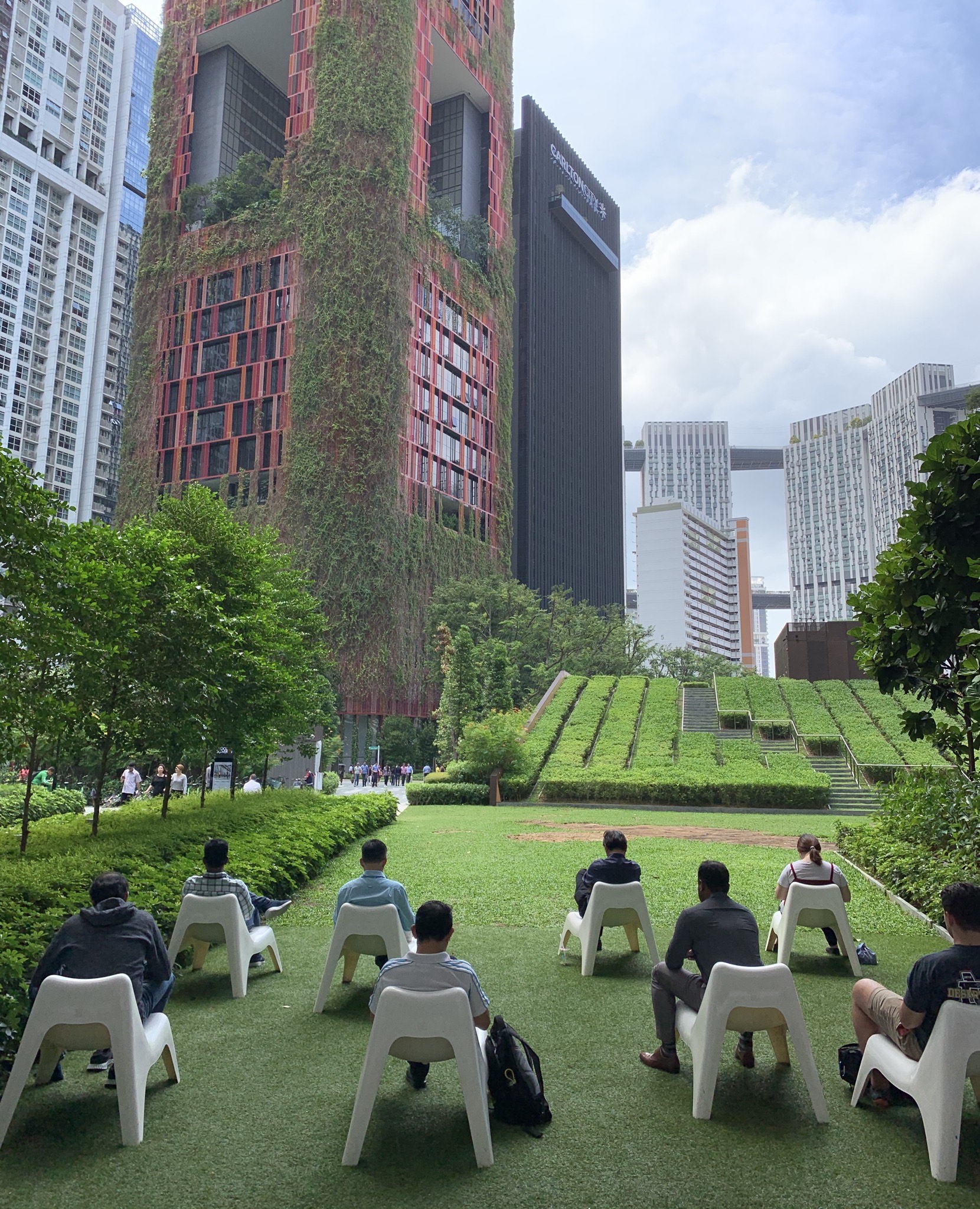
I can see it in my head: when the beast is finally…
6 May 2020
When All This Is Over
by Nicholas Yong
Singapore
I can see it in my head: when the beast is finally beaten, we can shed our masks and take the first tentative, barefaced steps out of our homes. We will walk into the sunlight, dazed and blinking. For just an instant, it will be strange and unfamiliar, as if we were on another planet.
Then we will look up, and catch each other’s eyes, and at long last, have a reason to smile.
When all this is over, the first thing I will do is take a long, long walk. I will greet everyone I meet along the way and shake their hands, and grab their forearms, and look into their eyes. No more fear in my heart, lurking just beneath the surface. No more social distancing or alternative greetings: I want to talk to people the way human beings are meant to.
If I happen to meet you and you are a doctor, nurse, paramedic, migrant worker, cleaner, delivery rider, transport worker, policeman, supermarket auntie or volunteer – then I will give you my widest smile. For you have borne the biggest burden of all, and we owe you so very much.
When all this is over, I will hug the ones I love, and even the ones I don’t. And though it is a miraculous and wondrous thing, I don’t ever want to talk to the people who matter most through a video screen again. Whether they are next door or a million miles away, I will meet them and tell them, face to face, just how much they mean to me. I’ve missed you, I will say. I thought of you every day.
When all this is over, I will stand in silence for Wuhan and New York and London and Daegu and Tehran and Singapore and a hundred other cities. I will weep alongside them for every grandparent, parent, child, sibling, lover and friend that was lost, and their families who could not even hold them in their final moments.
We must not ever forget them.
But when all this is over, I know what I will remember most. A bag of groceries left at the door when I was in quarantine and couldn’t leave my flat. A homemade meal delivered to me, just because a friend did not want me to feel all alone. And most of all, the simple text messages saying ‘Just checking in. How are you?’
When all this is over, I will treasure the little things with all my heart. Because it is the little things that make up the big things, and I never want to take them for granted again.
* With thanks to the poet Laura Fanucci, for planting a seed of hope in my heart.
4 April 2020
Anonymous
Trinidad and Tobago
COVID -19 – A Mental Health Patient’s Perspective
Being in quarantine is a state of mind for the mentally afflicted. It is not unusual, it is not unfathomable, it is life. Fighting a daily battle to stay alive in your mind makes Covid-19 an additional burden to carry. Together with the worry of medication shortages, side effects of the new drug that the…
4 April 2020
COVID -19 – A Mental Health Patient’s Perspective
by Anonymous
Trinidad and Tobago
Being in quarantine is a state of mind for the mentally afflicted. It is not unusual, it is not unfathomable, it is life. Fighting a daily battle to stay alive in your mind makes Covid-19 an additional burden to carry. Together with the worry of medication shortages, side effects of the new drug that the psychiatrist suggests will ‘benefit more than harm you,’ and of course, the possibility that your immune system is already sufficiently compromised from all the experimental drug trials, that should the virus land in your way, you are sure to succumb.
Where was I when the first videos of people falling in the streets of China emerged on social media? At home, curled up in my bed holding on to an already tear-soaked pillow. The fear did not come then. It seemed so far away and I was already burdened with troubles of my own.
As the madness spread in the Chinese mainland, I made contact with a close friend living on the outskirts of Wuhan. She was afraid; she was required to stay indoors except for essential grocery runs and other critical needs. I was an onlooker like the rest of the world, sympathetic but untouched. I went out to a local bar and got drunk that night, it was January 2020, the year had just begun, and surely, this would not become a behemoth that China’s Government could not handle.
The videos disappeared from social media, official reports from the city of Wuhan showed complete shut-down, cases of infected people rose and deaths became an everyday occurrence. I looked on at the late night news in the same local bar sipping on a sangria with calypso music playing in the background, pitying the Chinese people and my friend in their midst. I would drink multiple cocktails and shooters that night and begin skipping my medication.
February 2020, local Carnival celebrations and parties are in full swing. Fear is not here it seems. I feel uneasy all the time now. My medicine lies on the kitchen counter and stares at me. I look away and down at the glass of gin and tonic in my hand. It is 2 a.m. and I cannot sleep at night anymore, the alcohol seems to be my friend. After another week of self-medicating and denial, I am experiencing withdrawal symptoms. I lie on the couch and groan in pain. I did not refill my prescription and now I can barely move or eat. The local news starts a segment dedicated to Covid-19 and I cannot look at it.
Early March 2020, China is in a mess. My friend stays indoors all the time now, we video chat on the day I have to put my seventeen year old cat to sleep. We cry; she is frustrated that she could not be there to kiss my girl goodbye, and that she cannot come home, all flights are grounded. Grieving over a cat seems so trivial yet so overwhelmingly sad. I am consumed by my grief and Wuhan is so far away. I filled a new prescription for a stronger drug that boasts heart problems, diabetes and stroke as side effects, but I need it to function. I drove all over the country looking for the medication; it is scarce and expensive at $35.00 per pill. It seems Covid-19 is not all I should fear.
March 2020 continues at snail’s pace. I am sleeping excessively now. I barely make it into the office and need extended sick leave. Why? I am taking my pills, why do I feel so out of control? My therapist is not in contact and I don’t have the motivation to pick up the phone. I avoid speaking to my friend in China; it is scary to hear from her. I miss my baby girl, I have other pets but they cannot soothe me. I pace the rooms when I am awake, the alcohol does not pacify me. I am avoiding the news as best as I can, then, it happens; our country records the first positive case. I am glued to the television but it offers no real answers. My sick leave ends soon and I am required to report for duty, but how can I in this state? I am afraid of the new drug so I do not take it for some days, then I crash and need it more than ever. The clinics have been suspended and I am not considered a high-priority patient so I have no access to my psychiatrist. I gorge myself on expensive take-out and gourmet desserts; the alcohol has completely stopped working.
March 2020 nears an end; we have reported deaths and newer cases of infected people daily. China seems to have things slowly under control but the craziness is now starting on my end. I reach out to my friend in China; she is still taking precautions and staying indoors despite the lifting of the lockdown. On my side of the globe, I am asked to stay indoors unless “absolutely necessary” and I cannot shake the hollow sadness inside. It builds and overwhelms and I cannot cry, I hold my pillow at night, I cry out to a God I have shunned for quite some time. It is all too much and I am playing with the pills. One day I take it, and the next I don’t. This is no way to exist.
April 2020 has arrived. We are rostered at work, two days in the office and three working from home. I can barely make it off the bed on the two days I am expected to show up. How can I be productive? The emails keep coming and I try to respond, but then I am asleep most of the time, hiding in that realm of dreams and paused responsibilities. How is Covid-19 lockdown different from my usual days and nights? I am still crying uncontrollably and at times completely numb. I am constantly afraid of the drugs I have been prescribed, yet I worry I will run out of supply, what then? The withdrawals again? Who will help me off the ground when that happens?
The virus is taking over, bars are closed, all non-essential businesses are closed, and I am not allowed outdoors. Before Covid-19 my therapist said to me “go for long walks outside, visit the beach, exercise, breathe in fresh air, go to the parks, the zoo, pools, occupy yourself with the outside world.” Now that Covid-19 has arrived, I am restricted to my home, the silence, the stifling air, the loneliness, the knives in the kitchen that appeal to me to self-harm, it is infinitely harder to exist this way.
Occupy your mind is my new mantra, and take the medication of course! I bake cakes and pies, pizza and bread, all in the hopes of erasing the sadness. I color and write poetry, paint and redecorate rooms, clean and declutter, and I try to make it into the office when they ask me to. It is all in vain, everything is temporary, like a bandage on a severely infected wound. I am simply covering it up while hoping for the best.
I am ignoring the barrage of news reports now. I take my medication and nourish my body properly. I keep productive with chores and dedicate time for work, and, when I fail, which is inevitable most times, I cry and cry then pick myself up off the floor and try again. If I survive this virus, I might finally believe that I am stronger than I think I am, as the doctors have often told me. If not, let this be the one thing that I shared with the world – I tried.
30 April 2020
Sunil Sharma
Mumbai, India
Family
They meet over lunch-dinner regularly, these days— the entire household including aged parents earlier, pre-COVID-19 the home was always a house— a number, floor, street, neighbourhood in the vertical city the double income couple and kids could hardly meet and converse except a rare Sunday, each otherwise, plugged in, distracted, mentally some other place now—…
30 April 2020
Family
by Sunil Sharma
Mumbai, India
They meet over lunch-dinner
regularly, these days—
the entire household
including aged parents
earlier,
pre-COVID-19
the home was always a house—
a number, floor, street, neighbourhood
in the vertical city
the double income couple
and kids could hardly meet and converse
except a rare Sunday,
each otherwise, plugged in, distracted,
mentally some other place
now—
the gadgets, furniture, plasma TV,
everything is more personalized
and
the balconies utilized for the mini gatherings.
Corona
It can bring unexpected urban benefits
for the aged parents
28 April 2020
Emiene Erameh
Abuja, Nigeria
Life was normal.

2.59 am, listening to old school music on Cool 96.9 fm Abuja,…
28 April 2020
Life was normal.
by Emiene Erameh
Abuja, Nigeria
2.59 am, listening to old school music on Cool 96.9 fm Abuja, Tina Turner, singing what’s love got to do with it. It took me back, many years back.
It also took me back to last week when talk of the shutdown was just that, talk.
Life was normal. Wake up early, whine about waking up early.
Prepare for work, go to work. The daily routine was comforting like old clothes. Now it is day 2 of the shutdown and I am lying down unable to sleep.
Maybe this is so because I know I can wake up late tomorrow because it is shutdown season. It is supposed to be great, afterall, isn’t this what I had been praying for?
An extended holiday, but it feels like one has been uprooted. Like a form of suspension. Hanging, with nothing to keep one grounded.
I lose track of the days, everyday feels the same, like a Saturday.
The only time in the week when one gets to sleep late. But waking up late has become routine now and therefore unsatisfactory, and maybe in a few more days I will whine about that too.
And I wonder if it is possible to satisfy a human being
I had initially welcomed the shutdown, but when reality hit, it was different. I did not like it that much again.
Too many things changed at the same time.
It was difficult catching up.
I had been wanting a break, but when it came, the change was difficult to accept.
The market the day before the shutdown was the height of frustration. Too many people wanting to buy the same things at the same time.
Of course demand was higher than supply, and prices naturally skyrocketed.
A sea of heads, mostly women, scurrying from table to table because the main market in kubwa has been closed down, so traders have resorted to displaying their wares on both sides of the road hugging the market.
It is a good thing the market was rebuilt before now because there is more space to move around. This does not mean that anybody cares about social distancing rules.
The rush to secure food for the stomach is more pressing.
A few days later when I visit the market after the shutdown it looks like an apocalypse happened.
The market is bare of human beings like a freshly shaved head.
It finally looks like an actual road.
The only indication humans once inhabited this space is the tables used to display their wares, which have been used to form crude barricades to prevent cars and motorcycles from plying the road.
I miss the rush of the market. I miss the rush of people hurrying up and down opposite sides of the road. I miss the colours, vibrant rich colours of the fresh vegetables on display. I can’t wait for this pandemic to be over.
24 April 2020
Debasmita Ganguly
Kolkata, West Bengal, India
Living Within
Dear Saquib, I wish it is not too late to get in touch with you. I think we still are not individually demented as witnessing an unusually intense era which probably is going to wipe off most of the things that came before it. My life has been redrawn, there’s a massive shift in all…
24 April 2020
Living Within
by Debasmita Ganguly
Kolkata, West Bengal, India
Dear Saquib,
I wish it is not too late to get in touch with you. I think we still are not individually demented as witnessing an unusually intense era which probably is going to wipe off most of the things that came before it. My life has been redrawn, there’s a massive shift in all the dreams I’ve dreamt so far and the foundations of my interpretations of life – the spoils of a pandemic. These blurred days lost in isolation, this thick air… hunger strikes, torchlight processions, football matches, and sessions in roadside tea stalls in my city have been snuffed out somewhere or maybe nowhere on the planet. As the sun rises I wake up, have my cup of tea sitting by the eastward window of my study, looking at the neighbour’s mango tree. The birds still make their presence felt…uncaged, the early rays still lay on my study desk, the morning radiance still glows like fresh fish scales. The summer has not been quarantined yet. Heck, something that I’ve always heard and smelt for years goes missing. And I blame the virus.
I slouch around my home. It feels like the new definition of the universe. Saquib, I cook three meals every day, steamed rice, curries, rotis, fries. I wash my hands like a maniac in between. I obsessively sweep and mop the floor, sanitize the doorknobs and the tabletops. I’m not sure if it is only to fight the virus or more for getting rid of the stains of crimes that we’ve collectively committed to the elements of the earth which in turn is now on a mission of taming its unruly children. I keep checking the hoarded essentials. I try to confront the drudgery of daily chores with much kindness. But the fear hovers around. And I blame the virus.
The days are long, increasingly challenging with no stanza breaks. I’m in exile Saquib, disconnected, losing certainty in the present. Never before the future seemed so obscure. We are clapping, banging utensils, lighting candles in hope of good riddance. After all, you can’t pelt stones to drive away the outbreak. Religion, politics, economy and all the masts projecting the aggressive assertiveness of civilization are yielding every moment to the increasing death count and daily briefings by the Government. The fault lines in family, social structure and above all the absurdity of human beings on earth are becoming effortlessly evident. Indignation mounts up. And I blame the virus.
Do you sing these days Saquib or recite Agha Shahid Ali? In these dark times, most of us can seek solace from your Kashmir. Truth be told Saquib, have you ever asked your God to make us live in such crippling blockade which you have been suffering for decades? Haven’t you ever fancied to see the whole world in lockdown? Which is more definitive Saquib, divine forces or scientific discipline? I fear them both. I’ve become a part of your community, defeated faces wrapped in smoke and we all suffer a common fate trying to fritter away time and horror. And I blame the virus.
Difficult though it is to quantify which can be more damaging to human race state militancy or a single disease prevalent over the whole world, the fact remains that our minds are undone by uncertainty when old harmonies are falling apart under the burden of a seemingly endless turmoil. My city has been turned into a junkyard of half-baked wishes and lives jostling each other to metamorphose it to a burial ground. People are dying like cattle Saquib. And I blame the virus.
Before the sun goes down I sit in my balcony, see the birds flying high…unshackled, I get to smell the sky. I water the plants with my three-year-old son who is vastly unaware of what is going on outside. He is much contended to believe that the earth has fallen tired and needs some time to restore itself. Therefore, both of us are having a long vacation. We sing, we dance, we play, we get to see a moral retreat in each other. The night deepens, my little one coils up in my breasts, I sing a lullaby, he sleeps off. Should I blame the virus?
Our vanity as superior species is crushed forever Saquib. A single whirling disease can annihilate all the shadow lines of class creed or nationality. The slippery guidelines of science and metaphysics seem to be hilariously useless. Someday we’ll all become small personal stories or rather a larger sweep of history. Maybe we need to deconflict with magnanimity. With bowed head let us accept all our misdeeds and ask for forgiveness to the universal law of sustainability. Let us go deep down, deeper, farther, let us cut and compress, rearrange and rewrite, add and subtract until a door opens with clarity and a light seep out to heal the earth. Let us do not blame the virus.
Meet me in Light, bring me Splendour.
24 April 2020
Elena Pitsilidou
Nicosia, Cyprus
Daily Ritual
When you leave for work every morning I stand by the door and watch your daily ritual; you put your helmet first, because I always yell at you “Be Careful!” and you just nod and smile. Then, you put your sunglasses on and I think “what a stupid habit” to put your sunglasses on before…
24 April 2020
Daily Ritual
by Elena Pitsilidou
Nicosia, Cyprus
When you leave for work every morning I stand by the door and watch your daily ritual; you put your helmet first, because I always yell at you “Be Careful!” and you just nod and smile. Then, you put your sunglasses on and I think “what a stupid habit” to put your sunglasses on before you step out of the house. After that you grab your backpack and throw it hastily on your shoulders, and for last you leave your blue, plastic gloves and your maroon, washable mask. You open the door and you take your bicycle out with your strong arms, ready to ride to work.
I wave at you through the closed, glassed door, our dog on my feet staring worried at you caressing your black bike and I say “Don’t worry, he’ll be back soon!” You look back at both of us and your figure is different; I took for granted your wide smile when you said goodbye. Now it’s covered by your essential, washable mask. I took for granted the olive colour of your skin and your fingers. The fingers which hold my hand tightly for ten years and now they suffocate under your plastic gloves, and they remain untouched, drowning in their own tiny, salt lakes of sweat. I took for granted you and me, our figures, our faces, our inessential parts. Until gloves and masks became essential and I realised that nothing is more essential than you as you and me as me.
23 April 2020
Shereen Pandit
London, UK
In food we trust
Over the past couple of weeks, I have begun to worry a little less about Daughter, living on her own, still going in to teach a few days every week, still exposed. The reason for this greater ease, is quite simply that the people who share the small block of flats in which she lives,…
23 April 2020
In food we trust
by Shereen Pandit
London, UK
Over the past couple of weeks, I have begun to worry a little less about Daughter, living on her own, still going in to teach a few days every week, still exposed.
The reason for this greater ease, is quite simply that the people who share the small block of flats in which she lives, have begun to knit themselves together in a way I used to think of as peculiarly Cape Malay. Why? Because the knitting together has taken place around an exchange of food, something which I associate with home and the community in which I grew up, not this enormous and often impersonal city in which I now live. I associate the exchange of food with a sense of community, of safety, of being there for one another. It’s not easy to achieve in a busy modern city of busy modern lives. Yet the people of Daughter’s block have achieved it. Daughter has, since the advent of lockdown, regularly found small gifts of food on her doorstep and reciprocated by putting her own donations on other doorsteps. That’s how I know that people are looking out for her, and she for them.
More than associating this with Cape Town, and the Muslim community, I associate the exchange of foods with Ramadaan. This, the Muslim holy month, started tonight in the UK and Cape Town (assuming the new moon is sighted with the naked eye as tradition dictates, though many in Cape Town and the rest of South Africa will go with what Makkah does). It is during Ramadaan that the food swapping becomes a daily ritual, as much part of the holy month as fasting, prayer, reflection and giving to charity. This building of neighbourly links through food.
Ramadaan in any area of Cape Town where many Muslims reside has its own peculiar feel, one for which I have, at this time of the year, a profound sense of nostalgia. This, after a lifetime of atheism and more than three decades away from home.
This is what I miss: Towards dusk there is that special stillness in the air as if the entire neighbourhood is holding its breath, despite the bustling in every kitchen and preparations in every dining room – and in many, the laying down of prayer mats. The stillness is broken only by the rush of small feet, the piping of young voices, as children dart from house to house, delivering to neighbours the sweetmeats which their mothers, aunts, grandmothers and sisters have prepared and receiving in return something each neighbour has prepared. There is a sigh of relief as each child makes it safely home before the sun is fully down and the bilaal calls the evening prayer, the signal for all within range to break the fast. And when every family in the community sits down to eat, there will be, on its table, a taste from the table of every other family. A very particular form of sharing, which brings with it comfort and yes, a sense that nobody is alone. No person, no family.
It is odd, isn’t it, that I write of food, in a month which to almost anyone, Muslim or otherwise, means the absence of food, doing without it, ie fasting. Yes, there is the sense of shared deprivation, shared prayer, reflection and all that. But to me, Ramadaan means food bonding.
There was, in addition to the food swapping, the unspoken or informal arrangement in our area by which someone would always ensure that some food was taken every night to the care home, the homeless shelter and the orphanage. At the close of the month, as Eid approached, our mother would collect fitra – the compulsory charitable donation each adult has to give at Eid – from all of us adult children, to give to whoever she decided would be the recipient of our family’s religious obligation. But in addition, she would expect us to donate to the Eid food for the nursing home or whatever pet project she had in mind. And of course, there was the Eid food to be given to the poor, not just the people to whom my father was instructed to deliver a meal, but the line of people outside our front gate with bowls every Eid evening. (My mother’s deeply rooted sense of charity drew the line at donating her bowls as well. Food you could have, with pleasure, but not her bowls, which she swore nobody ever returned, so she never had enough).
This year I won’t be the only one missing the atmosphere of my particular childhood Ramadaan. Everyone, everywhere, no matter what their own Ramadaan is usually like, will be missing it. Nothing will be the same. In Cape Town, the children will not be out swapping food, because the lockdown is so strict there. And in a peculiar twist, it is in London that neighbours are swapping food. Saying through food: we are here for you. How very lockdown, to turn everything upside down.
20 April 2020
Shanti Arunkumar
Mumbai, India
Coro-Nation
No noise, no flurry, no words Could be heard any more, But a silence so deafening That could sear through the soul. The sounds of the cuckoo, the chirping of the sparrow, the shrieks of the night owl had replaced the humdrum of the city’s throes in the twinkling of an eye, that twinkled…
20 April 2020
Coro-Nation
by Shanti Arunkumar
Mumbai, India
No noise, no flurry, no words
Could be heard any more,
But a silence so deafening
That could sear through the soul.
The sounds of the cuckoo, the chirping of the sparrow, the shrieks of the night owl had replaced the humdrum of the city’s throes in the twinkling of an eye, that twinkled no more.
To us it seemed an echo of a
wasteland long ago, predicted by Eliot which came about,
They say, due to the avarice, insatiable greed and dog-eat-dog attitude, all shown by man to all, and ironically not by dogs!
T’was payback time They said,
And so, Nature donned a garb
so minuscule, yet had the power
to raze the human race with barbs, to naught!
Novel Corona, they called it, with thorns and horns embedded, lunging at humans, tearing at their lungs!
And ……Emancipation would only come if
Lessons were learnt, not to be forgotten!
To us it seemed an echo of a
wasteland long ago predicted by Eliot which came about,
They say, due to the avarice, unquenchable greed and dog-eat-dog attitude, all shown by man to all, and ironically not by dogs!
T’was payback time They said,
And so, Nature donned a garb
so minuscule, yet had the power
to raze the human race with barbs, to naught!
Novel Corona, they called it, with thorns and horns embedded,
lunging at humans, tearing at their lungs!
Emancipation would come only if
Lessons were learnt, not to be forgotten!
14 April 2020
Kevin Garbaran
Trinidad
Stuck in Trinidad during a pandemic
It’s been a month since I landed in Trinidad for what was supposed to be a two-week writer’s residency at the University of the West Indies, St. Augustine. My days, however, are spent in self-isolation, only heading out to get essentials when needed. Back in January when I found out that I had been accepted…
14 April 2020
Stuck in Trinidad during a pandemic
by Kevin Garbaran
Trinidad
It’s been a month since I landed in Trinidad for what was supposed to be a two-week writer’s residency at the University of the West Indies, St. Augustine. My days, however, are spent in self-isolation, only heading out to get essentials when needed. Back in January when I found out that I had been accepted as one of the writers-in-residence at UWI, the thought that COVID-19 would become a pandemic hadn’t crossed my mind. I spent my time preparing for the residency. Opportunities like this one are rare for Guyanese writers and I counted myself lucky to have been granted one. In March, when the WHO declared COVID-19 a pandemic, I, like many Guyanese, was more focused on the aftermath of the general election. Racial and political tensions had escalated to a point that I had never before witnessed in my life, while the virus continued to wreak havoc in many parts of the world.
After arriving in Trinidad along with fellow Guyanese writer Scott Ting-a-Kee it was clear that plans for the residency had to be modified. The highlight event of the residency – Campus Literature Week with daily lunchtime readings – is an annual event organized by the students of the MFA Creative Writing programme. This year, however, following the guidelines for social distancing, instead of live readings and discussions, we made recordings that were uploaded to the UWI website.
I had the opportunity to meet Scottish-Trinidadian poet Vahni Capildeo on campus. They were there to record a lecture and readings of a few of their poems for their residency. We made plans for us to finish the rest of the recordings at Queen’s Park Savannah the following day.
We ended that day with a special reading of Martin Carter’s Poem. Vahni suggested that we use a technique inspired by Lectio Divina, a traditional monastic practice in Catholicism. The idea was to read slowly and thoughtfully, immersing ourselves fully in what was being read. We took turns reading different lines, indicating to each other by holding up a leaf, that we were ready to pass on the reading to the next person. Once the reading was completed we each chose a phrase that resonated with us and said it out loud without explanation. It was a profoundly therapeutic way to read a text and I found myself contemplating Martin Carter, the way his work reaches through time to speak to generations, and I wondered had he been alive today what he would think of all that is happening in his country and in the world right now.
Walking around on campus I noticed something hauntingly beautiful about its emptiness. I don’t think it’s often that people get to see public spaces so empty. It was jarring. Weeks before arriving, I had pictured myself here, meeting students, going to the Alma Jordan library, having a chat over coffee. A strange nostalgia for memories of what could have been had come over me. It didn’t make sense and I don’t think it’s supposed to. There is a word that comes close to describing what I was feeling. I recalled reading about it in The Dictionary of Obscure Sorrows:
kenopsia
n. the eerie, forlorn atmosphere of a place that’s usually bustling with people but is now abandoned and quiet—a school hallway in the evening, an unlit office on a weekend, vacant fairgrounds—an emotional afterimage that makes it seem not just empty but hyper-empty, with a total population in the negative, who are so conspicuously absent they glow like neon signs.
Later that night I pondered on what new words might be added to our vocabulary from this period and what definitions might be revised.
About a week later we received word from the Guyanese High Commission stating that the airports were closed. Adjusting to the idea that I will be stuck here for weeks wasn’t easy. I miss my family and my friends and I think of them every day. I am aware that even in this situation I am to count myself lucky. The university has made my stay here very comfortable. I’m safe, I have food, and internet access. Meanwhile there are many people across the world right now who are stuck in cities and countries away from their homes and their loved ones, trying to survive in unfavourable, sometimes hostile conditions. It is not lost on me how many are disproportionately affected by this crisis.
Every Wednesday I look forward to an online class with the students of the MFA Creative Writing programme, the writers-in-residence and Dr. Amaye, the Coordinator of the programme. We share work, offer feedback and check in on each other to make sure that everyone is okay. I also keep in touch with my friends from the writing community back home ensuring that we’re all remaining sane. Lately I’ve found myself in a creative rut. Despite my best attempts to do some creative writing, nothing flows. But I keep a journal of my thoughts and any random thing that pops up in my mind. With all this time on my hands compounded by the fear of being unproductive, I embarked upon a journey of introspection fueled by nostalgia, home-sickness, fear, anxiety, music, literature and boredom.
In my attempts to make sense of what is going on not just externally but internally, the music from the Icelandic band Sigur Rós offers me relief. Their music has an atmospheric and ethereal sound. They usually sing in their native Icelandic but sometimes they use a made-up language called Hopelandic in their songs. Actually to call Hopelandic a language is misleading because even the band members themselves don’t understand what they’re saying. It is just a string of meaningless syllables and I get to imagine my own meaning, if I want to. We’re all living in very strange times. I’ve never dealt with something like this before and I find myself in odd, sometimes uncomfortable spaces within my thoughts and emotions. I like that their music allows me to feel whatever it is I’m feeling without having to name it or having lyrics telling me what I should be feeling.
My favourite painter is Vincent van Gogh and I remember him around this time every year, his birthday being a few days after mine. I recently found an online archive of some of the letters between him and his brother Theo. In those letters I get a glimpse of the very isolated life Vincent lived, which only led to the decline of his mental health. The kind of isolation we find ourselves in now is different but there will be psychological implications, especially for those with pre-existing mental illnesses. It is strange that we can no longer touch each other, hug each other or shake hands without a lingering sense of concern that this simple act of human need, the need for touch, is putting us at risk of contracting a deadly virus. But even in isolation we can reach out, if not for help then to help someone. Even if we don’t fully understand what is going on, knowing that someone cares and is willing to listen is sometimes enough to pull us out from a dark place. And art helps. I can’t imagine having to live through self-isolation without music, books, films, shows, video games and all the other contributions from people in creative fields.
So much is happening so fast and yet the days seem to move sluggishly by. I recall a line from Carter’s Proem that we read that day on the savannah, “But, enduring, you change with the change that changes.” I know my time here during this pandemic will forever colour the way I look at the world. I’ve submitted to taking whatever resonates with me from this whole experience and to channel it in whichever way it chooses to express itself in my writing from here on.
09 April 2020
Philippa Holloway
Lancashire, UK
Skill set
By the beginning of the second week, she’d had enough. Enough of the emails and lesson plans being sent to her son’s inbox; enough of trying to make him sit at the kitchen table for six hours a day as if it were normal to transpose his school life onto their cluttered kitchen; enough of…
09 April 2020
Skill set
by Philippa Holloway
Lancashire, UK
By the beginning of the second week, she’d had enough. Enough of the emails and lesson plans being sent to her son’s inbox; enough of trying to make him sit at the kitchen table for six hours a day as if it were normal to transpose his school life onto their cluttered kitchen; enough of the cajoling, bribing, threats to take away his favourite video games if he didn’t tick off one more task on his list. This wasn’t real home-schooling, this wasn’t formal education, this was jumping through hoops and not even the teachers at the other end of the email chain believed in it.
In the middle of the second week, she changed tactics. Left the laptop switched off, called her son down to the kitchen table and told him she was teaching him something else, something just as valuable as algebra or adverbs, more valuable even. He looked at her from under his teenage haircut, eyes wary. The pressure has been building, deadlines and feeling caged, his muscles taut with anxiety and the need to run and laugh and socialise.
She asked him to fetch one of his school shirts, washed and ironed and hanging in his wardrobe waiting to be grown out of rather than worn again. He griped and conceded, perhaps assuming she was going to try and formalise the family classroom. By the time he got back she’d already set up her mother’s old sewing machine, plugged it in and tested the motor. He watched, his shoulders easing as she tightened screws, flexed the cam belt. ‘Pass me the oil’ she asked, and he fetched it without complaint. She showed him how to wind the cam, slide it into the shuttle casing. She let him discover the route from bobbin spool to needle eye, trailing thread through hooks and holes, fingers steady.
She showed him how to spread out the shirt, how to mark out an oblong, how to cut thin strips and hem them. His eyes glimmered back to life as he sheared through the shirt, slicing through the tight cuffs and choking collar. She sat him down, let him test his hand-eye co-ordination. His foot was cautious on the pedal, revving, just as she imagined he would his first car.
‘What are we making?’ he asked, eventually.
‘Face masks,’ she said, as the white cotton slipped smoothly beneath his hands, the seam barely wavering.
8 April 2020
Donna Abraham Tijo
India
Summer clothes
Winter went by. Then my father returned from overseas and we went…
8 April 2020
Summer clothes
by Donna Abraham Tijo
India
Winter went by. Then my father returned from overseas and we went into self-imposed quarantine.
In a week, the national lockdown will be lifted. So here I am trying out my older sister’s summer clothes for when I step out next week.
08 April 2020
Mila Mohamed
UK
Connect
I haven’t left the estate for 3 weeks. And as introverted as I maybe, I feel myself growing more suffocated and smothered as each day passes by. Even so, it’s allowed me to reflect, on many things. Of our abhorrent, synthetic, greediness for material worth, the capitalist-consumer relationship plunging the first world into ruin, not…
08 April 2020
Connect
by Mila Mohamed
UK
I haven’t left the estate for 3 weeks. And as introverted as I maybe, I feel myself growing more suffocated and smothered as each day passes by. Even so, it’s allowed me to reflect, on many things. Of our abhorrent, synthetic, greediness for material worth, the capitalist-consumer relationship plunging the first world into ruin, not to mention the incessant narcissism displayed by bored celebrities.
When this subsides will we change? Or will we become crypto amnesiacs repeating the same mistakes dotted throughout history? It makes me think about others too, the homeless especially, who are one of the most vulnerable at this time, the elderly and our keyworkers too, how have we failed ourselves? And how did we get to this point? A sea of questions, but with no answers.
Still, I find myself holding onto a rope of ambition. Despite everything, the feeling of optimism makes itself known to me in the most hopeless of hours. We will change, and we have in the past too. We’ve conditioned these new habits, modes and manners into ourselves in a way that will alter our lives forever, although we may not feel it now, it’s become a defining moment of the modern era. These are seeds that will grow into something better, into a better day, a better tomorrow. And it’s not just me who builds these dreams of cultivating our world into a more compassionate, kinder and empathetic place, its coded into our very being, into humanity and that, is what connects us.
8 April 2020
Sabah Carrim
Kenya
Coronavirus IX
Have you been to a temple, to a gurdwara, a mosque, a church on a weekday at 11 am? (Nothing very different from a Sunday morning of a pandemic when everyone’s home, in quaran tine) When there is no bustle, when the birds are singing, and the prayer hall is empty…
8 April 2020
Coronavirus IX
by Sabah Carrim
Kenya
Have you been to a temple,
to a gurdwara, a mosque, a church on a
weekday at
11 am?
(Nothing very different
from a Sunday morning
of a
pandemic
when everyone’s home, in quaran
tine)
When there is no bustle, when the birds
are singing,
and the prayer hall is
empty
devoid of devotees, devoid of
devotion
When the sun is shining, and the sky is
blue, and everything’s so
peaceful
and you can hear the scraping
of the caretaker’s broom
somewhere far, somewhere
nearby
and the priest is wringing his
loincloth, and putting it up
to dry
and a wandering
semi-inflated balloon
teased by the gentle breeze of
a perfect day
lies
on the floor before you, in the middle of
no
where
where if you lifted your
gaze only a bit higher,
you’d see bold and bright
symbols of
religion
and
colourful paintings of
heroes
and warriors, and gods
on horses, decked in jewels
and with bright shiny swords
(or any of their equivalents)
all
hung up high enough on walls
in each corner
of the hall
to make an impression
A hall which now means
nothing
and lacks the lustre, lacks the
appeal
of when it once teemed
with
devotees
and their
devotion
07 April 2020
Norah Makang
Douala, Cameroon
The Crack
I see you, well, I see you now Bent, oblong, with no ambition or style And your shape definitely not your design choice I see you Beneath the curtains, just by the cupboard, I see you When were you birth into existence? Was it before I invaded your walls or after I stuffed myself within…
07 April 2020
The Crack
by Norah Makang
Douala, Cameroon
I see you, well, I see you now
Bent, oblong, with no ambition or style
And your shape definitely not your design choice
I see you
Beneath the curtains, just by the cupboard, I see you
When were you birth into existence?
Was it before I invaded your walls or after I stuffed myself within your space
Have you been there from the very beginning? Unseen by my myopic eyes
Always my silent companion
Well now I see you
Thanks for keeping me company, thanks for being here as I slowly learn myself again.
Ever since the earth decided to cleanse herself, ever since the choice was taken from us
And from her beautiful outdoors we all have been exiled, strapped in to save us from us
Now I see you
Is it just me, or is the world all over, at this moment getting revelations from your relatives.
Did a lone man in the east realize he has been living all this while with your lightening-shaped mother?
Or maybe a family up north has recognized the spidery designs of your cousins in their basement?
The pandemic may have limited our vision to within these walls, but now my eyes see ,
Yes they see, the crack on the wall.
6 April 2020
Amara Nicole Okolo
Vermont, USA
In Sickness and In Isolation
Today I baked for the first time in my life. In all my years of living, I have had no intense urge to sit down, stare and map out in quite concrete details, how I was going to spend my Sunday afternoon baking banana muffins. In retrospect, I have said that the only time I…
6 April 2020
In Sickness and In Isolation
by Amara Nicole Okolo
Vermont, USA
Today I baked for the first time in my life. In all my years of living, I have had no intense urge to sit down, stare and map out in quite concrete details, how I was going to spend my Sunday afternoon baking banana muffins. In retrospect, I have said that the only time I would stand near an oven with mittens is probably when I have a daughter and she requests of me, in all my naivety, to bake a birthday cake. But in 2020, my womb is empty, but COVID-19 and the unending shutdown has led me against my will. This day of the Lord, Sunday 5th April, I made banana muffins—vegan-style. Mind you, I am not even vegan. This just shows how unstructured my life (and diet) has become.
When I was a teenager, I thought the world would end from an asteroid smashing into it, destroying all mankind and bacteria. Thanks to obsessively watching and re-watching the movie Armageddon, it seemed plausible. Those days, whenever I saw anything abnormal shoot across the indigo skies at night my heart ceased breathing for a second. My prayers were childish but valid; Please God, before an asteroid hits the earth, I want to be with my family. Then I grew up and my brain developed interest in academics and boys, and I forgot asteroids and full impacts. I imagined getting old and dying instead before that happened, and this thought crystalized a more idealistic future for me.
This was until March 16th 2020. I was an adult woman living in Montpelier, Vermont, studying for an MFA. My family was devoid of my mother who had left this earth three years earlier. On this day, a Monday, I was sitting on a red cushioned chair with tiny white polka dots, soft and comfortable. Around me were other people I recognized; my classmates and faculty, and seated in front was the President of my school, the Vermont College of Fine Arts. This seemed like a usual meeting, but the only new, bizarre thing about it was that we were all seated a seat apart from each other, stranded in our own miniature seat islands. At first, because I had come in late, I had tried sitting close to another, but was softly instructed to move a seat ahead. This meeting was the first step towards our isolation, as the President told us that from that day, the school was going fully remote, and classes were going to be moved online. The virus everyone called COVID-19, which we had been following internationally, had finally made its way into the United States, and for the safety of everyone, the Government had ordered a complete shutdown. I listened to every word; my heart slowly dislodging from my ribcage and sliding upward to my mouth, and before the end of the meeting my eyes were stinging with tears of panic and anxiety. My family in Nigeria remained at the fore of my thoughts, and as I hurried back to the resident halls, I began dialling my father’s phone number.
He answered on the fifth ring. ‘Amy nwa m,’ His nasal voice was a relief to my ears, and I sighed before I sat down on my bed.
‘Daddy, have you heard? The virus has entered the United States. Before you get worried, I want to let you know I am fine, okay? My school just shut down this morning. So don’t worry about me. I am more worried about you all…please, this thing is serious. Wash your hands and be safe.’
Of course back then, my father made his usual banter about the virus never coming into Nigeria because the sun there is too hot for Corona virus to survive. After my persistent clamouring he finally agreed to listen to me and wash his hands regularly. Before I hung up, for added dread, I let him know that the virus was more problematic for people in their later years. He is seventy-three. He ended the call with a promise—he will do all I said.
But this was a month ago, when some parts of the world were still spared. Now, COVID-19 has spread its spikes throughout most countries of the world, heightening its rate of mortality, rippling shocks across economies, social interactions and human lives. Almost every country in the world is on lockdown, including my home country Nigeria, even though with sparingly less numbers of the infected and demised. Now Vermont has almost four hundred cases, and New York which it borders with, rages with thousands. The world is throbbing with fright but resilience, and even though I am thankful for the work thousands of exceptional health workers are doing in all the countries around the world, my heart bleeds with what would become of us when—if—this ends. The world we began in 2020 has switched to a survival entity where isolation is no longer craved but imposed. We have learnt to live without physically seeing or touching each other for thirty days. The last time I hugged someone without my heart skipping a beat was on March 6th, at approximately 3:38pm after my last class for the day. Since then, my body has learnt to ignore the existence of another’s touch, recoiling at the thought. My fear of infection has solidified my emotional gratification, and I worry that I will never be the same woman I was on Friday March 6th, holding another person’s body, feeling their heartbeat, smelling the fresh shampoo of their hair, enveloped by their warmth.
For those first few weeks of lockdown and remote classes, I woke up each morning with a justified confusion of what and how to act while staring at a computer screen fragmented into blocks that contained the faces of my professor and my classmates. At first I wore makeup, alluding to my looks before the virus came and sent us into our homes. I did not shower until two-thirty in the afternoons, and after class I sat and stared at nothingness, alarmed by this new life. Will this ever end? I asked myself this question when I struggled to live in the graveyard silence that had fallen like a rock in the resident halls. Nobody ventured outside to the hallways anymore, and even the little sounds of human presence I had always heard from my floor were gone too. It took two weeks for me to see Uka, my friend and the other Nigerian student in the dorm, and even when we sat in the kitchen and cooked our meals, we sat six feet apart. Social distancing, this new word that floated around us. It was also this second week that I sat on my chair after speaking to my family for the second time, and randomly began thinking about suicide. I felt leaving the world that has become this way could be an escape from this madness, this eventuality that stuffed me with a loneliness I had always known but had never feared. Deep down, I knew I would not act on this thought—I was not the only one suffering. Literally everyone in the world was locked in, we all dwelt isolated like chronic patients. But isn’t this what loneliness does, anyway? It carves your thoughts into halves of sorrow, little changelings that grow into demons. When I felt overwhelmed I picked up my phone and texted everyone I could. I called my friend Noni, faraway in New York City but eager to listen. I went out to the hallway, knocked on my classmate and friend Dahla’s door, and blurted my heart. I told my other classmate Hassan and he invited me to spend time with him and other people. That evening we all sat in the kitchen, cradling wineglasses filled with Moscato wine and eating bagels and chocolate chip cookies. Then that night, I watched old, horribly-made pandemic movies with these lovely people while still seated six feet from one another. And slowly, my heart healed. I realized that what I needed was just seeing a human face, in all its structured and beautiful form. That was all I needed to be whole again.
It is funny how a virus can make us realize how much we need each other, even while absent from one another. We are advised to stay far apart, six feet minimum and isolated maximum. We are encouraged to lock the doors of our homes and befriend the things we ignored in the old world—the TV, smartphones, Netflix. Education is modified to make you learn from your computer screen. You realize that time is indeed an enigma, it goes too slow when you are doing nothing, and faster when you are forced to do nothing. We realize that our earth can survive without us walking through her soil, flying through her skies, soaking in her sun. The world has never needed us. But we realize how much we need each other, how social media can thrive with numerous ‘challenges’ that will always make us laugh, how seeing our friends laughing through a Zoom video call can lift our spirits, how the sound of our voices over the phone can still make our hearts race. How cooking our own meals is really not so hard or tiresome. How joyous it is to dance without song, to laugh without seeing comedy. How freeing it is to not impress in what we thought were our glorious faces. How melodious it is when we rejoice in little achievements, like living through each day since this lockdown began and not breaking down. How we can, if we believe it, survive. For even in the absence of others, in the solitude of the self, we have come to know that we can, as a human race, live through anything. I hope for COVID-19 to be one of them.
My thoughts are with everyone who has lost someone in these times. And for the health workers all over the world, you are the true heroes of this moment. Thank you for all you do.
5 April 2020
Jorim Alosa
Nairobi, Kenya
One and a Half Degrees of Separation
In the COVID19 pandemic out-break, we have come up against an adversary whose extremities are like none we have ever faced before in all our previous days. We are plunged into a situation that puts to test our way of life in the most contrasting of manners. Throughout history, in all the other disasters that…
5 April 2020
One and a Half Degrees of Separation
by Jorim Alosa
Nairobi, Kenya
In the COVID19 pandemic out-break, we have come up against an adversary whose extremities are like none we have ever faced before in all our previous days. We are plunged into a situation that puts to test our way of life in the most contrasting of manners. Throughout history, in all the other disasters that have afflicted mankind, one thing has been constant; our mode of response. We have always called on each other to pull together and unite, for in numbers lies strength. We have always held hands together, always forged a common front in combating whatever has been thrown at us. Never before have we been required to isolate ourselves from each other in the face of calamity. For the first time, we face an enemy who, in order to beat, we are required to not only avoid holding hands, but also keep a distance from one another. Divided we stand, united we fall. People are advised to avoid body contact with each other, and maintain a minimum space of at least 1.5 meters from the nearest stranger. It was already clear from the beginning that the virus was a threat to us biologically, and later on economically too, but now it is threatening us socially as well.
In the midst of this turmoil and all the suffering however, something interesting is beginning to take shape. A different kind of infection has started to spread across the air. People have begun passing on to each other simple acts of kindness through mediums that defy the vacuum forced on us by the deadly disease. Though we were required to keep to ourselves and not touch one another, we are keeping in touch, and in ways that touch each other’s lives; sharing important facts online about the disease, or tips on how to cope with shortages and survive on minimum resources during these trying moments, sharing inspirational hashtags, and volunteers who have offered their services in helping to support government’s efforts in fighting the disease.
Of course, the usual detachment popular among us abound, and it’s not uncommon to hear phrases like, ‘Those people who are at risk of contracting the virus should…’ as if there’s only a specific group that’s at risk, and not “us”. In fact such people believe that this group is far removed from us, and live in a different space and dimension, although within Kenya. However, (and interestingly too), within such statements, you’ll notice a note of optimism that’s also, ironically, quite empathetic and inclusive. ‘Let us talk about that other issue later when this Corona crisis is over.’ This is a sentence that you’re likely to hear more than once during conversations among Kenyans. They not only believe that this a brief plague, but also that by the time it passes, they’ll both be alive. This is quite encouraging, and also a welcome departure from our usual selfish attitude; ‘it can only happen to you, not me.’ Our Health Minister doesn’t think this is a good thing, though. According to him, we aren’t scared enough. I get where he’s coming from. These are strange times we are living in, where togetherness and optimism are suddenly undesirable. However, I’m approaching this from a different perspective. I’m realising how difficult it is to kill the humanity that thrives amongst us. The natural human acts and impulses that have been passed down from generation to generation over centuries continue to rear defiantly in a dangerously admirable manner. Perhaps we have sold ourselves short all along. Maybe we aren’t as aloof and negative a species as we’ve always considered ourselves to be. Let’s keep the humanity, but in a way that is in line with the recommended safely precautions. Keep safe, and let us talk about everything else later when this Corona crisis is over.
5 April 2020
Leticia Alvarez
Cambridge, New Zealand
What Covid-19 Has Taught me About Touch

I am someone who has been catapulted back and forth between continents…
5 April 2020
What Covid-19 Has Taught me About Touch
by Leticia Alvarez
Cambridge, New Zealand
I am someone who has been catapulted back and forth between continents since childhood. Submergence in one culture, then being plunged into another, has made me love, then miss human touch. In Colombia, meeting a new person is accompanied with a kiss on the cheek. Meeting an older person comes with them squeezing my hands. I am used to unfamiliar cheeks pressing against mine – knobby, fleshy fingers tightening around my palms.
In New Zealand, people smile, wave if they’re extroverted. They leave a seat between each other on the bus as common courtesy. Greeting only comes from the mouth, hugs are only given when you’re breaking down. I couldn’t tell you what perfume my friends use, or the last time I saw someone resting their head on another person’s shoulder.
Life in various nooks and crannies of the world has shown me how marked the invisible lines around human touch are.
Today, everybody is confined to their personal bubbles. 2m apart from anyone not in it. We no longer brush with strangers, see our friends, interact with the multitude of human beings all coinciding at the same moment.
I’ve missed human touch for a long time. I am used to lying in the sun so my skin tingles, I trace my fingers down my arms and hold myself at night.
There are 8 billion people in this world, a rich constellation with a wonderful set of differences, but we share our humanity. We share our relationships, our emotional needs. Why do we value personal space so much? Hugging a person goodbye can mean more than any words.
Several weeks ago, we chose to value personal space. But once physical touch is prohibited, will we appreciate a handshake, will we sit next to someone rather than across, will we hesitate before we hug someone?
Perhaps for the first time in human history, every single person on Earth right now is sharing the same crisis. Our cultures don’t mean anything in the eyes of COVID-19. Everyone must stay in their bubble.
I hope that when we come out of this, we come out linking hands. I hope we will rejoice in the freedom to touch each other, unheeded, and love the ability to feel our existences interlocking. Carpe diem. You’re alive. Let those you love feel it, not just hear it. Sit next to the person you’ve always wanted to talk to. Human touch is a gift.
4 April 2020
Effiong Samuel
Lagos, Nigeria
The Story of Us
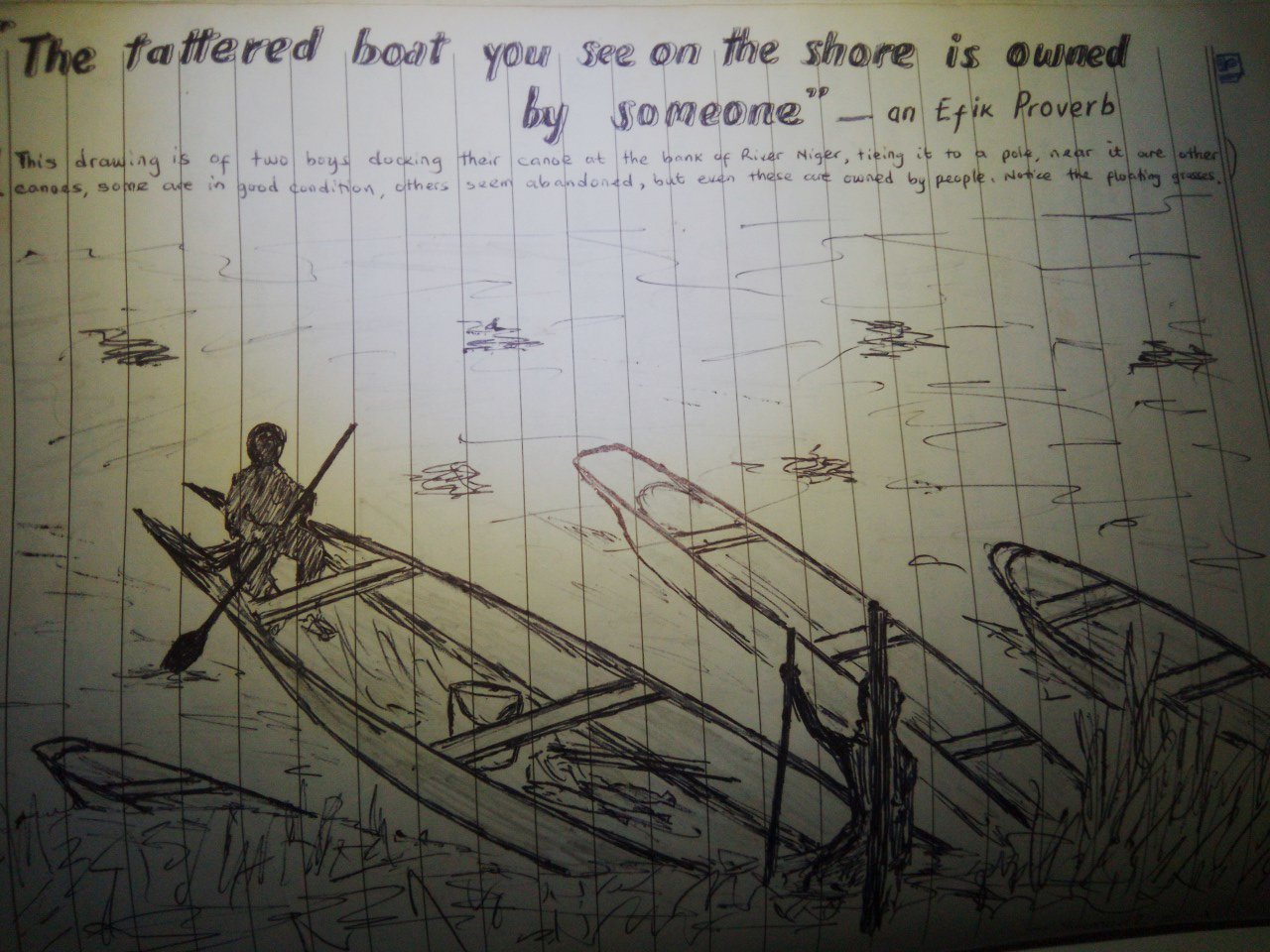
Mother had called to tell me how she can finally hear the…
4 April 2020
The Story of Us
by Effiong Samuel
Lagos, Nigeria
Mother had called to tell me how she can finally hear the birds singing as the sounds of the chainsaw had stopped. She seemed excited that the lockdown is in place and once more, she is having the quiet of a small town she once knew. That is Eket where they still have birds everywhere. I know in the world, nature will rejoice. The trees will cry tears of joy; the dolphins will dance and the skies will for once breathe as the fumes from industries cease.
What mother did not know is that I was given 24 hours to buy what I will need for 14 days. There was no need telling her that I stood in a queue for hours lest she insists that even if I will need to walk for days, I must come home. So I smiled and told her it was fun too here. The songs of birds were the constant blaring of the neighbours’ sound systems that shook my apartment.
I have learnt lessons about humanity from this pandemic. Before the outbreak, we felt sophisticated. We said the future of work was ‘work from’ home. We were going virtual.
COVID-19 first of all flawed our sophistication and showed that we are all vulnerable irrespective of our class. Then it threw our virtual world into our face and we cannot be sustained by it. We cannot eat data, breathe ‘clouds’ or drink ‘streams’. We need real cookies and pies and apples.
The lockdown showed me that we are so shaped by routines and jobs and adopted lifestyles that we tend to forget who we really are; this once that we are forced to really be with ourselves, we are bored with our real selves, not knowing what to do.
We do long for friends and company, but we have long taken for granted personal spaces. Now, I know that just like the Ibibio proverb states: “the tattered boat on the seashore is owned by someone”, so out of love, I’ll stay at home and respect these spaces.

4 April 2020
Kamaroon Rasheed
Singapore
‘I am in the vulnerable age group.’
I am in the vulnerable age group. The age group which hasn’t experienced famine, wars or any major calamities except what was shown on television. Tsunamis, earthquakes, fires and cyclones have wreaked havoc undoubtedly but this viral warfare is something totally new. My Whatsapp is full of forwards on how to fight off the Covid-19.…
4 April 2020
‘I am in the vulnerable age group.’
by Kamaroon Rasheed
Singapore
I am in the vulnerable age group. The age group which hasn’t experienced famine, wars or any major calamities except what was shown on television. Tsunamis, earthquakes, fires and cyclones have wreaked havoc undoubtedly but this viral warfare is something totally new.
My Whatsapp is full of forwards on how to fight off the Covid-19. Washing hands has always been an automatic ritual. Now that simple task has become an almost religious obsession. You recoil when you accidentally touch a handrail or a door handle. The Covid-19 has made that simple action a hazardous, potentially fatal one. Dangers lurk in the most common places, the elevator buttons, the ATM machine, the buttons at the pedestrian crossing.
In Singapore, the roads, normally clogged with cars seem to be slightly more empty than usual. The pavements bustling with people, going about their business seem less busy, perhaps not as dead as some of the other countries. Malls, the refuge from the humid heat of Singapore with their icy cold temperatures seem comparatively deserted. Shops offer sanitizer before you walk in and touch their products. Escalators previously packed with people run empty most of the times. The fragrance of the malls which just a month ago enticed you to breathe deep, now makes you fearful. Viruses, waiting to invade your lungs keeps you shallow breathing. Someone coughs – very surreptitiously – alarmed- you spin around. The little wall circling your favorite fountain where you sit to enjoy a snack is now marked with ominous crosses. ‘Social distance ambassadors’ remind you to keep your distance. It’s easy as the crowds are no longer there.
My sons are working from home, and were delighted about it two weeks ago. The delight seemed muted though yesterday, from one of my unmarried sons. Jogging, weightlifting and Netflix can’t compensate for social interaction. But they all acknowledge, they have to do their part in not getting infected.
Sales are down, especially those involving capital expenditure, one of my sons lament. Who wants to invest in something so expensive when life itself seems so fragile, one of his customers had asked him. Working from home at the dining table, jabbing at their computers, on call with colleagues around the world, ordering food which is delivered a little later than usual, going for walks, enjoying family time, life goes on though at a much reduced pace. The kids seem to enjoy the daddy time, though they are driving their parents crazy with their need for attention. But unlike other countries, there is no curfew. People are free to come and go as they please as long as they deep their distance.
Two weeks ago I watched the movie 1917 in the theatre. When booking, the app showed as fully booked, but when walking in, I realized that two seats on either side were free. Freaky but safe.
Four days ago, I celebrated my birthday with half my family out of respect for the ‘not more than 10 people to gather in one place’ rule. On arrival, our temperature was checked and we had to fill out a form to enable the authorities to track our movements and the virus. We enjoyed a platter of grilled Iranian meats in a restaurant by the river. That day we sat outside, watching kids on their bikes and scooters, surrounded by empty tables, in a place that is normally, packed to capacity.
Today I went to a neighborhood supermarket, and took my place queueing up a meter apart. Blue tape on the floor marked the distance. Shelves are full, and though at the beginning of the pandemic people were rushing to fill their carts – causing the closure of Musthafa, which in its entire history had never closed, as some of the staff were infected. Discouraged to ‘panic buy’, people still feel secure hoarding whatever they can.
The internet has undoubtedly helped to ease the boredom of ‘isolation’. Watching a movie, learning a new skill, interacting on social media, hopefully will see us through this ‘virus’.
While the horror of this pandemic has chilled everyone and reminded them that there are forces, beyond our control, at work, it is heartening to note that Singapore being the tiny city state that it is, is bailing out affected businesses. Those quarantined are housed at a luxury hotel, paid a daily allowance and citizens are advised on a daily basis of developments.
The prime minister of Singapore, yesterday, Friday April 3rd, reassured the people there was plenty of food and that ‘those who wished to wear a mask will not be discouraged’ as there was evidence that people without symptoms were passing on the virus. And as a ‘circuit breaker’ schools and inessential services will be closed. Everyone is encouraged to work from home and limit their outside activities.
The death toll is only six; a paltry number compared to the thousands in other parts of the world. Yet, there is a niggling worry. And an underlying tension.
and the ‘when can we get back to our usual routine?’
03 April 2020
Damilola Odunukan
Nigeria
Stay Home
Stay Home, So, they told us; Stay home, So you don’t die, For death looms in the streets, Like the blasts in the ballad of Birmingham. Stay home so the devourer does not come near you. “This may be the last time you’d hear me. For I’ll stay home and lie all day with…
03 April 2020
Stay Home
by Damilola Odunukan
Nigeria
Stay Home,
So, they told us;
Stay home,
So you don’t die,
For death looms in the streets,
Like the blasts in the ballad of Birmingham.
Stay home so the devourer does not come near you.
“This may be the last time you’d hear me.
For I’ll stay home and lie all day with the remains of your mother.
We are given sanitizers to cleanse our filthy hands
While we watch our guts feed on the walls of our stomachs”.
Papa said over the phone.
And the eggs in my mouth turned sour,
For ours is a society not balanced.
We obey orders: “hunger and stay home”.
Government orders, we obey.
Hunger orders, we oblige.
We go out.
We face death outside.
We sleep with death, indoors.
Death is death, so says the mother who has mouths to feed.
We are left to die in our homes.
Soldiers Kill the youth,
Who obey hunger.
While our leaders fatten on funds from saner climes.
Stay home here is to die quickly
Before, even, the real death comes.
03 April 2020
Anusuya Kashi
Bengaluru, India
Half Salary, Double Husband
Amar stumbled on the last step of the staircase. Thankfully, he hadn’t let go of his hold on the handrail, and so, there wasn’t any harm done. “Come on,” he chided himself, “You’ve dealt with bigger problems during your office days. This is nothing! Just your ego being hurt a little. Chin up.” In all…
03 April 2020
Half Salary, Double Husband
by Anusuya Kashi
Bengaluru, India
Amar stumbled on the last step of the staircase. Thankfully, he hadn’t let go of his hold on the handrail, and so, there wasn’t any harm done. “Come on,” he chided himself, “You’ve dealt with bigger problems during your office days. This is nothing! Just your ego being hurt a little. Chin up.”
In all our lives, sooner or later, there comes a turning point. We change, and then, we can never return to what we were before.
For Amar, that point had come this morning. He’d been sitting in the mild morning sun, leisurely turning the newspaper page, sipping his second cup of coffee, when he saw his wife Lata shaking with laughter, looking at something on her phone.
“What’s so funny, dear?” he’d asked, not realizing what was in store for him.
“Hahaha, nothing really! It’s only this message on our apartment ladies group that sounds so very apt. Just one of our little jokes!”
“Quite a joke it must be to make you laugh like that! Tell me, what it says,” he’d insisted; foolishly, as it now turned out.
Lata had grinned, and passed the phone so he could read the message for himself.
‘When a man retires from work, his wife gets half the salary, and double the husband,’ declared an image, which showed a man blown to unnatural proportion with a wife cowering in the background.
Lata was still laughing at the memory of the words. Looking at her, Amar had smiled too, but only with his lips, and not his eyes. He’d retired just six months ago. Was Lata already getting fed up of him being around at home for most of the day? The thought had been tormenting him and maybe that’s why he, Amar of the steady gait, had stumbled today.
“Come on, don’t start being a sensitive old man,” he told himself, “She was only laughing at the joke, and not at you.”
Amar shuffled around the block, keeping to the edge of the pavement, well away from the rash drivers on the road.
His walk took Amar close to the government hospital around the corner. As he waited to cross the road, Amar saw a young woman helping an old man complete the paperwork for registering as a patient. From his garb, the old man appeared to be a villager, unused to the ways of the city.
“It’s nice of you to help him,” said Amar, greeting the young woman.
“Thank you, sir,” she smiled back. “I volunteer here for a few hours every Monday and Wednesday. Many of the villagers coming to this hospital are illiterate, and they feel lost with filling out the forms. So I do it for them, and then guide them to the right place to see the doctor they must consult. It’s such a big hospital, and can be quite confusing for someone new to the place.”
“You’re doing a great job! How did you get this idea?”
“Well, sir, I’m part of a group called ‘Helping Hands’ and we’re trained to volunteer for such activities. All of us take turns at this desk depending on which days we have some free time.”
Amar chatted with the young woman, asking questions, trying to find out more about the volunteering group. She patiently answered all his questions and then, sensing his interest, she finally asked if he would like to join the group.
Amar considered the idea. It would take him out of the house for some time. “Some relief for Lata from my constant presence,” he thought. “She’ll be relieved at having only half the husband, I guess.” And it would give him something to do besides reading the newspaper, checking WhatsApp messages and the morning and evening walks.
“Ok, I’m game, what do I need to do to join?”
Amar’s young friend took him to an office close by and introduced him to the Helping Hands coordinator as a wannabe volunteer. He signed up for a 3-day short course and learned the basics of listening, asking open ended questions, and helping fill out paperwork for the patients coming to the hospital. The coordinator was happy with Amar’s willingness to learn. She was even more thrilled to learn that he was fluent in English, as well as two of the local languages – Kannada and Tamil. With Amar on the team, they wouldn’t need an extra person to translate what the patients or their caregivers were saying.
On day 4, Amar stood with another volunteer at the Helping Hands desk outside the hospital, hoping he’d remember all that he had learned in the past three days.
The first patient soon came by. By the time he’d helped fill out her form, Amar knew everything about her – right from her age and ailments, to the number of children and grandchildren she had, and even their names and eating habits. When his co-volunteer pulled his leg about getting the entire life history in greater detail than the doctor, Amar laughed and said, “See this grey hair on my head, young man? That’s what made her tell me all that!”
Soon the next patient came, and Amar learned of how this man’s farm was not doing too well, and the loan he had taken to procure seeds, and his hopes for a good spell of rain in the months to come.
A little while later, Amar attended to a young mother with a baby girl running a fever. He got drawn in by the mother’s grief at having a husband who was good except when under the influence of alcohol, which, it turned out, was not all that rare.
One patient after another kept coming up to the desk where Amar sat, as word spread of him knowing the local languages, and so it went on till around 1 pm when the outpatient department closed. Amar went to the Helping Hands office and reported the day’s events to the coordinator. She listened with a smile, sensing that he had really taken to the task. Amar’s co-volunteer had already told her that Amar was terrific at comforting the ailing souls and their caregivers.
Thus began a new chapter in Amar’s post-retirement life. He hurried through his morning walk, for he had to get ready to leave for the hospital. No more chitchatting with friends sitting on the benches in the park.
Slowly, Amar got more involved with the activities of Helping Hands, shouldering greater responsibility. The younger volunteers began turning to him for advice with their personal issues too. In him, they found a parental figure with one major difference from their own parents – he listened without interrupting with words of advice or censure. They could talk to him and feel really heard and so, they were more open to the suggestions he gave on how to deal with certain difficult situations. Sometimes, Amar would say nothing, he would simply listen with attention, and the other person would feel that the problem wasn’t really that bad.
Now, Amar left home every morning after breakfast and returned only in time for evening tea. Lata had taken to packing lunch for him like during his office days. Their son, busy with his work as an analyst at a reputed software firm, was amused to see his father get so involved with the volunteering.
“How much do they pay you, Dad?” he quipped one day, only to be surprised at Amar’s reply.
“Nothing.”
“Then why are you straining yourself at this age, spending so many hours there, even carrying a lunchbox instead of eating freshly prepared food in the comfort of your home?”
“They offered me a fee, but I refused to take anything because the entire operation runs on donations. Some of the other volunteers are actually needy. I’m not. Our needs are being met by my pension amount.”
Amar’s son muttered something then about people growing stubborn in their old age and walked out of the room. Amar turned to his wife and asked, “What’s your take, Lata?” She simply smiled and said, “You’re right.”
A few weeks later, Amar’s friends began pulling his leg about how he was too busy to reply to their messages on WhatsApp. He played along, not saying anything harsh to them, but to himself, he admitted that his life had now taken such a turn that made him feel their messages were very childish. Being exposed to people whose lives were not very rosy, Amar had come to appreciate his own good fortune. Besides, he now spent time thinking of how he could help this or that person to overcome their issues and that left him with no time for things like politics about which he had been passionate in the earlier days.
Just as Amar completed one year of volunteering with Helping Hands, disaster struck. The COVID-19 pandemic swept across the entire world, killing thousands of people. Even as he began to realize the horror of the situation in countries in Europe, Amar heard that his friend’s son had returned from the USA, and been diagnosed with the disease.
A few days later, the Indian Prime Minister appealed on national television to the entire populace to strictly adhere to social distancing. For a country that couldn’t boast of the healthcare services of the developed nations, it was the only hope to keep the community safe. A lockdown was announced, throwing lives into disarray. People could only go out at fixed times to purchase essential supplies. Amar’s son was asked by his employer to work from home.
For Amar, it was a testing time. The government hospital where he volunteered was one of the designated hospitals to isolate and treat COVID-19 patients. His presence in the hospital was needed now more than ever. Already understaffed, the hospital was stretched to its maximum capacity, and Amar decided to join the COVID-19 case monitoring and documentation team.
Seeing him at the team meeting, the doctor leading the team took Amar aside and advised him to go home.
“Your age works against you, sir. Your risk of catching the infection is greater. Please leave this to the younger folk.”
But Amar was adamant.
“I’ll take all the necessary precautions, Doctor. I’ll sit in the office and do the paperwork. I’ll type up reports, and prepare your datasheets. I won’t go into the wards. But I want to help during this crisis.”
Amar coaxed and cajoled and the doctor was forced to relent, for in these difficult times, it was tough finding volunteers. As days passed, and the number of cases entering the hospital kept increasing, Amar stretched his volunteering hours. Now, Lata too started getting worried. She pleaded with Amar to stop going to the hospital. When he didn’t listen to her, she tried emotional blackmail.
“At least think of me and our son,” she begged, “What if we catch the infection too?”
Amar’s reply was a hard stare, and a proposal that only worsened Lata’s fears. “Then I’ll stay at the hospital itself so as to keep you safe!”
Lata then used the only other weapon in her arsenal. She spoke to her brother and tried to get him to put pressure on Amar to stop going to the hospital. Nothing moved Amar’s resolve.
“The country needs us to help at this crucial time. It’s ok, everything will be alright in a few days time,” said Amar with finality.
After two weeks of hectic activity, Amar returned home late one night, feeling drained of energy. The next day, he had a mild cough, and when the team doctor caught Amar sipping some home-made decoction out of a flask, she ordered that he should be tested.
The results showed that Amar had been infected, too. The doctor ordered him to be admitted in that hospital itself, but Amar would have none of it.
“I’m capable of paying for my treatment, Doctor. Keep this bed for some poor patient who cannot afford his or her own treatment. I’ll get admitted in the private hospital that’s been put on our list of designated treatment centres.”
Amar went alone to the private hospital and got himself admitted. When he called his son to make the online admission fee payment, he was angry at his father’s decision “Why did you have to refuse treatment at the government hospital? After all you’ve done for them, free of cost, for all these days, giving you free treatment was the least they could have done,” he fumed.
Lying in bed, too tired in body and mind to argue, Amar could only cut the call. After a few minutes, he called Lata and told her to make sure the payment was made. He cautioned both of them to stay under home quarantine, and not go out for any reason whatsoever.
Lying in the hospital, Amar felt frustrated to think that he wasn’t out in the field, helping combat the deadly disease. But as the team doctor had insisted, he had to now focus on his own health. Luckily for Amar, his diagnosis had come early. Also, thanks to his naturally robust constitution and the fact that he did not suffer from any other ailments, his recovery was rapid.
Amar was discharged from the hospital and ready to go home. As he made the short journey, he saw signs of the town limping back to normal life. Traffic was still light, though, and there weren’t too many people on the street either. As he walked to his house, it was midday. Yet, he could hear the chirping of the birds and squeaking of squirrels – sounds he hadn’t heard for ages in this city.
Lata opened the door to Amar’s knock, and from the strained look on her face, he could see the toll things had taken on her. Travel restrictions had been eased, so their son had gone to work, and it was only the old couple who sat down to lunch.
“After that dreary hospital food, this tastes really delicious,” grinned Amar.
Refusing to rise to the bait, Lata had only a tremulous smile in reply.
After lunch, Amar took a stroll through the walking area that skirted their apartment complex. His phone beeped with WhatsApp messages. Two of them. One he simply glanced at and sent a reply saying, “OK.” The other one made him stop. Surprisingly, it came from Lata. Reading it, Amar threw back his head and laughed out loud, surprising the passersby.
It was the same old picture about “half salary and double husband,” but Lata had appended it with a little message of her own. “I’ll take double husband any day over no husband!”
Still smiling, Amar walked into his home, wondering how best to break the news to Lata. He had agreed to attend a Helping Hands meeting tomorrow. After all, isn’t it true that in all our lives, sooner or later, there comes a turning point? We change, and then, we can never return to what we were before.
03 April 2020
Lilian Ohanedozi
Port Harcourt, Nigeria
On COVID-19
Walking down the streets of Port Harcourt I see faces like myself, images of doubts, fear, uncertainty, a reminder of how powerless and yet powerful the human race is in the face of life’s inevitabilities. We are ordered to maintain social distance, we are told to stay at home, words meant to keep us safe.…
03 April 2020
On COVID-19
by Lilian Ohanedozi
Port Harcourt, Nigeria
Walking down the streets of Port Harcourt I see faces like myself, images of doubts, fear, uncertainty, a reminder of how powerless and yet powerful the human race is in the face of life’s inevitabilities.
We are ordered to maintain social distance, we are told to stay at home, words meant to keep us safe. It just calls to mind the ineptitude of our government. How safe is the homeless man who sleeps in crowded parks, or the beggar whose income comes from the money he collects on the road? There’s the wheelbarrow pusher, markets are on lockdown so nothing to push.
The worst hit in this tasteless predicament are the low-income earners, the artisans and labourers. People who are not equipped or prepared for this lockdown. If only the government has a plan for them.
I see them standing on the road, despair written on their faces, wondering when it would end. Contemplating between two choices, to stay home without food or to risk it for food. The tugging of children on their shirts, asking for food is enough to rend a slightly broken heart.
But COVID-19 is a teacher, a clever one at that. It didn’t start from Africa otherwise our leaders would have run to first world countries. Now they’re forced to stay at home, to be treated in our ill-equipped hospitals. Of course, they’re donating billions to buy ventilators for hospitals they ignored because it catered only to the poor. Coronavirus is a leveller of all, both the haves and the have nots. It has no respect for huge bank accounts.
Alas, we are all at home, having the difficult conversations we ignored because of work. Doing the things we neglected and staying with the people who love and annoy us, trying to fill in those gaps created by a once busy schedule.
But humanity is a winning race, we won Ebola and will win COVID-19, we will win back the trust of loved ones, we would accept donations from big pockets and be our brothers’ keeper. We would get through this because once again we have learnt another important message, the supremacy of life above all and the importance of humanity.
3 April 2020
Taskeen Lakhani
Karachi, Pakistan
A New Routine
Reza was excited with the news of school being off for two days – as any four year old would be. No lessons, and no math work. No learning alphabet formations. He was looking forward to forty-eight hours of uninterrupted play. Fatema sensed his excitement and tried to hide her frustration. She knew that with…
3 April 2020
A New Routine
by Taskeen Lakhani
Karachi, Pakistan
Reza was excited with the news of school being off for two days – as any four year old would be. No lessons, and no math work. No learning alphabet formations. He was looking forward to forty-eight hours of uninterrupted play. Fatema sensed his excitement and tried to hide her frustration. She knew that with Reza at home, there was only so much she could manage in her already part-time professional career.
She sighed and thought it a matter of only two days. After two days, the routine would resume.
She later found out that after two days, the routine had evolved.
Reza was happy with no school for at least two months. Summer break had come in early to the country. Fatema felt exhausted with the very thought of managing her child, with the house chores, and at the same time, watering her passion for her profession enough to be able to sustain it. Her husband, Manzoor, announced his work from home policy too, and Fatema clutched her hands tightly from the effort of straining her fear. She swallowed down her frustration and smiled.
The next few days were tough. It was scheduling a new routine, and then implementing it. Fatema set some homeschooling rules for Reza, with free play as well. Manzoor chipped in now and then in the child care and sharing some house chores. He participated not only in active play, but also in the kitchen work.
While Fatema was slightly delighted at this change, she was also inwardly shaken. The extempore change in her emotional state didn’t only result from the long nights she stayed awake in front of the laptop – trying to meet deadlines so she could spend adequate time with Reza in the mornings.
The spread of this pandemic – COVID-19 – had shaken her, like it shook so many others. Manzoor was a medical professional, and she dreaded the days when he would have to go to the hospital amidst the lockdown. While her kitchen was stocked with rations and supplies, she cringed at the thought of families who were living on daily wages, and how their lives must have turned upside down. She dreaded having Reza visit his grandparents’ house for fear of disease contraction.
Fatema was blessed in so many ways, and yet she was chained. Like everyone else.
She felt threatened, and scared – of something invisible, yet lingering in the air she breathed every day.
In a strange way, overnight, the human race had been ripped of their freedom.
Every morning, every human across the globe waits to wakes up to go out of their home – and be free again.
Fatema sleeps every night without thinking of tomorrow.
3 April 2020
Asha Iyer Kumar
Dubai, UAE
A Letter To God
Dear God, —- —- Sorry for pausing briefly after the opening invocation. The thought of corresponding with you one-on-one is overwhelming and I had to pull myself together for this moment. I have been lying scattered all around for a while, you see. I had to piece myself up from the ruins of time, dust…
3 April 2020
A Letter To God
by Asha Iyer Kumar
Dubai, UAE
Dear God,
—-
—-
Sorry for pausing briefly after the opening invocation. The thought of corresponding with you one-on-one is overwhelming and I had to pull myself together for this moment. I have been lying scattered all around for a while, you see. I had to piece myself up from the ruins of time, dust up and sanitize my inner space to present myself in a form that will not disappoint you.
Of course, we have been in touch in many intangible ways. I have waved at you and smiled every time I passed by your altar or the concrete spaces they say are your abode. I acknowledged you with sacred gestures and had casual cha(n)ts. Now, I want to sit down and have a private conversation. And it makes me emotional. Do you see my hands trembling as I punch in these words? Do you see a whimper escape my lips? I am beginning to choke now. Will you allow me to weep a bit before I continue? Will you hold my hand as I do that?
—-
Thank you. It feels better. I never knew there was so much power in the flushing out of tears. I have got so used to pooling them up inside and letting them simmer till they vaporized and became insignificant. Oceans of tears must have gone up to the skies by now and become clouds that never rained.
Sorry, I am digressing.
So, what do you have in mind for us, God? I don’t think we have the courage or capacity to fathom the whole truth behind whatever you are rolling out now into our midst, but I can’t help asking, ‘what exactly is your plan for us?’
All right, before there is any challenge from the naysayers on the ‘God’ title I am using to address you here, let me make this clear. It’s only for convenience. I don’t care by what name you are known to the rest of the world, or the fact that your existence itself is often called into question, to me you are the One that gives life to everything from that damn spiky pathogen to the expanse of human intelligence that has the potency to defeat its deadly virulence. Questioning your existence is akin to questioning my own existence. It is non-negotiable in my scheme of things.
You are listening, aren’t you?
Of course, you are. I feel you in my breath.
You know, God, as a child, I loved magic shows. I strongly believed that the magician had the power to produce a rabbit from a hat or make things vanish before our eyes. Nothing could have made me suspect his prowess to pull off such miraculous acts. A magician was someone who could make things happen, and unhappen. It was a child’s conviction that the man with the cape and the wand was above us ordinary mortals.
But somewhere along the way, as years got added on, that innocent wonder and sense of awe began to wear off. The adult brain sought logic and reason before believing. I learnt it was merely the magician’s sleight of hand that hoodwinked us, and that he was just another limited being like me, with no special powers to conjure up things or make them disappear.
But today, I want to travel backward in time and be the little girl in pigtails and pinafore who had unshakable belief in magicians. The one who thought stories were about saviours and super heroes coming to the rescue of people in distress were real. I want to reclaim the innocence that believed in the poetic justice and the promise of the inner voice –
‘In the end, all will be well.’
God, my magician, this combined agony of the world is consuming my innards. It surpasses my private woes that I am battling on the side. Allow to me put my head in your lap and cry unabashedly, for all of humanity. Let me wail a prayer for the dying old folks, the rough sleepers on the roads, the front-line warriors, the laid-off, the frightened and the freaked out.
Let me, for a while, find succour in your stirring presence and promise in your silent heeding. Let my tears evoke your boundless compassion and liberate us from this malady. Let this be your moment of sublime truth.
A little girl is waiting for the wizard to wave His wand and put the pieces of the jigsaw puzzle of the atlas together again.
02 April 2020
Rana Preet Gill
Punjab, India
Life in times of Corona
There is a fear in the air we breathe! The fear of the unknown. We are wearing masks to hide our grim expressions but everyone has the same question in their minds. How long? Everything has been shut down. The big malls, the small shops, flashy restaurants, roadside eateries, schools, offices, every nook and…
02 April 2020
Life in times of Corona
by Rana Preet Gill
Punjab, India
There is a fear in the air we breathe! The fear of the unknown. We are wearing masks to hide our grim expressions but everyone has the same question in their minds. How long?
Everything has been shut down. The big malls, the small shops, flashy restaurants, roadside eateries, schools, offices, every nook and corner of my city stands deserted. Where there used to be laughter there is a lull, a strange hush has descended on the cherubic noises. The market places emptied, the revelries abandoned, life has been brought to a standstill. We are at home. Watching TV all day long. Only to find hope abandoned on the nemesis of the unspeakable, the one that has taken cheer away from our lives and brought a strange kind of misery into the cycles of life moving at full speed. It’s strange because we do not know what we are fighting against. The minuscules of a virus are too small an entity, it seems, but too powerful and potent. We are scared of this tiny thing. We are scared to let it see our existence. We are in hiding.
The air has gone damp, weighted with expectations. Questions, answers, rumours, they are all swimming together in this vast pool of an unknown disease that overpowers with menace. For once we are all together. Not only the people of my city, my state or my country. But the people of the world. And though we might not hold hands because everyone fears the other; we are together in comradeship. You and me are together to wipe out the existence of this dread. The skin colours do not matter, neither the colour of the hair, the clothes, the way you live your life or I live mine. There is no segregation. We, the world, are united and this togetherness might bring us closer on an ethereal, abstract, common cause plan. But we have closed the borders for now. We are in our own zones fighting a battle from afar. Connected yet isolated.
Social distancing, the phenomena is so queer. The term is so new. Widely circulated in times of Corona, it’s on the tips of our tongues. Stay home, do not go out. Stay home, stay put. Stay home, quarantine and isolate. Burn bright alone till the contagion perishes in the need of bodies. I was never a fan of socializing. I prefer to be in my room any good day and read. I wondered that it must be tough for those riding on the terrain of life being an evergreen party.
But soon I realized, it was not a freak virus disrupting party lives, it was destroying the social fabric, the normalcy. It was taking away from us the small liberties of life we take for granted. Going to work, to the gym, buying groceries, dropping your kid to school, driving with no fixed destination, for leisure.
I wonder now, what people living in war zones must be encountering, experiencing in the wake of terror in everyday lives. How people must be feeling, fending themselves in war ravaged Syria, troubled pockets of Afghanistan, borders of ticking time bomb territories. The places where mortar shells and grenade explosions blow holes in the lives of people, humans with fear as they pray every day for war to end, normalcy to return, hope to blossom.
And suddenly, my life rhymes with some of the same intensity of uncertainty. The world is an extended territory of terror now. An unknown enemy is flashing its gun at us. We cower under the shelter of our home only to find solace in our hearts. Though bombs are not exploding outside, the fear of us stepping on a landmine wreaks havoc in our minds. Our minds are the active volcanoes ready to burst, with life putting too much restriction on us. But then, what cannot be cured must be endured. And as long we have the lust for life we will save ourselves and our loved ones from the times, the veiled threats of the unknown, the contamination, and even ourselves.
People no longer hug each other, they maintain a safe distance, they do not even shake hands. I wonder if we will forget the touch of other bodies very soon. If this cocoon will envelop us in a certain frostiness, and even after the threat of the unknown goes away we will not be able to shake it away. What if this coldness never thaws from our hearts and we are forever segregated into our own worlds. Forever suspicious, doubtful of the other being a healthy carrier. And the virus, though it might be dead, the fear of infection would stay alive in our hearts forever. What if we are not able to become the global village again? What will these boundaries, closed borders do to us? What if this fear lives on forever? What if we are not able to forget and forge the life of before the times of Corona?
And though there is no sign of infection, contagiousness abating, right now we are lying low. In homes, in closets, in our fears, in our own personal spaces demarked with precision. I hope we will be able to come out soon. I hope we will not be asphyxiated under the duress of being all alone for too long. I hope this scare dies down. I hope this imagined shower of mortars and shells will stop so that we will be able to live a life of peace and calm. I hope those people who are always at war at the borders and with their identity will understand that life is too short to be withered away in fighting. That there are enemies stronger, swifter which have the ability to annihilate the humankind. I hope those visible guns will fall silent some day and those who live under the fear of war would be able to live a life. That all of us, isolated, together can get a semblance of our lives back.
Little freedoms, ‘normalcy’ is all we crave right now. The normal, the boring looks divine today. We do not want too much disturbance and shaking of this rhythm of life. I hope if we all adhere to rules: isolate, quarantine, lie low, stay at home, safeguard, protect, take precautions, all that we have been asked to do, that we will get it right. So, let us do that! Let us stay safe, keep others safe, empathize more, criticize less, be patient and wait. Wait for the boringly normal days and routine to ensue. Life would start afresh after this lockdown. The normal would be exciting and we would encompass something we have never cared about so much.
Gratitude for the ‘normal’!
2 April 2020
Kaushi Kathireson
Colombo, Sri Lanka
Privilege
Each morning, I wake up – the snooze button on my alarm has acquired a new freedom, not one that I’m proud of – but it’s the option of staying in bed for a bit longer, avoiding the hours that stretch on endlessly. I know this luxury is a privilege. The day starts with a…
2 April 2020
Privilege
by Kaushi Kathireson
Colombo, Sri Lanka
Each morning, I wake up – the snooze button on my alarm has acquired a new freedom, not one that I’m proud of – but it’s the option of staying in bed for a bit longer, avoiding the hours that stretch on endlessly. I know this luxury is a privilege.
The day starts with a quick shower, then staying in the bedroom or heading down to the living room to set-up my workspace, plus breakfast – either cereal or fruit. I know this choice is a privilege.
I need to cook lunch for two – my father and I, and sometimes it is exhausting preparing a meal of rice and three curries. I know this problem is a privilege.
Work is all day long, so I try to juggle the daily chores and demands of the household, while trying to accomplish the day’s tasks, demands that having a job requires of me. I know this security is a privilege.
The washing machine is broken, but even when it wasn’t my clothes were handwashed weekly because they last longer and retain their shape– now this is a daily ritual, I’m particular about sorting them out by colour before I soak them, because I don’t want them to be stained. I know this compulsion is a privilege.
A couple of hours is spent coordinating the grocery, vegetable and fruit, medicine delivery – sourcing the vendor requires repeated calls, endless streams of Whatsapp messages, then follow ups – I know this access is a privilege.
Whenever a delivery comes in, I collect the bag, then thoroughly wash my hands with soap and water, or use a hand sanitizer. I know this precaution is a privilege.
Then there’s the doggy, who has his own demands, but who’s presence I am very grateful for. I know this comfort is a privilege.
Evenings, I force myself to go for a walk within the compound or take some time to do yoga – I know this routine is a privilege.
Some days out of sheer exhaustion, I choose to skip these physical commitments and instead read, spend my time with words – I know this ability is a privilege.
There is at least one daily call, if not multiple, with my close friends – I know this connectivity is a privilege.
Dinner is usually something simple, after which I either read, watch something, or listen to a podcast while I await sleep – I know.
Privilege.
Privilege.
Privilege.
I know that compared to many, I have nothing really to complain about.
Often, I feel quite guilty about my position in this crisis. I do what I can to help others, fully aware that the needs are massive, and my efforts, my contributions, probably a fraction of a drop in the ocean.
While the pandemic is global, the experience is so very personal.
I do have my share of problems, mental anguish, stress factors –still not being able to source all the meds my father needs, feeling alone and sometimes overwhelmed, having to always stay on top of things because I can’t afford not to, battling the uncertainty, calculating and budgeting over and over again to make sure the money situation is ok, wondering about the safety of loved ones, anxiety – list goes on – but I also feel like I am not allowed to dwell on them.
Or am I?
Is that a privilege too?
‘Snap out of it’ I tell myself, after all, I know that my writing this, that is also a privilege.
2 April 2020
Vaishali Pathak
India
The thing about quarantine
Silence is peace if you needed it, maddening if you didn’t. – Daniel V Chapel The start of this year was loud. In a time where everything is on the move. Information surging, technology evolving, society changing with the blink of an eye. This sudden pause was clearly uncalled for. In a world where everyone…
2 April 2020
The thing about quarantine
by Vaishali Pathak
India
Silence is peace if you needed it, maddening if you didn’t. – Daniel V Chapel
The start of this year was loud. In a time where everything is on the move. Information surging, technology evolving, society changing with the blink of an eye. This sudden pause was clearly uncalled for. In a world where everyone complains about not having enough time. This sudden vacation was not needed. No one was ready.
It amuses me to the core when I think about the things we were ready for. We were ready for war. We were ready to fight terrorism. We were ready to blame. We were ready to compare. We were ready to select who gets to be the rightful citizen of the country.
We were ready to question government. We were ready alright!
The world was ready. For nuclear attacks, for bad leaders. For bad administration. For space. For science. So much on the plate and so much going on. Yes, this pause was not needed.
In India we have been practicing quarantine since mid march and currently we are 21 days in strict lock down. As I am writing this, the total cases of coronavirus-infected patients has officially crossed the 2000 mark. Death toll at 53. it’s getting worse everyday.
When everything around us is halted we can notice the horrible painting this crisis can create. It only proves how vulnerable our human lives are.
In our country there are people who are trying to promote this pause period to stay at home, enjoy time with family, to exercise, to meditate and support social distancing. Which is good thing. The awareness is helpful. The internet age is our blessing.
And then I look at the other side of human helplessness which is as disturbing as it can get.
The morning news channel was on and my mother and father were glued to each and every piece of information on the channel about the pandemic, when I joined them with a cup of tea. The news of thousands of migrant workers crossing one state to another just by walking with their wives, their children, to their village, was flashing on screen. And the picture was tragic.
The migrant workers who live by their daily wages – how are they supposed to survive this strict lock down? So yes, we were not ready.
In a conversation with my mother about the current crisis she randomly said.
‘At this rate people are going to die with the lockdown first, forget the virus. They will die of hunger.’
How awfully accurate she is.
There is a picture of well-off people, who can work from home, their children can attend virtual classes, they can get groceries delivered to their home, and the government will praise them for their contribution as well.
But when it comes to the other picture, things are quite different.
Someone called me to say how annoying these people are, crossing the state in such large gatherings by walking. Having no care about the virus infection and outbreak. How irresponsible and some other humiliating and ignorant fancy words…
So yeah! The other picture is not very popular.
The people in the other picture are yelling for food, not for them, but for their children. They are crying to go home. They don’t understand anything but hunger. They need help. They are wandering aimlessly. They are in need of shelter.
Although the government is taking steps to get a hold on such a situation, how well it will be implemented? Are the authorities capable enough to protect the vulnerable population?
Such questions are our main concern.
For a lockdown of this kind, better planning and insight is needed.
The quarantine of people with no home is a major challenge. If the spread reaches to this population, the results would be terrifying.
On one hand the drastic lockdown and steps to fight the coronavirus outbreak is important, which could justify the action plan taken by the government. On the other hand, it also raises questions on account of millions of homeless people and people living in slums. What about the ‘them’? If the authorities will be able protect them? If the government is prepared to provide food and other basic human necessities?
It almost feels like yesterday when many people were on the streets against the government and its policies. No one backing down. Massive violence. Every day riots were taking the country all over. Everything was chaotic.
Different things, different opinions, different debates everyday and now this mad silence. Suddenly we are not powerful anymore. It’s not the pandemic which is horrifying, it’s the uncertainty which is unbearable.
As the global cases near a million, there will be panic, fear, crisis and depression. So are we really ready?
If you listen to this mad silence, you can hear the panic, the bad development, the rush.
We are on a pause. We can hear the silent screams.
To think that someone, somewhere, is suffering the consequences of this virus outbreak by not eating enough food, crying because of their helplessness, makes my heart bleed.
See, in situation like this we can finally see what is really important.
Now when there is no other news, when the crime rate is lower, when this crisis is forcing us to stop and think about what is important.
We can see that life is important. Our time is important. No matter what measures we take and how developed we think we are. Nature will always be one step ahead of us. We will never be ready. Building concrete statues, monuments, does not feed the hungry stomachs of people.
This crisis is making us pause and think about our blunders.
I am in the final year of law college. At the stage where almost everyone has a plan. Here I am as confused as ever, but now a little confident about my dilemmas.
When everything is uncertain, everything that is important becomes clear.
So yeah! I am hopeful about the future. I am hopeful that we will survive. The start of this decade is bitter, but the world is changing. Hopefully we will have a glorious chapter in history, or will it be worse?
Time will tell.
2 April 2020
Rani Drew
Cambridge, UK
Climate Rush
The Globe is vibrating with the Coronavirus. Has there ever been such a threat to human life? Yet now unseen and unknown it is overtaking the planet. World is no longer divided, no borders to prevent Gusts of killer air invading beyond the lines, Sweeping through Space boiling with living breath. Humans are…
2 April 2020
Climate Rush
by Rani Drew
Cambridge, UK
The Globe is vibrating with the Coronavirus.
Has there ever been such a threat to human life?
Yet now unseen and unknown it is overtaking the planet.
World is no longer divided, no borders to prevent
Gusts of killer air invading beyond the lines,
Sweeping through Space boiling with living breath.
Humans are locked up; bodies are arrested,
Leaving only minds to wander, eyes to visions,
But breath is held a prisoner.
How long? How long? Will this sweep of unseen,
untouched invasion of the planet be without end?
Will we remain alive to break its shackles?
The Caution-call roars from all ends to deter the infection.
Forbidden are the joys of breathing air, touching things;
Must keep a distance of six feet to escape its embrace.
To breathe once again: deep, deep, step out, no longer
A prisoner to the racing epidemic, the unseen invading
Storm of destruction, annihilation of humans.
But beyond the bite of the Vampire Bat,
Nature negates the threat of human Extinction.
Spring flowers are blooming, so fragrant, so colourful.
They yearn for human touch, just as humans
Long to behold the rainbow of their colours, and
Breathe their fragrance to soothe their own vision.
The earth flowers display more colours than even
The Sky Rainbow: red, orange, yellow, green, blue, indigo and violet.
But like the Rainbow with its curved sword of immortal colours
Slice the evil hurricane to bits with its sharp edge, never again
Let it rise to demolish the planet with disease and death.
2 April 2020
Purabi Das
Pickering, ON, Canada
Things I miss from before COVID-19 took over
I used to drop in at my friend’s, sip cups of tea, chat and laugh like school girls. Not anymore. I used to walk and run in our neighbourhood, occasionally stop to exchange pleasantries with neighbours. Not anymore. I feel awkward having to raise my voice to be heard from a distance. So, I run…
2 April 2020
Things I miss from before COVID-19 took over
by Purabi Das
Pickering, ON, Canada
I used to drop in at my friend’s, sip cups of tea, chat and laugh like school girls. Not anymore.
I used to walk and run in our neighbourhood, occasionally stop to exchange pleasantries with neighbours. Not anymore. I feel awkward having to raise my voice to be heard from a distance.
So, I run in the backyard. Feels like I am losing control.
I don’t like to grocery shop but used to go with my husband for the ride and his company. Now, with face half covered, I run in, pick up what we need while he waits in the car. We take turns to do this.
I cancelled our upcoming trip to Newfoundland. That tore my heart. My husband and I were so looking forward to this trip. Maybe next year, we say, avoiding each other’s eyes.
Our church has closed; all services are now on-line via Zoom or FaceTime. Will I ever get used to it? I miss the physical component of church worship, actual receiving of Eucharist. We are all coping.
I bury myself in writing, writing, and more writing. Creating is releasing energy: positive, healing, working out those thinking muscles.
Yet, in the quiet of the day, my spirit waits – for the school bell to ring, shouts of children as they are let out for recess. Sounds I took for granted. Not anymore. The silence is unnerving, surreal.
When I look at the mirror, if I remember to, I am shocked at my own image. Those eyes, they are trying to say things I don’t want to hear.
1 April 2020
Annalie Kleinloog
die Midlands, Kwa-Zulu-Natal, South Africa
Planet Earth’s tide has changed
“The tide you never valued has gone out, And you are marooned…
1 April 2020
Planet Earth’s tide has changed
by Annalie Kleinloog
die Midlands, Kwa-Zulu-Natal, South Africa
“The tide you never valued has gone out,
And you are marooned on unsure ground”
by John O’Donahue
Two lines blinking at me on my first day of total isolation. Not much is different from my normal hermetic existence, except that there is a slow rolling mist of uncertainty. Not knowing what next, where, how or when.
And even though nature turtle-dove-calls as usual and the water murmurs in the river as it’s done for eons, humans are grinding to a halt.
Planet Earth’s tide has changed, and the world’s people is in lockdown.
In my green heart, I find all the positive reason for a total change to rescue our planet.
In my red heart, I weep for the sick and the poor and the suffering and wish for salvage.
In my dark heart, I hate the greed and curse the miners of minds and minerals and I pray for forgiveness.
In my bright heart, I see solidarity and love, and a human togetherness which makes me lift my face humbly to the sun.
In quiet surrender I await the unfolding of the next phase of the virus-ruled-world. The impact as big as any meteorite strike, as clandestine as an alien invasion.
1 April 2020
Thandie Mwape
Oh This Lockdown! A Spotlight on The World’s Inequalities
I hear how impressive the global covid19 response is! I shudder! The lockdowns, the social distancing, the sanitizers, the hand washing! Yes, these are indeed saving lives. In the comfort of my suburban home, in this lockdown, my fridge and pantry are fully stocked. I can’t even decide what to eat! In…
1 April 2020
Oh This Lockdown! A Spotlight on The World’s Inequalities
by Thandie Mwape
I hear how impressive the global covid19 response is!
I shudder!
The lockdowns, the social distancing, the sanitizers, the hand washing! Yes, these are indeed saving lives.
In the comfort of my suburban home, in this lockdown, my fridge and pantry are fully stocked. I can’t even decide what to eat!
In the backyard of my rich neighborhood is a township. There are 10 people living in a room the size of my bedroom. And next to them, another family the same size. On another street, there is a homeless person. In fact, many.
At my lavish home, it’s just the three of us. On our property are lush gardens, a swimming pool and a tennis court!
Oh, this lockdown!
In that township, the dad, the mum, the big sister in charge of that crowded home cannot make their $1 a day to buy food.
It’s a lockdown!
In my neighborhood, I mourn about how this lockdown has stopped my jogging in the nearby park!
Out there, they step out, streets still abuzz, taking a chance to make that $1!
I see it on the news, and I shudder! I tell myself ‘they can’t be serious!’
In search of the dollar, the police pounce. It’s a lockdown! There is beatings and arrests.
In my world, I walk to the swimming pool. I glare at the blue skies. I dive in.
Oh, this lockdown!
In that one room, there is no water, the children are hungry, the parents are angry, there is beatings in the home to silence the unrest.
The lockdown is saving lives.
Oh, this lockdown!
A multiplicity of voices: Nicosia Beyond Barriers
Posted on by Commonwealth Foundation
The Politics of Translation
Posted on by Commonwealth Foundation
The art and craft of the short story
Posted on by Commonwealth Foundation
2020 Commonwealth Short Story Prize judges
Posted on by Commonwealth Foundation
Commonwealth Short Story Prize, 2021 (Samoan)
Posted on by Commonwealth Foundation
Words against solitudes
Posted on by Commonwealth Foundation
