The credibility of the Commonwealth will not be determined by the language of its communiqués alone. It will be determined by whether people can see their concerns reflected in government decisions and whether governments remain answerable to the people they represent.
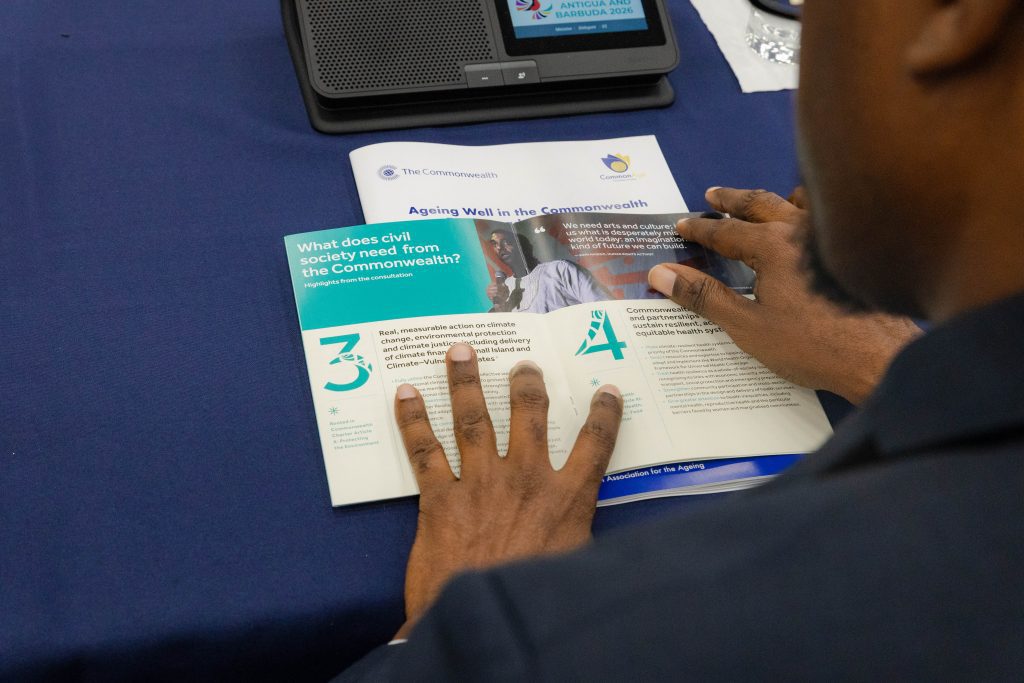
This is why the Commonwealth People’s Forum and the Foreign Ministers’ Roundtable with Civil Society in Antigua were such important parts of the proceedings at CHOGM. Together, they created a meaningful connection between Commonwealth citizens, civil society and governments, ensuring that public participation was not treated as an event on the margins, but as part of the central work of the meeting.
The Commonwealth People’s Forum is the Commonwealth’s principal civil society gathering, bringing together activists, advocates, community leaders and academics from all Commonwealth regions. It is a space where the issues shaping the Commonwealth’s future can be examined openly, grounded in the experiences of the people and communities most affected by political decisions.
In the lead-up to the Forum, participants explored issues including climate justice, artificial intelligence, health financing, freedom of expression, gender equality and intersectionality. These discussions were not separate from the formal programme. They helped shape the perspectives that were carried into the Government Executive Sessions and the Foreign Ministers’ Roundtable.
Those perspectives were vital. They came from people working directly with communities and confronting the consequences of policy choices in their everyday lives. They brought to the discussion not only expertise, but the lived realities of people too often absent from high-level deliberations.
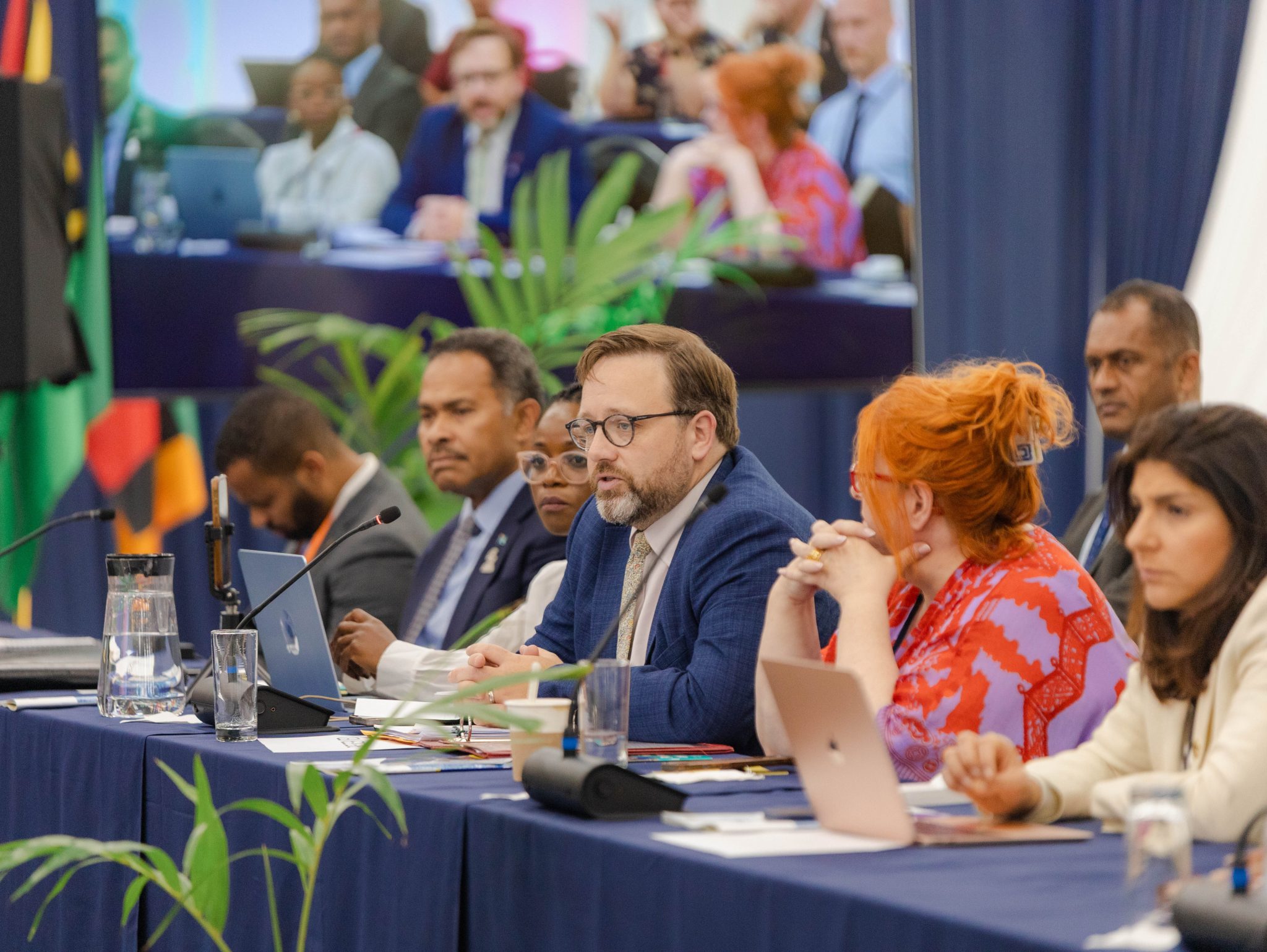
The Foreign Ministers’ Roundtable, co-hosted by the Commonwealth Foundation, the Commonwealth Secretariat and the Government of Antigua and Barbuda, provided a direct exchange between governments and leaders of Commonwealth civil society. It was an important continuation of the People’s Forum: a space where the concerns raised by civil society could be placed directly before ministers and tested against official priorities.
The Roundtable was not a ceremonial conclusion. Nor was it a negotiating session. No commitments were made. Its purpose was to create a space for honest dialogue: for civil society to question governments, for ministers to respond, and for official priorities to be examined in light of real-world experience.
The value of the process lay precisely in that connection. The People’s Forum created the space for civil society to deliberate, organise and articulate its priorities. The Roundtable then brought those perspectives into direct conversation with government. Participation was therefore not confined to being heard; it became part of the wider proceedings through which the Commonwealth considers its future.
That exchange provides legitimacy. Multilateralism cannot be effective if it speaks only to itself. It must be open to scrutiny by the people whose lives are shaped by its decisions. As the Commonwealth Foundation, we see civic participation not as an accessory to governance, but as one of the conditions of credible governance.
The discussion reflected many of the priorities set out in the 2026 Commonwealth Communiqué, including accountability, inclusion, climate justice, digital rights and stronger financing for vulnerable countries. But the value of the People’s Forum and the Roundtable lay in placing those broad commitments alongside the practical realities faced by communities across the Commonwealth.
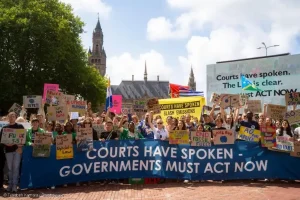
The urgency was most evident in the discussion on climate justice. For small island developing states, the 1.5°C target is not an abstract negotiating position. It is a boundary between manageable disruption and escalating loss, displacement and insecurity. Yet the countries most exposed to climate change often face the greatest difficulty accessing finance.
As the Commonwealth looks towards COP31, the discussions underlined the need for climate finance that reflects vulnerability, not simply national income. Affordable finance, grants, debt relief, resilient infrastructure and more responsive international institutions will be essential if climate commitments are to have meaning beyond the conference hall.
The same principle applies to the blue economy. Economic opportunity cannot be separated from environmental responsibility. Concerns about deep-sea mining and calls for stronger accountability reflect a wider anxiety: that new forms of extraction could reproduce older patterns in which communities bear the costs while others capture the benefits.
For small states, this is not simply an environmental debate. It is a question of sovereignty, intergenerational justice and who gets to decide how natural resources are used. The Commonwealth’s commitment to safeguard the marine environment must be matched by transparent decision-making and meaningful participation by affected communities.
Climate change also exposes the weaknesses of current approaches to economic security. Young people are navigating insecure employment, rising living costs and a deteriorating natural environment at the same time. Their participation cannot be reduced to consultation after decisions have already been made. If the Commonwealth’s emphasis on youth engagement is to be credible, young people must have meaningful influence over decisions on climate finance, digital safety and the future of work.
Artificial intelligence presents a similar test. Its effects are already being felt in education, employment, public services and democratic life, while smaller countries often lack the resources to regulate powerful technology companies on equal terms.
The discussion called for a shift from principles to accountability. A rights-based and gender-responsive approach to AI should include transparency about automated decisions, accessible routes to redress and safeguards against discrimination. Protecting children online is essential, but surveillance and age verification cannot become substitutes for rights-respecting regulation.
The conversation on freedom of expression placed these concerns within a wider civic context. Digital technologies can widen participation, but they can also amplify harassment, disinformation and exclusion. At a time when journalists, activists and human rights defenders face growing pressure, protecting open civic space is central to the Commonwealth’s democratic credibility.
Health financing was also understood as a question of economic and political resilience. Investment in women’s lifelong health, including conditions that are routinely underdiagnosed and undertreated, is not a marginal social expenditure. It is an investment in participation, productivity and the ability of societies to prosper.
Nor can gender-based violence be treated as separate from the prosperity agenda. A society cannot claim inclusive growth while survivors lack access to safety, justice and support. The discussion highlighted the importance of sustained financing, reliable data and effective institutions capable of responding to violence and discrimination.
That agenda must be intersectional. Women, young people, LGBT+ communities, people with disabilities and those living in poverty do not experience exclusion in the same way. Nor can the rollback of rights and the growth of anti-gender movements be treated as isolated developments. They are part of a wider contest over whose rights are recognised and whose voices are permitted to shape public life.
For small states, the People’s Forum and the Roundtable offered an important reminder of the value of the Commonwealth space. These countries may have limited economic power, but they possess indispensable knowledge of climate vulnerability, public-health pressures, digital inequality and the consequences of underfunded development.
The Commonwealth’s relevance will depend on whether it can convert that knowledge into genuine political influence. That requires more than speaking the language of partnership. It requires institutions that make room for disagreement, accept scrutiny and allow people to see how their perspectives enter government decision-making.
The proceedings in Antigua showed what more accountable multilateralism can look like. The People’s Forum placed civil society at the centre of the conversation. The Foreign Ministers’ Roundtable carried that conversation directly into dialogue with government. Together, they demonstrated that participation is not a parallel activity, but an essential part of how the Commonwealth should deliberate and make itself accountable.
The process did not promise instant solutions. It did something more fundamental: it made listening visible and created a clearer path between public concerns and political decision-making.
At the Commonwealth Foundation, we believe that this is the beginning of legitimacy. The test now is whether the openness demonstrated in Antigua becomes a lasting feature of the Commonwealth’s way of working and whether the perspectives raised through the People’s Forum and the Roundtable continue to inform the political decisions that follow.
A multilateral organisation that listens but does not allow itself to be questioned will lose credibility. One that creates genuine space for dialogue can renew it. That is the condition of the Commonwealth’s continued relevance.
Razmi Farook is the Director-General of the Commonwealth Foundation.