

Commonwealth Short Story Prize
 2026
2026


The 2026 prize winner

‘This story began in my childhood in rural Trinidad. Each day, I walked to school past rum shops where cane workers and labourers gathered. I remember the voices, the laughter, the arguments and conversations that shaped village life. Even as a child, I sensed the hardship carried by families affected by alcohol. “The Serpent in the Grove” is fiction, but it grew from those early observations and from the lives of ordinary people whose stories are rarely written down.’
‘We are hugely proud of our shortlist, regional winners and our overall winner, “The Serpent in the Grove” by Jamir Nazir, an original, poetic and deeply moving story, and we would like to pay tribute to the many thousands of writers from across the globe who entrusted us with their work. May this wonderful prize, the largest of its kind and the greatest champion of diverse new writing worldwide, go from strength to strength.’
Watch the 2026 prize ceremony
Meet the regional winners
Please read our update on the review of the 2026 Commonwealth Short Story Prize.
The five regional winners of the 2026 Commonwealth Short Story Prize have been announced.
Congratulations to this year’s writers: Lisa-Anne Julien (South Africa, Africa region), Sharon Aruparayil (India, Asia region), John Edward DeMicoli (Malta, Canada and Europe region), Jamir Nazir (Trinidad and Tobago, Caribbean region), and Holly Ann Miller (New Zealand, Pacific region).
Chosen from 7,806 entries — the second highest number in the Prize’s history — the five winners represent the very best of contemporary short fiction from across the Commonwealth. All five writers are first-time shortlisted entrants, and this year also marks the first time a Maltese writer has won the Canada and Europe regional prize.
The winning stories bring compelling characters to life in sharply drawn settings, exploring themes of power, family tension, resistance and unheard voices, alongside courage and unexpected connection. Among them are a keenly observant domestic worker, a young woman whose henna art enables silenced women to speak, and a resourceful young sheep farmer.
The stories transport readers to the chawls of Mumbai, a sheep farm in the Southern Alps of Aotearoa New Zealand, Malta’s ancient bastions, a home in South Africa, and a Trinidadian grove with hidden secrets.
Chair of the Judges, renowned author Louise Doughty, said: ‘Here are five writers who share an immense confidence of tone, announcing themselves from the very first line. The style and content of each work may vary, but what all our winning authors have in common is an ability to take their readers by the hand and lead them into a world where the characters are utterly believable, the prose assured, and the author has something important to say.’
Each winner will now progress to the final round of judging before the overall winner is announced in our online award ceremony on 30 June 2026.
The winning stories have been published online by the literary magazine Granta. Learn more about the winners and discover their stories below.
Press contact: Ruth Killick publicity@ruthkillick.co.uk
For all other inquiries regarding the prize, please see the FAQs below or contact: creatives@commonwealthfoundation.com
The Commonwealth Foundation would like to assure our community that we take seriously the integrity of the judging process of the Short Story Prize. Please see our full statement here.

Regional winners
We are delighted to announce the five regional winners of the 2026 Commonwealth Short Story Prize:
- Africa 'Me and Ma'am' Lisa-Anne Julien (South Africa)
- Asia 'Mehendi Nights' Sharon Aruparayil (India)
- Canada & Europe 'The Bastion's Shadow' John Edward DeMicoli (Malta)
- Caribbean 'The Serpent in the Grove' Jamir Nazir (Trinidad and Tobago)
- Pacific 'Second Skin' Holly Ann Miller (New Zealand)
A day in the life of the tangled relationship between a domestic worker and her employer.
‘A typical South African tale of “girls” and “madams” rendered in beautiful prose. Usually, stories about class in South Africa are couched in race. This is mainly because race has always been a class determinant in that country. Not anymore. The story is therefore important in more ways than one – it is at one level a commentary on debates about class, and how they have evolved. But it is also a story about women looking out for each other. The writing is relaxed and humorous without being overly funny and silly. It is a richly complex story that rises above all submissions from the African continent through a combination of humour, serious introspection and a deep sense of a shared humanity. The characters are sympathetic and warm.’
Fred Khumalo, Judge, Africa Region
In a speculative world inspired by the chawls of Mumbai, where women are forbidden language, a girl with crooked teeth and red-stained fingers discovers that desire is a dialect no man can scrub clean.
‘In a compelling first-person narrative filled in equal measure with figurative and matter-of-fact description, ‘Mehendi Nights’ transports us into a world where a young woman’s henna painting on other women’s upper and lower limbs emerges as a powerful symbol, becoming a quiet catalyst for an awakening amongst the women. The story is an exquisite reminder that fiction is not only about portraying people’s lives but also about pushing the boundaries of storytelling as well as the known parameters of realities, and creating new forms and possibilities in the process.’
Rifat Munim Dip, Judge, Asia Region
In Valletta, an NGO worker helping migrants begins to sense the island’s ancient bastions as silent witnesses to memory, where history and human dignity quietly converge.
‘DeMicoli tells the reader that the “limestone remembered”. On the bastions of Valletta, names are written in chalk and washed away with heavy rains, but the walls know and keep the names and their importance inside the stones. It is a story that layers the old with the modern and the healing of two grieving hearts. DeMicoli paints us [a] seaside scene that contains mystery and reassurance, but more importantly, the resilience of the human spirit and the ancestors who strengthen us all daily.’
Norma Dunning, Judge, Canada and Europe Region
Set in rural Trinidad, this is a story of a struggling farmer, a silenced young wife, and a grove that seems to remember what human beings try to bury. Steeped in desire, poverty and dread, it explores betrayal, survival and the stubborn force of a woman’s will.
‘Jamir Nazir’s language is sublime—precise yet richly evocative—conjuring vivid, lush imagery with remarkable economy. Through sharp sensory detail, he renders the Grove as a living presence, where labour, landscape, and memory are intimately entwined. Polished and confident, this is a story with a melodic voice that lingers long after the final line. Jamir Nazir’s prose pulses with a voice of restraint and quiet authority—a beautifully told and assured piece of storytelling.’
Sharma Taylor, Judge, Caribbean Region
Set on a farm in the Southern Alps of Aotearoa, Second Skin is a psychological examination of familial belonging in which the boundaries between humanity and nature are blurred.
‘Second Skin is a meticulously constructed, stiflingly atmospheric tale of motherhood, family and betrayal. The story vividly conjures an ordinary working farm and its inhabitants, in all their messiness, mistakes, yearning, and duplicity. Holly Ann Miller’s descriptions of nature, birth, butchery and the environment are lyrical but uncomfortable; beautiful as well as brutal. A slow burn at first, the narrative cleverly builds towards a startling and impactful ending.’
Maxine Beneba Clarke, Judge, Pacific Region
The Shortlist
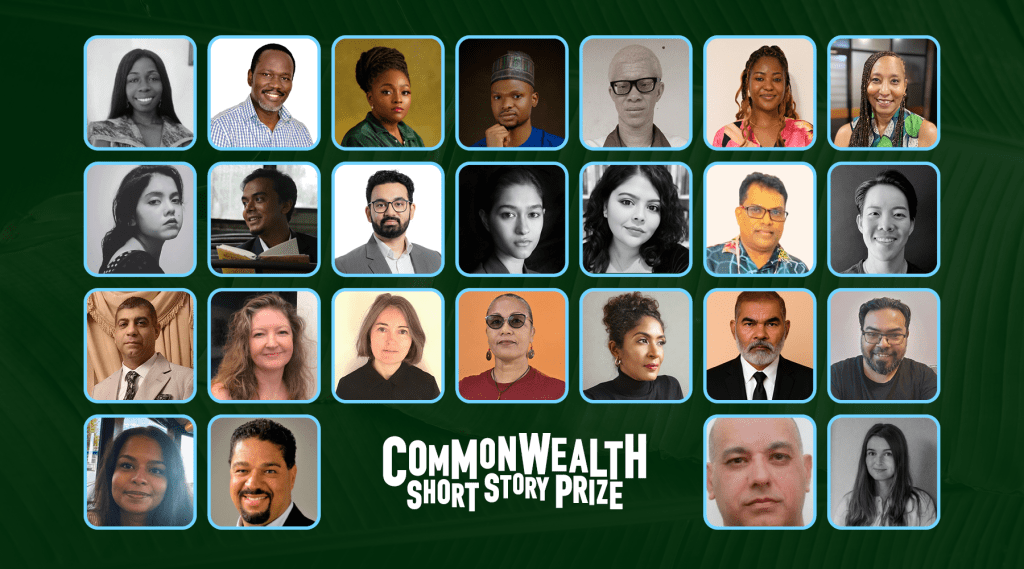
We are pleased to announce the 2026 Commonwealth Short Story Prize shortlist. The international panel of judges has selected 25 writers from a pool of 7,806 entrants.
The shortlist brings together writers from 14 Commonwealth countries. This year marks new milestones, with a Maltese writer appearing on the shortlist for the first time, while all but three writers are new to this stage of the Prize. The recognition of stories written in Bengali and Malay further reflects the Prize’s role in bringing contemporary voices from across the Commonwealth to the fore.
The shortlisted stories span a wide range of subjects, from intimate family relationships and love stories to experiences of migration, natural disasters, and the human cost of war. Told through a vivid and varied cast of protagonists—including musicians, athletes, migrant workers and even a stray dog—they move across continents and between rural and urban worlds. Across these settings, the stories explore themes of forbidden love, displacement , and memory, while reflecting on identity, resilience , and the enduring search for belonging.
Chair of the Judges, award-winning British novelist and dramatist Louise Doughty said: ‘Ultimately, our choices for the shortlist came down to authors who were not only excellent writers but, we felt, also had a grasp on the unique pleasures of the short story form, how it is a miniature carved in words that holds all the potential of a full-length novel in a few dense brushstrokes. We believe the writers in this shortlist have achieved all that and more, and we are immensely proud of our selection.’
Director-General of the Commonwealth Foundation, Razmi Farook, shared: ‘Congratulations to all the shortlisted writers. Each year, the Commonwealth Short Story Prize becomes more competitive, and this year’s shortlist reflects the remarkable creativity found across our Commonwealth. Storytelling continues to play a vital role in opening up alternative narratives and offering space for voices and perspectives that bring depth and context to the pressing issues facing Commonwealth citizens today — helping us better understand one another and imagine a more hopeful, inclusive future.’
We were deeply saddened to learn of the passing of shortlisted writer Mohamed Nasser Mohamed after the announcement of this year’s shortlist. Mohamed’s gifted storytelling moved and impressed our judges, and we are honoured that he shared his work with the Prize this year. We extend our heartfelt condolences to his family, friends and loved ones.
Five regional winners, each from one Commonwealth region, will be announced on 13 May, with the overall winner to be announced in late June. The shortlisted stories will be published and available to read on our online literary magazine, adda. The five regional winners will also be published on Granta.
-
'Orchard of Blackbirds' , Lois Akoma AntwiGhana
-
'The Runner's Gift' , Ken Odak OdumbeKenya
-
'The God under the Bed' , Dawn ImmanuelNigeria
-
'Arewa Girls' , Hussani AbdulrahimNigeria
-
'Shock Me I Shock You' , Ola W. HalimNigeria
-
'New Things' , Oluwatoke AdejoyeNigeria
-
'Me and Ma'am' , Lisa-Anne JulienSouth Africa
-
'A Masculine Fest' , Anmana ManishitaBangladesh
-
'Mofiz - er Relation e Spark Nai' , Shazed Ul Hoq AbirBangladesh
-
'Thirty-One Steps' , Rafaa DalviIndia
-
'Fighting Elsewhere' , Rupsa DeyIndia
-
'Mehendi Nights' , Sharon AruparayilIndia
-
'Separuh Yang Hilang' , Mohamed Nasser MohamedMalaysia
-
'The Miles Between Us' , Jacqueline ChangSingapore
-
'The Bastion's Shadow' , John Edward DeMicoliMalta
-
'Saudade' , Alison ArmstrongUnited Kingdom
-
'Chiddingfold' , Jennifer HarveyUnited Kingdom
-
'The Metamorphosis of Miss Alice' , Cosmata LindieGuyana
-
'Plenty Time' , Celeste MohammedTrinidad and Tobago
-
'The Serpent in the Grove' , Jamir NazirTrinidad and Tobago
-
'Pom Pom Peedeem Pom' , Jason DookeranTrinidad and Tobago
-
'River Mouth' , Jochelle Greaves SiewTrinidad and Tobago
-
'Pot Hound Republic' , Roger-Mark De SouzaTrinidad and Tobago
-
'Bitter Water Village' , M.S. BhatiaAustralia
-
'Second Skin' , Holly Ann MillerNew Zealand
-
Orchard of BlackbirdsLois Akoma AntwiGhana
Told in the voice of a fourteen-year-old girl in a Bosnian town on the eve of war, this is a story of blue sneakers, stolen plums and a childhood unravelling. It traces the quiet days before violence arrives and the irreversible moment it does.
‘They came in the morning, when Mama’s bread was still rising and Baba had just left for the railway yard. At first, I thought it was a parade. Boots thundered against the street. I pressed my face to the glass, expecting flags, drums, maybe even music like in the old festivals.’
-
The Runner's GiftKen Odak OdumbeKenya
Set in Kenya’s highland running culture, ‘The Runner’s Gift’ follows Mercy, a gifted distance runner contending with inherited scars, family survival, and the hidden cost of excellence.
‘She remembers the first time. Sixteen years old, Thomas shouting encouragement. The metallic taste surprising her. “It’s nothing,” Thomas had said, wiping his own mouth. “The altitude gifts us blood. It’s the price. Keep running.”’
-
The God under the BedDawn ImmanuelNigeria
In an overcrowded family home governed by an unseen god, a young girl comes of age under rigid rules, until one restless night when she decides to go in search of the truth.
‘Deep within those shadows, the god made itself at home. I have never seen it, so I couldn’t tell you what it looked like. I’m not sure anyone in my family ever has either, at least not clearly.’
-
Arewa GirlsHussani AbdulrahimNigeria
Narrated in the first-person plural (“we”), Arewa Girls journeys through the shared experience of Northern Nigerian women inhibited by patriarchal and religious-cultural norms. It’s a work of social realism that blurs the line between fiction and manifesto, mapping the emotional and generational inheritance of suppression, internalised misogyny, and the gradual awakening of self-awareness.
‘We are not doctors saving lives in hospitals. But that’s fine. We save lives in our own way. We are miraculous.’
-
Shock Me I Shock YouOla W. HalimNigeria
Two siblings navigate family dysfunction and personal identities through a mischievous game.
‘From the window, Oyin and I watch her for a while. We try to guess what she’s whispering, why her lips move so quickly. Eventually Oyin decides it’s not our cup of garri, that she’s Daddy’s responsibility, and so we pull down the curtains and sit on the centre rug to play Shock-Me-I-Shock-You.’
-
New ThingsOluwatoke AdejoyeNigeria
Set in Akure, 1999, during Nigeria’s transition to democracy and on the cusp of the new millennium, this story follows a teenage boy who loses his sole caretaker and must learn to navigate living with a new guardian and a country reinventing itself.
‘Rolake came to me in the middle of the night, while the pastor was holding a night-til-daybreak prayer vigil in the church. It was like that first day that she entered. No knock. No invitation.’
-
Me and Ma'amLisa-Anne JulienSouth Africa
A day in the life of the tangled relationship between a domestic worker and her employer.
‘Ma’am means well, even if she does choose the most inconvenient times to try and change my life.’
-
A Masculine FestAnmana ManishitaBangladesh
Set in 1950s East Pakistan, now Bangladesh, the story is about a young Bengali Muslim woman navigating the unexpected realities of womanhood.
‘They were not like the men of our house. They glimmered and glittered, like light rippling off from a crisp new note; our men were sovereigns—a grounded heaviness about them.’
-
Mofiz - er Relation e Spark NaiShazed Ul Hoq AbirBangladesh
A man in a Sundarbans village runs to revive the spark in his failing marriage while modern development slowly unsettles the fragile balance of his world.
Translated from Bengali into English by Arunava Sinha and Shabnam Nadiya.
‘He would have to build electrical power by running. “But it won’t do to run at any old speed.” Mafiz looked worried. ‘You said I have to run at the speed of light. How can a human run as fast as light?’’
-
Thirty-One StepsRafaa DalviIndia
Unfolding through a father’s nine-year vigil at Amritsar Junction, this is a story of waiting and the unbearable distance between a son who cannot return and parents who refuse to stop believing he will.
‘The bench at Platform Three had learnt the shape of Singh’s body. Nine years of waiting had carved his outline into the wooden slats. His tan suit, pressed each morning by his wife despite his protests, hung loose on bones that grew thinner with each passing train.’
-
Fighting ElsewhereRupsa DeyIndia
He could not tell his mother that he lost his job in Prague, or that he is gay, or that he supports her through sex work. When words hide, silence speaks out.
‘My mother never feared to tell me where I might encounter trouble, which life decision would become an eventual nightmare, what kind of lentil soup was tough for the stomach to digest, which red hot curry would draw the cold away from my head to my toes, and break me out in a sweat on a cold winter day. It didn’t matter that sitting in her cramped apartment in Howrah, my mother could never fathom the life I lived.’
-
Mehendi NightsSharon AruparayilIndia
In a speculative world inspired by the chawls of Mumbai, where women are forbidden language, a girl with crooked teeth and red-stained fingers discovers that desire is a dialect no man can scrub clean.
‘They say that a woman alone after dark was not a woman at all; she was a story already being written by someone else’s mouth.’
-
Separuh Yang HilangMohamed Nasser MohamedMalaysia
In a flood-stricken village, a father haunted by what was taken from him learns how memory, love, and survival reshape a broken life.
Translated from Malay into English by Pauline Fan.
‘People say, if a shoe has lost its pair, just throw it away. I nodded when they spoke, then quietly placed it back on the rack, aligned with my slippers and Sarah’s.’
-
The Miles Between UsJacqueline ChangSingapore
This is a story of a Singaporean woman sorting through her mother’s estate, who discovers that 76,240 KrisFlyer miles cannot be inherited, transferred, or grieved. Only spent.
‘The KrisFlyer miles of a dead person cannot be redeemed. The woman on the hotline said it like a line she had underlined with a ruler. Her voice carried that patient brightness unique to people trained to deliver bad news in complete sentences.’
-
The Bastion's ShadowJohn Edward DeMicoliMalta
In Valletta, an NGO worker helping migrants begins to sense the island’s ancient bastions as silent witnesses to memory, where history and human dignity quietly converge.
‘Her grandfather used to say limestone remembered, but only because someone first pressed a memory into it. It drank in heat and salt and footsteps and held them long after people were gone.’
-
SaudadeAlison ArmstrongUnited Kingdom
An older sister tries to locate the meaning of an event in childhood.
‘I began to see the parrot differently after that. Looking into his cage as he looked back and bobbed his head and stepped from side to side. She made me see this sadness that I would rather not have seen. It made me extra set against her as though it were her fault, the loneliness it felt. The emptiness in the pale grey ring of its eye.’
-
ChiddingfoldJennifer HarveyUnited Kingdom
In the summer of 1978 a woman visits an English village with her two young daughters and finds herself contemplating her life and her marriage and what it means to call a place home.
‘Chiddingfold. She knew nothing about it. It was simply a name she’d seen on the bus timetable. But it appealed to her in ways she couldn’t quite express. The Englishness of it. ‘Chiddingfold’. Every time she said it a picture began to form in her mind. A picture that felt more like a longing.’
-
The Metamorphosis of Miss AliceCosmata LindieGuyana
This story follows the experience of a juvenile delinquent whose interactions with a frail and forgotten old woman teaches him to believe in the power of transformation.
‘He knew that his visits were not secret from Miss Alice. She had seen him many times, as he climbed and hung with monkey-like agility among the branches, high overhead. But she had never shouted at him, and her age and infirmities made it impossible for her to chase him off, like most other people did.’
-
Plenty TimeCeleste MohammedTrinidad and Tobago
In a Trinidadian post office, an elderly widow witnesses another woman’s desperate struggle for dignity, prompting a small act of kindness that restores her will to live.
‘Over the years, Mavis has become invisible to most people – especially the young ones who look right through her as if she’s made of glass.’
-
The Serpent in the GroveJamir NazirTrinidad and Tobago
Set in rural Trinidad, this is a story of a struggling farmer, a silenced young wife, and a grove that seems to remember what human beings try to bury. Steeped in desire, poverty and dread, it explores betrayal, survival and the stubborn force of a woman’s will.
‘Ask the oldest in the village and you’ll hear some version of: “It had a well there once, and a woman. The grove ain’t forget.”’
-
Pom Pom Peedeem PomJason DookeranTrinidad and Tobago
A Trinidadian bassist flees to Lima to escape his past, but a relentless rhythm follows him across the sea, turning every sound, from factory machinery to his own heartbeat, into the music he tried to leave behind.
‘You can’t run from rhythm, boy. His father’s voice, salt-thick and certain. The music does find you. Always.’
-
River MouthJochelle Greaves SiewTrinidad and Tobago
Set in a fishing village in southern Trinidad, this story follows Amara as the disappearance of several girls fractures her community and exposes tensions simmering beneath its quiet shoreline.
‘Amara wiped her hands on a rag behind the counter, watching them through the mirror over the rum bottles. Their faces looked doubled in the glass—one real, one warped—and she wondered which version told the truth.’
-
Pot Hound RepublicRoger-Mark De SouzaTrinidad and Tobago
This story, told in the voice of a sharp-tongued stray dog wandering the markets and streets of Port of Spain, highlights Trinidad’s divisions of class, belonging, and freedom—until a storm brings unexpected encounters that challenge what it means to be stray or sheltered.
‘In the Drag Mall, some does call it Little Africa, life beat steady like drum. Smoke and sweat rise together, making the heat shimmer. Each stall a sermon, each voice selling some kind of offering: bone, blessing, or breath. All under the same hard sun.’
-
Bitter Water VillageM.S. BhatiaAustralia
In a rain-soaked village by a restless river, a fifteen-year-old finds her childhood collapsing under the weight of family silence and unspoken danger. As the village watches and waits, she must discover what it means to endure — and who she must become to survive.
‘Her eyes weren’t the ones he’d left behind. Not soft, not forgiving, but cold and fixed, like river stones worn smooth by current. Wei Yoon turned, walked to her room, and shut the door she hadn’t closed since the night he disappeared.’
-
Second SkinHolly Ann MillerNew Zealand
Set on a farm in the Southern Alps of Aotearoa, Second Skin is a psychological examination of familial belonging in which the boundaries between humanity and nature are blurred.
‘Nina would do anything to preserve the softness of her son’s heart. Good things were too easily corrupted. She didn’t want him to see what she was about to do.’
This year’s judging panel
-
Photo: Max Kennedy
Louise Doughty
ChairLouise Doughty is the author of ten novels, the latest of which is A Bird in Winter, published by Faber & Faber UK. Her previous books include the bestseller Apple Tree Yard, which was adapted as a major BBC One TV series starring Emily Watson; Platform Seven, which has been filmed for ITVX and Black Water, which was a New York Times Notable Book of the Year. She has also written novels about the Roma Holocaust during World War Two, Fires in the Dark, and her own Romany-Traveller ancestry, Stone Cradle. She has been nominated for multiple awards including the Costa Novel Award, the Women’s Prize for Fiction and the Sunday Times Short Story Prize and her work has been translated into thirty languages. She is a Fellow of the Royal Society of Literature and a Folio Prize Academician, the recipient of two Honorary Doctorates for her contributions to literature and has judged many prizes including the Booker Prize and the Costa Novel Award. She is also a screenwriter and journalist and in 2026 will publish a memoir, On This Spot Fell One Tear of Love.
-
Photo: Dirk Skiba
Fred Khumalo
Judge, Africa RegionFred Khumalo is the author of 19 books, which include novels, short story collections, journalism and works of biography. His famous Dancing the Death Drill has been translated into German, Setswana and isiZulu – with more translations into other local languages in the pipeline He has won numerous honours, including the European Union Literary Award (not to be mistaken confused with the European Literary Prize) and the National Institute for the Humanities and Social Sciences Award. A journalist by training, he writes primarily in English but has also published two books in his mother tongue, Zulu.
He holds an MA Creative Writing from Wits University, is a Nieman Fellow at Harvard University, a Fellow of the Academy of the Arts of the World (Cologne, Germany), a Fellow of the Johannesburg Institute for Advanced Study, a Fellow of the Stellenbosch Institute for Advanced Study. He has been a judge on numerous South African writing contests including the European Union Literary Prize and Herman Charles Bosman Prize among others. He has participated in numerous writing residencies and literary festivals both in his native South Africa and beyond the borders of his own country. His first book, Touch My Blood was adapted for the stage by James Ngcobo in 2007.
-
Photo: Rajib Dhar
Rifat Munim
Judge, Asia RegionRifat Munim is an editor, journalist, bilingual writer, and translator based in Dhaka, Bangladesh. He was the In-Charge of the books wing of the Daily Star (2012–2014) and the literary editor of Dhaka Tribune (2016–2021). He was a jury member for the DSC Prize for South Asian Literature in 2019. His books include Bangladesh: A Literary Journey Through 50 Short Stories (ed.). He was among the editors of Speak Out, a special issue focused on freedom of expression, published in 2022 by the Commonwealth Foundation. His English translations of Bengali poetry and short stories, and his articles on freedom of expression and different aspects of Bengali and South Asian fiction, have appeared in Outlook India, World Literature Today, Scroll, Your Impossible Voice, Asia News Network, Dhaka Tribune, and The Daily Star. His essay on the stories and novels written by Bangladesh’s preeminent writer Akhtaruzzaman Elias has been included in The Palgrave Encyclopedia of Urban Literary Studies.
-
Photo: Carina Gartner Lamarche
Norma Dunning (PhD)
Judge, Canada and Europe RegionNorma Dunning is a Padlei Inuk Canadian writer, professor and grandmother. She has published two collections of short stories, two collections of poetry and one work of nonfiction. Her future publications include two children’s books, Aput (2026) and Anaanatsiaq (2028) and her first novel titled Naoyak (2026). Her books have received esteemed literary awards and have translated into French, Greek and Amharic. Norma currently teaches for the Faculty of Indigenous Studies at the First Nations University of Canada.
Books published: Annie Muktuk and Other Stories (UAP, 2017) – Danuta Gleed Award 2018, Eskimo Pie: a poetics of Inuit identity (Bookland, 2020), Taninna (the unseen ones) (D&M 2021) – Govenor General’s Award 2021, Akia (the other side) (Bookland, 2022) and Kinauvit? (What’s your name?) (D&M, 2022) – shortlist Shaughnessy Cohen Political Pen. Books forthcoming: Aput! (Snow) (Tradewinds, 2026), Anaanatsiaq (Tundra Books, 2028), Nayoak (D&M, 2026).
-
Sharma Taylor
Judge, Caribbean RegionSharma Taylor, a Jamaican writer and lawyer, was awarded the 2023 Institute of Jamaica’s Musgrave Bronze Medal for contribution to Literature. The University of the West Indies (Mona Campus) appointed her its Writer-in-Residence for semester II, 2024. Her work has won the 2020 Wasafiri Queen Mary New Writing Prize, the 2020 Frank Collymore Literary Endowment Award and the 2019 Bocas Lit Fest’s Johnson and Amoy Achong Caribbean Writers Prize. She has been shortlisted four times for the Commonwealth Short Story Prize.
She was a judge in the 2022 and 2024 The Queen’s Commonwealth Essay Competition organized by the Royal Commonwealth Society, the 2023 Brooklyn Caribbean Literary Festival (BCLF) Short Fiction Story Contest for Writers in the Caribbean and was on the jury for the 2023 Bocas Lit Fest Breakthrough Fellowships. In 2024, she was published in The Cropper Foundations Caribbean Climate Justice anthology, “Writing For Our Lives” launched in November at the COP29 (the 29th session of the Conference of the Parties to the United Nations Framework Convention on Climate Change in Azerbaijan). Her debut novel, “What a Mother’s Love Don’t Teach You” was published in 2022 in the UK and Commonwealth by Virago Press.
-
Photo: Copyright Agency
Maxine Beneba Clarke
Judge, Pacific RegionMaxine Beneba Clarke is the author of over fifteen books for adults and children, including the ABIA and Indie award-winning short fiction collection Foreign Soil, the critically acclaimed best selling memoir The Hate Race, the self-illustrated picture book When We Say Black Lives Matter, which was longlisted for the UK’s Kate Greenaway Medal, and the CBCA Honour Book The Patchwork Bike (illustrated by Van T Rudd), which won the 2019 Boston Globe Horn Prize for Best Picture Book. Her poetry collections include Carrying the World, which won the 2017 Victorian Premier’s Literary Award for Poetry, How Decent Folk Behave, and It’s the Sound of the Thing: 100 new poems for young people, which won the 2024 ABIA for Book of the Year for Younger Readers. Maxine is the inaugural Peter Steele Poet in Residence at the University of Melbourne (2023-2025).
Frequently asked questions
-
The prize is open to all Commonwealth citizens aged 18 and over – please see the full list of Commonwealth countries here.
-
The regional winners receive £2,500 and the overall winner receives a total of £5,000. The winning stories are published online by Granta and in a special print collection by Paper + Ink. The shortlisted stories are published in adda, the online literary magazine of the Commonwealth Foundation.
If the winning short story is a translation into English, the translator will receive an additional prize of £750.
-
The story must be between 2,000 and 5,000 words.
-
The prize is only open to short fiction, but it can be in any fiction genre–science fiction, speculative fiction, historical fiction, crime, romance, literary fiction–and you may write about any subject you wish.
-
We accept stories written in Bengali, Chinese, Creole, English, French, Greek, Malay, Maltese, Portuguese, Samoan, Swahili, Tamil, and Turkish. Stories that have been translated into English from any language are also accepted and the translator of any winning story receives additional prize money.
-
Your submission must be unpublished in any print or online publication, with the exception of personal websites.
-
Entries are initially assessed by a team of readers and a longlist of 200 entries is put before the international judging panel, comprising a chair and five judges, one from each of the Commonwealth regions – Africa, Asia, Canada and Europe, the Caribbean, and the Pacific. All judges read entries from all regions.
Entries in other languages are assessed by relevant language readers and the best submissions are selected for translation into English to be considered for inclusion on the longlist.
The judging panel select a shortlist of around twenty-five stories, from which five regional winners are chosen, one of which is chosen as the overall winner.
Please note that entries are read by real people at every stage of the judging process and not put through an AI system.
-
Entries open from 1 September – 1 November every year.
The other key dates for the prize are as follows:
April: Shortlist revealed
May: Regional winners announced
June: Award ceremony and overall winner announced -
We now receive close to 8,000 entries each year. Due to the large volume of submissions, please note that we are unable to provide individual feedback on submissions.
-
If you have any questions about your submission, please email them to creatives@commonwealthfoundation.com. Be sure to include your entry submission number to ensure we can assist you promptly.
Resources & News
- Longlisted stories for the 2026 Commonwealth Short Story Prize
- Four steps to writing your best short story
- Publishing Tips from Nancy Adimora
- Perfecting your story: tips for crafting your prize submission
- A short story by Jennifer Nansubuga Makumbi
- Sharma Taylor in Conversation with Alexia Tolas
- Ntsika Kota in Conversation with Damon Galgut
- The Art and Craft of the Short Story
- 'The Fishing Line' by Kevin Jared Hosein
- Kritika Pandey in conversation with Nii Ayikwei Parkes
- The Origins of the Commonwealth Short Story Prize
- Commonwealth Writers’ Conversations- Cyprus at 60
Sign up for prize updates
Be the first to know the latest news about the Commonwealth Short Story Prize, from key submission dates to announcements about the winner.