Submit a thread to our digital quilt for the chance to be featured in an exhibition and win £200. Learn more

Theme: Human rights

Upholding gender equality legislation

Issue

Pro-women legislation has been promoted and adopted by the Pakistan government in recent years, including the Prevention of Anti-Women Practices (Criminal Law Amendment) Act 2011, but significant work is still needed on its enforcement.

Project

The Community Appraisal and Motivation Programme (CAMP) is working with female-led CSOs in Pakistan to form a strategy for women’s rights advocacy entitled, The Sisters’ Voice. In order to address issues such as honour crimes and domestic violence, CAMP is working with female-led CSOs within the provinces of Punjab and Balochistan to improve their abilities to work with policy makers and produce a clear and effective strategy for women’s rights advocacy.

Eighty women from forty CSOs will receive training in a range of crucial skills and knowledge, including awareness of existing laws and policies and advocacy and networking skills. The women, many of whom work in underprivileged communities, will receive training and mentoring that will allow them to not only make decision makers – particularly female parliamentarians – aware of their needs, but also to work with them to help advance their basic rights.

By building this network of confident, informed and cohesive CSOs, CAMP hopes to start building a generation of women who are able to secure equality and fairness for Pakistan’s future female population.

[youtube https://www.youtube.com/watch?v=0MDmBzLX-gY?rel=0]

Community Appraisal and Motivation Programme (CAMP)

Community Appraisal and Motivation Programme (CAMP) is a Pakistani non-profit and non-governmental organisation established and registered in May 2002. It works with some of the most underprivileged communities in Pakistan, responding to emergencies, improving access to quality health and education, creating livelihood opportunities, and working closely with communities and government departments to promote human rights, peace and security.

www.camp.org.pk

Follow /Community-Appraisal-and-Motivation-Programme-CAMP on Facebook
 

Strengthening the PEN Africa network for civil society engagement

Issue

The pen and the written word are powerful tools for upholding free expression, cultural rights and democratic governance. Through creative expression, Commonwealth citizens have the ability to advocate for the legislation that underpins these rights.

Project

PEN International (founded 1921) is a global community of writers, who work to promote literature and defend freedom of expression. The organisation will target measures to build capacity, skills and knowledge in order to advocate in favor of freedom of expression. Local PEN Centres will participate in policy training to help with advocacy work on local, regional and international levels and a three-year advocacy strategy will map out plans to engage with regional-level forums such as the Africa Commission on Human Rights. 

This work will serve to leverage the voice and influence of PEN Africa Network members in Ghana, Kenya, Malawi, Nigeria, South Africa and Zambia. PEN members will gain greater understanding of areas including freedom of expression and digital freedom, cultural and linguistic rights and quality education. It will help to empower not just them but the people with whom they work and future generations of writers, journalists and advocates.

Follow @pen_int on Twitter

Follow /peninternational on Facebook

Enhancing national dialogues on justice

Issue

Following Kenya’s national elections in 2007, heavy violence broke out between the opponents and the victors, which the Kenyan government has been seeking to address in the years since.

Project

Kituo Cha Sheria and REDRESS are empowering people affected by post-election violence in Kenya. The Truth, Justice and Reconciliation Commission (TJRC) set up by the government recommended the establishment of a reparations program which has yet to be implemented. The national judiciary is in the process of establishing an International Crimes Division to try the crimes committed during the post-election violence. In addition, legislation was passed to deal with the vast numbers of internally displaced people (IDP) which has yet to be enforced. So far, these transitional justice mechanisms have not fully addressed post-election violence concerns.

With the aid of a Commonwealth Foundation grant, Kituo Cha Sheria and REDRESS are empowering the people affected by the violence to meaningfully engage in the transitional justice process and ensure their voices are heard. Community based organisations representing people affected by violence, will be trained in human rights and advocacy, enabling them to advocate for their rights in dialogue meetings with national institutions.

Kituo Cha Sheria and REDRESS are both esteemed organisations in the field: Kituo Cha Sheria is a legal aid centre that was established in 1973 while REDRESS has worked to obtain justice for torture survivors worldwide since 1992. Together, they will use the grant to work with civil society organisations (CSOs), with community based organisations (CBOs) and with other local groups to ensure that the transitional justice process in Kenya is victim-centred. “Transitional justice is not only about rebuilding state institutions but it is also about empowering those whose rights were violated. This is why this project makes a difference.” says Beini Ye, Post-Conflict Legal Adviser at REDRESS.


[youtube https://www.youtube.com/watch?v=tBS7kMf3flo?rel=0]

Follow @KituoSheria on Twitter

Follow /Kituo-Cha-Sheria on Facebook

Promoting community solutions in upgrading urban settlements

Issue

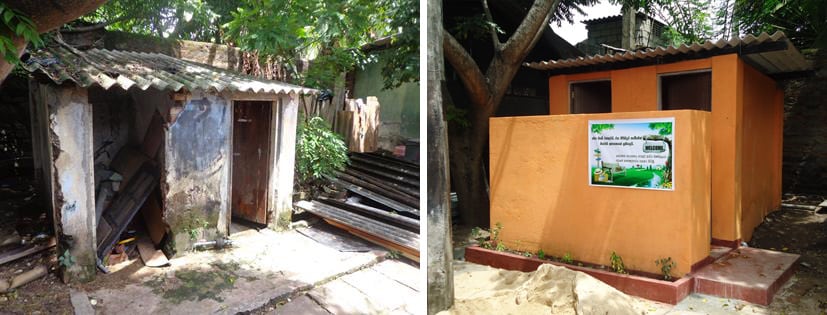
The Sri Lankan capital of Colombo is growing – and it is growing fast. The pace at which the city’s population is rising – due to both migration and birth rates – has outstripped its capacity to build sufficient housing provisions, leading to a rapid increase in informal settlements, with poor living conditions and unstable or non-existent community structures.
Reall is leading a project that will focus on 40 low income settlements in Colombo, and look at how the people themselves can contribute to improving the environments in which they live. The project will set up community development councils (CDCs) – a group of office bearers elected by households in the community – to act as representative bodies who will help the communities to work with governmental bodies and drive structured development of sanitation, water and other vital infrastructure.

Settlement upgrades in Colombo, Sri Lanka

Project

Reall (formerly Homeless International) is setting up community development councils to give the people of Colombo the knowledge, the skills and the voice to help them transform the conditions and services in the settlements in which they live. Through participatory decision-making and community empowerment, the project will give the people of Colombo the knowledge, the skills and the voice to help them transform the conditions and services in these settlements.

Jenny Hyde, the International Programmes Officer at Reall, explained, “By replicating tested approaches from other communities, the project will mobilise communities into CSOs, develop their capacity to initiate basic service delivery within their communities and facilitate working partnerships with government, leading to improved housing and basic services in targeted communities. Using a community-driven approach to design and deliver infrastructure promotes a strong sense of ownership, which in turn will ensure long-term maintenance of the facilities.”

The project is being implemented by Reall’s long-term partner in Sri Lanka, Sevanatha Urban Resource Centre, in association with the Sri Lanka Women’s Coop. The Colombo Municipal Council is the lead government partner on the project and has committed to provide funding towards infrastructure improvement projects.

Reall

Formerly known as Homeless International, Reall – or Real Equity for All – is a social enterprise that is dedicated to alleviating housing conditions in informal settlements across the developing world.

In 1989 Homeless International was born out of the social housing community in the UK and has developed a unique approach to tackle the problem of slums. They now help slum dwellers by supporting the development of partner organisations in Africa and Asia, which have their roots in poor communities.

reall.xyz

Follow @reall_int on Twitter


Promoting the recognition of carers in India

Issue

The need for long-term care for people with chronic illnesses and disabilities is universal, and the rapidly increasing demand is an urgent challenge facing countries throughout the world. In India, carers – like elsewhere in the world – are often unheralded and are usually unpaid family members.

Project

Carers Worldwide UK is supporting carers in India, who are mostly women, to advocate for the social provisions and protection needed to reduce their vulnerability to impacts such as reduced earnings, poor health and loss of education. Carers Worldwide is partnering with socially-focused CSOs in Jharkand, Andhra Pradesh and Karnataka, to build on the lessons of an earlier advocacy pilot project, which highlighted the importance of helping carers through participatory processes such as group-led actions. The pilot has already achieved a number of important outcomes – including establishing self-help groups that have allowed carers to come together for the first time, participation in a government-run livelihood scheme and raising their profile with local government officials – and this project aims to help take that work even further.

The carers most affected by poverty in each of the three districts will receive livelihood and training options compatible with caring and will learn engagement and advocacy skills, to allow them to participate in their own development. The project will also support district level Carers’ Associations, allowing people to communicate with peers and giving them a platform through which they can make their issues known to development and district government agendas.

“This project is creating the first opportunity for carers to come together, be seen and make their voices heard,” explained Anil Patil, the founder and executive director of Carers Worldwide. “This is a huge step forward for this vulnerable group who, until now, have been unrecognised by their communities and the wider society. In partnership with NBJK, SACRED and Samuha, we believe we will achieve significant change for marginalised carers over the next three years, transforming the lives of them and their families as well as laying firm foundations for a carers’ movement across India.”

[youtube https://www.youtube.com/watch?v=GZRBuhvtrMg?rel=0]

Carers Worldwide

Carers Worldwide works with carers in developing countries.

It aims to improve support, services and recognition for anyone living with the challenges of caring for a family member or friend who is ill, frail, disabled or has mental health problems.

www.carersworldwide.org

Follow @CarersWorldwide on Twitter

Follow /CarersWorldwide on Facebook


Promoting cultural industries through multi-stakeholder participation

Issue

Challenges such as low levels of professionalism among artists and operators in the sector; the lack of recognition and statutory regulation of the cultural professions; limited institutional capacity within the Ministry of Culture; underuse of the potential of the country’s cultural diversity; and the lack of social protection for cultural practitioners are all being addressed.

Project

The Centre for Ewe Language and Cultural Research (CEFOELAC) is developing a plan to guide  the country’s cultural development stakeholders in their work, as well as increase collaboration between the state and civil society groups working to promote the cultural industries in Ghana.

Centre for Ewe Language and Cultural Research (CEFOELAC)

Since 2000, the Centre for Ewe Language and Cultural Research has been advocating for the use of culture in development in Ghana.

It has worked with the Ministry of Culture to develop a curriculum of study on culture and development in tertiary institutions. In addition to having close ties and collaborating with local and international organisations on cultural issues, the centre is also a member of the local network of cultural practitioners that organised the first ever culture and arts competition in the Volta region of Ghana.


Promoting community-led governance solutions

Issue

Engagement of people in local government is recognised as vitally important to ensure transparency and accountability.

Project

Sarvodaya are increasing opportunities for people to engage in local governance in Sri Lanka.

With the support of a Commonwealth Foundation grant, Sarvodaya will work with 20 existing civil society organisations across the country, helping them to improve their understanding of local governance, advocacy and monitoring methods. Community monitoring teams will be formed to monitor local government for improved transparency and accountability.

The project will increase opportunities for dialogue between community members and elected representatives of local government authorities through citizen juries. Networking and sharing good practice will be encouraged, and in-kind grants will be given to fund small-scale community projects improving local governance. The project hopes to build on internationally accepted values of participation, inclusiveness, transparency and accountability which it hopes will result in community-led solutions to promote good governance. This project builds on previous work carried out by Sarvodaya to train community monitoring teams.

Sarvodaya has created a membership fund of R10m together with a national volunteer base of approximately 10,000 members contributing to the strength of the project. It has a strong track record of delivering this type of work and has used the learning from other initiatives to develop this project.


Lanka Jathika Sarvodaya

Lanka Jathika Sarvodaya is Sri Lanka’s largest people’s organisation with 34 district offices and a strong volunteer base.

Starting out as a movement developed around a set of philosophical principles drawn from Buddhist and Gandhian thought, over the last 50 years it has become a network of over 15,000 villages. It has worked on women’s empowerment, conflict mediation and good governance, and is engaged in relief efforts in the north of the country as well as ongoing development projects. Sarvodaya started the country’s largest micro-credit organisation with a loan portfolio of over US$1million and runs a welfare service helping over 1,000 orphaned and destitute children, underage mothers and the elderly.

www.sarvodaya.org

Follow @sarvodayalanka on Twitter

Follow /SarvodayaSriLanka on Facebook


Promoting awareness of the media’s role

Issue

Promoting awareness of the role the media can play to ensure citizens are better informed about political and economic decision-making is a priority for Tonga.

Project

With this grant from the Commonwealth Foundation, the Centre for Citizenship Education is promoting the principles of development journalism, illustrating models of good practice, developing the skills of media professionals and building the capacity of the media and government to develop good working relationships. Lending his authority to the initiative is Lord Fakafanua, pictured, Speaker of the Tongan Legislative Assembly.

A website (www.tonganz.net) will provide a focal point for information sharing, where briefings, profiles and case studies on political and economic issues will be published.

This project demonstrates the potential collaboration and learning between civil society organisations and institutions in governance. It will help to familiarise citizens of Tonga with the recently introduced Freedom of Information policy, as well as establish a two-way dialogue to improve development. This project builds on the citizenship education programme carried out by the Centre for Citizenship Education prior to the 2010 Tongan election, and is supported by the office of the Clerk in Tonga.

Centre for Citizenship Education

The Centre for Citizenship Education is a New Zealand charitable trust, established to give a focus to citizenship education at a national and local government level in New Zealand and the Pacific Islands.

The organisation works primarily in the information sector, to ensure that citizens understand their rights, responsibilities and opportunities within a democracy, and are motivated to participate actively at all levels of society. It achieves its aims through professional and institutional development, as well as the production of resources and policy advocacy.

www.citizenshipeducation.net