








Written piece
Cameroon’s Living Quilt
Messi Messi Juste Gilbert
Cameroon
About this piece
Original
This thread is a short prose-poem created for the Commonwealth Quilt project. It responds to the official creative prompt “Thread” by Commonwealth Poet Laureate Selina Tusitala.
The piece celebrates Cameroonian culture, focusing on the rich heritage of the Grassfields region.
English translation
This thread is a short prose-poem created for the Commonwealth Quilt project. It responds to the official creative prompt “Thread” by Commonwealth Poet Laureate Selina Tusitala.
The piece celebrates Cameroonian culture, focusing on the rich heritage of the Grassfields region.
In the highlands of Bamenda(north west region of Cameroon), where the earth breathes mist and ancient fondoms stand tall, our culture is not cloth alone — it is thread.
From the hands of weavers and embroiderers comes the Toghu: black velvet base, alive with bold stitches of red, gold, white, and orange. Each motif — the double gong that calls ancestors, the spider that weaves wisdom, the chevron bead that speaks of wealth and journey — is a deliberate pull of needle through fabric. These are not mere decorations. They are proverbs sewn into skin, stories that bind family to chief, chief to people, people to the land.
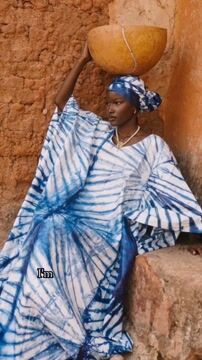
Beside it lies Ndop, the royal indigo resist-dyed cloth, geometric patterns resisting the dye like our resilience resists forgetting. Imported long ago yet reborn in our looms, it carries the breath of kings and the quiet power of women who tie wrappers and head-ties with pride.
Thread connects us across more than 250 ethnic voices in Cameroon — the “Africa in miniature.” English and French may divide the tongue, yet the needle unites the hand. From the coastal mangroves to the savanna, from the rainforest rhythms to the Grassfields dances, one invisible thread runs: the shared heartbeat of belonging.
In every wedding, every cultural festival, every moment a young person dons Toghu for the first time, we re-thread the past into the present. We mend what time tries to unravel. We celebrate that strength is not in sameness, but in the vibrant patchwork — each colour, each stitch, each story adding beauty to the whole.
Cameroon’s thread is unbreakable because it is collective. It pulls us together in joy, in resilience, and in the quiet knowledge that every generation must pick up the needle and continue the quilt.
English translation
In the highlands of Bamenda(north west region of Cameroon), where the earth breathes mist and ancient fondoms stand tall, our culture is not cloth alone — it is thread.
From the hands of weavers and embroiderers comes the Toghu: black velvet base, alive with bold stitches of red, gold, white, and orange. Each motif — the double gong that calls ancestors, the spider that weaves wisdom, the chevron bead that speaks of wealth and journey — is a deliberate pull of needle through fabric. These are not mere decorations. They are proverbs sewn into skin, stories that bind family to chief, chief to people, people to the land.
Beside it lies Ndop, the royal indigo resist-dyed cloth, geometric patterns resisting the dye like our resilience resists forgetting. Imported long ago yet reborn in our looms, it carries the breath of kings and the quiet power of women who tie wrappers and head-ties with pride.
Thread connects us across more than 250 ethnic voices in Cameroon — the “Africa in miniature.” English and French may divide the tongue, yet the needle unites the hand. From the coastal mangroves to the savanna, from the rainforest rhythms to the Grassfields dances, one invisible thread runs: the shared heartbeat of belonging.
In every wedding, every cultural festival, every moment a young person dons Toghu for the first time, we re-thread the past into the present. We mend what time tries to unravel. We celebrate that strength is not in sameness, but in the vibrant patchwork — each colour, each stitch, each story adding beauty to the whole.
Cameroon’s thread is unbreakable because it is collective. It pulls us together in joy, in resilience, and in the quiet knowledge that every generation must pick up the needle and continue the quilt.